
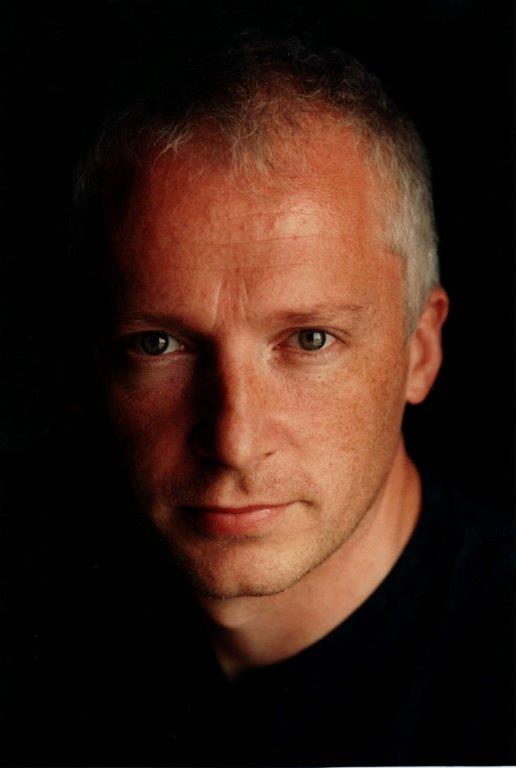
Marcus du Sautoy. A passionate advocate for the “wonders of science”.
Marcus du Sautoy, OBE, is the Simonyi Professor for Public Understanding of Science and a Professor of Mathematics at the University of Oxford. He is known for his efforts in popularizing mathematics and has been named by The Independent on Sunday as one of the UK’s leading scientists. He was a recipient of the London Mathematical Society’s prestigious Berwick Prize in 2001, which is awarded every two years to reward the best mathematical research by a mathematician under forty.
Du Sautoy writes for the Times and the Guardian and has presented numerous television and radio programmes, including The Story of Maths, School of Hard Sums and The Code. He is also the author of many academic articles and books including the best-selling The Music of the Primes and The Num8er My5teries: A Mathematical Odyssey Through Everyday Life.
When mathematician Marcus du Sautoy was appointed the prestigious role of the Simonyi Professor for the Public Understanding of Science at the University of Oxford back in October 2008, he had two distinct priorities looming prominently in his mind.
The job brief was clear in its motives at the time and reflected on the one-hand high-level science, and on the other, the ability to communicate this scientific research widely to a public audience. The latter was the first priority. Stepping into fill the boots of the inaugural holder Richard Dawkins, was by no means an easy feat, but du Sautoy also a Professor of Mathematics at the University of Oxford, took to the role naturally.
“When I took over from Richard, my immediate thoughts were on clearly communicating to the public what was happening in science,” says du Sautoy. “Science has such a big impact on humanity. In order for people to feel empowered and for them to be able to make decisions on where they want science to go and the long lasting effects it has on society, they must first fully understand the surrounding issues.”
The second role of his job, encouraging the communication of science between disciplines within the sciences, is perhaps the most intriguing, in terms of developments. The biggest challenges, du Sautoy says, are the “inbuilt education system” and the “linguistic barriers” across the sciences. “This is a fascinating area where across academia we’re looking to break down the silo mentality which I believe has been prevalent in most universities across the world”, asserts du Sautoy. “This is partly due to the time and hard work we put into our own specialist subject meaning there often isn’t time to see what’s happening in other areas.”