Citizen Science: A Hobby with implications

Petra

Petra D’Odorico is an environmental / earth system scientist studying land vegetation dynamics from space and in the field. She has a PhD from the University of Zurich where she continued working as a postdoc at the Remote Sensing Laboratories of the Geography Department. Currently, she is a Postdoctoral Fellow at the Grassland Science Group at the Institute of Agricultural Sciences of the Swiss Federal Institute of Technology, working on plant phenology and ecosystem biogeochemical cycles.

How ordinary people are helping us understand climate change and much more 

When it all began, not much was known about them and the academic elite were wary. But then – in times of harsh budget cuts with institutional funding and research support drying out – mistrust is a luxury only few can afford. Unsurprising then, that in recent years academia has begun opening its gates to a workforce that has appeared at the right time, seems intelligent enough, is eager to contribute and has enough free time to help collect data on all kinds of species and phenomena: Citizen Scientists. But how did it all begin?

Back in 1999, the University of California at Berkeley invited citizens to donate idle time on their home computers to analyze radio telescope data with the hope of discovering signals from extraterrestrial civilizations (SETI@home). In 2005, a second project kicked off, this time run by the University of Washington in Seattle, allowing volunteers to download a program devoted to the difficult problem of protein folding (Rosetta@home). Soon it became clear that computing power was not the only resource hiding in those homes. Scientists realized that human brainpower was the real capital to be outsourced. By mid-2008, an interface allowed users not just to assist the computation but also to interact with it helping it to converge to a solution more quickly. The Citizen Science Era had officially begun!

Continue reading →

The Science of Spin

Julia Archbold is a National Health and Medical Research Postdoctoral Fellow at the Institute for Molecular Bioscience in Brisbane, Australia. She has worked for industry, spending three years as a screening biologist with AstraZeneca in Australia. Her PhD research investigated the structures of T cell receptors and their ligands, providing insight into organ transplant rejection. Her PhD work led to the Victorian Premier’s Award for Medical Research in 2010. After postdoctoral work at the University of Auckland in Professor Ted Baker’s lab on G protein coupled receptors, Julia has returned to the University of Queensland to continue working in the area of structural immunology. This year she was awarded the UQ Early Career Researcher Grant for her work on the structures of Membrane Proteins. Julia also contributes articles to the Australian Biochemist magazine.

“Science arose from poetry… when times change the two can meet again on a higher level as friends.” Johann Wolfgang von Goethe

The definition of spin according to the free dictionary is “to provide an interpretation of (a statement or event, for example), especially in a way meant to sway public opinion”. Should swaying and convincing your peers that your interpretation of your results is correct be the basis for a good research article? Do we, as researchers, need to fine-tune the science of spin?

spinning topIt was my PhD supervisor at Monash University who repeatedly asked me this question, etching it into my brain: “Julia, what is the punch line of your paper?” Back then I was confused: how do I know what the main message of my paper will be is if I haven’t finished my experiments or written the paper? But looking back, I realize he was training me. To write a good research article, you must know the main message you are trying to get across. The end of your paper, as well as the ending sentence of your abstract, is absolutely critical. You need to have a short, catchy, one sentence summary of the main finding of your work, and why people should care.

At the end of my PhD, I attended a media training session. The trainers encouraged us to simplify our research to communicate our results with the public. Again, they told me to come up with ‘one short catchy sentence’ to convey my research to the public, and repeat that over and over in interviews, so that people get the take home message. For those who have ever participated in the 3 minute thesis competition, you will know how hard it is to condense years of research into a couple of minutes let alone one sentence!

Since my PhD days, both of the institutes I have worked at, namely the University of Auckland and the University of Queensland, have emphasised our obligation as scientists to communicate our research with the public. It is the public who fund the majority of our research and they deserve an explanation of why they should continue to give us the dollars. And thus, the science of spin is born. How do you put the best light on your research to attract the money from the funding bodies, from the public and get published in the best journals? Continue reading →

Research 2.0.3: The future of research communication

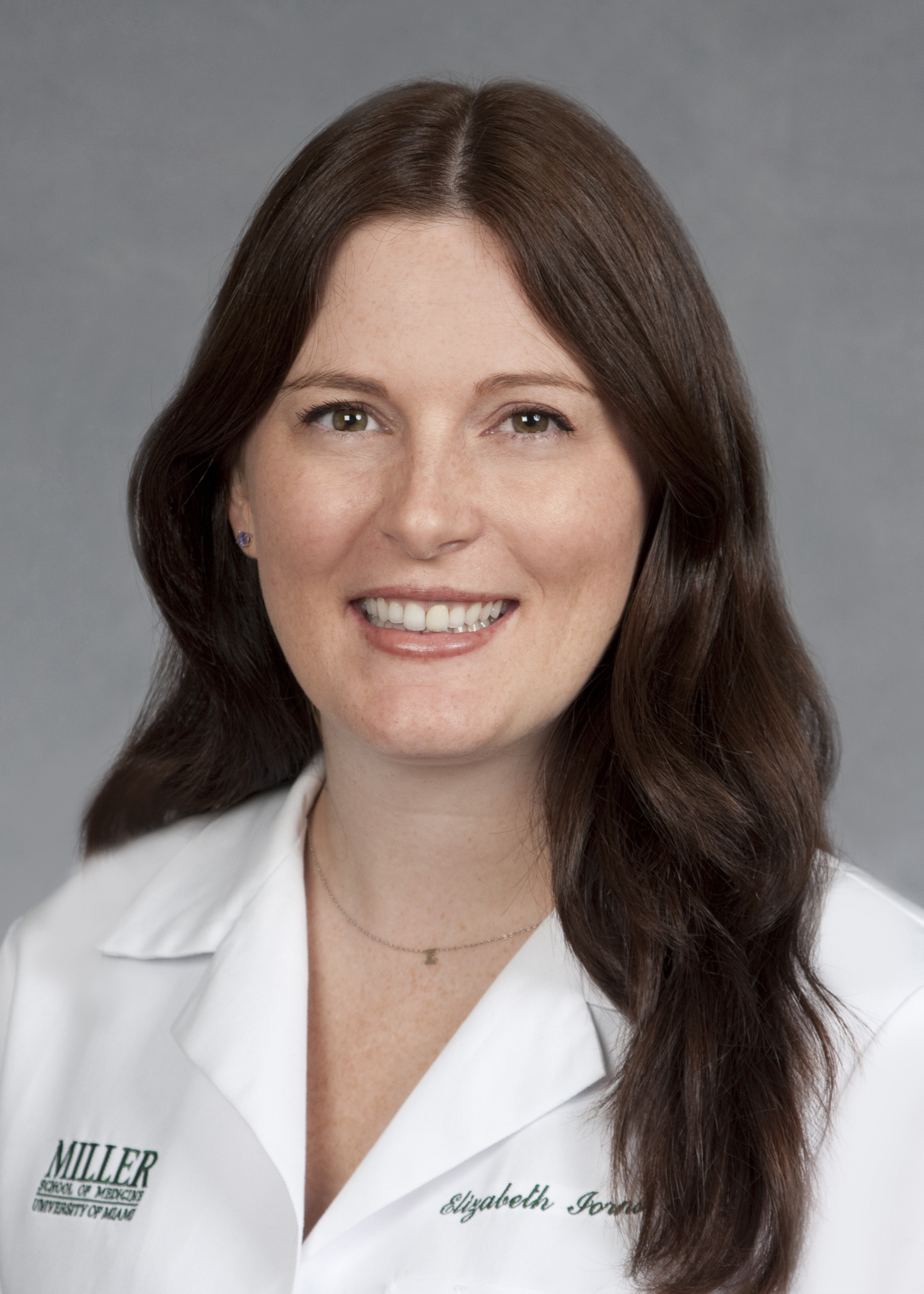
Elizabeth Iorns headshot (portrait)Elizabeth Iorns is a breast cancer scientist and the Co-Founder & CEO of Science Exchange, an online marketplace for science experiments. 

This week Elizabeth is hosting a three part series all about the research cycle. Do share your thoughts in the comment thread.

In the first post of this series, I described the changes that are coming for the way scientific research is funded in the digital age.  In the second part, I explored the ways in which the process of research itself is destined to undergo dramatic changes. In the final part I look at the future of research communication, exploring the impact of digital tools on scientific reputation.

Nowhere in science has the disruptive power of digital technologies been more apparent than in research communication.  Traditional journals with subscription-based models and lengthy, anonymous pre-publication peer-review have been challenged by pre-print servers, post-publication evaluation and open access. Scientific news outlets now co-exist with blogs, often written by practicing scientists.  The threat of gatekeepers stultifying the scientific process is replaced by the need for new ways to extract knowledge from the threat of information overload.

The continued move towards open access

The Open Access movement to free published research from subscription barriers has led to major research funding agencies in the U.S., U.K. and the EU mandating that the research they fund be made openly available on-line within 12 months of publication.  This in turn has led to a shift in publishing business models away from subscriptions and towards publication fees, as evidenced by the prominent rise of new OA journals such as PeerJ and eLife to join the more established BioMed Central, PLOS, and Frontiers journals. Continue reading →

Research 2.0.2: How research is conducted

Elizabeth Iorns headshot (portrait)

Elizabeth Iorns is a breast cancer scientist and the Co-Founder & CEO of Science Exchange, an online marketplace for science experiments. 

This week Elizabeth is hosting a three part series all about the research cycle. Do share your thoughts in the comment thread.

In the first post of this series, I described the changes that are coming for the way scientific research is funded in the digital age.  In the second part, I’ll explore the ways in which the process of research itself is also destined to undergo dramatic changes.

Traditionally, research was conducted by a single scientist or a small team of scientists within a single laboratory. The scientist(s) would conduct the majority of required experiments themselves, even if they did not initially have the necessary expertise or equipment. If they could not conduct an experiment themselves, they would attempt to find a collaborator in another lab to help them by using a barter system. This barter system essentially involves one scientist asking for a favor from another scientist, with the potential upside being co-authorship on any publications that are produced by the work. This type of collaborative arrangement depends heavily on personal networks developed by scientists. Continue reading →

Bridging the Science-to-Society Gap: Part 1 #reachingoutsci

Information about the authors can be found here.

The chasm between science and society is wide and deep, illustrated most recently by events in climate science1 and calls for increasingly politicized management of NSF-funding2.  Scientists tend to blame it on society, but scientists also share the blame2.  It is thus essential that the scientific community—and scientists as individuals—begin to re-think our approach to doing science.  This is particularly salient for biologists who study how natural systems work, given the widespread influence of human activities on Earth’s life-support systems and the profound dependence of humanity on other living things.

We speculate that scientists distance themselves from society in four ways, sometimes inadvertently, sometimes intentionally.  First, they tend to pursue a research agenda they are passionate about, often without thinking about how the energy devoted to a particular project serves society.  Second, most scientists regard their job as finished when they report their results in a specialized research journal, adding a notch to their publication count.  Third, scientists counsel that advocating for a particular societal position compromises their scientific credibility, so much so that the general credo is: “If you want to succeed as a hard scientist doing original research you do have to be a little careful about public communications,” as climate scientist James Hansen put it3. And finally, many scientists feel that dealing with societal issues is some other profession’s problem, something that requires too much time and for which they have little support or expertise [https://leopoldleadership.stanford.edu/]. Continue reading →

Science Mentoring: My graduate school mentor

The latest Soapbox Science mini-series focuses on the role of mentors in science. Tying in with this year’s Lindau Nobel Laureate meeting, where almost 600 young scientists have the opportunity to meet each other and 25 Nobel laureates, we’ll be looking at the importance of supportive relationships and role models. We’ll hear from a mix of mentors, mentees and projects set up to support scientists and we aim to explore not just the positive examples of good mentoring but what can happen when these key relationships are absent or break down. For more discussions around this year’s Lindau meeting, check out the Lindau Nobel Community site.

Mariena is a 30 year old puertorrican scientist living in NY. Currently she works as an electron cryomicroscopist, the field she was trained in while in graduate school. In 2009 she completed a degree in biophysics at Vanderbilt University, followed by a postdoc in biochemistry at the University of Western Ontario. Last year she moved away from the tenure-track to pursue a dream of working with instrumentation and training people in microscopy. She’s interested in science, science communication and literacy, tweeting, blogging and photography.

I didn’t know what I was going to study when I decided to go to grad school, but I did decide to go to a school with an umbrella program in the southern US, one in which I didn’t have to commit to a lab or project from the get-go. I could do rotations in several departments for a year, then decide where I wanted to join. The year before, while doing a summer internship, I learned about the technique I would use and become proficient in for my PhD. I thought it was a really cool approach, though I didn’t get to do it as an undergrad. Then in grad school, I saw a poster with my mentor’s name and all the projects her lab was working on and noticed that her lab was using this great structural biology approach I had learned about as an undergrad. She had recently moved to my school and was looking for rotation students and I was eager to meet her and hopefully do a rotation in the lab. I admit now that my eyes lit up that day and I started attending some of the departmental seminars and greeting her down the hall, even when I wasn’t doing rotations in said department. Continue reading →

Reaching Out: Science Cafés are great. At least, I think so.

Science Online New York (SoNYC) encourages audience participation in the discussion of how science is carried out and communicated online. To tie in with June’s event which looks at how scientists reach out of the ivory tower, communicating science to the public, we’re hosting a series of guest posts on Soapbox Science. We will hear from a range of contributors: scientists, writers, enthusiasts, communicators, events organizers, policy makers and teachers, each sharing details about how they engage and reach out to the public.

Laura Walker is a biological research scientist in the School of Clinical Sciences at the University of Bristol. She spends her days trying to improve lung function during heart surgery, and her spare time communicating science by running Bristol’s monthly Science Café at the Tobacco Factory. Laura is currently studying for an MSc in Science Communication at UWE, and is passionate about facilitating academics and other researchers in their public engagement activities. Continue reading →

Transitions: From Scientist to combining science and novel writing – Professor Sunetra Gupta

Career paths are not always straightforward. Choosing a scientific vocation can involve challenging and unanticipated decisions, often with no tour guide to follow. Some scientists may hop from the lab bench into industry while others progress up the academic research ladder. Others decide to leave research behind and explore science communication,  teaching, setting up their own business or working in technical roles outside of the lab. 

While a love of science can lead to varied and fulfilling careers, it may be lonely trying to evaluate the next step to take. Recently, initiatives such as “This is what a scientist looks like” and the #IamScience discussions, have shone a bright light on scientific career trajectories. In our latest Soapbox Science series, we focus on some interesting examples of scientific career transitions. We will hear from different contributors, all of whom use their scientific background in their current jobs, asking each of them the same questions: how did you decide on your career path, what are your motivations, and what does the future hold?

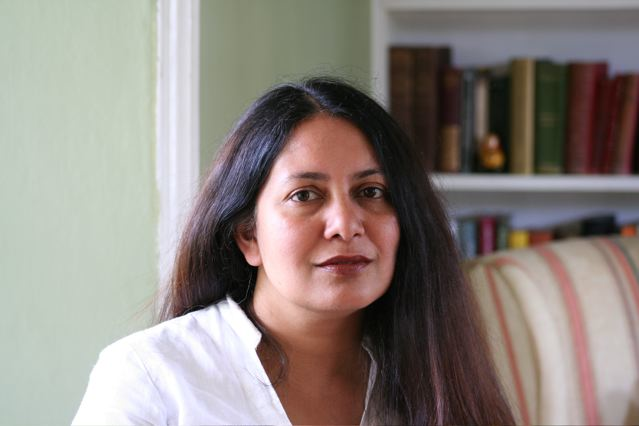
In this post Professor Sunetra Gupta talks about her parallel careers as a scientist and a novelist

Sunetra Gupta is an acclaimed novelist, essayist and scientist. Her fifth novel, So Good in Black was published in February 2009. She was named as the winner of the 2009 Royal Society Rosalind Franklin Award for her scientific achievements. Sunetra, who lives in Oxford with her husband and two daughters, is Professor of Theoretical Epidemiology at Oxford University’s Department of Zoology, having graduated in 1987 from Princeton University and received her PhD from the University of London in 1992. Sunetra was born in Calcutta in 1965 and wrote her first works of fiction in Bengali. She is an accomplished translator of the poetry of Rabindranath Tagore. Continue reading →

Transitions: From PhD to Patent Attorney – Toby Thompson

Career paths are not always straightforward. Choosing a scientific vocation can involve challenging and unanticipated decisions, often with no tour guide to follow. Some scientists may hop from the lab bench into industry while others progress up the academic research ladder. Others decide to leave research behind and explore science communication,  teaching, setting up their own business or working in technical roles outside of the lab. 

While a love of science can lead to varied and fulfilling careers, it may be lonely trying to evaluate the next step to take. Recently, initiatives such as “This is what a scientist looks like” and the #IamScience discussions, have shone a bright light on scientific career trajectories. In our latest Soapbox Science series, we focus on some interesting examples of scientific career transitions. We will hear from different contributors, all of whom use their scientific background in their current jobs, asking each of them the same questions: how did you decide on your career path, what are your motivations, and what does the future hold?

In this post Toby Thompson talks about his transition from PhD to patent attorney.

Toby graduated with a first in chemistry from the University of Nottingham in 1999, and went on to complete a PhD in organic chemistry from the same university in 2003.  He spent 5 years working as a medicinal chemist for a pharmaceutical company, before moving into the patent profession, qualifying as a UK and European patent attorney in 2011.  Toby currently works in private practice for a firm of patent and trade mark attorneys, and is based in their London office.  Outside of work, he enjoys playing guitar and piano, running, and following the recent resurrection of the England rugby team. Continue reading →

Fractals: How nature just keeps on giving

jovan.bmp

This week’s guest blogger is Jovan Nedic, a PhD student in the Department of Aeronautics at Imperial College, London. His work looks at understanding how fractal geometries can be used to interact with fluids and how they can be implemented in engineering applications.

It is difficult in this day and age of scientific enlightenment to even think there is something in nature that can allow us to understand, and more importantly, exploit the world we have created for ourselves, but fractals are certainly one of those things.

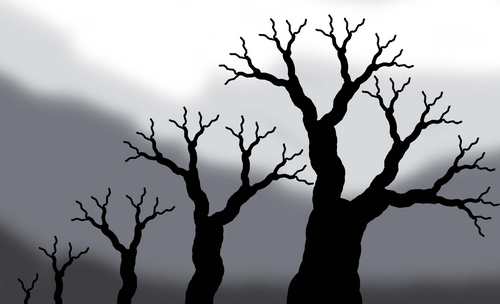
I always love explaining what fractals are to others, mainly because I get to see the expression on their face change from a blank, vacant, almost bored expression, to a sudden realisation that fractals really are everywhere you look and that conceptually at least, they are relatively simple to understand. The tree is my favorite example, because it’s the easiest. Have a look at Figure 1 and you will see what looks like the various stages of a tree’s growth, or is it? Well it is, except in this example all you are really looking at is the different components of the final tree on the right which I arranged in a fractal manner.

Figure 1
tree.bmp

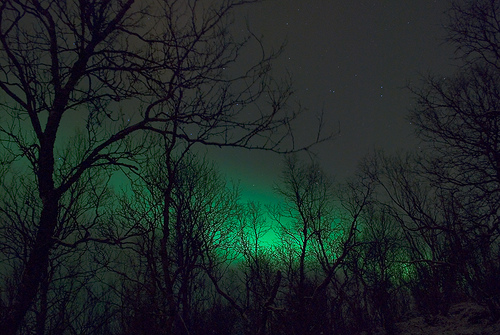
Now look at the Figure 2 below, courtesy of Per Ivar Somby. Can you spot the similarities? Put simply, a fractal is a self repeating pattern where if you kept zooming in, you would always see the same pattern. Mathematically, this means that you can go on for infinity, but practically there are obvious limitations.

Figure 2
2990547760_11594fbab9.jpg

The mathematics of self-similar shapes has existed for centuries, but what was rather surprising was realising that this is a natural phenomena, and trees are not the only example. River networks, clouds, coral reefs, leaves, lightning bolts, birds wings, broccoli, and the cardiovascular system are just a few examples that illustrate the abundance of this fractal pattern in nature. So there must be a reason as to why this is a naturally occurring phenomena and more importantly, could we exploit this in some way?

This is what myself and the rest of the researchers in the Turbulence, Mixing and Flow Control Group in the Department of Aeronautics at Imperial College London, under the supervision of Professor Vassilicos, are doing. Our aim is to not only understand how they might affect fluids, but to also apply this knowledge to real life applications.

One of the first things, and probably the most fundamental aspects of fractals to understand, is that fractals allow you to maximize the volume or space you are given. For plants this is vital because they want to capture as much sunlight as possible so they can grow. For our lungs it allows us to take in as much oxygen as possible and distribute it to the rest of the body as quickly as possible. Where does this come in handy for engineering applications? In-line mixers are one example that has been looked at; finding the most efficient way of mixing two fluids is vital for chemical combustion.

None of this happened by chance, and for the last ten years or so, there has been a lot of work on understanding how fractal geometries might be used to control turbulence and flow in general. Some of the results coming from these studies, as well as ones that are currently being carried out, show that certain turbulent parameters are not as universal as people once thought. This is not to say that scientists have been wrong in the past; scientific conclusions are based on the data that is in front of them, and as these change, so do the conclusions. This is how science evolves.

As our understanding of this new type of flow grows through experimental and numerical work, we can begin to use it to our benefit. One of the recent studies carried out in our group, and one that I have been working on, is for acoustic manipulation, specifically on aircraft wing spoilers. The noise generated by the spoilers comes from the unsteady flow created by it, which give off a very low frequency booming noise that can travel for miles on end; as you can imagine, this is a problem for the aviation industry! There were some signs that by simply adding holes to these plates, you would shift the noise to higher frequencies, frequencies we can’t hear. Dogs might, but they won’t be on the plane so that’s not too much of a problem. What we noticed however, is that if you used a fractal pattern to created the holes, you would get better results and furthermore, you could control the noise level.

Currently my work has started to look at using fractal generated geometries on wings, again following in the footsteps of nature as birds’ wings have a fractal element to them. This is still a work in progress but initial signs look promising. These are just a few examples, but interest in this field is growing every year and is not just confined to the UK, so expect to see many more examples of how fractal geometries are being used to help the world around us.