The Colorado: elegy for an overused river

Posted on behalf of Monya Baker
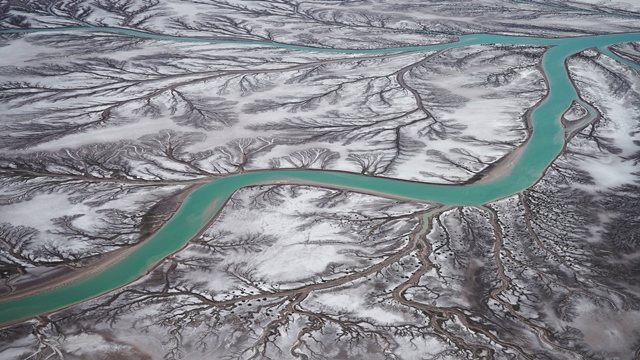
The Colorado River

Tidal waters in the delta region of the Colorado River.{credit}Murat Eyuboglu{/credit}

The Colorado River in the US West proves the adage that you never step into the same river twice. Lined by a vast array of landscapes, communities and industries it has shaped, its waters run variously aqua, navy blue, muddy brown — or not at all. Over its 2,334 kilometres, it sustains some 40 million people, 2 million hectares of farmland and the Hoover Dam. It is also polluted, depleted, diverted.

Now this mighty waterway is celebrated in The Colorado — a music-based documentary that delivers a powerful environmental and social message. Produced by VisionIntoArt, the project brings together several composers including Paola Prestini and live performance ensemble Roomful of Teeth, among others. (See below for the trailer.)
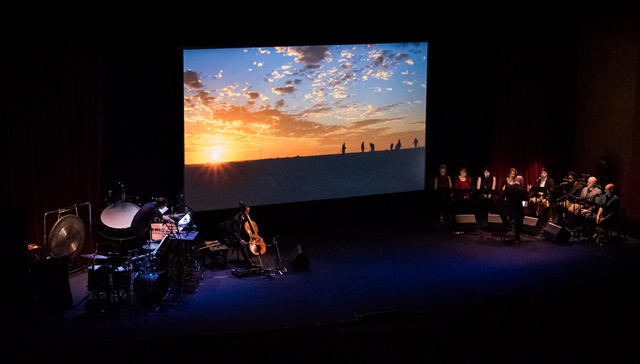
Glenn Kotche and Jeffrey Zeigler performing at the New York premiere of The Colorado.

Glenn Kotche and Jeffrey Zeigler performing at the New York premiere of The Colorado.{credit}Jill Steinberg{/credit}

At a pre-show talk on 22 April at Stanford University in Palo Alto, California, the project’s director Murat Eyuboglu noted that his inspiration was the story of the Salton Sea in California’s Colorado Desert. This huge inland lake was created by accident in 1905, when engineers’ plans for irrigation canals succumbed to the river’s might. Now saltier than the Pacific Ocean, the lake is filled with toxic sludge and hosts acres of deserted lakeshore development, yet is essential habitat for migrating seabirds. “I’ve never seen so much beauty and devastation cohabiting in one place,” said Eyuboglu. That sentiment holds for the film as well.

Eyuboglu’s interest in the Salton Sea led him to contact writer William deBuys, who has chronicled the natural histories of water in the region in books such as Salt Dreams (coauthored with Joan Myers). DeBuys signed on to advise Eyugoblu on the project, then became his co-scriptwriter and lyricist. Filmed over four years (and 20 trips into the river’s drainage basin), their documentary meanders from the artificially fertile fields of Imperial Valley to the artificially parched expanses in the Sonoran Desert as well as the Salton Sea.
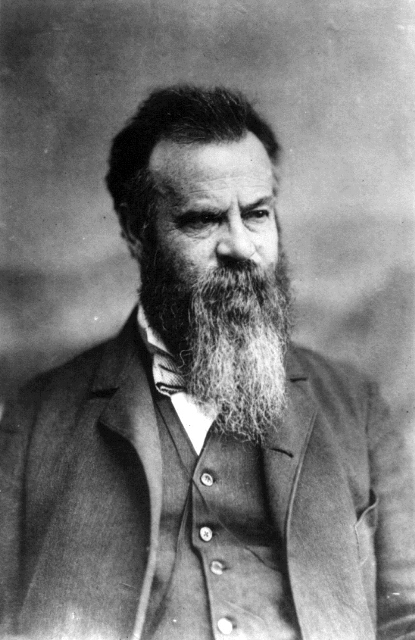
Geologist John Wesley Powell, the first to explore the Colorado River for scientific purposes.

Geologist John Wesley Powell, the first to explore the Colorado River for scientific purposes.

The work is divided into nine sections. Each begins with a narrative introduction by actor Mark Rylance, grounded in stories of people who explored, exploited or were exploited by water-fueled power. After the narration stops, we are steeped in stunning cinematography and archival footage.

The first to explore the Colorado for scientific purposes was noted geologist and Civil War veteran John Wesley Powell. (During that conflict Powell, who lost an arm in combat, would instruct his soldiers to watch out for fossils while digging trenches.) On his first, grueling three-month 1869 expedition, Powell recognized that the river had cut through millennia, pronouncing the region “a Book of Revelations in the rock-leaved Bible of geology” that he was determined to read. Mapping the basin, Powell made a coherent case that political units should follow the same boundaries, to balance the needs of those dwelling upstream and downstream at a time when land speculators carved property for their own benefit. That lost opportunity is repeatedly apparent in the film.

Another story is that of David Brower (1912-2000). Founder of environmental organisations including Friends of the Earth and first head of the Sierra Club, Brower successfully fought to stop a dam slated to flood the Dinosaur National Monument in Colorado and Utah. He proposed Glen Canyon as an alternative, despite never having seen it. After mapping Glen Canyon, he realised that burying its magnificent rock “cathedrals in the desert” and thousands of ancient indigenous sites under what is now Powell Lake would go down as the biggest US environmental mistake in history — and admitted his part in it. We see footage of the canyon being dynamited pre-dam, run backwards. Witnessing the canyon walls reform, we feel what has been lost.

In other sections, we see the tons of produce grown in Imperial Valley, irrigated by the river and harvested mainly by farm labourers from Latin America. Finally, we glimpse the nearly bone-dry delta of the Colorado in Mexico. With farms and industries each due a cut of “liquid property”, the water generally fails to reach the sea despite governmental efforts. The delta’s former fecundity is now relegated to the memories of octogenarians.

The Colorado is, for the most part, emotionally and intellectually rich — sometimes too much so. At one point, I missed a series of explanatory texts on screen because I was pondering the source of the sound accompanying them — it was, I eventually realized, the cellist striking his bow alternately on the instrument’s base and a plastic water bottle. Birdsong at the start of one segment is the call of the canyon wren, whose characteristic trill inspires a vocal piece later on. But I would not have recognized either fact without the pre-show talk.

The river is disappearing under the constant demands of civilization, yet is beautiful even in decline. The film closes with a Yuman poem, once description, now wish. “This is my water, my water… It shall flow forever.”

Monya Baker writes and edits for Nature from San Francisco, California. She tweets at Monya_science. The Colorado will travel to Washington DC in March 2018, as part of the Kennedy Center’s inaugural season of Direct Current, a celebration of contemporary culture. View a trailer for The Colorado here. A Nature Q&A with Paola Prestini can be found here.


For Nature’s full coverage of science in culture, visit www.nature.com/news/booksandarts.

An immortal life: Henrietta Lacks on film

Posted on behalf of Ewen Callaway

p12871796_p_v8_aa

In the HBO film based on Rebecca Skloot’s book of the same name, Oprah Winfrey plays Henrietta Lacks’ daughter Deborah Lacks.

The idea that people should have a say over how their cells are used in research isn’t revolutionary, but it flies in the face of research practices over the past century. That it nearly became law is due in no small part to Rebecca Skloot’s 2010 bestseller The Immortal Life of Henrietta Lacks, the story of the African-American woman living in Baltimore, Maryland, whose fatal tumour – taken by scientists at Johns Hopkins Hospital in 1951 without the knowledge or permission of Lacks or her family — gave rise to the first immortal human cell line, HeLa.

The book fuelled a much-needed conversation about scientists’ moral obligations to research participants and their families. Now a powerful film adaptation of the same name, starring Oprah Winfrey as Lacks’ youngest daughter Deborah, looks set to amplify that.

Skloot’s book covered a lot of ground, and the film’s director George C. Wolfe (best known for directing and producing Broadway hits such as Tony Kushner’s Angels in America) does an admirable job cramming in details about how HeLa cells were established and their ongoing impact on research. But the movie, broadcast on 22 April on premium US television network HBO, largely covers the decade it took for Skloot to report and publish her book. It focuses in particular on her efforts to gain the trust of Lacks’ family and build an emotional bond with Deborah Lacks.

Their relationship can feel overly dramatized, although Wolfe should not be faulted for taking some dramatic licence with Skloot’s book in what is, after all, a dramatisation (she also served as an executive producer). But much of the film rings true. A scene in which Deborah Lacks questions Skloot’s financial motives and grabs her arm is exactly as described in the book.

Deborah Lacks.

Deborah Lacks.{credit}Rebecca Skloot{/credit}

By omitting some key aspects of the book — the science and history of cell culture and large swathes of Lacks’ biography — the film can feel meta. It is, after all, a film based on a book about a journalist trying to write a book. But it should encourage more people to read the story and absorb its powerful message of social injustice institutionalized by science.

US National Institutes of Health (NIH) director Francis Collins and then-deputy Kathy Hudson have noted that Lacks’ story inspired policy changes in the rules that govern research on human subjects (officially known as the Federal Policy for the Protection of Human Subjects, but widely known as the Common Rule). “The people who are participating in research and providing pieces of themselves should be providing permission as well,” Hudson told Nature in 2015, when the government floated a proposal that would have required them to get approval to reuse discarded samples of blood, urine and other specimens for studies beyond those the subject initially agreed to. But the proposal caused consternation among many scientists. They breathed a sigh of relief this year, when the  final version. of the Common Rule largely maintained the status quo. As long as a participant’s name is removed from the sample, scientists needn’t obtain new consent.

Henrietta Lacks.

Henrietta Lacks.{credit}Courtesy of the Lacks family{/credit}

That may seem like a setback in a quest for justice the Lacks family is all too familiar with. But other developments suggest that the Lacks’ story has changed how research participants are treated by scientists.

Currently, a movement for “dynamic consent” — focused on the establishment of a lasting relationship between researchers and study participants — is growing. It was pioneered by professor of health, law and policy Jane Kaye, while elements of it are being used in Australia. Participants or their relatives (in cases where they are no longer alive) are kept up to date on how their samples are used in research, and they can opt out of particular studies or remove their sample entirely.

The Lacks are finally gaining some control over HeLa cells, if not the remuneration many members have in the past and some still seek. In 2013, after researchers funded by the NIH sequenced the HeLa cell genome without the knowledge or consent of the Lacks family, Collins helped broker a deal with the family to limit access to the data. Now, all NIH-funded scientists and others who want the best quality HeLa genome must explain their research to a committee that includes a Lacks family member. It’s enough for a sequel.

Ewen Callaway is a senior reporter for Nature based in London. He tweets at @ewencallaway. 


For Nature’s full coverage of science in culture, visit www.nature.com/news/booksandarts.

Imaging exodus: a thermographic lens on refugees

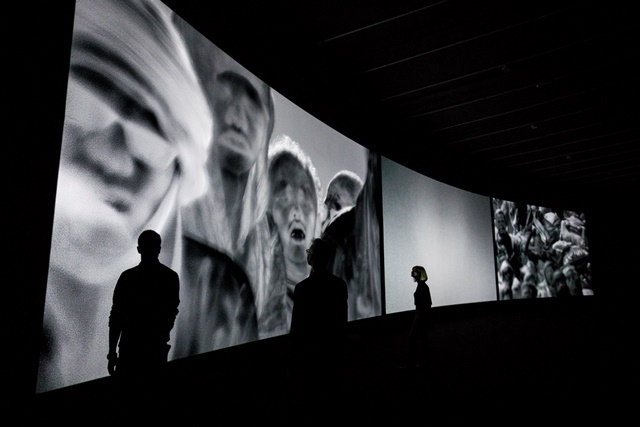
Incoming: installation view, by Richard Mosse in collaboration with Trevor Tweeten and Ben Frost, at The Curve, Barbican Centre, London.

Incoming: installation view, by Richard Mosse in collaboration with Trevor Tweeten and Ben Frost, at The Curve, Barbican Centre, London.{credit}Photo by Tristan Fewings/Getty images{/credit}

Posted on behalf of Philip Parker

Like war photography, images of the refugee crisis can elicit a disorienting mix of empathy and disbelief. Photographer Nilüfer Demir’s 2015 image of lifeless toddler Alan Kurdi, face down on a Turkish beach, is a case in point. Now film installation Incoming at London’s Barbican, by Irish photographer Richard Mosse, offers an original, unsettling perspective on the crisis.

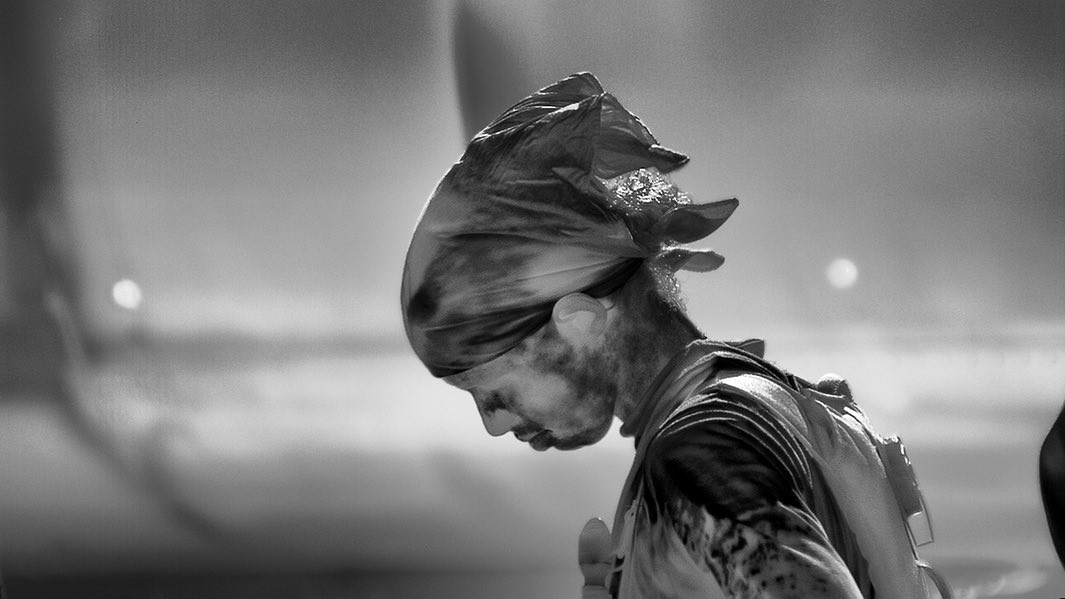
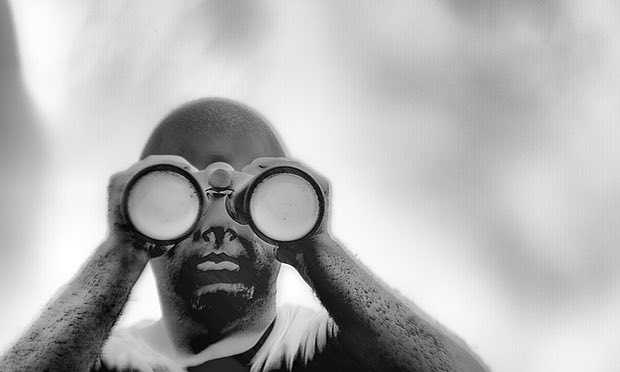
To escape some of the tropes of documentary photography, Mosse has experimented with non-standard processes such as 16-millimetre infrared film, which colourises in pinks and purples. For Incoming, he used a ‘camera’ classified as a weapon — a military-grade device created by a drone and missile designer that uses thermographic technology to detect people at 30 kilometres. Controlled by the International Traffic in Arms Regulations, it was designed for use in ballistics targeting and surveillance. For the show (which finishes on 23 April, moving to Melbourne, Australia, in the autumn), the images of refugees on journeys from the Middle East to Europe are displayed across a triptych of three 8-metre-wide curving screens. Mosse has repurposed a technology of war for ostensibly humanitarian ends.

Still frame from Incoming, 2015–2016. Three-screen video installation by Richard Mosse in collaboration with Trevor Tweeten and Ben Frost.

Still frame from Incoming, 2015–2016. Three-screen video installation by Richard Mosse in collaboration with Trevor Tweeten and Ben Frost.{credit}Courtesy of the artist, Jack Shainman Gallery, New York and carlier|gebauer, Berlin.{/credit}

The device — capable of resolving fine detail in darkness and through fog and smoke — was ideal for capturing subjects in difficult conditions. It uses middle-wavelength infrared, with optics specially created from the rare earth germanium, and sensors made from cadmium telluride to detect heat contours. Mosse and his cinematographer had to devise a rig to carry the 23-kilogram camera, plus steadicam and computer.

They spent two years filming the routes trekked by refugees – from Syria, Iraq and Afghanistan across the Aegean, through North Africa into Europe, and inside camps in Greece and Germany. The 50-minute Incoming captures the gritty realities: a rescue at sea; a lorry lumbering, overloaded with human cargo. But the imaging renders these scenes uncanny. The people are negatives, variations in skin colour evened out and noses and lips whitened; every fold in their clothes is etched, but they are rendered in shades of grey. A man appears to be washing his face in oil (water appears black). A fire in a camp billows like grey liquid. One beautifully composed scene picks out kites being flown in front of a bare mountain range, but as the imaging gives no sense of scale, the black darts resemble a fleet of stealth bombers. Mosse has slowed the footage to less than half its usual 60 frames a second, giving it a balletic aesthetic at odds with the raw subject matter.

Still frame from Incoming, 2015–2016. Three-screen video installation by Richard Mosse in collaboration with Trevor Tweeten and Ben Frost.

Still frame from Incoming, 2015–2016. Three-screen video installation by Richard Mosse in collaboration with Trevor Tweeten and Ben Frost.{credit}Courtesy of the artist, Jack Shainman Gallery, New York and carlier|gebauer, Berlin.{/credit}

Mosse often lingers over his subjects — we spend a long time staring at hairs on the arm of a distant policeman. In more intimate scenes, the detail serves to distort. Ultra-closeups of the postmortem of a child who drowned at sea is clinical and disturbingly unemotional, even with the high-pitched wail of a saw carving a bone sample for DNA identification. Each person’s eyes are black apertures, any sense of the individual erased.

Mosse shot almost every scene without his subjects’ knowledge. In a British Journal of Photography article on Incoming, he was quoted as saying that this allowed authenticity and “portraiture of extraordinary tenderness”. In my view, the technology renders real people with real grief and hopes into an anonymous mass – of the other, the migrant, the stateless. For soldiers, this distancing is undoubtedly an advantage; as a viewer, I became alienated.

Richard Mosse in collaboration with Trevor Tweeten and Ben Frost, The Curve, Barbican Centre.

Richard Mosse in collaboration with Trevor Tweeten and Ben Frost,
The Curve, Barbican Centre.{credit}Photo by Tristan Fewings/Getty images{/credit}

The United Nations estimates that over 65 million people are displaced globally, more than at any time since the Second World War. With climate change and political instability ongoing, that figure looks likely to increase. In an accompanying book, Mosse claims that he wished to reconcile the camera’s capacities with the “harsh, disparate, unpredictable and frequently tragic narratives of migration and displacement”. But we know the name of Alan Kurdi, the subject of Demir’s unforgettable photograph; the unnamed, monochrome hordes in Mosse’s film ultimately become abstractions. For all the thermal imaging, Incoming left me cold.

Philip Parker trained as a scientist, worked in publishing and with campaigning organisations. He is currently Stamp Strategy Manager for Royal Mail. He tweets at @parkerpj01.

Incoming is at The Curve Gallery at the Barbican, London, until 23 April, and will travel to Melbourne, Australia, in autumn 2017. It is co-commissioned by the Barbican and the National Gallery of Victoria in Melbourne.


For Nature’s full coverage of science in culture, visit www.nature.com/news/booksandarts.

Fibonacci’s real mathematical legacy

Posted on behalf of Davide Castelvecchi

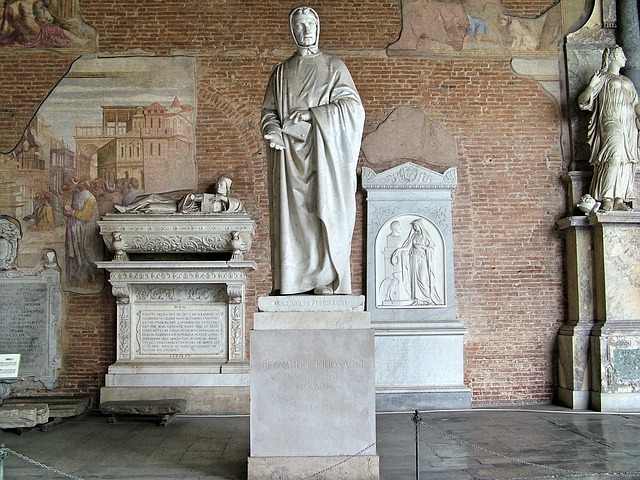
Statue of Leonardo Pisano (Fibonacci) in Pisa.

Monument of Leonardo Pisano (Fibonacci) by Giovanni Paganucci (1863) in the Camposanto di Pisa.{credit}Hans-Peter Postel, Wikimedia Commons{/credit}

For hundreds of years until the ebb of the Italian Renaissance, one name was synonymous with arithmetic. This was Leonardo — not the polymath from Vinci, but Leonardo Pisano (ca. 1170-1250), now popularly known as Fibonacci.

Yet we know little of Fibonacci’s life beyond the nickname and his Pisan roots: most details come from a 160-word autobiographical sketch written in 1202. He is often assumed to have discovered the so-called ‘Fibonacci sequence’, which starts with zero and 1 and is thereafter the sum of the two previous numbers (so 1, 2, 3, 5 and so on). The sequence shows up with astonishing frequency in natural spiral structures such as shells and plant tendrils.

Fibonacci did not, however, discover the sequence – it was recorded in Sanskrit at least as far back as 200 BC. Nor does the sequence explain anything about artistic beauty via the so-called ‘golden section’, as Keith Devlin reminds us in his new book Finding Fibonacci. The Pisan’s greatest legacy was to help Europe dump the ancient system of Roman numerals and switch to Hindu-Arabic numbers from 1 to 9 and, perhaps most importantly, 0, which Fibonacci called zephirum after the Arabic ṣifr. (Finding Fibonacci repeats some of Devlin’s arguments in his 2011 The Man of Numbers, and indeed is in large part a meta-narrative exploring the making of that earlier book.)

A page of Fibonacci's Liber Abaci from the Biblioteca Nazionale di Firenze showing (in box on right) the Fibonacci sequence with the position in the sequence labeled in Roman numerals and the value in Hindu-Arabic numerals.

A page of Fibonacci’s Liber Abaci from the Biblioteca Nazionale di Firenze showing (in box on right) the Fibonacci sequence with the position in the sequence labeled in Roman numerals and the value in Hindu-Arabic numerals.{credit}National Library of Florence, Wikimedia Commons.{/credit}

During Fibonacci’s lifetime, much of Italy was part of the Holy Roman Empire, yet many Italian cities were in practice independent city-states. Pisa, Genoa, Amalfi and Venice had been gaining prominence as maritime powers, establishing trade routes across the Mediterranean. As commerce boomed, Italian merchants needed to keep track of finances efficiently. Roman numerals made multiplication and division extremely cumbersome (try dividing MXCI by LIII); they were no match for the 10-digit positional system invented by the Hindus some time before 700 AD and common in the Arab world. And compared to using, say, an abacus, calculations in Hindu-Arabic numbers also allowed an “audit trail”, as Devlin points out: “An individual sitting in Pisa controlling a network of traders needed to be able to review the financial books on a regular basis.”

To fill that need, in 1202 Fibonacci (the son of a notary working for Pisan traders) published Liber Abaci, a compendium of Hindu-Arabic arithmetic and its practical applications to trade. The 600-page book introduces the numerals and explains how to use them for basic calculations. Like every good maths textbook, it also features many practical problems, such as how to convert currencies (Italy alone had 28 at the time, Devlin notes), or puzzles such as this:

It is proposed that 7 rolls of pepper are worth 4 bezants and 9
pounds of saffron are worth 11 bezants, and it is sought how
much saffron will be had for 23 rolls of pepper.

Such problems may seem trivial to someone trained in modern elementary-school algebra, but the symbolic notation for equations with x’s and y’s had not yet been invented at the time, so all solutions had to be spelled out in words. As mathematician John Hannah wrote in his 2011 review of The Man of Numbers,“It is awe-inspiring to see how far medieval mathematicians could progress using such primitive tools.”

Liber Abaci was published in Latin, as was the norm for learned texts. But soon, ‘popular arithmetic’ books in local vernacular, many citing Fibonacci as their source, began to appear. These ‘abacus books’ became standard in schools; at least 600 were written over the next few centuries. Through these texts Italy, and later Europe, learned to do maths.

In Finding Fibonacci Devlin tells us (22 times) that Liber Abaci “changed the world”, comparing the medieval mathematician to tech giant Steve Jobs. He even contends that the book made Western science and technology possible. But although Liber Abaci seems to predate the vernacular abacus books, did it actually inspire them?

Devlin points out that Fibonacci had also written a shorter, simpler abacus book in the vernacular, intended for merchants. That is now generally considered to be lost. If this book could be found, he argues, it might turn out to be the “missing link” between Liber Abaci and the spread of popularized arithmetic texts that came later.

Medieval whodunit

In 2003, historian of mathematics Raffaella Franci discovered such a vernacular text, Livero de l’abbecho, from the late 1200s. Devlin centres both his books on the assertion that Franci concluded that this text was a copy of Fibonacci’s lost book; Devlin avers that it is a “slavish” copy.  He states that thanks to Franci and subsequent studies by other researchers, “we can now say with historical certainty” that Livero de l’abbecho is indeed Fibonacci’s missing link.

But is this as certain as Devlin claims? Franci wrote to me: “I do not believe and I have never claimed that Livero de l’abbecho should be attributed to Leonardo Pisano.” She found evidence that Livero de l’abbecho was based on Fibonacci’s lost book — not that it was a word-for-word copy. Another historian of mathematics, Elisabetta Ulivi, adds that Livero cannot be an exact copy as it’s written in an Umbrian dialect, not Fibonacci’s Tuscan. And historian Jens Høyrup even disputes the importance of Livero and Fibonacci to the importation of Hindu-Arabic arithmetic.

Devlin emailed me that Livero “can be taken to be a fairly close copy” (in Finding Fibonacci he describes it as “a medieval equivalent of a photocopy”) of Leonardo’s lost book. “My duty as a writer of history is not to list the ‘facts’,” he added. “It is to present the best account I can.” Devlin did not respond to follow-up questions about why, in both his books, he describes his attribution of Livero to Fibonacci as “Franci’s conclusion”.

Still, Finding Fibonacci showcases Devlin’s writerly flair. My favourite passages are the incredible story of how Liber Abaci (or at least, the edition he wrote in 1228, the sole surviving one) became available in English for the first time – to this day the only modern-language translation. Mathematician Laurence Sigler had made it his mission to translate the book, rushing to complete the task right before he died of lymphocytic leukemia in 1997. But his editor moved on, and the manuscript languished on floppy disks for years. For a while Sigler’s widow Judith Sigler Fell, fearing the project would be killed, took the extraordinary step of impersonating her husband in communiqués.

By the time Fell found a new publisher, Springer Verlag (now part of the same publisher as Nature), floppy disks had been superseded and she had to hire a hacker to extract the files. Fell then discovered that Springer only accepted submissions in TEX format, the technical standard for physics and mathematics texts. She learned it and spent six months retyping the text. Fibonacci’s Liber Abaci was finally published in 2002 — the 800th anniversary of the book’s first appearance.

Davide Castelvecchi is senior physical sciences reporter at Nature. He tweets at @dcastelvecchi.


For Nature’s full coverage of science in culture, visit www.nature.com/news/booksandarts.
Change Agent: CRISPR-flavoured fiction

Posted on behalf of Sara Reardon

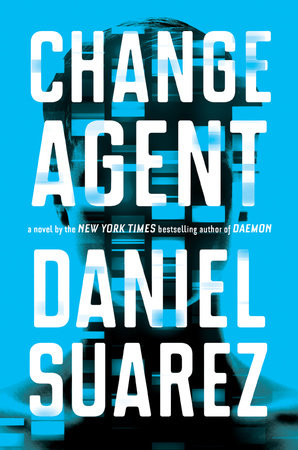
9781101984666It’s 2045, and the genetic editing system CRISPR has become a mainstay of society, producing everything from housecat-sized tigers to geopolitical intrigues. The United Nations has approved a sensible list of gene edits that can be legally used to eliminate specific genetic diseases from human embryos. This international concord works as well as one could expect from a sluggish bureaucracy trying to rein in a lucrative new enterprise. Before the treaty’s ink is dry, underground labs in Asia are offering “vanity edits” to parents willing to pay for smarter, healthier children. A single CRISPR snip to a gene that reduces the risk of heart disease might be routine and relatively cheap; altering the many genes that contribute to a complex feature like intelligence will cost much more. And that’s before you factor in the legal consequences if you get caught designing your perfect baby. As one illicit geneticist says, “all genetics is warfare”.

So begins Change Agent: a sci-fi thriller set in Southeast Asia with colourful and scientifically believable elements embellishing a fairly tired plot. Former software developer Daniel Suarez drew on still-cutting-edge research for his novel, one of the first to namecheck CRISPR as the catalyst for dystopia.

In Suarez’s imagined future, crime involving genetically modified humans has become so pervasive that international police organisation INTERPOL has devoted massive resources to dealing with it. But when detective Kenneth Durand finds himself hot on the heels of an organized crime ring in Singapore, he gets jabbed with a “change agent”. He awakens weeks later, shocked to find his body inexplicably transformed into that of the cartel’s ringleader, Marcus Demang Wyckes.

No one believes Durand’s explanation, least of all fellow INTERPOL agents who see him as the man whose face is on every wanted poster in Asia. After all, even the best scientists in 2045 believe it is impossible to genetically edit a living person. So Durand-as-Wyckes sets off alone to track down the real Wyckes and find a way to reverse-engineer his own body. That journey takes him through a landscape of sci-fi cliché – an underground nightclub of bio-enhancement enthusiasts, a shadowy Chinese trafficking ring with an invisible leader, intrusive augmented-reality ads.

Biotechnological flights of fancy

Yet Suarez has sprinkled the narrative with clever ideas inspired by current technologies. Singapore’s streets crawl with drug addicts, who tattoo molecular compounds onto their bodies so that dealers with 3-D printers can synthesize the drugs to deliver personalized highs. The Burmese government, which is waging genocide on its hill tribes, destroys their crops with gene drives — a controversial technology that can destroy populations by introducing genes that kill offspring. Nearly every other page is a glimpse into some biotechnological flight of fancy.

Suarez’s descriptions of the capacities and limitations of CRISPR, among other real-life technologies, are clear and mostly accurate, with minimal artistic licence. It’s the novel’s plot that — although fast-moving — fails to impress. As Durand flees his pursuers, he fights an unconvincing war with himself, as Wyckes’ grafted-on persona tries to drive him to violence. The enemies and allies that he picks up along the way are hackneyed and forgettable. This is especially true of the moustache-twirling Wyckes, whose denouement would be described as disappointing if we had cared about him in the first place. I won’t spoil everything, but suffice to say that Suarez wastes his most original idea in Wyckes’s bizarre engineered hitman, whose clever biochemical makeup repulses normal humans.

When we finally meet the CRISPRers, it’s in coastal Thailand (where else?). Potential parents sit through a parade of perfect children as if it’s a presentation for timeshare vacation condos. Predictably, the youngsters are a cover for the criminals’ more profitable product: children engineered with defective brains and enhanced muscles that make them disciplined workers and soldiers. Certainly people in 2045 must have read Brave New World. And meanwhile, readers will experience less shock than scepticism over how INTERPOL ever let crime get this bad right under their noses.

Perhaps that dulled reaction is what makes Change Agent most memorable. We have become so used to fictional explorations and academic treatises on engineering humans — from Mary Shelley’s Frankenstein to recent editorials in Nature — that the deranged possibilities presented by the technologies fail to thrill us any more. In an era stranger than fiction, sci-fi writers are increasingly hard-pressed to generate the requisite surprise, even as the scientific advances motor on.

Sara Reardon is a reporter for Nature working on biomedical research and policy, based in Washington DC. She tweets at @Sara_Reardon.


For Nature’s full coverage of science in culture, visit www.nature.com/news/booksandarts.
Ancient DNA and the rise of ‘celebrity science’

Elizabeth Jones.

Science historian Elizabeth Jones.

3Q: Elizabeth Jones

Whether it’s about Neanderthal-human interbreeding or the prospect of resurrecting woolly mammoths, the public cannot seem to hear enough about ancient-DNA research. For science historian Elizabeth Jones, ancient DNA offered an opportunity to study the development of a field in the crucible of intense public interest. She defines the phenomenon as “celebrity science”, in which scientists harness attention to generate interest in their work and capture future funding.

What led you to the definition of celebrity science?

As a historian, I used traditional research methods, like looking at professional and popular literature. I’ve gone back to conferences and archives. But one of the main reasons I’ve come up with the idea of celebrity science is from my conversations with scientists working in ancient DNA themselves. Many of them are alive so I can talk to them, but it’s also dangerous territory because their careers could be impacted by what I write. Meanwhile, if you go back to the 1970s and 80s, you see that the interest in ancient DNA was there from the very beginning. My speculation is that this comes from a long history of popularizing certain public-facing fields, such as palaeontology, archaeology and molecular biology. Our fascination with dinosaurs, human history and genetics and DNA as the code of life is documented. When you get these things together, the interest is just explosive.

Jurassic_Park_logo

The Jurassic Park franchise enabled a visual image of what using ancient DNA to bring back extinct species might mean.

How important do you think the Jurassic Park films are to the field?

Steven Spielberg’s 1993 film Jurassic Park had, for the first time, this visual image of what it would mean to use DNA to do something like bring back dinosaurs. That image was used by both researchers and reporters to talk to the public – ‘I’m doing this ancient-DNA research, and it’s kind of like this but not really’. It created a lot of momentum and it influenced press interest. There are some arguments that it influenced publication timing in journals like Nature. Did it influence research? One good example has to do with funding in the United States. Jack Horner, who is a palaeontologist but was also the scientific consultant to the Jurassic Park films, applied to the National Science Foundation in 1993 for money to try to extract DNA from dinosaur bones. Interviewees I talked to who were involved in the project feel the funding was awarded in part because of the public interest in the film at the time. Some researchers think this close connection between science and science fiction was damaging to press and publication expectations about what their research could really do. But a lot of the researchers who work in this field are very attuned to news value. They understand that you have to sell science. That means packaging it in such a way that the consumer wants to read it or learn more about it. They understand that Jurassic Park was an easy entry for communicating to the public what their research can and can’t do.

What changes have you seen in the field since?

Ancient-DNA researchers agree that they have achieved a great sense of credibility in the field of evolutionary biology. You can look at a lot of the work with ancient humans like the Neanderthal genome, for example, that’s really shown the power of ancient DNA. But even the Neanderthal genome was still very much a celebrity kind of study. Svante Pääbo was really active in designing it that way, by issuing press releases, putting a strict deadline on his lab and telling the rest of the world “we’ll sequence the genome in two years’ time”. It’s very much still science in the spotlight, but one that has demonstrated that they can do rigorous research. Next-generation sequencing has allowed researchers to get some high coverage genomes from extinct organisms. There are a few researchers in the ancient-DNA community who are not necessarily pursuing de-extinction, but they’re involved in these conversations. Because they’re respected scientists, they have lent a sense of credibility to the idea that de-extinction might happen. I think researchers in the ancient-DNA community are starting to pay attention to this pursuit in a way they wouldn’t have 15 years ago. As for my own work, I worry that scientists will think I’m saying celebrity science is a sell-out kind of science. Of course there are tensions between science and the spotlight. But ancient-DNA research is a great example of how really rigorous work can coincide with press and public interest.

Interview by Ewen Callaway, a senior reporter for Nature based in London. He tweets at @ewencallaway. 

This interview has been edited for length and clarity.


For Nature’s full coverage of science in culture, visit www.nature.com/news/booksandarts.