Bricks + Mortals: mapping the racist roots of science

Posted on behalf of Buddhini Samarasinghe
Subhadra Das,xxx

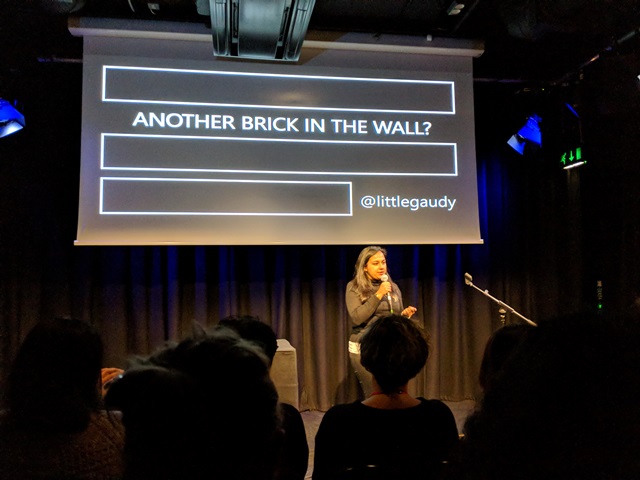
Subhadra Das, curator of the UCL Galton and Pathology Collections, at the opening show for Bricks + Mortals.{credit}Buddhini Samarasinghe{/credit}

If walls could speak: the saying might have been tailor-made for University College London’s new exhibition. Bricks + Mortals uses the campus buildings to tell the story of how eugenics gained a foothold at the university over a century ago. The epicentre, a lab for “national eugenics”, was set up in the early 1900s by Francis Galton, the Victorian mathematician and ‘father of eugenics’ whose crude bolting of statistics to human variety marks a nadir of modern science. Several UCL buildings and lecture theatres still bear the names of eugenicists.

The story uncovered by Bricks + Mortals — brainchild of the inspiring Subhadra Das, who curates the UCL Galton and Pathology Collections — is one I was only vaguely aware of. Uncomfortable topics make people uncomfortable: it’s easier to look the other way and pretend that the past belongs in the past. It’s convenient to believe that we gain nothing from considering its sepia-toned mistakes too closely.

This show proves otherwise — and is, moreover, a valuable puzzle piece in a historical jigsaw covering much of the globe. While geneticists today wielding the CRISPR scissors focus on ending disease, Galton had very different ideas for ‘bettering’ society. His theories (as he put it in the 1883 Inquiries into the Human Faculty and Its Development) aimed to allow “the more suitable races or strains of blood a better chance of prevailing speedily over the less suitable”. Galton’s racism and conflations of class and intelligence accelerated an early twentieth-century movement in Britain, Canada, the United States and much of Europe that targeted minority groups and people with disabilities as ‘unfit’ to reproduce (such as the infamous US case of Buck v Bell).

Given the depth of that stain on science history, it’s remarkable that Bricks + Mortals was launched at a comedy show in November, hosted by iconoclastic comic Sophie Duker. As it turned out, comedy was a great way to confront and tackle the topic.

The evening began with short acts performed by UCL students and staff. Biologist Oz Ismail, social scientist Amanda Moorghen, health scientist Asma Ashraf and biochemist Michael Sulu shared their experiences of working in academia with affecting honesty. Their humour worked because we the audience could relate to them — it was a case of if you don’t laugh, you’ll cry. For example Ismail, cofounder of Minorities in STEM, shared how during his research he learned about Emil Kraepelin, co-discoverer of  Alzheimer’s disease, and his racism and anti-Semitism. Moorghen, a researcher with the English Speaking Union, talked about the influence of Nazi ideology on education and intelligence testing.

Digging for the backstory

Das then spoke about the Galton collection — the instruments, papers and personal memorabilia endowed by the mathematician to UCL, along with a bequest funding the first chair of eugenics in Britain. The university still has a Galton Professor, although today it is of Human Genetics – yet you’d have to dig to discover that backstory. Das approaches her work with nuance and depth. She is frank about Galton’s racism; she also notes his contributions to ideas and inventions, for example in meteorology and criminology.

Das reminded us that any narrative on eugenics must include its racist and colonialist roots — as well as how its ideas have to some degree seeded research today. As she notes, “When Empire happened, science happened at the same time.”

Bricks + Mortals — a tour marking out UCL buildings with historical links to the university’s involvement in eugenics — is a palpable testament to that. The show’s podcast, downloadable here, can be used as a walking guide for understanding the legacy. For example, the tour describes the Galton Lecture Theatre. The Pearson Building, once home to the department of eugenics and now housing the geography department, was named in honour of the statistician and ardent eugenicist Karl Pearson, a close friend and collaborator of Galton’s.

For me, the comedy night and the exhibition were a reminder that we need to extend the scrutiny Das suggests to all branches of science. For example, it is chilling to appreciate that American physician J. Marion Sims, hailed by some as the ‘father of gynaecology’, experimented on enslaved women without their consent or anaesthesia, because it was widely believed at the time that women of colour were incapable of feeling pain. Indeed, this racist belief exists even today: a recent study demonstrated racial bias in how medical providers assess black patients’ complaints of pain, leading those providers to consistently undertreat black patients and ignore their symptoms. It is sobering, too, to recall that in the seventeenth century, a number of Royal Society members also belonged to the Royal African Company, a key player in the slave trade.

Projects such as Bricks + Mortals provide necessary historical context for understanding today’s scientific concepts. Too often we forget that although science and the scientific method have ideals unencumbered by biases or emotions, scientists are people and are subject to the same cultural norms and beliefs as the rest of society. And as this exhibition and show remind us, we carry the weight of centuries of biases.

Buddhini Samarasinghe is a science writer with a background in molecular biology and cancer research. Her writing can be found at Jargonwall. She is also the founder of STEM Women, an initiative dedicated to promoting and celebrating women in STEM. She tweets at @DrHalfPintBuddy.

Bricks + Mortals runs through 22 December.


For Nature’s full coverage of science in culture, visit www.nature.com/news/booksandarts.


Ancient DNA and the rise of ‘celebrity science’

Elizabeth Jones.

Science historian Elizabeth Jones.

3Q: Elizabeth Jones

Whether it’s about Neanderthal-human interbreeding or the prospect of resurrecting woolly mammoths, the public cannot seem to hear enough about ancient-DNA research. For science historian Elizabeth Jones, ancient DNA offered an opportunity to study the development of a field in the crucible of intense public interest. She defines the phenomenon as “celebrity science”, in which scientists harness attention to generate interest in their work and capture future funding.

What led you to the definition of celebrity science?

As a historian, I used traditional research methods, like looking at professional and popular literature. I’ve gone back to conferences and archives. But one of the main reasons I’ve come up with the idea of celebrity science is from my conversations with scientists working in ancient DNA themselves. Many of them are alive so I can talk to them, but it’s also dangerous territory because their careers could be impacted by what I write. Meanwhile, if you go back to the 1970s and 80s, you see that the interest in ancient DNA was there from the very beginning. My speculation is that this comes from a long history of popularizing certain public-facing fields, such as palaeontology, archaeology and molecular biology. Our fascination with dinosaurs, human history and genetics and DNA as the code of life is documented. When you get these things together, the interest is just explosive.

Jurassic_Park_logo

The Jurassic Park franchise enabled a visual image of what using ancient DNA to bring back extinct species might mean.

How important do you think the Jurassic Park films are to the field?

Steven Spielberg’s 1993 film Jurassic Park had, for the first time, this visual image of what it would mean to use DNA to do something like bring back dinosaurs. That image was used by both researchers and reporters to talk to the public – ‘I’m doing this ancient-DNA research, and it’s kind of like this but not really’. It created a lot of momentum and it influenced press interest. There are some arguments that it influenced publication timing in journals like Nature. Did it influence research? One good example has to do with funding in the United States. Jack Horner, who is a palaeontologist but was also the scientific consultant to the Jurassic Park films, applied to the National Science Foundation in 1993 for money to try to extract DNA from dinosaur bones. Interviewees I talked to who were involved in the project feel the funding was awarded in part because of the public interest in the film at the time. Some researchers think this close connection between science and science fiction was damaging to press and publication expectations about what their research could really do. But a lot of the researchers who work in this field are very attuned to news value. They understand that you have to sell science. That means packaging it in such a way that the consumer wants to read it or learn more about it. They understand that Jurassic Park was an easy entry for communicating to the public what their research can and can’t do.

What changes have you seen in the field since?

Ancient-DNA researchers agree that they have achieved a great sense of credibility in the field of evolutionary biology. You can look at a lot of the work with ancient humans like the Neanderthal genome, for example, that’s really shown the power of ancient DNA. But even the Neanderthal genome was still very much a celebrity kind of study. Svante Pääbo was really active in designing it that way, by issuing press releases, putting a strict deadline on his lab and telling the rest of the world “we’ll sequence the genome in two years’ time”. It’s very much still science in the spotlight, but one that has demonstrated that they can do rigorous research. Next-generation sequencing has allowed researchers to get some high coverage genomes from extinct organisms. There are a few researchers in the ancient-DNA community who are not necessarily pursuing de-extinction, but they’re involved in these conversations. Because they’re respected scientists, they have lent a sense of credibility to the idea that de-extinction might happen. I think researchers in the ancient-DNA community are starting to pay attention to this pursuit in a way they wouldn’t have 15 years ago. As for my own work, I worry that scientists will think I’m saying celebrity science is a sell-out kind of science. Of course there are tensions between science and the spotlight. But ancient-DNA research is a great example of how really rigorous work can coincide with press and public interest.

Interview by Ewen Callaway, a senior reporter for Nature based in London. He tweets at @ewencallaway. 

This interview has been edited for length and clarity.


For Nature’s full coverage of science in culture, visit www.nature.com/news/booksandarts.

Tracking the propulsive power of science books

station-839208_960_720What makes a science tome so audacious, original and right that it kickstarts a life’s journey, propelling someone to the bench or field? Science writer Ann Finkbeiner (of The Last Word on Nothing) has written about that for A View from the Bridge. And when Academic Book Week fired up on 23 January, I started musing anew about encounters with remarkable books.

Academic Book Week celebrates “the diversity, innovation and influence of academic books” as forces shaping modern Britain. The popular vote went to economist John Maynard Keynes‘s 1936 The General Theory of Employment, Interest and Money. But despite the inclusion of works by Stephen Hawking, Richard Dawkins and James Watson in the ABW top 20, I saw a relative dearth of science in there. (No mention, for instance, of Charles Darwin’s On the Origin of Species or D’Arcy Thompson’s On Growth and Form.) Books that reveal the complexities of a culture to itself are essential. Books that unpick the complexities of nature seem as key.

So we asked readers to vote for their top science read – broadening the discussion by including any in the English language. Science writer David Quammen, for instance, cites David Hull’s 1988 Science as a Process and Horace Judson’s The Eighth Day of Creation (1979). Dawkins and Hawking are a noted presence, while Carl Sagan looms largest. Here’s a sampling:

12346789101112131415161718

A straw poll among colleagues yielded more rich pickings. US news editor Lauren Morello recalls reading The New York Times Guide to the Return of Halley’s Comet (1985) cover to cover at age seven, while James Gleick’s 1992 Genius: The Life and Science of Richard Feynman proved a beacon in high school. Podcast editor Kerri Smith extols Oliver Sacks‘s 1985 The Man Who Mistook His Wife for a Hat, “which made science feel like storytelling and was so much more pleasurable to read than the classic but quite dense pop science I had read before”. She notes further: “Maybe not a causal relationship, but I did a MSc in neuroscience a couple of years later.”

Nature reporters reported no less galvanising reads. Heidi Ledford recalls encountering Cosmos early on – and “how excited I felt whenever I picked it up”. As a teenager, Lizzie Gibney found that Hawking’s A Brief History of Time “really made me think science. The Time and Space of Uncle Albert had a huge influence too.” Ewen Callaway names thrilleresque 1995 The Hot Zone – Richard Preston’s non-fiction tome on viral haemorrhagic fever – as key. And Amy Maxmen opts for E.O. Wilson’s 1994 Naturalist, which she writes “made me get serious about bug collecting in high school, which resulted in a 10-year detour in science”.

What science classic pried open the door to your life in science? We’d love to know: answers either to the comments on A View from the Bridge, or to @naturenews with the hashtag #AcBookWeek.


For Nature’s full coverage of science in culture, visit www.nature.com/news/booksandarts.

Humboldt biography wins Royal Society prize

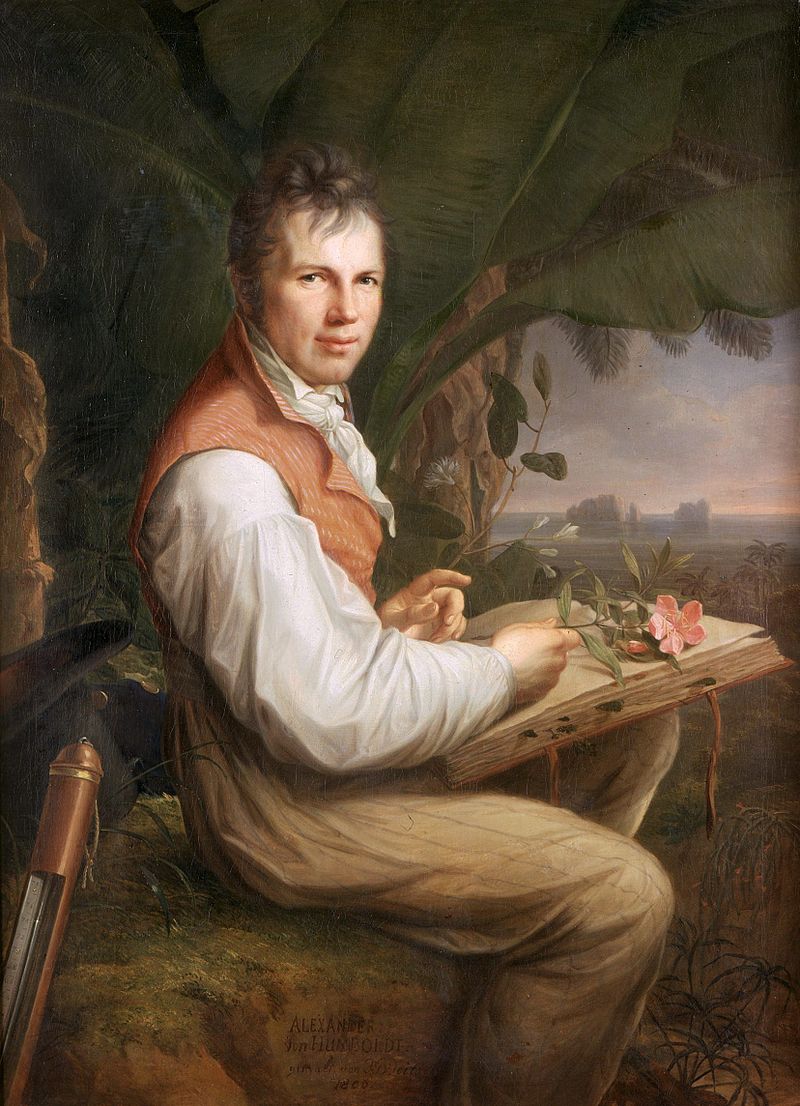
Alexander von Humboldt (oil painting by Friedrich Georg Weitsch, 1806).

Alexander von Humboldt (oil painting by Friedrich Georg Weitsch, 1806).

If fame were measured in namesakes, Alexander von Humboldt might reign supreme. The moniker of the brilliant biogeographer, naturalist and explorer graces dozens of species and phenomena, from the hog-nosed skunk Conepatus humboldtii to a sinkhole in Venezuela. Yet the Prussian polymath’s reputation has lagged somewhat behind that of, say, Charles Darwin. Andrea Wulf’s The Invention of Nature went some way towards changing all that. Now this immensely acclaimed biography is burnished anew by winning the Royal Society’s Science Book Prize, sponsored by Insight Investment.

Wulf writes as if electrified by the fierce intellect of her subject. The Invention of Nature is also a model of concision, I feel, given the range of  Humboldt’s prodigious findings over his long life (1769–1859). He defined climate zones, predicted climate change, experimented with geomagnetism and conducted a gruelling five-year expedition in South America, discovering the Peru Current and numerous plant species, making a record ascent of Chimborazo and amassing 30 volumes of data.

Andrea Wulf.

Andrea Wulf.{credit}Antonina Gern{/credit}

Wulf’s tour de force is in good company, as one of the six that were up for the prize (and all reviewed in Nature).

Tim Birkhead’s The Most Perfect Thing: Inside (and Outside) a Bird’s Egg (Bloomsbury) (reviewed here) is a 360-degree tour of the avian egg, unshelling the chequered history of oology and the natural history of the thing itself — from formation in the ovary to the functions of their elegant colouration. As reviewer John Marzluff noted, we have yet to crack all their mysteries: “Why, for example, does the egg of a chicken travel through the hen pointed end first until the very last minute, when it turns through 180° on the horizontal plane to be laid blunt end first?”

Birkhead chose the ubiquitous. In The Hunt for Vulcan: How Albert Einstein Destroyed a Planet and Deciphered the Universe (Head of Zeus) (reviewed here), Thomas Levenson chronicles the nonexistent: a planet hypothesised to explain oddities in the orbit of Mercury, only to be quashed by Einstein’s general theory of relativity. In the telling, Levenson achieves what many science writers aspire to — a narrative weaving discoveries, backstories and implications into a synthesised tapestry.

From history to the here and now — Jo Marchant’s Cure: A Journey into the Science of Mind Over Body (Canongate) (reviewed here) is a revved-up, research-packed explication of the use of mind in medicine, from meditation to guided visualisation. Marchant’s nimble reportage on the work of scientists in novel fields such as psychoneuroimmunology and her discussion of placebos are as fresh as her reminders of how stress and poverty affect wellbeing are timely.

Equally apropos for our disordered times is The Planet Remade: How Geoengineering Could Change the World by Oliver Morton (Granta) (reviewed here). Morton’s journey through climate fixes is an assured tour of the science, the history of climate interventions and, as reviewer Jane Long noted, the “ethical, political and social implications if climate intervention became available”.

Finally, Siddhartha Mukherjee’s The Gene: An Intimate History (Bodley Head) (reviewed here) is a book of two halves. Mukherjee’s treatment of early genetics controversially skips over some complexities, but  reviewer Matthew Cobb felt it picks up from the 1970s onward with compelling detail on clinical work, the burgeoning of biotech and discoveries such as the genetic basis of Huntington’s disease.

Certainly, from Mendel to CRISPR–Cas9, the story of genetics has been a wonder. Yet it’s just a strand in the grand scientific saga that, luckily for us, continues to inspire fine writers.

The judges of this year’s prize included chair Bill Bryson, whose books include A Short History of Nearly Everything, which won the Royal Society’s Aventis Prize; lecturer and Royal Society University Research Fellow Clare Burrage; American evolutionary ecologist and ornithologist Devorah Bennu (GrrlScientist); author and Science Museum Group director of external affairs Roger Highfield; and award-winning author Alastair Reynolds.


For Nature’s full coverage of science in culture, visit www.nature.com/news/booksandarts.

 

The top 20: a year of reading immersively


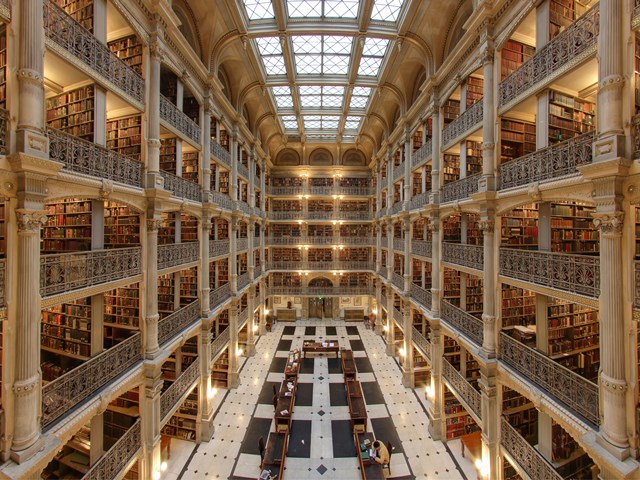
George Peabody Library, Baltimore, Maryland.

George Peabody Library, Baltimore, Maryland.{credit}Matthew Petroff{/credit}

It has been quite a year. We found ourselves saturated with light and knee-deep in soil — even diving down the rabbit hole with Alice to explore Lewis Carroll’s legacy for logic. There were discoveries (the pockmarked beauty of Pluto) and rediscoveries (the taxonomic reinstatement of Brontosaurus).

Meanwhile, in my parallel biblio-Universe, hundreds of science, social-science and science-history books hove into view. As I read, relished, reviewed and commissioned, I too made discoveries. Fascinating patterns emerged — ripples from shifts in science, society, culture. Robots held pole position, as authors grappled with the deep implications of twenty-first-century mechanisation and AI. There was a burst of books on the soup-to-nuts story of the cosmos, and an astonishing irruption of butterfly studies. Bedbugs had a moment (in Richard Jones’s House Guests, House Pests, reviewed here, and Brooke Borel’s Infested), as did pigs (in offerings such as Barry Estabrook’s Pig Tales, reviewed here).

As always, pulling ‘the best’ out of this flood has been tough. The 20 that stood out for me have an original grain — not going with the flow but creating whorls of their own. Several are biographies themselves representing a life’s work for their authors. Death, rainforests, seashells, Alexander Humboldt and DNA get a look-in. In no particular order, here goes.

The Invention of Nature: Alexander Humboldt’s New World, Andrea Wulf. Knopf. The accomplished historian delivers an inspired biography of the German polymath, explorer, prescient proto-environmentalist and discoverer of climate zones. (Reviewed here.)

Life’s Greatest Secret: The Race to Crack the Genetic Code, Matthew Cobb. Profile. A zoologist reframes the double-helix story, interweaving findings across physics, chemistry and biology with the lives of the luminaries involved. (Reviewed here.)

On the Edge: The State and Fate of the World’s Tropical Rainforests, Claude Martin. Greystone. The seasoned conservationist traces decades of rainforest losses to map future strategies for sustainable management in a key report to the Club of Rome. (Reviewed here.)

Our Kids: The American Dream in Crisis, Robert D. Putnam. Simon and Schuster. The astute political scientist and author of Bowling Alone (2000) exposes the insidious erosion of US social mobility that is disenfranchising a generation. (Reviewed here.)

Spirals in Time: The Secret Life and Curious Afterlife of Seashells, Helen Scales. Bloomsbury Sigma. A marine biologist tours the exquisite morphology and multidimensional functionality of that architectural marvel, a mollusc’s shell. (Reviewed here.)

Pure Intelligence: The Life of William Hyde Wollaston, Melvyn C. Usselman. University of Chicago Press. A meticulous, engrossing biography of the Enlightenment polymath — discoverer of cystine and palladium — by the late chemist. (Reviewed here.)

Weatherland: Writers and Artists Under English Skies, Alexandra Harris. Thames & Hudson. A cultural historian traces the weather fronts moving through English literature and art, from Shakespeare’s storms to Turner’s meteorological sublime. (Reviewed here.)

Birth of a Theorem: A Mathematical Adventure, Cédric Villani. Bodley Head/Faber and Faber. The flamboyant French recipient of the 2010 Fields Medal parts the curtains on the “strange alternate universe” of a mathematician’s life. (Reviewed here.)

The Black Mirror: Looking at Life Through Death, Raymond Tallis. Yale University Press. The former geriatric specialist uses his future corpse as the philosophical focus for a layered journey through his sensory and emotional life. (Reviewed here.)

Alfred Wegener: Science, Exploration, and the Theory of Continental Drift, Mott T. Greene. Johns Hopkins University Press. The science historian brilliantly biographises the physicist, meteorologist and explorer who discovered the precursor to plate tectonics. (Reviewed here.)

Concrete Revolution: Large Dams, Cold War Geopolitics, and the US Bureau of Reclamation, Christopher Sneddon. University of Chicago Press. A geographer surveys the US hegemony in twentieth-century dam engineering that has spawned a mixed global legacy. (Reviewed here.)

The Brain: The Story of You, David Eagleman. Pantheon. The virtuosic neuroscientist skips into the skull for a cutting-edge tour of how meat can generate self. (Reviewed here.)

The Reproach of Hunger: Food, Justice and Money in the 21st Century, David Rieff. Verso. The veteran development observer reveals how philanthrocapitalists and aid agencies are failing to crack the deep political problem of poverty and hunger. (Reviewed here.)

The Invention of Science: A New History of the Scientific Revolution, David Wootton. Allen Lane. A robust, expertly synthesised revisionist retelling of the scientific revolution by a commanding historical mind. (Reviewed here.)

Applied Minds: How Engineers Think, Guru Madhavan. W.W. Norton. A bioengineer lifts the lid on the rigorous, solution-oriented, constraints-savvy mindset of the made world’s hidden heroes. (Reviewed here.)

Why Are We Waiting?: The Logic, Urgency, and Promise of Tackling Climate Change, Nicholas Stern. MIT Press. The towering economist examines the hellish complexities of climate change and the potential of future innovation to tackle them. (Reviewed here.)

The Vital Question: Why Is Life the Way It Is?, Nick Lane. Profile. The evolutionary biochemist analyses the “improbable” moment, 1.5 billion years ago, when an endosymbiosis event created the cellular forebear of complex life. (Reviewed here.)

Plant Behaviour and Intelligence, Anthony Trewavas. Oxford University Press. The plant physiologist draws on 50 years of research for a rollicking exploration of botanic behaviours. (Reviewed here.)

Sharing Cities: A Case for Truly Smart and Sustainable Cities, Duncan McLaren and Julian Agyeman. MIT Press. Two urban sustainability thinkers propose a paradigm for collaboration and inclusivity in cities that far outpaces the commercial sharing-economy model. (Reviewed here.)

Scientific Babel: The Language of Science from the Fall of Latin to the Rise of English, Michael Gordin. Profile/University of Chicago Press. A linguist and historian deftly analyses the irresistible rise of English as the scientific lingua franca. (Reviewed here.)


For Nature’s full coverage of science in culture, visit www.nature.com/news/booksandarts.

A scintillating shortlist for the Royal Society prize

Libri_Vincent_van_Gogh

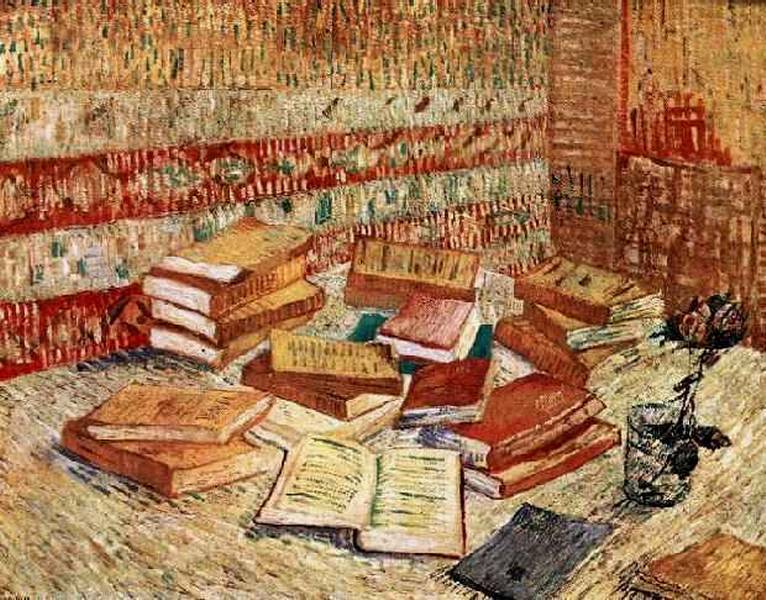
{credit}Still Life with French Novels and a Rose, Vincent Van Gogh (oil, 1887){/credit}

As the literati strive to predict the future of the book, one thing is clear in the here and now: the best of popular science writing is still all about clarity, rigour and brio. This year’s six-book shortlist for the Royal Society Winton Prize for Science Books bristles with that mix.

The Society’s annual prize, now worth £25,000, is awarded to the year’s “outstanding popular science books from around the world”. This half-dozen certainly delves into many worlds — the universe inside the skull, the cosmos of numbers, the subatomic, the gene, and the dynamic interplay between biology and quantum mechanics, and people and planet.

Meet the contenders (in alphabetical order of authors’ surnames).

The Man Who Couldn’t Stop by David Adam (Picador)

Seasoned science journalist (and Nature colleague) Adam’s searing study-cum-memoir, reviewed here, is a twin journey through his own knotted, traumatic experience of obsessive-compulsive disorder, and the evolving science surrounding it. A reflective eye on what Adam calls “our siege mentality”.

Alex Through the Looking-Glass: How Life Reflects Numbers and Numbers Reflect Life by Alex Bellos (Bloomsbury)

The erudite and engaging Bellos, a writer and speaker on mathematics, follows up his bestselling 2010 Alex’s Adventures in Numberland with this equally adroit interweaving of maths history, the peculiarities of day-to-day maths, and the mindscapes of mathematicians. (Why is 24 is better than 31 in the context of anti-dandruff shampoo? You’ll need to read the book.)

Smashing Physics: Inside the World’s Biggest Experiment by Jon Butterworth (Headline)

Butterworth, a particle physicist and CERN insider, here (writes my colleague Jo Baker) gives “a personal account of three years that shook his research field – from the switching on of the Large Hadron Collider at CERN in 2009 to the discovery of the Higgs boson in 2012. In a lucid treatment —  part memoir, part primer — he relates the ups, downs and minutiae of everyday life at the particle physics coalface and reflects on the public and political perceptions of science.”

Life’s Greatest Secret: The Story of the Race to Crack the Genetic Code by Matthew Cobb (Profile)
Zoologist Cobb masterfully recontextualises the 1953 discovery of the structure of DNA (reviewed here). One for the shelf bearing seminal early studies by James Watson and Horace Judson, Cobb’s treatment beautifully explicates the contributions of physics, biology and chemistry, and scientists from Oswald Avery to Rosalind Franklin.

Life on the Edge: The Coming of Age of Quantum Biology by Johnjoe Mcfadden and Jim Al-Khalili (Bantam Press)
Al-Khalili (a physicist) and McFadden (a molecular biologist) take on the vexed nexus of quantum weirdness and life itself in this exploration of an emergent field of scientific endeavour (reviewed here). From synthbio to quantum tunnelling inside enzymes, a trip into strange, and strangely compelling, realms of research.

Adventures in the Anthropocene: A Journey to the Heart of the Planet we Made by Gaia Vince (Chatto & Windus)
Writer, broadcaster and former Nature news editor Vince covered six continents over two years to craft this compilation (reviewed here). Bucking the trend to view the environmental challenges of the Anthropocene with terrified or jaundiced eye, she discovered innovators and pioneers working towards new models of adaptation and environmental ‘reverse engineering’. A grand survey of development endeavour through a science writer’s lens.

In looking through this list, it occurred to me anew how popular science writing remains one of the great exemplars of multidisciplinarity. It is the context to the findings — the history, the socioeconomic realities, the psychology of the players and their rivals, the leadup to discovery and the societal implications of its deployment — that reveals the real-world significance of the science.

Scientific storytelling is one of the great artforms of our age. Its roots may stretch back to Mary Somerville’s monumental On the Connexion of the Physical Sciences 181 years ago (reviewed here), but its heyday is now.

The judges of this year’s prize include chair Ian Stewart (mathematician and Royal Society Fellow), Guardian books editor Claire Armitstead, Channel 4 lead anchor Krishnan Guru-Murthy, electronics engineer Jo Shien Ng, science broadcaster and author Adam Rutherford, and novelist Sarah Waters. The winner will be announced at a Royal Society public event on 24 September, hosted by Brian Cox, Royal Society Professor for Public Engagement in Science.


For Nature’s full coverage of science in culture, visit www.nature.com/news/booksandarts.