TechBlog: The sound of DNA

DNA sonify pic UPDATE

{credit}Mark Temple{/credit}

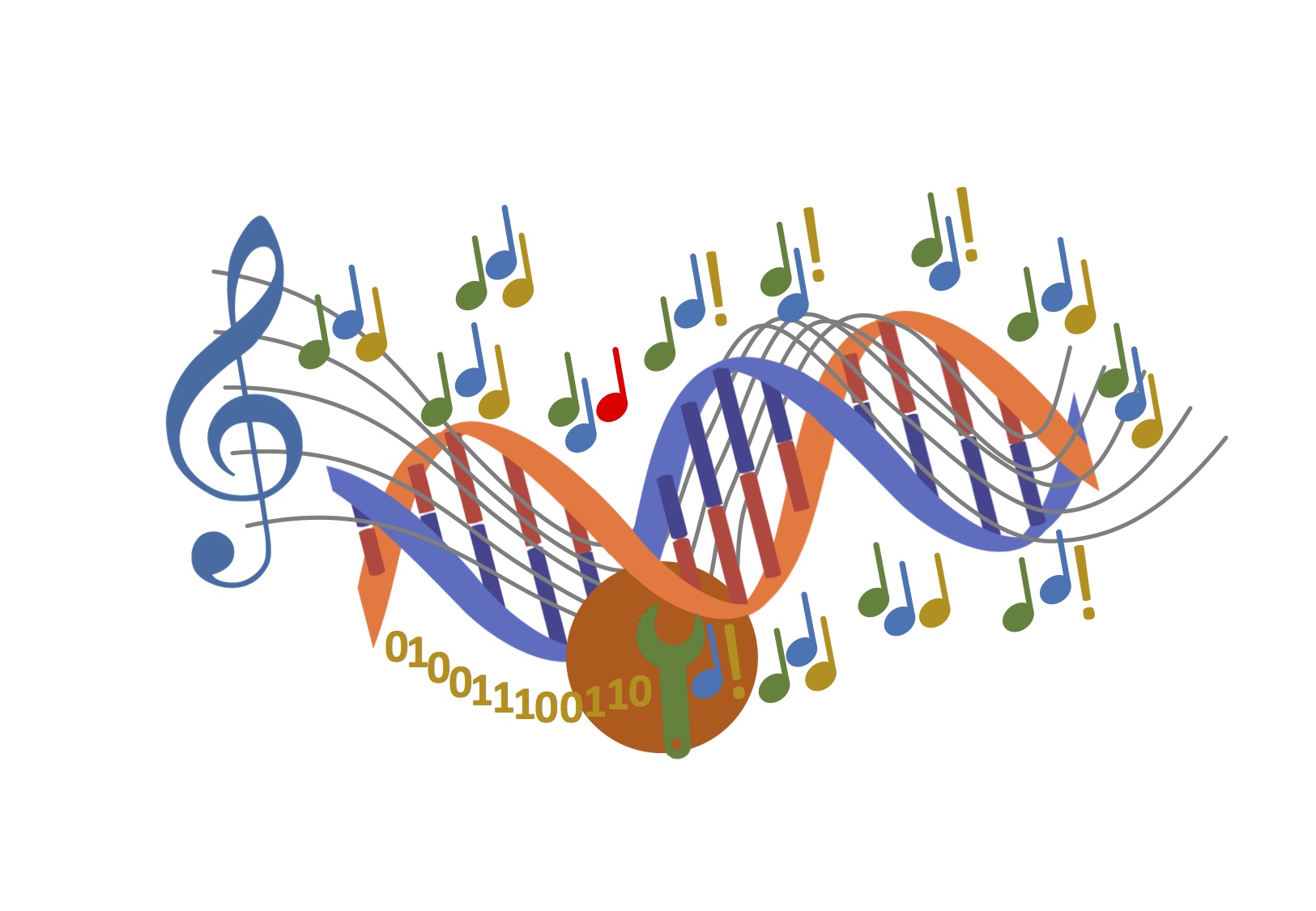
With an alphabet comprising just four letters, DNA sequence isn’t much to look at. So, when sequence analysis tools want to highlight key elements, they typically do so using colour, font, or by overlaying other types of information. In the not-too-distant future, there may be another option: Audio.

In a paper published this past April in BMC Bioinformatics, molecular biologist and part-time drummer Mark Temple of Western Sydney University, Australia, describes “an auditory display tool” for DNA: sequence in, audio out.

Available online at dnasonification.org, the tool does precisely what it sounds like: Given a sequence of DNA, it will convert the As, Cs, Gs, and Ts into notes played by a virtual piano, guitar, and organ. An ancillary browser extension, called Jazz-Plugin, is required to play the resulting MIDI files, though Temple has made a number of example MP3 files available on his web site and on YouTube.

After uploading a sequence, the user can select precisely how the musical transcription is accomplished. The simplest mode maps each base to a single note, providing a four-tone auditory landscape. Another maps dinucleotides to notes, increasing the complexity to 16 total sounds.

Most informative, says Temple, is the trinucleotide mode. Here, the software maps each nucleotide triplet to one of 20 notes, and outputs the audio in each of three reading frames at once, just as the genetic code maps 64 codons to 20 amino acids. The result is a series of three-note arpeggios – CGF-ADD-CFF-DFG-AFC-GCD-FCD-FCD, for instance. Optional parameters allow the user to flag start and stop codons, or to cause audio in each reading frame to turn on and off as start and stop codons arise. Continue reading →

Announcing the Better Science through Better Data 2017 (#scidata17) writing competition

SN&Wellcome

Enter for the chance to attend the Better Science through Better Data 2017 event (#scidata17) in October, work with a Nature editor, and have your writing published here on Naturejobs and on the Scientific Data blog.

Continue reading →

Science’s fake journal epidemic

Predatory publishers, peerless reviews and those who fight against the destruction of the scientific approach.

The landscape of scholarly communication falls into two main categories: a paid access business model, where journals require readers to pay for access to an article or a subscription to the entire journal itself; or open access journals, which charge authors to publish but make content available free of charge and without restrictions to readers. The rise in popularity of open access journals has resulted in more than 50 per cent of new research now being made available free online. Legitimate open access journals such as PLOS and BioMed Central have been essential in allowing greater access to science, a higher volume of published work, improved education and a greater scope for scientists to publish negative results.

Jeffrey Beall{credit}Kevin Moloney/The New York Times/Redux/eyevine {/credit}

Continue reading →

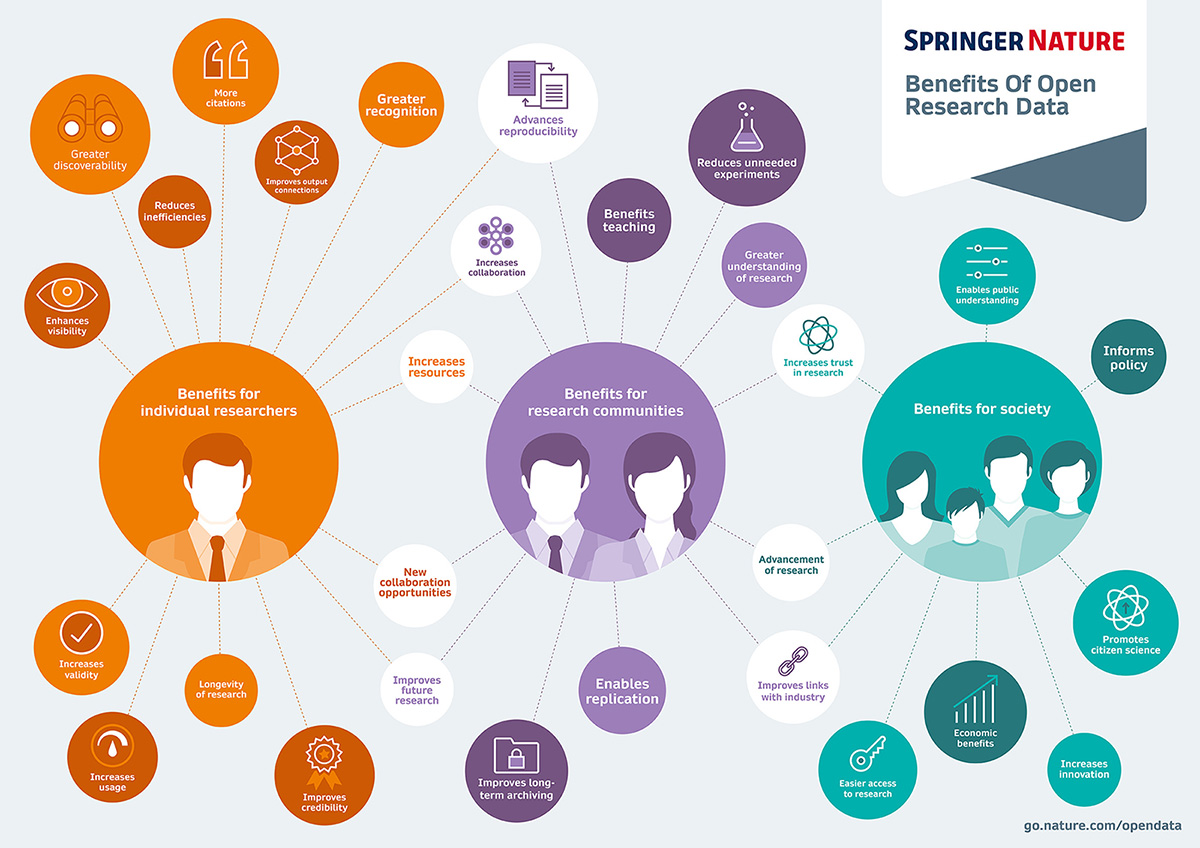
Ask not what you can do for open data; ask what open data can do for you

Mathias Astell, marketing manager for Scientific Data and Scientific Reports, outlines the benefits of open research data and provides some tips and tools researchers can use to make their data more open.

It has been shown that research articles receive more citations when they have their underlying data openly linked to them. With this in mind, it’s time to consider not just the ideological reasons for making research data open, but the selfish benefits of openly sharing data that all researchers can (and should) be taking advantage of.

mat1

This infographic can be downloaded under a CC-BY licence here

And as an increasing number of funders mandate data sharing, and publishers start implementing more consistent data policies at their journals, it is worth seriously considering how and why you should make the research data you generate more openly available. Continue reading →

TechBlog: C. Titus Brown: Predicting the paper of the future

C. Titus Brown, a bioinformatician at the University of California, Davis, participated in a January workshop at Caltech on “The Paper of the Future,” and wrote about the experience on his blog. Here, he expands on how academic publishing may change in the years to come.

p45

Continue reading →

TechBlog: My digital toolbox: Julia Stewart Lowndes

Julia Stewart Lowndes, a marine data scientist at the National Center for Ecological Analysis and Synthesis (NCEAS) at the University of California at Santa Barbara, published a paper this week laying out the challenges her team faces as they try to share and reuse data on the world’s oceans. Here, some key lessons.

{credit}Elliot Lowndes{/credit}

Continue reading →

Should you join a start-up company after academia?

A career in a start-up company is more than just risk, discovers Idil Cazimoglu.

This piece was one of two winners of the Science Innovation Union writing competition, Oxford.

“Risky.”

My housemate, now in the final year of his PhD, had a one-word answer to my question “Would you consider working in a start-up company after you graduate?”

Intrigued, I posed this question to fellow PhD students in various disciplines over the following weeks, and received similar answers including “I don’t want to live in uncertainty,” “No job security,” “Academia is more stable,” and, memorably, “I’d rather go bungee jumping.”

rocket-1122402_1920

Not everything launches so smoothly

Continue reading →

TechBlog: Smartphone science, no programming required

MIT App Designer 2

MIT App Designer 2

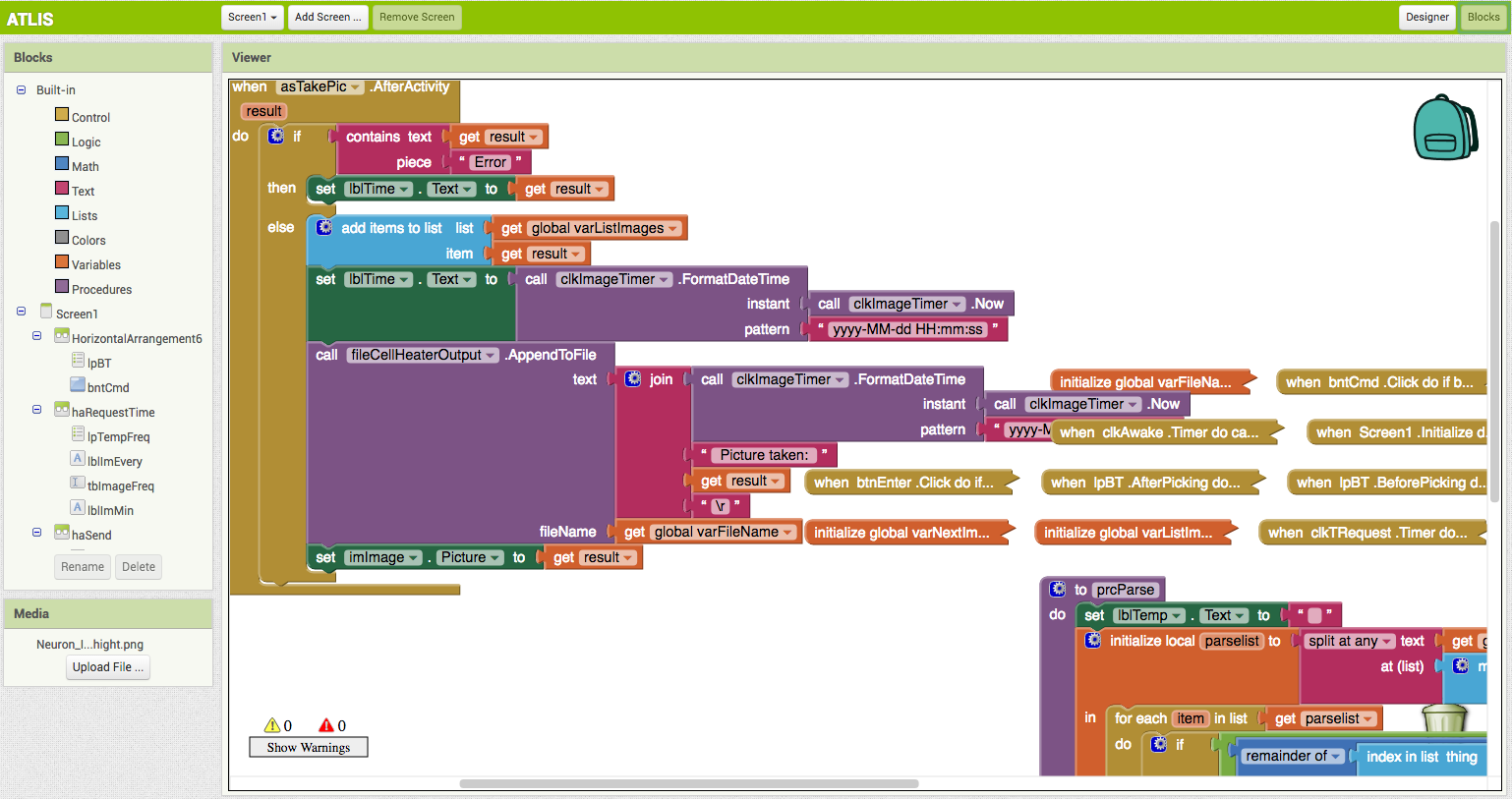
In the 4 May Nature technology feature, I explore the growing use of smartphones to drive scientific research. Today’s phones are so full-featured, they’re often ready for use out-of-the-box. Sometimes, though, a custom app is required, and that can be a sticking point, as programming a mobile app isn’t easy.

Continue reading →

TechBlog: Need an instrument? Build it!

The 6 April issue of Nature included a Toolbox feature on the growing use of DIY electronics in scientific research.

Daniel Cressey writes:

Arduinos and similar devices, such as the Raspberry Pi, pack considerable power on their diminutive boards, providing tremendous opportunities for automation, networking and data collection and analysis. For researchers, those features can translate into benefits both economic and practical. Users can shoehorn the systems into tiny spaces, deploy them without monitors or keyboards, buy them in bulk, and pack them into autonomous devices that need to be taken to (and transmit data from) remote field locations. All it takes is a little ingenuity.

A recent article on the bioRxiv preprint server provides a case in point.

Continue reading →