A David Letterman-like countdown to the 10 biggest pitfalls in scientific presentations

Making a good scientific presentation takes time, but awareness of common mistakes is the first step to improving performance.

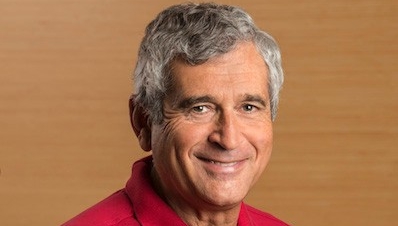
Guest contributor David Rubenson

The slide presentation has become the most ubiquitous form of scientific communication and it is causing havoc.  Scientists spend enormous amounts of time preparing presentations, travelling to conferences to deliver them, and listening to them almost every day.   But most scientists simply aren’t very good at them – we should change that.

image_0.img.full.high

David Rubenson

I previously argued that this problem underlies a significant communication crisis in research.  As I’ve learnt as a scientific presentation coach at Stanford, there’s a broad understanding of this problem, but insufficient incentive for the time-intensive training many scientists need.  Still, following simple lists of “dos” and “don’ts” is a great way to improve presentation skills.

In that spirit, and to supplement an earlier list of eight positive suggestions, here’s a David Letterman-like countdown of the 10 biggest pitfalls in creating and delivering a scientific presentation:


Continue reading →

Science communication: The predatory open access “journals”

Having a web page with scientific articles isn’t all it takes to be a scientific journal, says Victor Morais.

Guest contributor Victor Morais

The number of open access journals available to scientists has grown enormously in recent years. They offer the possibility of fast and easy publishing to get research out in the world as soon as possible. Unfortunately, not all open access journals are as they appear.

Photo 2

Victor Morais

Every day, email invitations to new open access journals drop into my inbox. Recently I decided to investigate further. On the publisher’s site I found more than 30 journals covering a variety of areas, but fewer than half of them had published articles and none of them had more than 10 articles. There were more places to publish than there were publications!

I wondered if these journals were real. They could be predatory journals – a web page where scientists publish papers in a form more like a personal page or a blog than a legitimate scientific journal. The real purpose of a scientific journal is to share and preserve knowledge and to protect the minimum quality requirements of a scientific publication. If scientists publish their work on personal web pages, there are no quality controls and it’s not possible to guarantee the visibility or protection of articles. Predatory journals do not do the job of a scientific journal in terms of quality, visibility or preservation, and most of the time lack the peer review process that makes science reliable. As a researcher, how do I guarantee that as soon as I’m charged for publication, my work won’t be lost in the ether?

In my ensuing research, I found some interesting resources like Think. Check. Submit that give guidelines to choose the right journal. Here, I want to share some of the clues that helped me to distinguish between established, emerging and predatory journals.

Continue reading →

Jobs of the Future: What will a science career look like in 2030?

Scientists should be the ones designing the jobs of the future, say Michael Fischer and Mandë Holford. The Jobs of the Future initiative enables them to do so.


The modern growth in cross- and multidisciplinary research in academia has already had huge impact on the world around us, and is set to reshape the jobs market for scientists globally. With this in mind, the UN recently announced their 2030 Sustainable Development Goals (SDGs), which includes the goal to create jobs with competitive salaries that lead to sustainable economic growth. We believe young scientists should be the ones establishing the new fields and areas of employment for the future, to address the 2030 SDGs.


JOF-2

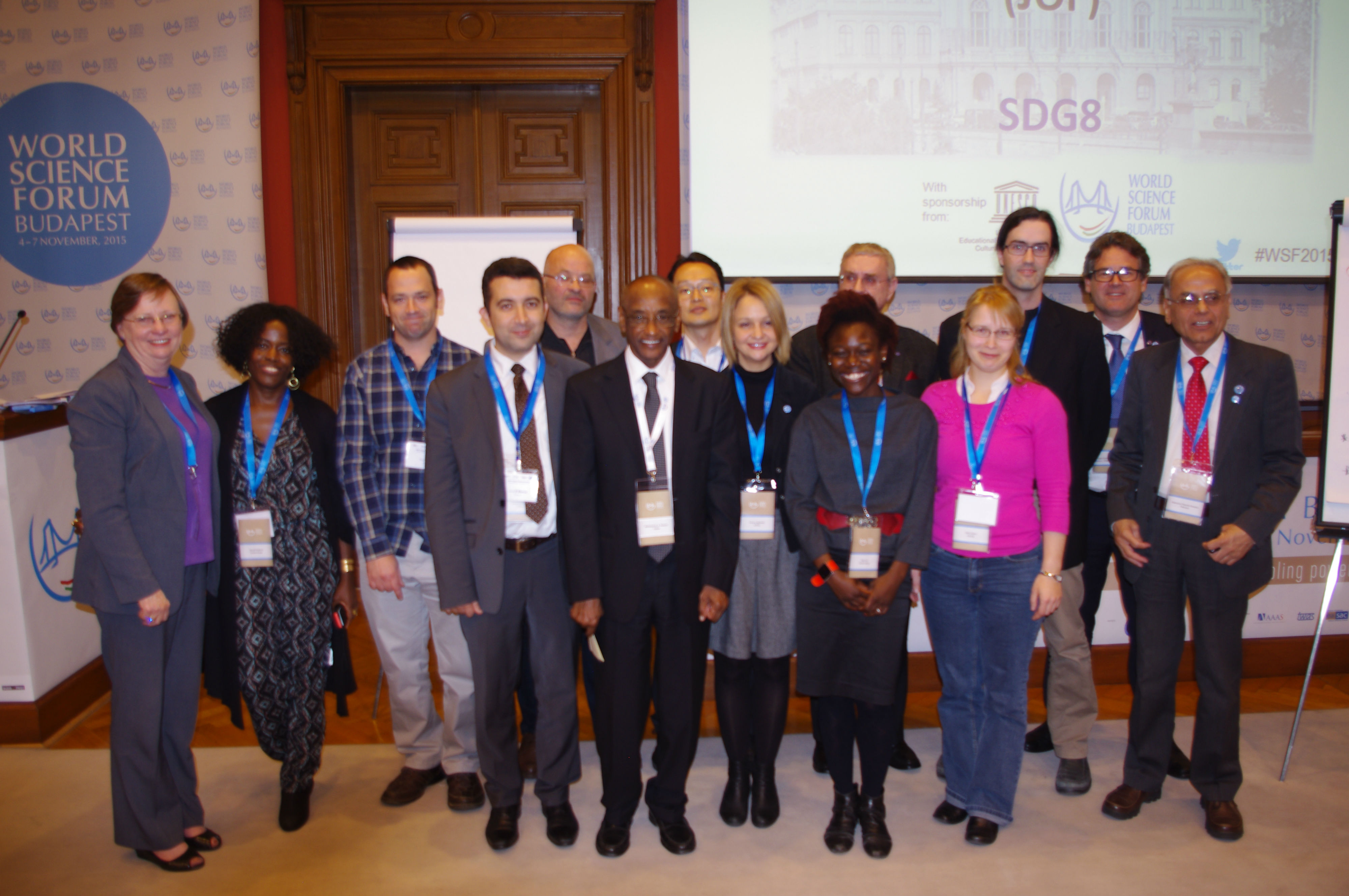
The JOF team

The Jobs of the Future (JOF) initiative will provide a platform to do just that – it’s a that allows young scientists and engineers to describe their dream job of the future.


To answer this call, a group of early career scientists and engineers at the 2015 World Science Forum pitched ideas on tangible ways to address the SDGs to a panel of international judges composed of high profile decision makers from UNESCO, InterAcademy Panel, and The Academy of Science of South Africa. The winning pitch, made by a team including the authors, was the JOF initiative.


Continue reading →

Science communication: Writing for scientific and policy audiences

Catherine Ball, a policy analyst at the House of Lords Science and Technology Select committee, explains the difference in styles between writing for a scientific audience and writing for a policy audience at the Naturejobs Career Expo London 2015.

You are currently viewing a placeholder content from YouTube. To access the actual content, click the button below. Please note that doing so will share data with third-party providers.

More Information

Watch more from the Naturejobs career expo here.

Science communication: What are the differences between working for parliament or a learned society?

Catherine Ball, a policy analyst at the House of Lords Science and Technology Select committee, explains the differences between working for parliament and working for a learned society at the Naturejobs Career Expo London 2015.

You are currently viewing a placeholder content from YouTube. To access the actual content, click the button below. Please note that doing so will share data with third-party providers.

More Information

Watch more from the Naturejobs career expo here.

Science communication: Why is the turn-over rate for editors so high?

Anke Sparmann, associate editor at Nature Structural & Molecular Biology, shares her views on the turn-over rate for editors in scientific publishing at the Naturejobs Career Expo London 2015.

You are currently viewing a placeholder content from YouTube. To access the actual content, click the button below. Please note that doing so will share data with third-party providers.

More Information

Watch more from the Naturejobs career expo here.


From start to finish: A guide to informational interviewing

Informational interviews, when properly prepared for, are a powerful career and self-development tool.

Contributor Prital Patel

informational-interviews-patel-naturejobs-blog

Lauren Celano, Propel Careers{credit}Image credit: Shawna Lu and Jennifer Gorman{/credit}

In 2014 I attended the Naturejobs Career Expo in Boston as a reporter, covering a talk delivered by Lauren Celano of Propel Careers on how to look your best on paper (here’s part 1 and part 2). I am currently an executive member of the Life Sciences Career Development Society (LSCDS) at the University of Toronto, a platform for assisting graduate students in exploring career options outside of academia. I worked as part of a team to organize a networking reception to give researchers at University of Toronto an opportunity to engage and network with life sciences professionals in non-academic roles. As a prelude to the event, Celano gave a seminar on informational interviewing and effective networking.

“Informational interviews are one of the most powerful tools available to graduate students and academics who wish to figure out what exactly it is they wish to do.”- Lauren Celano

Typically lasting between 15-30 minutes, informational interviews can happen anywhere ranging from coffee shops, Skype or even the telephone. They are an opportunity for job seekers to gather information about jobs and companies that are of interest to them.

As a graduate student, I can attest to the fact that the number of “non-traditional” career options I can pursue are numerous. Whilst the possibilities are exciting, they quickly become overwhelming. As Celano pointed out, narrowing down where your interests lie is crucial for proper time management, especially as it allow you to effectively develop career-specific networks and prepare for job interviews. I’ll admit that reaching out and speaking to strangers over an informational interview seemed very daunting at first. However, Lauren simplified it into a step-by-step process making it easier for me to find a structured approach to take.

Continue reading →

Ask the expert: Meet Clare Jones

Clare Jones, senior careers advisor at Nottingham University, is our Naturejobs Expert this coming month.

Clare-Jones-naturejobs

{credit}Image credit: Clare Jones{/credit}

What is your scientific background?

I am sorry to say that I struggled with science at school and only continued with biology to O’level and even managed to be unsuccessful at that stage. However if the researchers I work with can explain their science to me they are certainly developing that great skill of being able to communicate effectively to a non-scientist.

Why did you decide to leave academia?

Actually I’m a career changer into academia. I’ve had an eclectic career journey beginning with a short career commission in the (then) Women’s Royal Naval Service followed by working mainly in the not-for-profit and government sectors. I moved into HE to work on skills and employability projects before qualifying as a Careers Adviser and then specialising in working with Early Career Researchers.

Why did you decide to take on the role you have now?

I was working at Swansea University as the Employability and Skills Officer and decided to ask my boss if I could take on extra duties as a Careers Adviser. Why? – because I was on a fixed term contract and realised that investing in some additional work and getting a qualification within HE Careers work might provide a more “secure” career route, a way out of the fixed term contract insecurities. My role at Swansea was inevitably going to come to an end and so I wanted to take a proactive approach to my career rather than waiting for something to happen. The role at Nottingham was advertised just as I qualified and it was a new post working with ECRs and it looked really interesting, a bit different to other roles and a chance to develop a new area of work – all things I had a history of doing. So here I am 10 years later and still enjoying it!

How do you want to help scientists in their careers?

Working in academia is very challenging and sometimes researchers lose touch with the breadth and depth of the competencies, skills and behaviours they have. They also may not have explored other careers outside academia and when faced with a decision about staying or going I am able to offer an impartial and confidential opportunity to talk through options and make informed and confident decisions about their future career direction. I also support those who are continuing in academia.

Why did you chose the questions below for your audience to vote on?

I based these questions on themes that recur in my individual guidance interviews with Post docs and PhD students and on areas that perhaps they don’t want to talk about yet with their supervisors, PIs or research managers. Some have a hidden or additional theme behind the question, for example, question one can be answered in a factual way but may also generate a discussion on wider commitment and understanding of the academic career pathway and is it what the individual really wants? Question two is also expressing concern about making career decisions as well as knowledge of career options. I have therefore tried to provide questions that will enable me to cover a number of points in the response.

Tell us something about yourself?

My other passion is golf, handicap 11 and I’ve been Lady Captain at three different golf clubs which is a bit unusual (most people do it once) so I think I may suffer from  “not-able-to-say-no” syndrome.

Vote for the question that you would like Clare to answer next month:

You are currently viewing a placeholder content from Default. To access the actual content, click the button below. Please note that doing so will share data with third-party providers.

More Information

Ask the expert: Meet Barry O’Brien

Barry-OBrien-Naturejobs-blogThis month’s Naturejobs Expert is Barry O’Brien from PhD Career Link in Sweden. Say hello!

What is your scientific background?

I’m a marketing man. My flirtation with scientific lab work ended with GCSE Biology as a 16 year old, but I admire the dedication of the people I work with and find it frustrating that these super intelligent people are not getting enough opportunities to use their talents.

Why did you decide to leave academia?

I was presented with the opportunity of taking a job at a large UK Insurance firm, so I left before completing my undergrad studies.

Why did you decide to start PhD Career Link?

I saw that scientists in Sweden were really struggling to understand how to market themselves to recruiters, so decided to share my expertise using a range of services.

How do you want to help scientists in their careers?

We live in a digital world and that’s where the recruiters are hanging out. Many scientists are still living in an analogue world. My aim is to show them why tools such as LinkedIn and Meetup are essential for networking and marketing their uniqueness or ‘personal brand’.

Tell us something interesting about yourself.

I am a collector of vintage Nike sportswear – 1980s mainly!

Vote for the question you’d like Barry to answer:

You are currently viewing a placeholder content from Default. To access the actual content, click the button below. Please note that doing so will share data with third-party providers.

More Information

Ask the Expert: What question should Barry O’Brien answer?

Ask the expert on Naturejobs: Meet Sarah Blackford

This new series on the Naturejobs blog, called Ask the expert, is an opportunity for you, our readers, to chose what questions our experts answer. We’re still easing them in slowly, so this time they’ll still be given some questions.

Sarah-Blackford

{credit}Image courtesy: Sarah Blackford{/credit}

Meet our expert for this month: Sarah Blackford, Head of Education & Public Affairs at the Society for Experimental Biology.

What is your scientific background?

My scientific background is way back in the past, when I worked for three years at York University investigating calcium uptake in plants. Practical lab work was not for me; my specialities were more aligned with presenting data, designing posters, negotiating for equipment from other research groups and organising departmental socials. My communication and creative skills led me on to a 5-year career in scientific publishing as assistant editor at the Journal of Experimental Botany.

Why did you decide to take on the role you have now?

Whist working as assistant editor, I was based at Southampton University, where I took the opportunity to spend some of my spare time volunteering at the Careers Service. I enjoyed helping students and researching employers and careers information. When my job relocated to Lancaster University, I was offered a post as a Careers Adviser there and, subsequently, at Leeds University. After three years, I returned to Lancaster to set up the Society for Experimental Biology’s Education & Public Affairs office. My current role involves doing a variety of tasks such as science communication, management and supporting the career development of early career researchers and PhD students.

How do you want to help scientists in their careers?

I have had over 10 years’ experience in my role as academic and science career specialist, and have formalised this with a master’s in career education and guidance (Warwick University), as well as publishing a book entitled Career planning for research bioscientists. Therefore, I hope to be able to offer a breadth of support for scientists, encompassing most aspects of their career development and management, from personal and professional through to practical and transitional.

Tell us something interesting about yourself.

Working for the Society for Experimental Biology means I’m not restricted to supporting researchers in only one institution, so mobility is a big part of my work. This year I’ve delivered workshops and one-to-one career guidance in 20 different institutions and at three international conferences in 8 countries. Being a tea lover, I always take time out to try out  one or two local cafés and tea shops when I’m in town. So far, top of my list are Gottingen, Germany and Portland, Oregon!

Sarah’s got such a vast experience in bioscience careers, so here are some bioscience questions for her. Vote in the poll to decide which one she will answer in November!

You are currently viewing a placeholder content from Default. To access the actual content, click the button below. Please note that doing so will share data with third-party providers.

More Information