Remapping the scientific landscape: moving from a closed to open science world

Science is changing – and we will change with it, says Anastasia Greenberg

Better Science through Better Data writing competition winner Anastasia Greenberg

“Information is power. But like all power, there are those who want to keep it for themselves.” Those were the words of Aaron Swartz, a young programming prodigy and the creator of Reddit, in his Guerilla Open Access Manifesto. In 2011, Swartz wrote some code that systematically downloaded millions of academic papers from the JSTOR database onto his computer, which was hidden in a basement closet at the Massachusetts Institute of Technology (MIT). This act of hacktivism resulted in felony charges, with potential for decades of jail time. Swartz hanged himself in 2013.

To some, Swartz’s story embodies the open-science movement, but it is far from clear what his motives for downloading JSOR’s database were, and which, if any, segments of the open science movement Swartz identified with. Continue reading

Back to basics: Cracking an academic interview

Mit Bhavsar runs through some simple tips he learnt in his quest for an academic position.

Staying and working in academia is a good career choice but finding the right position in academia is still a tricky thing. Blanket-applying to as many positions as you can find and crossing your fingers isn’t going to cut it. Recently, I managed to crack some of my own postdoc interviews. Here’s what I learnt.

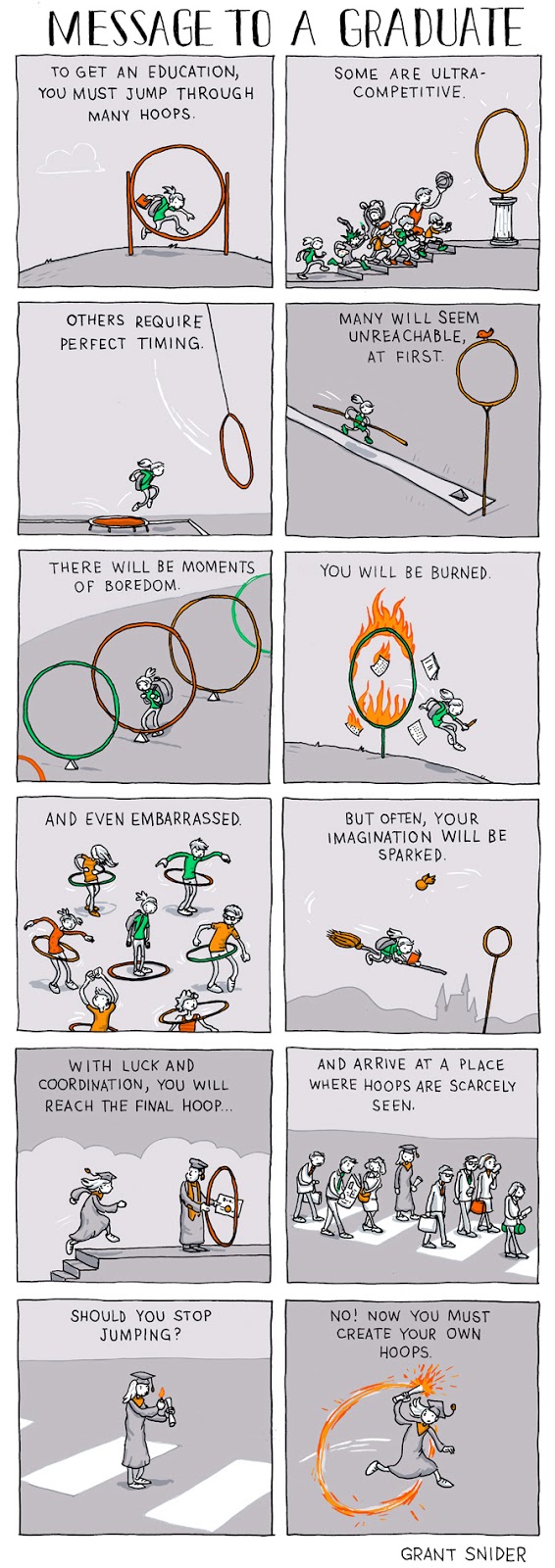
grant snider comuic

Image source: Grant Snider https://www.incidentalcomics.com/2013/05/message-to-graduate.html

Continue reading

Pomp and them some for Friday’s MIT presidential inauguration

Friday’s inauguration of new MIT president L. Raphael Reif included all the usual pomp, plus some.  Music for the event included a piece by a Senegalese drum ensemble and a performance of “A Rhumba for Raphael Reif” written by MIT professor and Pulitzer Prize winning composer John Harbison. More below.

Continue reading

Science Journalism Tracker: A virtual water cooler for sciwriters

In addition to training writers from across the globe, the Knight Science Journalism program at MIT keeps an eye on what we all produce. The KS Journalism Tracker web site notes that, for the past six years, its writers have “commented on the effectiveness and balance of thousands of news stories.” The program recently lauched a redesiged web site, but the Tracker’s mission remains the same. Today it counts 30,000 hits a month, including many from Spanish-speaking readers interested in posts on Latin Amerian science journalism. The site hopes to offer the same service to Chinese-speaking science writers.

 Earlier this week, Nature Boston talked Phil Hilts, the former New York Times reporter who runs the Knight Science Journalism program at MIT.

What is the thinking behind the Tracker? 

Knight Science Journalism Program director Phil Hilts

(Charlie Petit’s) original idea was just to do a little round up of a bunch of stories. What he noticed was — science writers, while they know each other and see each other at meetings, they don’t really see each other’s work very much.

… He started getting into the idea that you could pick out a couple of good stories and identify them and do a little critique – and once in a while do a critique when something went wrong. (The posts) are all supposed to be relatively short. They’re starting to get a little too long and I’ve started complaining to (the writers.)…I like a mixed length and not too much analysis.

What’s the difference between an analysis and a critique?

My sense of analysis is that it tends to go pretty deep and long.  I don’t really want deep and long.

Why not?

This is a blog and … (Readers) go to it because they’re interested in what is going on. … If you give them this large post, it’s going to quickly put them off.  Once in a while, a little longer that’s fine.  But mainly they want to jump on and see two or three or four items – here are some good stories or everybody is doing this story this way. Continue reading

Gown v. Gown: MIT students, faculty question Kendall Square plan

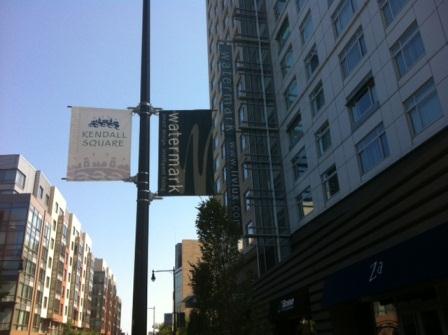
Kendall Square, once a bleak, industrial backwater, is now a Cambridge hot spot.  A dense cluster of biopharma labs has attracted tech giants like Google, “luxury” apartment blocks and restaurants offering oysters, tapas and serious coffee. Last week, The Boston Globe called the neighborhood “a place city dwellers, foodies and beer enthusiasts can enjoy.”

MIT also sees it another way – as an investment opportunity. The school’s Kendall Square Initiative – as outlined to the City Council in in May — calls for remaking one of the neighborhoods area’s last barren spots into  “a mixed-use revitalization project.” That includes housing, retail and eight new commercial buildings  to house labs and offices, which The Globe values at $2 billion.

But, opposition has emerged.  This time, it is not from activist neighbors. Instead, a small group of faculty members and the Graduate Student Council have issued statements questioning the use of one of MIT’s last vacant parcels for commercial development. Continue reading

Lewin LIVE! Physics superstar comes out of retirement for Japanese TV

 With his European accent and electrically charged hair, Walter Lewin more than evokes the mad scientist of cartoons and B movies. For years, the MIT emeritus professor has been delivering silly, energetic, easy-to understand physics lectures. Videos of him swinging in front of the classroom on a huge pendulum went viral before anyone had coined the term.

Last year, he gave one last lecture. and retired at 75. But, this summer, he’s engaged in an encore performance. Lewin has prepared eight new lectures and is delivering them before live audiences for Japanese public television. On  Monday – a brilliant summer morning — students and admirers packed a windowless lecture hall to see Lewin live.

“What is electricity? What is magnetism?” he asked, cameras following him from three different angles. “It is a very easy question to ask but it is not possible to answer it — not in two lectures not even in THE…” – his voice rising –“… THIRTY-FIVE LECTURES I spend with my freshman on this topic.” Continue reading

The New Yorker — and MIT — on Daniel Nocera’s artificial leaf

The May 14th innovators issue of The New Yorker has a long piece on MIT’s Prof. Daniel Nocera and the promise and limitations of his “artifical leaf.” The story, like most of theirs, is long and sits behind the pay wall.

From the abstract:

The process that Nocera calls “artificial photosynthesis” could be described more precisely as solar-powered electrolysis of water: using energy from the sun to electrochemically split water into hydrogen and oxygen. Nocera isn’t the only scientist working on artificial photosynthesis. …Writer visits Nocera’s lab at M.I.T. Discusses the challenges of adapting the artificial leaf for household use. Since the early eighties, Nocera has focussed on providing energy for the world’s poorest people. “If there’s one thing that’s unique to the technology development I’ve done, it’s been doing science with the super-poor in mind.” His emphasis is largely humanitarian; it also arises from his belief, as a scientist, that the only way to meet the world’s projected energy needs without causing intolerable environmental harm will be to work, in effect, from the bottom up—an approach that’s very different from the ones that dominate energy research. Continue reading

After a short search, MIT provost L. Rafael Reif named to replace President Susan Hockfield

With the foggy Boston skyline as a backdrop, Massachusetts Institute of Technology provost L. Rafael Reif held court with the press on Wednesday morning for the official announcement of his selection as the school’s new president. The Venezuelan native will take over from Susan Hockfield, the school’s first female president and the first biomedical researcher to head the school.  An electrical engineer, Reif was appointed to the job of Provost in 2005 by Hockfield and will become president in July.

MIT’s official release here.

A full text of Reif’s comments.

The Boston Globe reports: Continue reading

MIT fights to keep its defunded fusion program

MIT houses a lot of futuristic-looking devices, and some actually focus on technology that – at this point — we can only imagine.  One would be the Alcator C-Mod tokamak, a warehouse-sized, magnetized  device that  scientists are using to do research on fusion energy.   This tokamak, one of three in the U.S., looks like a 20-foot high water tank overrun by pipes, vents, pumps and monitoring devices.

But, if the proposed federal budget passes, there will only be two  — one in California and another at Princeton in New Jersey. Instead of the funding for the MIT device, as it has for more than 30 years, DOE will shift the fusion dollars to a similar international project in France.

So, MIT scientists are fighting to save it. One of them is Geoff  Olynyk, a tall, thin, clean-cut graduate student in the Department of Nuclear Science and Engineering. He was studying fuel cells at Queen’s University  in Ontario, Canada, when a scientist from the MIT fusion program came to speak.

“If you talk to fusion people, they inevitably have that moment when they caught the fusion bug,” he said during an interview in the tokamak control room.  The visit from the MIT’s prof was when he caught it.  He thought:  “This is really cool and important and I want to work on it.”

MIT grad student Geoff Olynyk

He’s one of about 160 technicians, scientists and engineers who , under the 2013 budget, won’t be able to work in it- at least at MIT. So, Olynyk and others have launched a campaign —  Facebook, Wikipedia page and a website called “Fusion Future” – to save the MIT program. They’ve brought Sen. John Kerry and Rep. Michael Capuano on board to tour the device.  They’ve collected more than 1,800 signatures on a petition.  Last week,  eight university presidents  — including MIT’s Susan Hockfield  who sent letters to Obama’s  Science Advisor Dr. John Holdren and Secretary of Energy Dr. Steven Chu asking for level funding for the domestic fusion program. One major concern – fusion researchers and students would leave the field, they wrote.

Olynyk  agrees. He said the MIT program stands out from the other two in that it emphasizes training and education.  If the unit is closed, he said, grad students who have enough data will be able to finish their research, but others will have to go elsewhere.

Nuclear science professor Dennis Whyte was on his way to a thesis defense after finishing up a class in the control room. He thinks the other two domestic programs will eventually be cut in favor to the ITER program in France. He’s not sure why they picked MIT this year.

“We have — as much as possible – looked at what we’ve done and what we’ve accomplished,” he said. “I don’t want this to sound arrogant, but we can’t figure out what we are doing wrong.”

Energy Secretary Steven Chu has said that the defunding of the MIT project was a “tough decision.” DOE  spokesperson Keri Fulton supplied the following comment via email.

“The research projects supported through the Department’s Fusion Energy Sciences program mark the culmination of decades of effort by the international science community to demonstrate the transformative potential of fusion as an energy resource… In light of the current budget climate, the Department was required to make a number of tough choices in the FY 13 budget request, including an overall reduction to the Department’s Fusion Energy Science research program.”

President Susan Hockfield to leave MIT after 8 years

The latest from the Globe:

Hockfield, who turns 61 next month, decided to leave the presidency only a few weeks ago and told almost no one until now. She said in an interview that she felt the university would be best served by a new leader as MIT embarks on a multi-billion-dollar fund-raising campaign — an activity that can become an all-consuming, exhausting task for university presidents.

“We have set out an agenda that I would say is appropriately ambitious and very exciting, but it is a ten-year agenda,” she said. “Campaigns of the magnitude that we anticipate require, boy, seven years, eight years of concerted work. And it’s not that I don’t like fund-raising — I love fund-raising, and I have to say quite modestly I’ve been kind of successful at it — but I don’t imagine that I could commit to being in this position for another eight years.”

She added that “no one is driving the decision besides me and how I think about MIT and MIT’s future. I think the best legacy I can leave the institute is having increased our strength, increased our momentum, and had the reasonableness or the modesty or whatever it is to hand it off in a transition that I hope will be as smooth and as without hesitation as possible.”

MIT annoucement:

In a letter to the MIT community, Hockfield explained that she had thought carefully about the timing of her departure. She said that the momentum that has built by the Institute’s progress over the last seven years makes the current moment in MIT’s history an excellent opportunity for a smooth transition. “The momentum of all that we have accomplished has tempted me to stay on to see our many efforts bear their full fruit. But to support our ambitious goals for the future, MIT has begun the crucial work of planning for a significant new fundraising campaign. A campaign on this scale will require the full focus and sustained attention of the Institute’s president over many years. I have concluded that it would be best for the Institute to begin this next chapter with new leadership.”

In her letter, Hockfield reflected on her tenure as president and her deep affection for MIT. “For now,” she wrote, “let me simply thank the faculty, students, staff, alumni and friends of MIT who have given of themselves to advance the mission of MIT. While I expect new intellectual adventures ahead, nothing will compare to the exhilaration of the world-changing accomplishments that we produced together.”

More from the press release here.

For more on Hockfield and a picture of who she was and what she planned when she arrived at MIT as the 151 year old school’s first femal president, see our 2005 Nature Medicine profile:

If Hockfield is at all intimidated by the prospect of leading a school with ten Nobel prize winners and a reputation as the world’s top technical university, she doesn’t show it. A slight woman who favors business suits and light makeup, she strides into the job with good humor and gusto.

Although her official inauguration is in May 2005, Hockfield began her work at MIT in early December. She arrives at her office, with its view of the green expanse of Killian Court and the Charles River, at about 8 a.m. each day. Her full day usually leads to an evening event and beyond.

In her first few weeks, she has lunched with the female faculty, posed with her moving boxes for the graduate student newsletter and hosted a reception at her home for MIT’s most recent Nobel Prize winner, physicist Frank Wilczek. Even before moving to Cambridge, she also attended a black-tie gala for new Boston Symphony Orchestra Music Director James Levine.

Hockfield says her life as a scientist has prepared her well for her new position. Even when she ran her lab, she sought ideas and input from her entire team, a process she says she finds enormously productive as an administrator. “I do my thinking better in a group than I do on my own. And that’s the way science is done,” she says. “We don’t do science by living and working in isolation…You don’t know which idea is going to spark an insight in your mind so you have to gather lots of ideas.”