Tool Tales: Google+? It’s very simple

Science Online New York (SoNYC) encourages audience participation in the discussion of how science is carried out and communicated online. To celebrate our first birthday, we are handing the mic over to the audience so that anyone who would like to participate will get five minutes to show off their favourite online tool, application or website that makes science online fun. To complement the celebrations, we’re hosting a series of guest posts on Soapbox Science where a range of scientists share details about what’s in their online science toolkits.  Why not let us know how they compare to the tools that you use in the comment threads?

Alan Cann is a senior lecturer in the School of Biological Sciences at the University of Leicester. His interests are science education and exploiting emerging social technologies to enhance the student experience and maximise student and researcher development. He is the author of two highly successful textbooks, has served on the editorial boards of several scientific journals, is creator of MicrobiologyBytes.com, and is Internet Consulting Editor of the Annals of Botany. He has worked as a consultant for numerous educational and scientific institutions, and has published extensively in the area of educational research. More information  Continue reading →

Tool Tales: Science Writing Made Easy

Science Online New York (SoNYC) encourages audience participation in the discussion of how science is carried out and communicated online. To celebrate our first birthday, we are handing the mic over to the audience so that anyone who would like to participate will get five minutes to show off their favourite online tool, application or website that makes science online fun. To complement the celebrations, we’re hosting a series of guest posts on Soapbox Science where a range of scientists share details about what’s in their online science toolkits.  Why not let us know how they compare to the tools that you use in the comment threads?

Dr Peter Etchells is a post-doctoral research assistant in the School of Experimental Psychology at the University of Bristol, UK. His current research looks at the psychological, evolutionary, and biomechanical factors that underpin the perception of attractiveness, and attribution of personality traits in human walking movements. In his spare time, he writes the Nature Network blog ‘Counterbalanced’, and is currently taking part in ‘I’m a Scientist: In the Zone’, a Wellcome Trust public engagment competition. Continue reading →

Tool Tales: SciVee – Making Science Visible

Science Online New York (SoNYC) encourages audience participation in the discussion of how science is carried out and communicated online. To celebrate our first birthday, we are handing the mic over to the audience so that anyone who would like to participate will get five minutes to show off their favourite online tool, application or website that makes science online fun. To complement the celebrations, we’re hosting a series of guest posts on Soapbox Science where a range of scientists share details about what’s in their online science toolkits.  Why not let us know how they compare to the tools that you use in the comment threads?

Mary Mangan has been fascinated with biology since spending summers at the beach engrossed by the tide pools. This led to degrees in Microbiology, Plant Cell Biology, and eventually a PhD in Cell, Molecular, and Developmental Biology. Moving to computational biology, bioinformatics and genomics as those fields emerged, Mary finds databases are the new tide pools for her. And new waves keep washing interesting things in! Mary is currently the President of OpenHelix since its founding in 2003. OpenHelix provides online and onsite training on bioinformatics and genomics resources. Previously, she successfully founded and operated Biological Software Testing Services, Inc. This company provided software testing from a biological scientist’s perspective for the bioinformatics industry. For some publications, you can see her Google Scholar profile. Continue reading →

Exomars and the History of Mars Exploration – Can Russia Help?

Amy Shira Teitel is an historian of spaceflight, blogger and freelance writer passionate about making space history accessible to everyone. She blogs at Vintage Space where she chronicles her love of space history and space exploration, and she’s currently working on a book about NASA’s pursuit of runway landings during the space race. In the meantime, her work appears regularly on Discovery News, Motherboard, and America Space.

 
In February, President Obama revealed NASA’s budget for 2013. At $17.7 billion the agency is taking a hit, but the biggest loser is the agency’s Mars program which has been allocated $318 million less than last year. This funding cut has forced NASA out of ExoMars, the joint mission with the European Space Agency (ESA) designed to culminate with a sample return mission. Without NASA, ESA is left in pieces; the US agency was responsible for the launch vehicles and interplanetary spacecraft, not to mention substantial funding. Now, ESA is hoping the Russian Space Agency Roscosmos will take NASA’s place. This partnership could be without payoff since neither country has had great luck with Mars. Particularly Russia, whose missions have been thwarted by the mythical galactic ghoul. Continue reading →

The Ethics of Transplants – Why Careless Thought Costs Lives

Janet Radcliffe Richards  is Professor of Practical Philosophy at the University of Oxford, and Distinguished Research Fellow at the Oxford Uehiro Centre for Practical Ethics.  Earlier, she was Lecturer in Philosophy at the Open University, and then Director of the Centre for Bioethics in the medical school at University College London.  She is a philosopher who originally specialized in metaphysics and philosophy of science, but has now for many years concentrated on the practical applications of philosophy, and is the author of The Sceptical Feminist (1980) and Human Nature after Darwin (2000).  She was drawn into transplant ethics some time ago when a short newspaper article of hers was picked up by transplant surgeons, and she has since been a frequent speaker at transplant conferences around the world.   “The Ethics of Transplants: why careless thought costs lives” was published in the UK in March 2012. Continue reading →

Transitions: From Science to Politics – Julian Huppert

Career paths are not always straightforward. Choosing a scientific vocation can involve challenging and unanticipated decisions, often with no tour guide to follow. Some scientists may hop from the lab bench into industry while others progress up the academic research ladder. Others decide to leave research behind and explore science communication,  teaching, setting up their own business or working in technical roles outside of the lab. 

While a love of science can lead to varied and fulfilling careers, it may be lonely trying to evaluate the next step to take. Recently, initiatives such as “This is what a scientist looks like” and the #IamScience discussions, have shone a bright light on scientific career trajectories. In our latest Soapbox Science series, we focus on some interesting examples of scientific career transitions. We will hear from different contributors, all of whom use their scientific background in their current jobs, asking each of them the same questions: how did you decide on your career path, what are your motivations, and what does the future hold?

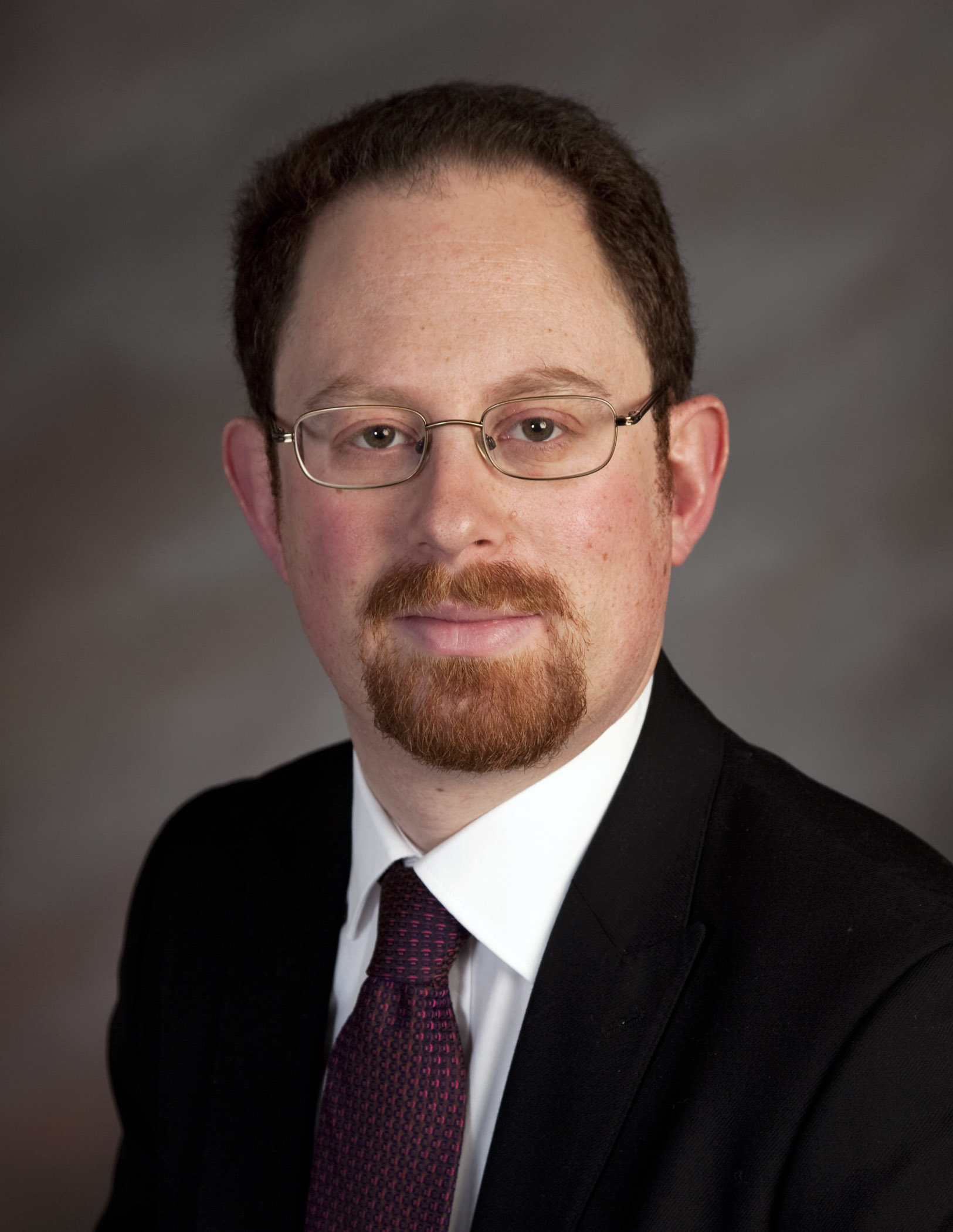
Julian Huppert is a Liberal Democrat politician in the United Kingdom and has been a Member of Parliament for Cambridge since 2010. He studied at Cambridge University, completing a BA and then a PhD in Biological Chemistry at Trinity College. He was elected a Junior Research Fellow of Trinity in 2004 and became a fellow of Clare College in 2009. He is also a Member of the Royal Society of Chemistry (MRSC) and the Institute of Physics (MInstP).  Continue reading →

Transitions: From Scientist to combining science and novel writing – Professor Sunetra Gupta

Career paths are not always straightforward. Choosing a scientific vocation can involve challenging and unanticipated decisions, often with no tour guide to follow. Some scientists may hop from the lab bench into industry while others progress up the academic research ladder. Others decide to leave research behind and explore science communication,  teaching, setting up their own business or working in technical roles outside of the lab. 

While a love of science can lead to varied and fulfilling careers, it may be lonely trying to evaluate the next step to take. Recently, initiatives such as “This is what a scientist looks like” and the #IamScience discussions, have shone a bright light on scientific career trajectories. In our latest Soapbox Science series, we focus on some interesting examples of scientific career transitions. We will hear from different contributors, all of whom use their scientific background in their current jobs, asking each of them the same questions: how did you decide on your career path, what are your motivations, and what does the future hold?

In this post Professor Sunetra Gupta talks about her parallel careers as a scientist and a novelist

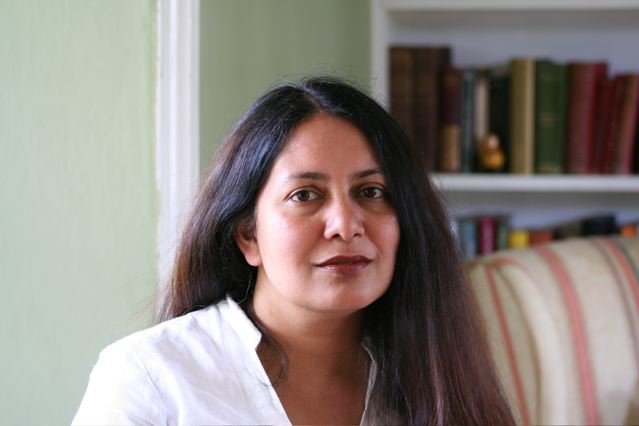
Sunetra Gupta is an acclaimed novelist, essayist and scientist. Her fifth novel, So Good in Black was published in February 2009. She was named as the winner of the 2009 Royal Society Rosalind Franklin Award for her scientific achievements. Sunetra, who lives in Oxford with her husband and two daughters, is Professor of Theoretical Epidemiology at Oxford University’s Department of Zoology, having graduated in 1987 from Princeton University and received her PhD from the University of London in 1992. Sunetra was born in Calcutta in 1965 and wrote her first works of fiction in Bengali. She is an accomplished translator of the poetry of Rabindranath Tagore. Continue reading →

Transitions: From PhD to Scientific Conference Organizer – Amanda Ullman

Career paths are not always straightforward. Choosing a scientific vocation can involve challenging and unanticipated decisions, often with no tour guide to follow. Some scientists may hop from the lab bench into industry while others progress up the academic research ladder. Others decide to leave research behind and explore science communication,  teaching, setting up their own business or working in technical roles outside of the lab. 

While a love of science can lead to varied and fulfilling careers, it may be lonely trying to evaluate the next step to take. Recently, initiatives such as “This is what a scientist looks like” and the #IamScience discussions, have shone a bright light on scientific career trajectories. In our latest Soapbox Science series, we focus on some interesting examples of scientific career transitions. We will hear from different contributors, all of whom use their scientific background in their current jobs, asking each of them the same questions: how did you decide on your career path, what are your motivations, and what does the future hold?

In this post Amanda Ullman talks about her transition from the bench into pharmaceutical marketing and finally scientific conference organizer.

Amanda Ullman graduated with distinction from McGill University with a BSc in Microbiology and Immunology.  She earned her PhD at Stony Brook University in Molecular Genetics and Microbiology.  She continued her training as a postdoc in the Microbiology department at the Mount Sinai School of Medicine and then in the Department of Immunology at Memorial Sloan-Kettering Cancer Center.  Amanda tweets as @ScienceMandy 

Job Title:

Program Manager, Life Sciences, at the New York Academy of Sciences Continue reading →

Transitions: From Chemist to Company Founder – Dr Ed Marshall

Career paths are not always straightforward. Choosing a scientific vocation can involve challenging and unanticipated decisions, often with no tour guide to follow. Some scientists may hop from the lab bench into industry while others progress up the academic research ladder. Others decide to leave research behind and explore science communication,  teaching, setting up their own business or working in technical roles outside of the lab. 

While a love of science can lead to varied and fulfilling careers, it may be lonely trying to evaluate the next step to take. Recently, initiatives such as “This is what a scientist looks like” and the #IamScience discussions, have shone a bright light on scientific career trajectories. In our latest Soapbox Science series, we focus on some interesting examples of scientific career transitions. We will hear from different contributors, all of whom use their scientific background in their current jobs, asking each of them the same questions: how did you decide on your career path, what are your motivations, and what does the future hold? 

In this post Dr Ed Marshall talks about his transition from chemistry lecturer to founder of his own company.

Dr Ed Marshall is Director of Research and Founder, Plaxica Ltd. With more than 50 academic papers and patents to his name, Ed Marshall was formerly a lecturer in the department of Chemistry, Imperial College London before co-founding Plaxica in 2009. A major focus of his research has been the development of new catalysts for the synthesis of polymers from green sources. He was also previously the Director of Imperial’s Master’s degree in Green Chemistry: Energy and the Environment. Continue reading →

Transitions: From PhD to Patent Attorney – Toby Thompson

Career paths are not always straightforward. Choosing a scientific vocation can involve challenging and unanticipated decisions, often with no tour guide to follow. Some scientists may hop from the lab bench into industry while others progress up the academic research ladder. Others decide to leave research behind and explore science communication,  teaching, setting up their own business or working in technical roles outside of the lab. 

While a love of science can lead to varied and fulfilling careers, it may be lonely trying to evaluate the next step to take. Recently, initiatives such as “This is what a scientist looks like” and the #IamScience discussions, have shone a bright light on scientific career trajectories. In our latest Soapbox Science series, we focus on some interesting examples of scientific career transitions. We will hear from different contributors, all of whom use their scientific background in their current jobs, asking each of them the same questions: how did you decide on your career path, what are your motivations, and what does the future hold?

In this post Toby Thompson talks about his transition from PhD to patent attorney.

Toby graduated with a first in chemistry from the University of Nottingham in 1999, and went on to complete a PhD in organic chemistry from the same university in 2003.  He spent 5 years working as a medicinal chemist for a pharmaceutical company, before moving into the patent profession, qualifying as a UK and European patent attorney in 2011.  Toby currently works in private practice for a firm of patent and trade mark attorneys, and is based in their London office.  Outside of work, he enjoys playing guitar and piano, running, and following the recent resurrection of the England rugby team. Continue reading →