Our culture expert heads back to California

If you’ve been following the Spoonful of Medicine ‘Daily Dose’ news summaries, you’re familiar with the inspired writing of Christian Torres. For the past six months during his news internship at Nature Medicine, Christian has delivered sharp and witty posts on this blog on subjects ranging from pharma’s use of Twitter to medical apps on the iPhone.

During his time with the journal, Christian has kept a close watch on US healthcare reform. He’s reported on the day-to-day developments of what the reform means for medical spending and taken the long view about the coming battle for data produced by electronic health records. Christian has also tackled tough regulatory issues, such as international monitoring of pharmaceutical manufacturing facilities.

Our blog readers know that in addition to his reporting on biomedical policy and research news, Christian has livened up the blog with his extensive cultural knowledge. He has served as our resident movie critic. He has rounded up memorable medical moments in film. He has even surveyed the poor choices doctors make in TV dramas.

As Christian wraps up his internship and heads back to California, home of Hollywood, we wish him the very best and thank him for all his hard work. Stay tuned for his news feature, which appears in the upcoming June issue of Nature Medicine.
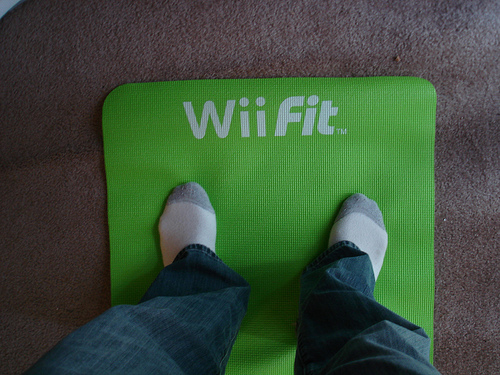
Wii can do better

WiiFit.jpg

A couple years ago, my mother didn’t want clothes, jewelry, or even a day at the spa for Christmas. She wanted a Nintendo Wii. Video games? Are you kidding me? No, she wasn’t. She specifically wanted Wii Fit, the game where you can do yoga and other exercises on a balancing board, and though my brother and I were skeptical, we granted her wish. A few months later, the machine was collecting dust.

It’s a story I like to remind my mother about every once in a while, especially when I go back to visit. (My 20 minutes of MarioKart is probably the only action that Wii sees anymore.) Even if the games had her attention for more than a few weeks, they’re apparently not a long-term solution for exercise.

That’s why I’m surprised, like many others, to see the American Heart Association (AHA) put its famous heart label on the Wii. The same logo of endorsement we see on cereal boxes and other food packaging now appears on a $200 Nintendo console, as well as two games, Wii Fit Plus and Wii Sports Resort.

Continue reading

New stem cell guidance from HESCRAC also the last

The field of guidance documents for human embryonic stem cell research seems like it’ll be getting a little smaller. The National Academies released an updated set of guidelines today, but the committee behind the document has decided to disband. In its report, the Human Embryonic Stem Cell Research Advisory Committee (HESCRAC) says that guidance put out by the National Institutes of Health should now supersede its own.

Continue reading

New cold start for an HIV vaccine

hiv_l.jpg

In 2007, Merck halted its phase 2b trial of an HIV vaccine after data showed that study subjects given the experimental vaccine had an increased rate of infection. Many researchers at the time blamed the failure of the so-called STEP trial on the viral vector used to deliver the vaccine — a common cold virus called adenovirus-5 (Ad5) — and scientists have been on the look out for alternative vectors ever since.

Just in time for HIV vaccine awareness day, at a meeting this week at the New York Academy of Sciences, Dan Barouch, a virologist at Harvard Medical School in Boston, presented preliminary data from an ongoing phase 1 trial testing a vaccine that uses a related adenovirus-26, Ad26, also a cold virus but one not usually found in humans. He showed that the vaccine was immunogenic at three different doses and only caused mild adverse effects, including fevers, chills and headaches, at the highest dose given.

Based on these findings — the first evidence that an Ad26-based vaccine is safe and effective against HIV in humans — Barouch hopes to test a prime-boost vaccine strategy involving two vectors: Ad35, which has already shown some promise, and Ad26. (Such a combo approach is already undergoing testing against the malaria parasite.)

Notably absent from Barouch’s proposed vaccine was Ad5. Some researchers have speculated that the STEP trial failed because many people already had pre-existing immunity to the virus, but two studies published last year in Nature Medicine refuted that claim. Regardless of the reason, most researchers in the field, including Barouch, are clearly trying to move on.

Image: NIH