Promising psoriasis treatment signals hope for microRNA therapies

guinea1HR

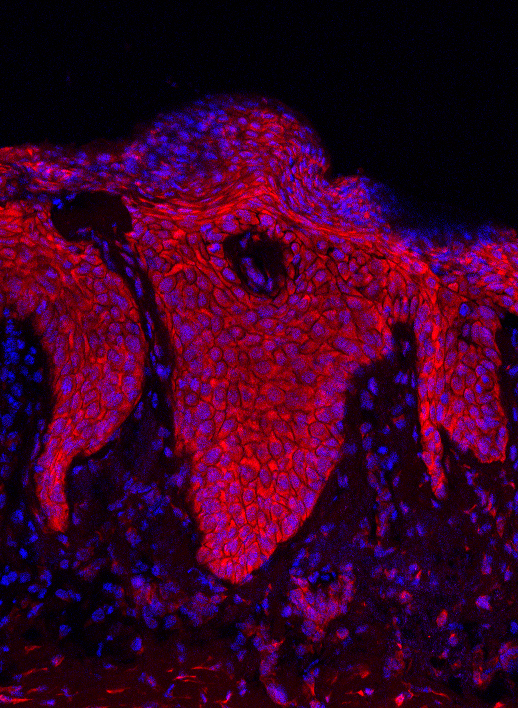
Human psoriatic skin treated with anti-miR-21 {credit}María Jiménez and Juan Guinea-Viniegra{/credit}

Nearly 2% of people worldwide chronically suffer from itchy and painful patches on their bodies, the manifestation of psoriasis, an incurable inflammatory disease in which immune cells infiltrate the skin and release molecules called cytokines that stimulate the skin cells to grow too rapidly. Treatments such as corticosteroids and immunosuppressants can help alleviate mild forms of the disease, and newer antibody-based therapies provide some relief for some of the most severe cases, but some patients fail to respond to these treatments or experience harmful side effects. Now, a new study shows that inhibiting a specific microRNA—a short bit of genetic material that influences the production of proteins in cells—appears to be an effective psoriasis treatment in mice, leaving researchers hopeful that this therapeutic approach will one day be tested in clinical trials.

Psoriasis researchers have known for some time that the levels of a microRNA called miR-21 are elevated in the skin lesions of patients with psoriasis. To determine whether miR-21 plays a crucial role in the disease, a team of scientists led by Erwin Wagner at the Spanish National Cancer Research Centre in Madrid inhibited these genetic elements using an anti-miR-21 treatment. The anti-miR-21 molecules are tiny strands of nucleotides that specifically glom onto miR-21 and prevent it from functioning. Wagner and his colleagues injected this treatment into the skin of mice bearing grafts of diseased tissue from human patients with psoriasis. The anti-miR-21 reduced the thickness of the human skin lesions by about half, a response similar to that obtained using the antibody-based psoriasis therapy etanercept (commercially available from California-based Amgen as Enbrel).
Continue reading

Experimental diabetes drug reverses emphysema in mice

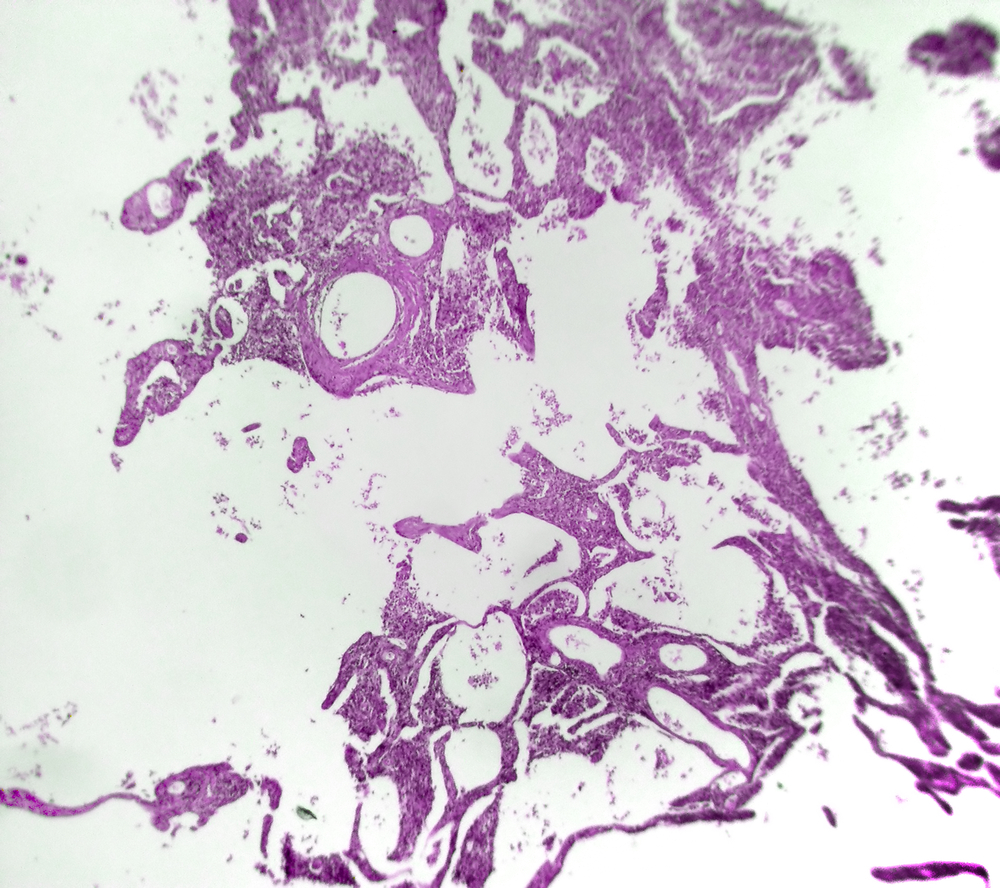
Lung tissue damaged by emphysema

Lung tissue damaged by emphysema

This year marks the 50th anniversary of the US Surgeon General’s first ever report, which implicated smoking as the primary cause of emphysema and other chronic diseases. Despite decades of research, emphysema—a form of chronic obstructive pulmonary disease (COPD), which ranks among the third leading cause of death in the US—remains incurable.

But a new study provides a glimmer of hope. In a paper published online yesterday in the Journal of Clinical Investigation, researchers show that a compound belonging to the class of drugs known as thiazolidinediones (TZDs) can reverse smoking-induced lung damage in mice. What makes the discovery even more intriguing is that TZDs activate a protein called PPAR-gamma, which acts on DNA, and two of these drugs—namely, Takeda’s Actos (pioglitazone) and GlaxoSmithKline’s Avandia (rosiglitazone)—have been used clinically to treat type 2 diabetes.

At first glance, type 2 diabetes and emphysema might appear to have little in common. But in the last decade several studies have suggested that smoking triggers heightened lung inflammatory responses through pathways that are normally held in check by PPAR-gamma, which is perhaps best known for its crucial role in the development of fat cells and regulation of metabolism.

In the new study, led by David Corry and Farrah Kheradmand at Baylor College of Medicine in Houston, the researchers investigated the genetic changes induced by tobacco smoke, and discovered that levels of PPAR-gamma mRNA were depleted in a subset of immune cells from the lungs of smokers with emphysema and mice exposed to cigarette smoke. What’s more, emphysema-associated lung damage began to heal in animals that had ongoing exposure to smoke when they received ciglitazone, an experimental antidiabetic medicine belonging to the TZD class drug that activates PPAR-gamma.

Continue reading

As drug target reemerges, the question is to block or stimulate it

More than two decades ago, drugmakers searching for new hypertension medications unearthed a mysterious new cell receptor that responded to a hormone known as angiotensin II. This peptide hormone constricts blood vessels, but, oddly, blocking the so-called angiotensin II receptor type 2 (AT2) appeared to have no effect on blood pressure, so the target was largely ignored by drug developers. “Big pharma really just left the AT2 receptor by the side of the road,” says Tom McCarthy, chief executive of Spinifex Pharamceuticals, a company based in Melbourne, Australia, that is exploring the promise of targeting AT2.

Fast forward to today, and scientists now know that AT2 plays a role in everything from tissue repair to inflammation to pain response. A handful of companies are hustling to develop compounds that either block or stimulate this receptor to treat inflammatory diseases, nerve injuries, hypertension and more. In a paper published today, researchers from Spinifex and their collaborators published the first clinical data on a compound that binds to AT2, called EMA401. Results from the placebo-controlled, phase 2 trial suggest that EMA401, which blocks the receptor, can blunt lingering nerve pain due to damage caused by the shingles virus.

AT2 is just one of two receptors known to bind angiotensin II. Several medications that block the other receptor, AT1, have already received market approval for hypertension, diabetic nephropathy and congestive heart failure. When AT2 was first discovered, researchers thought the receptor was “just a little brother,” says Thomas Unger, scientific director of CARIM, Maastricht University’s School for Cardiovascular Diseases in the Netherlands. But Unger and his colleagues now know that AT2 has a “very peculiar and unique combination of effects, which is completely different from the AT1 receptor.”

Continue reading