Experimental diabetes drug reverses emphysema in mice

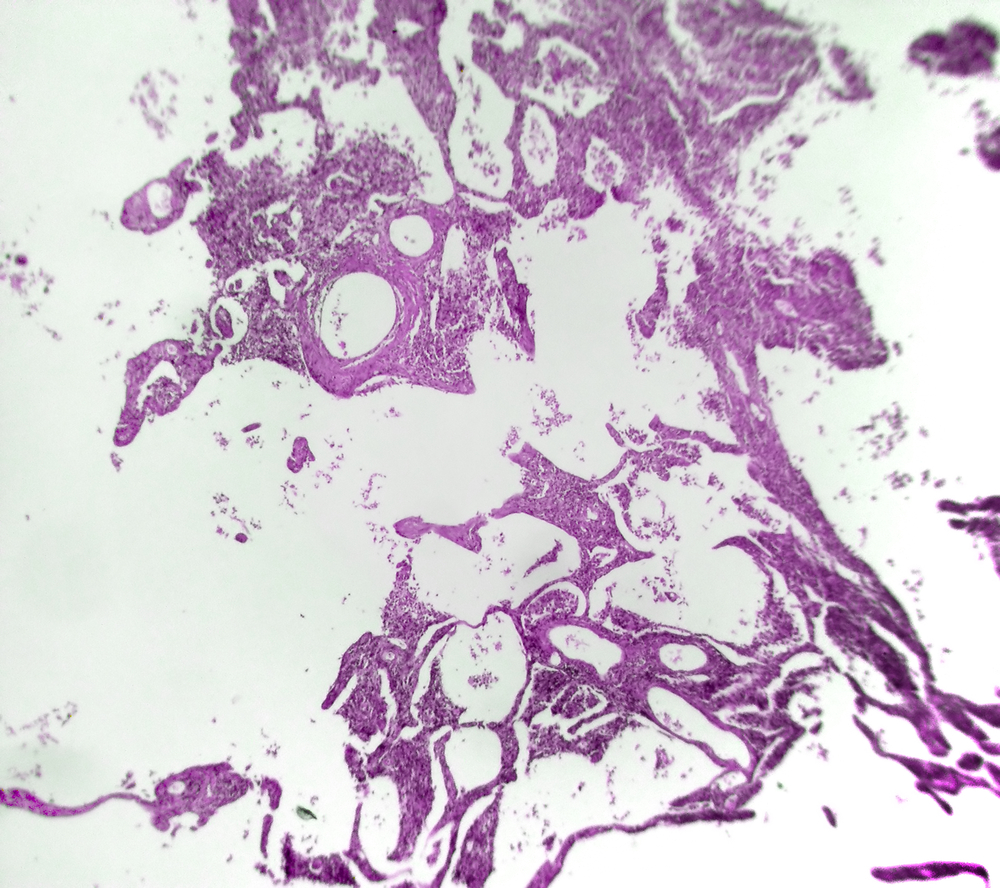
Lung tissue damaged by emphysema

Lung tissue damaged by emphysema

This year marks the 50th anniversary of the US Surgeon General’s first ever report, which implicated smoking as the primary cause of emphysema and other chronic diseases. Despite decades of research, emphysema—a form of chronic obstructive pulmonary disease (COPD), which ranks among the third leading cause of death in the US—remains incurable.

But a new study provides a glimmer of hope. In a paper published online yesterday in the Journal of Clinical Investigation, researchers show that a compound belonging to the class of drugs known as thiazolidinediones (TZDs) can reverse smoking-induced lung damage in mice. What makes the discovery even more intriguing is that TZDs activate a protein called PPAR-gamma, which acts on DNA, and two of these drugs—namely, Takeda’s Actos (pioglitazone) and GlaxoSmithKline’s Avandia (rosiglitazone)—have been used clinically to treat type 2 diabetes.

At first glance, type 2 diabetes and emphysema might appear to have little in common. But in the last decade several studies have suggested that smoking triggers heightened lung inflammatory responses through pathways that are normally held in check by PPAR-gamma, which is perhaps best known for its crucial role in the development of fat cells and regulation of metabolism.

In the new study, led by David Corry and Farrah Kheradmand at Baylor College of Medicine in Houston, the researchers investigated the genetic changes induced by tobacco smoke, and discovered that levels of PPAR-gamma mRNA were depleted in a subset of immune cells from the lungs of smokers with emphysema and mice exposed to cigarette smoke. What’s more, emphysema-associated lung damage began to heal in animals that had ongoing exposure to smoke when they received ciglitazone, an experimental antidiabetic medicine belonging to the TZD class drug that activates PPAR-gamma.


Continue reading

Metabolic gatekeeper provides new target for disrupting cancer metabolism

In the 1920s, the German physiologist Otto Warburg proposed that cancer cells generate energy in ways that are distinct from normal cells. Healthy cells mainly metabolize sugar via respiration in the mitochondria, switching only to glycolysis in the cytoplasm when oxygen levels are low. In contrast, cancer cells rely on glycolysis all the time, even under oxygen-rich scenarios. This shift in how energy is produced—the so-called ‘Warburg effect’, as the observation came to be known—is now recognized as a primary driver of tumor formation, but a mechanistic explanation for the phenomenon has remained elusive.

Now, researchers have implicated a chromatin regulator known as SIRT6 as a key mediator of the switch to glycolysis in cancer cells, a finding that could lead to new therapeutic modalities. “This work is very significant for the cancer field,” says Andrei Seluanov, a cancer biologist at the University of Rochester in New York State who studies SIRT6 but was not involved in the latest study. “It establishes the role of SIRT6 as a tumor suppressor and shows that SIRT6 loss leads to tumor formation in mice and humans.”

SIRT6 encodes one of seven mammalian proteins called sirtuins, a group of histone deacetylases that play a role in regulating metabolism, lifespan and aging. SIRT1—which is activated by resveratrol, a molecule found in the skin of red grapes—is perhaps the best known sirtuin, but several of the others are now the focus of active investigation as therapeutic targets for a range of conditions, from metabolic syndrome to cancer. Just last month, for example, a paper in Nature Medicine demonstrated that SIRT6 plays an important role in heart disease.

Six years ago, a team led by Raul Mostoslavsky, a molecular biologist at the Massachusetts General Hospital Cancer Center in Boston, first showed that SIRT6 protects mice from DNA damage and had anti-aging properties. In 2010, the same team established SIRT6 as a critical regulator of glycolysis. Now, reporting today in Cell, Mostoslavsky and his colleagues have shown that SIRT6 function is lost in cancer cells—thus, definitively establishing SIRT6 as a potent tumor suppressor.

Continue reading

Turning down the heat revs up brown fat

This past winter, vests were a hot button issue thanks to then US presidential hopeful Rick Santorum. But a vest that cools—rather than warms—could fire up studies of brown fat as researchers seek drugs that turn on this calorie-burning tissue.

Compared with white fat, which mostly acts as an energy repository, brown fat serves to generate heat. In the past, researchers believed only babies made use of brown adipose tissue. Now we know adults have small deposits of brown fat throughout the body that burn energy only in chilly environments. With roughly two-thirds of the US classified as overweight, researchers are keen on pinpointing how brown fat is activated and how to convert white fat to its healthier cousin to help people slim down.

In February, Canadian researchers published a study in the Journal of Clinical Investigation that looked beyond brown fat’s heat-producing capabilities to how, once activated, it affects our metabolism. With a sample size of six healthy men, they reduced average skin temperature by about 4 degrees to roughly 30°C by fitting them in a cooling suit. Positron-emission tomography (PET) allowed scientists to see for the first time that cold exposure increased the amount of nonesterified fatty acids (NEFA)—the primary source of energy for tissues in fasting conditions—in the blood stream by one-third. Despite the small sample size, researchers expressed confidence in their results due to consistent measurements across the participants.

But it would be more convenient for overweight individuals to take a drug that causes brown fat to burn calories. A study published this week in the Proceedings of the National Academy of Sciences (PNAS) set out to test a possible drug therapy. Aaron Cypess of the Joslin Diabetes Center in Boston and his team wanted to determine if an ingredient found in over-the-counter decongestant drugs, called ephedrine, might activate brown fat without any cold exposure. A meta-analysis in 2003 had previously suggested that ephedrine may produce modest weight loss in humans. Ephedrine seems to cause weight loss by stimulating a release of the messenger molecule norepinephrine, thereby increasing heart rate. Brown adipose tissue has receptors for norepinephrine, so researchers reasoned the drug would activate this type of fat.

Continue reading

Mysteries about drug metabolism in the obese weigh on doctors

By Alisa Opar

The surgery was a success, but a question loomed after the procedure: given that the patient was obese, what was the right antibiotic dose? “The thought was, well, she’s twice as big as a normal person, so we’ll give her twice the dose,” says Aaron Cook, a clinical pharmacy specialist at the University of Kentucky in Lexington. “For that drug, levofloxacin, there’s just no information to go on, no dosage recommendation for obese patients.”

The patient fared well, but such conundrums are becoming increasingly common as obesity rates rise around the globe. Just a month ago, researchers released new figures estimating that the US will see an additional 65 million obese individuals by 2030 (Lancet 378, 815–825, 2011). Already in the country approximately one in three adults and one in six children are obese—a condition that can precipitate heart disease, diabetes, respiratory failure and other illnesses that often require medication. But experts say that merely doubling the dose isn’t the solution because the physiological changes that accompany obesity, such as increases in the volume of blood pumped by the heart and fat mass, can in turn lead to changes drug absorption and metabolism.

(Click here to continue reading.)

FDA committee votes down first-of-a-kind diabetes drugs

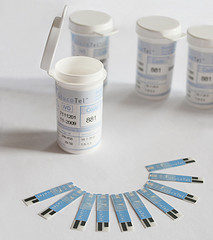
diabetes-testing-strips.jpgThe first of a highly anticipated class of diabetes drugs assessed by the US Food and Drug Administration (FDA) got the thumbs-down from the agency’s Endocrinologic and Metabolic Drugs Advisory Committee yesterday. The FDA panel rejected dapagliflozin, developed by Bristol-Myers Squibb and AstraZeneca, by a 9–6 margin.

Unlike current type 2 diabetes medicines, which modulate insulin activity to affect sugar levels in the bloodstream, dapagliflozin regulates blood sugar independently of insulin by preventing the protein sodium-dependent glucose cotransporter 2 (SGLT2) from reabsorbing glucose into the kidney. Usually, this simple sugar is dumped back into the bloodstream, inducing a symptom known as hyperglycemia. But dapagliflozin and similar drugs in development cause the kidney to excrete the excess glucose into the urine.

These SGLT2 inhibitors excite researchers and doctors because they provide “a new option for patients with diabetes with a totally different mechanism of action,” says Steven Shoelson, head of pathophysiology and molecular pharmacology at the Joslin Diabetes Center in Boston who is not involved in the development of these drugs.

In phase 3 trials, dapagliflozin proved to regulate blood sugar and even caused weight loss in many of study subjects. However, the FDA panel voted down the drug because of safety issues. Notably, patients taking dapagliflozin had higher rates of breast and bladder cancer compared to those in the control arms of the trials.

Looking ahead, other drugmakers developing experimental SGLT2 inhibitors will have to “be very careful to make sure that they do sufficient numbers of people to test [cancer incidence] adequately,” says Shoelson. Johnson & Johnson have a drug called canagliflozin in phase 3 trials, and Boehringer Ingelheim and Lexicon Pharmaceuticals have a related agent in phase 2 testing.

The FDA doesn’t have to follow the recommendations of its advisory panels, but it usually does. A final decision is due 28 October.

Image: Flickr user bodytel, under Creative Commons

Cancer concerns emerge about experimental diabetes drug ahead of FDA evaluation

Ahead of a US Food and Drug Administration advisory committee meeting next month to evaluate the experimental diabetes drug dapagliflozin, its developers, Bristol-Myers Squibb and AstraZeneca, released positive two-year trial data over the weekend showing that the medication lowered blood sugar levels more than other diabetes drugs. But people on dapagliflozin also had higher rates of certain cancers and infections, which could factor into regulatory decisions at the 19 July panel meeting.

Dapagliflozin is one of a new class of diabetes drugs called SGLT-2 inhibitors. Unlike most approved agents, which work to modulate the insulin pathway, SGLT-2 inhibitors work independently of insulin to simply increase the amount of glucose excreted in urine.

As discussed in a news story this month in Nature Medicine, dapagliflozin is the first such drug to go before the FDA. Analysts have forecast annual sales for the drug in excess of $600 million within a few years. But the new safety data, presented at the American Diabetes Association meeting in San Diego, could give investors pause.

The companies reported that genital and urinary-tract infections occurred in around 14% of people treated with dapagliflozin, compared with only around 5% of those taking the insulin-modulating drug metformin. Among the 5,500 or so individuals who took the new drug, 18 also developed breast or bladder cancer, compared to only two cases in the 3,000-plus people in the control arm.

The cancer figures might look alarming. But statistically, the overall numbers are so low as to possibly make little difference in the eyes of the FDA. Smoothing the numbers over the dozens of studies to date, 1.4% of people taking dapagliflozin and 1.3% of controls developed some type of cancer with no signs of tumors in animal studies, Reuters reports. “Importantly, overall cancers are not imbalanced,” Elisabeth Bjork, vice president of development for dapagliflozin at AstraZeneca, told the wire service.

Nuclear leak reinforces need for drugs to combat radiation

By Cassandra Willyard

REM02-03-010.jpgIn the aftermath of Japan’s 9.0-magnitude earthquake and subsequent tsunami, evacuation centers surrounding the crippled Fukushima Daiichi Nuclear Power Station stockpiled nearly a quarter-million doses of potassium iodide as a preventative measure against radiation poisoning. These pills protect people from the long-term risks of thyroid cancer associated with chronic radiation exposure, but they do little to guard against the ill effects of high-dose radiation toxicity.

Unfortunately, no drugs are currently approved to treat the extreme radiation sickness that plant workers or emergency personnel may experience. Yet, thanks to investment from the US government, several candidate compounds might soon be available in the event of another nuclear catastrophe.

The Project BioShield Act, passed by Congress in 2004, and the Pandemic and All-Hazard Preparedness Act, signed into law two years later, allotted billions of dollars in funding for research into medical countermeasures to be used in the case of nuclear, chemical and biological attacks. These government awards include more than $500 million for the treatment and prevention of so-called acute radiation syndrome (ARS), the extreme radiation sickness associated with exposure to high doses of ionizing radiation over a short period of time.

In addition to terrorism, nuclear plant disasters are a leading cause of ARS. The 1986 explosion at Ukraine’s Chernobyl plant, for example, caused 134 confirmed cases of ARS, accounting for almost one third of the reported incidences of the disease worldwide (Health Phys. 93, 462–469, 2007). Over the past week, engineers in Japan have made headway in containing leaks at the Fukushima site and seemed to have averted a meltdown. But radiation at the plant had already spiked to dangerous levels, forcing hundreds of exposed emergency workers to temporarily evacuate.

If any of these workers are diagnosed with ARS, their treatment options currently are limited to antibiotics, blood transfusions and fluid supplements that deal with the symptoms of the disease. Physicians also sometimes administer cancer drugs that help the immune system rebound, but these drugs must be given in medical facilities. Now, however, researchers are developing biologics and small molecule drugs that be used in the field to stem radiation’s ill effects.

Continue reading

Review of data supports virus link to diabetes

enterovirus-coxsackie-B4_250.jpgPeople with type I diabetes might be ten times more likely to have enteroviral infections than healthy people, according to a new study published yesterday. The analysis, led by Maria Craig of the University of Sydney, reviewed data from 26 studies involving more than 4,400 people with type 1 diabetes that measured enterovirus levels in the blood, gut or pancreas.

Enteroviruses, which cause a wide range of sickness, including the common cold and flu, come into the body through the gastrointestinal tract.

“What we are showing from studies across the world is that enteroviruses are found in children before they get diabetes, so it’s an initial trigger of the disease,” Craig says.

Researchers in the late 1960s first noticed a link between enteroviral infections and type 1 diabetes, which usually strikes children and leads to the loss of insulin-producing cells. Some scientists remain skeptical, in part because not all people with diabetes have a history of enterovirus infections. However, says Didier Hober of the University of Lille in France, this could be because these viruses are only occasionally released from the gut and may at times go undetected.

Craig now hopes researchers consider a new approach to prevent the progression and ultimately the onset of the disease.

“There has been huge efforts targeting the immune system and none of them have worked,” says Craig. “It’s time we look at a different strategy. Rather than targeting the immune system, why don’t we try targeting the virus?”

However, it is easier said than done to create a type I diabetes vaccine. There are hundreds of enteroviruses, and Craig, estimates that a dozen or so of them are implicated in the disease. Still, Hober voices optimism that scientists will be able to narrow in on the possible cause, “it is not hopeless.”

Image of a Coxsackie virus implicated In Diabetes, CDC

Mandatory limits on salt content could save lives, researchers say

nm0810-841-I1.jpg

Governments should force companies to curb salt content in processed foods, rather than leaving it up to food manufacturers to voluntary regulate salt levels, according to a new study.

Researchers from the University of Queensland in Australia came to this conclusion after measuring the public health benefits and cost effectiveness of three different salt reduction strategies: dietary advice, voluntary incentives and mandatory limits. The first two interventions only had minimal impacts, according to the authors’ theoretical model, but forcing companies to reduce salt content cut ill-health from heart disease by 18%.

“If we rely on companies to voluntarily reduce salt content, there would be some benefit,” study author Linda Cobiac told Reuters. “But benefits from mandatory cuts would be 20 times greater.” The results were published online this week in the journal Heart.

One way to help food makers reduce salt levels in their bread, margarine, potato chips and other products while maintaining the same flavor is to use newer low-sodium alternatives. To read more about technological solutions for cutting back on the tabletop seasoning, be sure to check out our news feature ‘Parse the Salt’ from the August issue of Nature Medicine.

Weighty setbacks for obesity drugs

Americans battling obesity and hoping for a pill to help them lose weight will have to keep waiting: A US Food and Drug Administration (FDA) panel yesterday voted against approving Arena Pharmaceuticals’ experimental weight-loss pill lorcaserin.

The FDA panel’s stamp of disapproval — which cited safety concerns about tumors seen in rats, along with higher rates of depression and memory loss among people taking the pill — comes only months after the federal regulator rejected a similar obesity drug, Vivus’s Qnexa.

With two drugs down, the only remaining contender to become the first new prescription diet drug in a decade is Orexigen’s Contrave, which will have its day before federal regulators later this year. In June, Orexigen scientists presented data at the American Diabetes Association meeting showing that Contrave helped diabetics lose weight and control their blood sugar better than a placebo.

As a further setback to the diet drug field, half the 16 members of a FDA advisory panel recommended Wednesday that the agency take Abbott Laboratories’s weight-loss drug Meridia off the market. A study out this month in the New England Journal of Medicine found the risk of a cardiac disease was 16% higher among people taking Meridia compared to placebo.

Besides Meridia, the only other prescription diet drug on the market is orlistat, which is sold under the trade name Xenical by Genentech/Roche, and over-the-counter as Alli by GlaxoSmithKline.

To read more about the mechanism of action of Qnexa and related drugs, see out earlier news story on anti-obesity medications.