Smoke and Mirrors

The tobacco industry produces a product that, used as intended, kills millions of people each year. So it seems a lot to ask the industry to assume ethical standards in another of its favorite endeavors—funding scientific research.

The tobacco industry is up to some of its usual antics, as reported by

The New York Times. It seems tobacco money helped fund one of the most controversial studies to recently emerge from The New England Journal of Medicine.

The study concluded that the widespread use of CT scans could prevent 80 percent of lung cancer deaths.

The primary author of the study, Claudia Henschke of Weill Cornell Medical College declared funding through a little-known group, the Foundation for Lung Cancer: Early Detection, Prevention and Treatment. It took an investigative

reporter checking tax records to discover that foundation is actually funded by the parent company of the Liggett group, which manufactures several cigarette brands. Henschke did not reveal the source of the foundation’s money to the journal—what’s more, she helped create the foundation and is its president; the dean of Weill Cornell is a director.

The study’s findings obviously are favorable to the tobacco industry. But they have been controversial in part because early screening can lead to unnecessary procedures for spots on a CT scan that are not an imminent threat to health. A $200 million follow-up trial is now under way at the NCI.

What the tobacco linkage will mean for the validity of the study in the minds of experts remains to be seen—although this quote, from Catherine D. DeAngelis, the editor of The Journal of the American Medical Association, is telling:

I would never publish a paper dealing with lung cancer from a person who had taken money from a tobacco company.

Why so much fuss?

As DeAngelis is undoubtedly aware, the industry’s influence in this study fits into an overall pattern.

Tobacco companies fund research that has the potential to minimize the severe effects of smoking, and they also underwrite unrelated, legitimate, research, to bolster their reputation. It’s also not unusual for tobacco companies to keep their fingerprints away from the research they fund.

Tobacco companies also have a well-documented history of trying to stir up ‘debate’ about the dangers of smoking and second-hand smoke. Their support of research to bolster their arguments helped, for many years,

create public uncertainty about the dangers of tobacco and staved off anti-tobacco legislation. Sowing doubt about generally-accepted science is a tactic that foes of global warming legislation successfully borrowed; indeed, the tobacco industry spawned some of the ‘think tanks’ that now fight against global-warming legislation by supporting industry-friendly scientists.

Manipulating science has been a core tactic of the tobacco industry for years. So it’s not surprising that some schools, such as Harvard’s School of Public Health, have banned tobacco money. The University of California system refused to follow suit, but they have implemented a system of extra scrutiny over research funded by the tobacco industry. Opponents of a ban in California argued that it would constrain ‘academic freedom.’

What do you think? Does the source of funding for the NEJM study throw its findings into doubt? Or is this all a bunch of fuss about nothing?

Finally, is it fair for the editor of the Journal of the American Medical Association to refuse lung cancer papers funded by the tobacco industry?
Strong Nature

I found the past two online installments of Nature to be particularly strong.

Sunday’s issue had two papers showing that activation of the aryl hydrocarbon receptor (AHR) — a ligand-dependent transcription factor that mediates the action of environmental toxins such as dioxin — plays a role in the pathophysiology of EAE, the commonly used animal model of multiple sclerosis.

Marc Veldhoen et al. and Francisco Quintana et al. found that AHR exacerbated EAE by promoting the differentiation of Th17 cells and the production of IL-22. Remarkably, Quintana and his colleagues went on to show that the effect of AHR depended on the agonist they used; whereas one agonist promoted EAE, a different agonist suppressed the pathology by inducing regulatory T cells. The authors don’t go too far downstream to nail down the transcriptional pathways that are responsible and account for the dual effect of AHR (which is in and of itself not unprecedented), but the possibility that environmental toxins might use this receptor to modify the course of multiple sclerosis in people is very interesting.

Then, on today’s edition of the journal, there are two RNA-related papers that are also very interesting. The first one is a proof-of-principle study by Joacim Elmén et al., showing that it is possible to silence microRNAs in non-human primates. Although therapeutic effects of blocking microRNAs in rodents have been published, there has been scepticism about translating the approach to the clinic. Elmén and his colleagues now show that it is possible to silence a liver microRNA in the green monkey by delivering a locked-nucleic-acid-modified “antimiR”. Moreover, this silencing approach had a functional readout — decreased plasma cholesterol — and no obvious toxicity. This is a reassuring finding for those interested in targeting microRNAs in humans with therapeutic purposes.

The second RNA-related paper reports a somewhat unexpected finding. There are reports that you can use siRNA to target proangiogenic molecules like VEGF or its receptor, and block pathological angiogenesis in patients with neovascularization linked to age-related macular degeneration. Now, Mark Kleinman and his colleagues show that it doesn’t quite matter what molecule you target because a large number of siRNAs (even if some that target non-genomic sequences or antiangiogenic genes) have the same antiangiogenic effect. As long as the siRNA is 21-nucleotides or longer, it will exert an anti-angiogenic effect mediated by the TLR3 signaling cascade. This “class effect” implies that generic siRNAs might be therapeutic agents, and that siRNAs might have unanticipated actions on the vascular and immune systems.

Ten years of Viagra

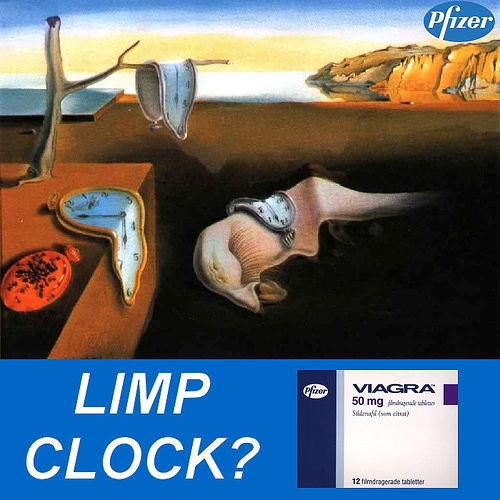
Today is the 10th anniversary of the FDA’s approval of sildenafil nitrate for the treatment of erectile dysfunction. A decade and over 30 million users later, there’s very little left to say about Viagra that hasn’t been said before. Maybe that’s why the media coverage of the anniversary has been somewhat modest. I nevertheless found this pretty neat graphic in the Spanish newspaper El Mundo. It’s, of course, in Spanish, but I hope you get the gist of it.

After this anniversary, Pfizer probably won’t be looking forward to future ones; their patent on the drug is set to “go limp” between 2011 and 2013.

Daliviagra.jpg

Image by n3wjack’s world in pixels

Political compromises

Today’s announcement that the British Prime Minister is ready to compromise and have a free vote on parts of his government’s embryo research proposal is disappointing.

Britain has traditionally taken a much broader view of stem-cell research than, say, the US. So, for Gordon Brown to yield under the pressure from Catholic MPs, who had threatened to step down if a vote was not held, is nothing short of a step backwards.

One of the most controversial aspects of the Bill has to do with the generation of “cybrids” or “admix” embryos generated by injecting a human nucleus into an animal egg. Critics of the Bill cite ethical concerns. For example, Cardinal Keith O’Brien (Roman Catholic Archbishop of St Andrews and Edinburgh) stated that “It is difficult to imagine a single piece of legislation which more comprehensively attacks the sanctity and dignity of human life than this particular bill”, and that the Bill could lead to experiments of “Frankenstein proportions”.

Needeless to say, supporters of the Bill have urged the Catholic church to become more familiar with the facts before making such strong statements. In fact, if you look at what a cybrid really is and realize that it’s something that may or may not even be successful, the alarms set off by opponents of the Bill seem rather out of proportion. (See this correspondence from MIT’s Richard Hynes that we published some time ago, in which he clarifies the terminology and dismisses some of the most erroneous concerns about the generation of chimeras, hybrids and cybrids.)

Clearly, the Prime Minister’s decision to compromise is political, and he sounds confident that the Bill will pass as intended despite the objections from the rebel MPs. Hopefully his gamble is correct, and we don’t have to live through another case of science taking a backseat to religion.

frankenstein.jpg

Scientific discrimination

I’m in the middle of preparing a talk that I’m scheduled to give in Madrid in a few days. The talk is called “Myths and realities of publishing in the Nature journals”, and its goal, at least in part, is to dispel the myth that our journals discriminate against, say, Spanish-speaking countries or developing nations, and that we favor countries like the USA and Britain.

Thinking about the comments I’ve heard from people, this myth can be divided into at least four parts:

1. The fame myth — “to publish in the Nature journals, you have to be a big name.”

2. The friends myth — “to publish in the Nature journals, you have to be a friend of the journal, and you have to be on first-name terms with everyone in the field so that you always draw positive reviewers.”

3. The language myth — “to publish in the Nature journals, you have to have the Queen’s English, or the editors won’t even read your paper.”

4. The surname myth — “to publish in the Nature journals, it’s better if you are Dr. White and not Dr. Blanco. In fact, if I were to change the names of the authors in my paper to anglosaxon names, I’m sure you would have sent it out for external review at least.”

Each of these myths can be rebutted, and part of my talk will consist of data proving that this is not the way we operate. For example, you don’t need to be famous to publish in Nature Medicine. Just flicking through the last four issues of the journal (including April 2008), I found that 75% of the articles we published were authored by people I didn’t know about before their submission.

That being said, I’m most interested in any evidence you may have in support of the myths. I want to make sure that my perception of the fairness of our processes is a legitimate one. So, if you know of any specific instance of discrimination, please send it over. I may even include it in the talk.

Thin and happy

A lot has been said about the link between calorie restriction and aging — eat less, live longer. But if that wasn’t enough, there seems to be a new reason to do away with snacking: calorie restriction has an anti-depressant effect in mice, which depends on orexin-mediated signaling.

Michael Lutter and his colleagues tested mice in two animal models of depression — forced swim (a “depressed” animal will stop trying to escape from the water and will therefore cease to swim) and social defeat (a mouse that has been bullied will express its “depression” by reduced social interactions with other mice). The authors found that, if the mice were on calorie restriction, both their latency to stop swimming and their likelihood to engage in social interactions increased. In other words, the restricted mice did not show signs of depression.

But if the mice lacked orexin, calorie restriction had no effect. Orexin’s claim to fame is its relationship to narcolepsy — people (and some dog breeds) without orexin fall asleep without warning. But orexin has also been linked to the regulation of food and drug reward, pointing to a role for orexin in emotional processes. Lutter et al. further strengthen the link of orexin with depression by showing that mice in the social-defeat model have epigenetic modifications in the orexin promoter, which lead to decreased expression of the orexin gene in the “depressed” mice.

Clearly, the mechanistic link between depression, orexin and calorie restriction could do with some additional tightening. Similarly, the existing animal models of depression and their relevance to human depression are consistently criticized by the community. One also wonders about the behavioral (or “psychological”, if you will) effects of calorie restriction per se on an animal that is undergoing a stressful situation like the one the mice experience in the forced-swim and social-defeat tests. In other words, is the increased latency to show depression a true anti-depressant effect, or is it that the mouse’s hunger causes it to be more anxious in the context of the behavioural testing it is exposed to?

All of that said, other effects of calorie restriction that were originally met with scepticism now enjoy widespread acceptance. Maybe the same will turn out to occur in this fascinating case.

cupcakes.jpg

The wrong target

There’s a remarkable number of drugs that people use for which the mechanism of action is unknown, and two papers in the Journal of Neuroscience illustrate this point from two different perspectives.

Methylprednisolone is an anti-inflammatory drug that is often used — with modest success — in multiple sclerosis and (off label) after spinal cord injury. People think that its effect depends on its ability to dampen inflammation but, as Jin-Moo Lee and colleagues show, the drug seems to act in vitro and in vivo (at least in rats) by preventing oligodendrocyte apoptosis through the indirect activation of glucocorticoid receptors. By contrast, the drug has no such protective effect on neurons, which may start to account for its limited therapeutic effect.

The second paper has to do with a drug that people use with recreational, as opposed to therapeutic, purposes — ecstasy. Carla Busceti and her colleagues report that giving ecstasy to mice results in a transient increase in the phosphorylation of tau — the same molecule that is phosphorylated in Alzheimer disease and in a series of conditions known as tauopathies. They further show that the increased phosphorylation, which is primarily seen in the hippocampus, depends on both GSK3β and cdk5, a pair of kinases known to phosphorylate tau. So, ecstasy induces the expression of Dickkopf-1, which inhibits Wnt signalling, thereby increasing GSK3β activity, and it also induces the expression of p25, a known activator of cdk5. It’s very hard to know if there is any relationship between these biochemical changes and neurological diseases, but it would be very interesting to see if there is an increased incidence of any tauopathy in frequent users of ecstasy. I guess we’ll have to wait for epidemiological studies to know the answer.

drugs.jpg

Bullet dodged (for now)

Sighs of relief from the whole editorial community were heard this weekend, following a ruling denying Pfizer accces to confidential peer-review documents from the NEJM.

Pfizer is facing a lawsuit over injuries believed to have come from use of their drug Celebrex. So, this January the drug company filed a motion asking for peer-review documents — including reviewers’ names and confidential comments — that might be relevant to the lawsuit and useful for its defense. (If you want to read all the details about the legal showdown between Pfizer and the NEJM, I would recommend that you read this excellent blog entry in “”https://pipeline.corante.com/“>In the Pipeline”.)

This past Friday, the U.S. District Court for the Northern District of Illinois ruled that “it is not unreasonable to believe that compelling production of peer review documents would compromise the process”. And as Pfizer didn’t explained in sufficient detail what they expected to find in the confidential documents, the court decided that “whatever probative value the subpoenaed documents and information may have is outweighed by the burden and harm that would result” to the journals.

I was also delighted by the news, but I’m somewhat uncomfortable by the fact that the decision in favor the journals was shaped in no small measure by Pfizer’s inability to produce convincing-enough arguments. I wonder what would happen if a future motion makes a good case for what a company or any other party expects to find in our confidential information. Would the court then rule in favor of the company, setting a devastating precedent?

I must admit that my understanding of all the legal aspects that surround matters of this sort is very limited. But if journalists are protected from identifying their sources in court (what is often referred to as “privilege”), is that the same kind of protection that our “sources” — our referees — get when they share confidential information with us and when we promise to protect their anonymity? If this is not the case, why not? And is there something that we, the editors of scientific journals, could do to make sure that we have “privilege”?

The ruling favored us this time, setting some sort of precedent for the protection of confidential information at scientific journals, but the matter is far from closed, and heaven knows what will happen next time.

gavel.jpg

Gene associations galore

This week’s issue of JAMA struck me as pretty interesting. They normally publish stuff that’s too clinical or epidemiological for my taste and in comparison to what we publish, but this time they had a themed issue on genomics with four articles reporting associations between gene variants and diseases of different systems.

Two of the articles are relevant to the cardiovascular system. First, Tamali Bhattacharyya and colleagues established a link between polymorphisms that affect the function of paraoxonase 1 (an HDL-bound enzyme with cardioprotective properties), oxidative stress and cardiovascular disease. As might be expected, forms of the enzyme with higher activity were associated with less oxidative stress and a reduced risk of cardiac events.

The second paper, by Irene Bezemer and her colleagues, disclosed gene polymorphisms linked to deep vein thrombosis. These variants affected several genes (CYP4V2, SERPINC1, GP6, KLKB1 and F11), and some of these were also linked to higher levels of coagulation factor XI, hinting at a possible molecular mechanism.

Next, a study by Joyce van Meurs and colleagues reports polymorphisms in the low-density lipoprotein receptor-related protein LRP5 that are associated with osteoporosis. As mutations in LRP5 had already been linked to bone disorders, it is not entirely surprising that variants of this gene would lead to reduced bone density and increased fracture risk.

Last, but not least, there’s a very intriguing contribution by Elisabeth Binder and her colleagues, who found that variants in the FKBP5 gene (which encodes a protein that interacts with the glucocorticoid receptor to modulate its cortisol-binding affinity and has therefore been linked to physiological responses to stress) interact with the occurrence of abuse during childhood, predicting the severity of posttraumatic stress disorder (PTSD) in adulthood. The gene variants themselves were not good predictors of PTSD. So, this is a fine example of gene-environment interactions in the context of mental disease.

Very interesting associations indeed. Hopefully they’ll lead to some hardcore molecular work that results in some mechanistic insight into the biological meaning of this gene polymorphisms that goes above and beyond the correlations found in these studies.

DNA.jpg

Two on cancer

Two papers in Nature these past few days reported on some very intriguing biology of cancer cells.

Some tumor cells have the peculiar property of acting like anaerobic cells, producing lactate even in the presence of oxygen — a property known as aerobic glycolysis or the Warburg phenomenon. The molecular mechanisms behind this phenotype are not clear, but the first of these two papers provides a very solid clue to account for it. Heather Christofk and her colleagues show that a switch between isoforms of the glycolytic enzyme pyruvate kinase is crucial for aerobic glycolysis and tumorigenesis. Tumor cells express the embryonic M2 isoform of pyruvate kinase, but by knocking it down and replacing it with the M1 (adult) isoform, the authors reversed aerobic glycolysis and reduced tumor growth in mice.

The second paper takes a look at the hardcore signaling that takes place inside tumor cells. We know very well that the Ras-PI3K-AKT pathway is crucial for tumor maintenance. The new study, by Kian-Huat Lim and colleagues, shows that blocking the AKT-mediated phosphorylation of endothelial nitric oxide synthase (eNOS) also inhibits tumor maintenance. As eNOS enhances the nitrosylation and activity of Ras proteins, which are required for tumorigenesis, the authors come full circle by proposing a (mutated) Ras-PI3K-AKT-eNOS-(wild-type) Ras pathway for tumor growth.