74 new susceptibility genes found for breast, ovarian and prostate cancer

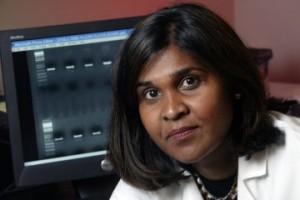
shutterstock_85786180In the largest cancer genotyping study to date, an international team of scientists spanning more than 160 research groups has identified 74 new genetic regions associated with breast, ovarian or prostate cancer—a near doubling of the number of susceptibility loci linked to these three hormone-related cancers.

“These findings are very significant and show the power of international collaborative research that provided additional knowledge regarding the common risk factors,” says Jan Korbel, a molecular biologist who studies prostate cancer at the European Molecular Biology Laboratory in Heidelberg, Germany, who was not part of the study.

The researchers discovered the genetic regions using a custom-built genotyping array comprised of around 200,000 single nucleotide polymorphisms (SNPs) drawn mainly from previous genome-wide association studies of different cancer types. This method pinpointed 23 previously unidentified susceptibility loci linked to prostate cancer, 16 of which were associated with more aggressive and life-threatening forms of the disease. The same approach flagged 49 new SNPs for breast cancer and 11 new regions associated with ovarian cancer.

The work—the product of the EU-funded Collaborative Oncological Gene-Environment Study—was published online today in a series of 13 papers in Nature Genetics, Nature Communications, PLOS Genetics, the American Journal of Human Genetics and Human Molecular Genetics.

Similar to previous reports, these studies uncovered genetic variations in regions that are shared among the three cancers, suggesting a common genetic basis and mechanism of pathology. “We presume that these particular genes are important across cancer types, but the way these genes are regulated is different across tissues,” said Douglas Easton, director of the Center for Cancer Genetic Epidemiology at the University of Cambridge, UK, who led the breast cancer work, at a press briefing.

Many of the newly identified SNPs are located in genome regions that affect cell growth and proliferation. The authors hope the work will open the door to the future development of biomarkers and therapeutic targets for improved clinical diagnostics and intervention.

“As we understand the biology of genetic susceptibility, it may impinge directly on the way we think about the tumor biology and the personalized treatment of the tumor based on the molecular characteristics,” said University of Cambridge oncologist Paul Pharoah, a senior author of the paper on ovarian cancer, at the press briefing.

Image: Shutterstock
Hopkins scientist to lead the NIH’s basic science branch

Photo credit: Mike Ciesielski

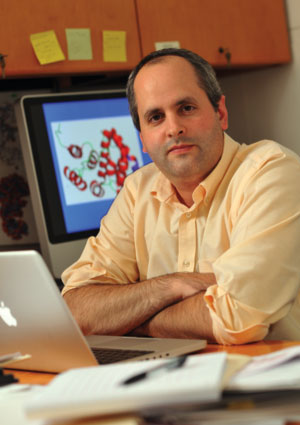
NIGMS’s new director Jon Lorsch {credit}Mike Ciesielski{/credit}

The US National Institute of General Medical Sciences (NIGMS)—the $2.4 billion branch of the National Institutes of Health (NIH) tasked with laying the foundation for research into disease diagnosis, treatment and prevention—has a new leader. Earlier today, the agency announced that Jon Lorsch, a biophysical chemist at the Johns Hopkins University School of Medicine in Baltimore, would become the new director, starting this summer.

“They could not have done better at the NIH,” says Lorsch’s colleague Mario Amzel, director of the Biophysics and Physical Chemistry department at Hopkins. “He’s one of the best teachers at the medical school and has a strong interest in education, which seems to be one of the directions in which the NIH wants to go now.”

In 2011, for example, Lorsch proposed a new integrated model for graduate education in the life sciences that addressed a number of challenges, including the increased information burden and the need to train researchers who can work across traditional disciplinary boundaries.

In the lab, Lorsch’s work focuses on understanding the mechanisms of translational initiation in yeast cells. Last month, for instance, his group published two papers characterizing the molecular events through which messenger RNA is recognized by and recruited to the ribosome.

Jon has exploited the tools available in yeast and combined them with powerful kinetic analyses to molecularly dissect the process of translation initiation,” says Thomas Dever, a biochemist at the US Eunice Kennedy Shriver National Institute of Child Health and Human Development in Bethesda, Maryland, who has worked with Lorsch on similar projects. “As a long-time collaborator, I am particularly excited to have him as a colleague at the NIH.”

The news of Lorsch’s appointment was equally well received by his former mentor and PhD advisor Jack Szostak, a geneticist at the Massachusetts General Hospital in Boston. “It’s great to have another outstanding scientist as NIGMS Director,” he told Nature Medicine. “Jon is also a very funny person, and no doubt his sense of humor will help him in trying to get people with diverse interests to work together and support the best science in the most efficient manner.”

Lorsch will replace acting director Judith Greenberg, who stepped into the post two years ago after Jeremy Berg, who had served as NIGMS director from 2003 to 2011, left to lead science strategy and planning at the University of Pittsburgh Schools of the Health Sciences in Pennsylvania. (Nature Medicine conducted an interview with Berg in 2011 regarding his contributions to NIGMS and his decision to leave.) Under Greenberg, the NIGMS underwent a series of reorganizations, with the creation of two new divisions that combined existing NIGMS programs with those transferred from the former National Center for Research Resources (NCRR). The NCRR was folded in 2011 to make room for the National Center for Advancing Translational Sciences.

Patients should learn about secondary genetic risk factors, say recommendations

Cross-posted from the Nature News Blog

Imagine getting a chest X-ray to identify the cause of a serious cough. The radiologist finds a shadow that wasn’t causing the cough but could be a tumor. In many cases, it is obvious what to do upon uncovering these sorts of secondary or incidental findings — most doctors would follow up on the search for a possible lung tumor, for example.

But genomic information presents a special case: genes are predictive, but not perfectly so, making some results murky. And many genetic diseases and predispositions to disease don’t have clear and obvious paths for clinical management, potentially making them a lifelong psychological burden.

Today, the American College of Medical Genetics and Genomics (ACMG) released recommendations for how genome-sequencing laboratories should report incidental findings after a doctor orders a full or partial genome sequence. It defines a minimum list of about 60 genes and 30 conditions that should be reported to the doctor as part of a patient’s care, whether the patient wants to know them or not. But the guidelines stop far short of recommending that all risk factors be passed on to doctors and patients.

Click here to continue reading.

Stem cell tracking system promises more targeted regenerative therapies

Ultrasound MachineStem cells hold enormous potential for repairing or regenerating damaged tissue. But delivery of these cells to their target location remains a major obstacle. Now, researchers at the Stanford University School of Medicine in California have developed a novel nanoparticle-based system that allows stem cells to be tracked in real time in a living mouse for up to a year after injection. This work, if replicated in humans, could finally allow scientists to verify if these cells are going where they’re intended.

“Delivering stem cells to specific tissues is a very big challenge, since basically all investigators have to shoot blindly,” says Sanjiv Gambhir, director of Stanford’s molecular imaging program who led the work published online today in Science Translational Medicine. “For these cell therapies to succeed, you need imaging systems.”

Gambhir and his team started with a type of nanoparticle already used in clinical trials to guide cancer drug delivery. They then attached two imaging agents to the nanoparticle: gadolinium, a contrast agent picked up by magnetic resonance imaging (MRI), and a fluorescent compound called fluorescein. Although the resulting composite nanoparticle was less than a micron in diameter, it aggregated once absorbed by a cell, making it large enough be imaged by ultrasound and MRI.

After injecting bone marrow stem cells labeled with these particles into the hearts of healthy mice, the researchers found that they could track the cells using a standard ultrasound device. The MRI contrasting agent allowed the team to monitor long term survival or deposition patterns of labeled stem cells without harming the animals. And when necessary, the fluorescent tag allowed for accurate post-mortem examinations as well. Nanoparticle imaging also demonstrated remarkable sensitivity, as the researchers were able to visualize as few as 75,000 stem cells with ultrasound, and a few hundred thousand with MRI.

Although the materials utilized in the study have already been used in clinical trials, Gambhir acknowledges that this new composite nanoparticle requires strenuous safety testing before it could be ready for human use. Still, he was encouraged by the finding that the nanoparticles did not affect stem cell differentiation or division.

The researchers first plan to test the system in larger animal studies with other populations of stem cells. Ghambir believes it could be ready for human testing within the next five years. “This enables cell therapy to understand why it’s failing. This allows you to connect the dots,” he says.

Check out the video of labeled stem cells being injected into a mouse heart below (stem cells circled in red):

Red blood cell production relies on white blood cell help


Red and white blood cells
Red blood cell production in the bone marrow is a precarious process. Too few RBCs and you can become anemic; too many and you could be suffering from polycythemia vera, a rare, so-called ‘myeloproliferative’ genetic disorder marked by an abnormally high RBC count. Now, researchers have identified a surprising player in the regulation of RBC production under these disease conditions. Reporting online today in Nature Medicine, two independent teams describe the pivotal role of macrophages—amoeba-like white blood cells responsible for digesting harmful foreign microbes and removing old or dying cells—for generating RBCs in both anemic and over-proliferative conditions.

In one study, geneticist Stefano Rivella and his colleagues at the Weill Cornell Medical College in New York administered a drug that selectively kills macrophages in a mouse model of polycythemia vera. In these mice, RBCs are generated at almost twice the normal amount, leading to viscous blood, enlarged organs and increased risk for strokes and heart disease. The drug, called clodronate, appeared to cure these symptoms, however, drastically lowering macrophage population and bringing RBC counts back to normal levels compared with a control group of animals treated with saline.

These findings were independently confirmed by Paul Frenette, a stem cell biologist at the Albert Einstein College of Medicine, also in New York. His team used a genetically modified mouse in which macrophages expressed a gene that made them vulnerable to a toxin and arrived at similar conclusions. “When we depleted macrophages in this disease, we actually corrected the disease,” Frenette says. “Maybe this could be a new therapy for this type of disease, which is unexpected.”

Continue reading

Rallying for the future of medical research: Q&A with Jon Retzlaff

shutterstock_44616835Less than a month from now, science advocates hope to bring thousands of people together on the Carnegie Library Grounds at Mt. Vernon Square in Washington, DC,  to stand together in the Rally for Medical Research. The move is, in large part, a response to the latest development in the US budget battle, in which the government has implemented massive cuts, known as sequestration, to most federal programs starting 1 March. The sequestration’s $1.6 billion cut to the US National Institutes of Health (NIH) translates to over 5 % spending cut to federally-funded medical research. These cuts come at a time when the NIH’s budget has been steadily declining for the past ten years.

The American Association for Cancer Research (AACR) is one of nearly 100 partnering organizations behind the 8 April rally. Jon Retzlaff, a managing director for Science Policy and Regulatory Affairs at AACR who is also involved in coordinating and organizing the rally, told Nature Medicine how AACR conceived the idea for the rally and how it plans to call on our nation’s policymakers to make life-saving medical research funding a national priority:

How did the idea for a rally come about?

We have an annual meeting in Washington, DC, between April 6 and 10, where around 18,000 people come to town for this meeting. Our chief executive officer, Margaret Foti, proposed that because we are at a crisis moment in regards to the medical research, specifically the funding for the NIH, we need to do something at the annual meeting to make the NIH a national priority and generate awareness among the general public to take action to inform the members of Congress that there are key areas of government that need to be supported and the NIH is one of them.

How many people are they expecting to come?

Nearly 100 partnering organization have already signed up. The American Heart Association is coming to the rally on behalf of the NIH and it’s going to be a major event. When we just started, we hoped for 10,000 people. Now I’m optimistic that we underestimated the numbers.

Continue reading

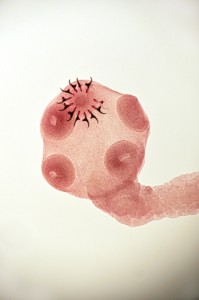
From tumors to tapeworms: parasite’s genome points to new uses for cancer drugs

On the map: Taenia solium

On the map: Taenia solium {credit}Shutterstock{/credit}

Commonly used cancer drugs could be repurposed to help eliminate tapeworm infections, according to the first full genome analysis of the human gut pathogen.

A team led by Matthew Berriman, a geneticist who studies parasites at the Welcome Trust Sanger Institute in Hinxton, UK, sequenced the genomes of three human-infective tapeworm species as well as a fourth tapeworm that lives in the intestines of rats and mice. Their analysis, published online today of Nature found that among more than 1,000 gene products that are predicted to be druggable in the parasite responsible for echinococcosis—a disease that affects an estimated 2–3 million people worldwide—more than 200 already have existing therapies (many in the oncology space) that block them.

“By providing reference genomes for these tapeworms, the study lays the foundation for the identification of new potential drug targets to kill the worms,” says P’ng Loke, a microbiologist at the New York University Langone Medical Center who was not involved in the study.

The cancer link makes sense given the life cycle of the tapeworm, notes Berriman. People typically ingest the parasite as eggs or larvae that then migrate to the host’s intestines where they develop into adult tapeworms. “When larvae infiltrate tissues and organs and cause large proliferating growth, [it’s] like metastasizing cancer,” he says.

The potential for new pharmacological interventions doesn’t end there, though. The genome map also revealed that the tapeworm’s parasitic lifestyle has led to a number of gene losses and molecular simplifications that could provide a wormy Achilles’ heel. Thanks to evolution, for example, tapeworms have lost genes involved in oxidative stress response, making them reliant on just one enzyme for this kind of cell detoxification.

Fortunately, drug repurposing could prove successful here, too. The tapeworm enzyme involved in oxidative stress, called thioredoxin glutathione reductase, is the target of multiple drugs that have been shown to kill blood flukes and flatworms. “We have identified clear vulnerabilities in the pathways the parasites rely on,” Berriman says.

New, intensive trials planned on heels of Mississippi HIV ‘cure’

Deborah Persaud

Deborah Persaud presented her findings at CROI. {credit}Johns Hopkins Medicine{/credit}

ATLANTA — Until recently, the medical community held a consensus that children born with HIV might be obliged to take antiretroviral drugs for the rest of their lives. But the announcement made last week that an infant in rural Mississippi who stopped receiving medicine at 18 months of age and has since lived for a year with no measurable viral RNA in the blood is prompting HIV experts to question the conventional wisdom.

“It’s definitely paradigm shifting,” says Deborah Persaud, a pediatric infectious disease physician at the Johns Hopkins Children’s Center in Baltimore who presented the Mississippi case here at the Conference on Retroviruses and Opportunistic Infections (CROI) on 4 March. However, a trial that involves drug cessation is fraught with ethical and medical difficulties, so the next steps going forward remain unclear.

Persaud and other HIV specialists plan to meet over three days in May at a leadership retreat of the International Maternal Pediatric Adolescent AIDS Clinical Trials (IMPAACT) group, an investigator network funded by the US National Institutes of Health (NIH), to discuss how best to test if and when antiretroviral therapy can be halted for children born with HIV who achieve undetectable levels of the virus in their blood. “We need community input on this,” Persaud says. “If we develop careful strategies, we could probably come up with a consensus approach in a couple of months.”

From Berlin to Mississippi

A prime benefit of going off antiretrovirals is the avoidance of drug-induced side effects, ranging from metabolic complications to bone demineralization to kidney failure. This is especially true for young people who could be on these medications from birth. Yet, before the Mississippi baby, no one had ever achieved a ‘functional cure’ from HIV—meaning undetectable viral replication and no disease progression in the absence of drugs—off the back of antiretroviral therapy alone. (Timothy Brown, the so-called ‘Berlin patient’, achieved this state, but only after a bone-marrow transplant with donor cells invulnerable to HIV replaced all of his native immune cells, a procedure deemed too risky for most HIV-positive individuals.)

The key to the baby’s functional cure, researchers believe, was probably the unconventionally aggressive treatment administered to the newborn in the first days of life: a trio of antiretroviral agents given twice daily starting from around 30 hours after birth. By giving these drugs before the infant had the chance to develop any memory T cells—the place where HIV goes to hide—this may have prevented the virus from establishing the latent reservoir that typically thwarts efforts at fully eliminating HIV from the body.

In contrast, most babies born to HIV-positive mothers today receive only a ‘prophylactic’ course of antiretroviral drugs to prevent infection. This typically involves fewer agents and less frequent dosing. Full treatment regimens are then given only after a positive diagnosis, which can take up to six weeks in many parts of the developing world.

Yet, in the case of the Mississippi baby, Hannah Gay, a pediatric HIV specialist at the University of Mississippi Medical Center in Jackson, put the newborn on the more aggressive regimen even before the tests came back showing that the child was infected. She did so out of the concern over the possibility of mother-to-child transmission, as the mother had never received prenatal care nor antiretroviral treatment. In fact, her HIV-positive status was only revealed to doctors while she was in labor. Following the baby’s diagnosis six days later, Gay maintained this intensive protocol with a slightly different drug cocktail going forward. Drug withdrawal was never planned. But after 18 months on the regimen, the child’s family stopped treatment for unspecified reasons. Surprisingly to Gay and her colleagues, the virus never rebounded.

“It’s always good to have your thinking jolted,” says Katherine Luzuriaga, of the University of Massachusetts Medical School in Worcester, who collaborated with Presaud and Gay in analyzing the Mississippi baby’s blood work.

Could other babies—around 1,000 of whom are newly infected globally each day with HIV—treated in a similar way now be functionally cured of their infection? A month ago, most researchers would have said no. Now, they’re not so sure.

Continue reading

Potential treatment for severe influenza found in Omega-3 fatty acids

shutterstock_129688976Omega-3 fatty acids, which have an important role in promoting healthy growth and development, have made headlines in recent years for, among other things, their possible cardiovascular benefits. Found in high levels in fish oil, these fatty acids are the most consumed non-vitamin or non-mineral supplement in the US. Now, researchers have discovered another potential use for these fat building blocks: using them as a treatment for flu.

In a study published today in Cell, a modified omega-3 fatty acid known as protectin D1 was found to markedly increase the chances of survival in mice with infected with various strains of influenza, including the H1N1 strain behind the 2009 ‘swine flu’ epidemic.

“The authors show for the first time that [protectin D1] actually disrupts replication of influenza,” says Charles Serhan, an anesthesiologist at Brigham and Women’s Hospital in Boston. “It provides a natural template for new therapeutic development.”

When given microgram doses of protectin D1 intravenously 12 hours before and immediately after infection with a strain of influenza A, three out of eight treated animals survived past a two-week end point; by comparison, all seven control counterparts died within eight days. Mice infected with the 2009 strain of H1N1 swine flu fared even better when treated in this manner—all six survived, compared with only two out of six in the group that received only a saline solution.

Protectin D1 given two days post-infection appeared nearly as effective in preventing death in mice as Peramivir, an intravenous anti-viral drug marketed by BioCryst Pharmaceuticals of Durham, North Carolina. Approved in Japan and Korea for treating severe flu, Peramivir did not move past phase III clinical trials in the US for efficacy, but was subject to an emergency FDA authorization in 2009 as a treatment for H1N1 swine flu.

Remarkably, while less than half of treated animals survived past two weeks on either therapeutic alone after infection with influenza A, none died after receiving protectin D1 and Peramivir in conjunction.

In a petri dish model using human lung cells, protectin D1 appeared to reduce the virulence of influenza by blocking the export of viral mRNA from a cell’s nucleus, according to the new study. This is reflected in a massive decrease in the infection rate of cells.

Derived from omega-3 fatty acids, protectin D1 is one of a family of similar fat molecules with apparent antiinflammatory and antibiotic properties. Naturally produced, these compounds are thought to play a protective effect in the lung, brain and other organs. This study is the first to demonstrate anti-viral qualities for these molecules, with protectin D1 showing the greatest efficacy.

“I see this as opening a whole new avenue of research,” says Serhan, who was the first to characterize protectin D1 in 2007. He notes that this could represent a new class of antivirals that work by both reducing excessive inflammation and by disarming replication of the virus. The risk for side effects could be low as well since “it’s a natural mechanism,” says Serhan.

Many questions remain as to protecin D1’s therapeutic potential in humans, as well as if these omega-3 fatty acid-derived molecules could treat other types of viral infections. Future clinical trials and research are needed to prove efficacy and safety, says Serhan. For now, he recommends not over-doing it with fish oil supplements, until scientists know more about the underlying mechanisms. “You don’t want to be deficient in [omega-3], but I wouldn’t go the other direction. There could be unwanted side effects.”

Image: Shutterstock

Paid news internship at Nature Medicine

Are you comfortable with the concepts of both gene editing and story editing? If so, we want to let you know that we’re currently accepting applications for our science writing internship.

The intern will be closely involved in the editorial process and write news articles and briefs. This is not a paper-pushing internship! The person selected for the position will be reporting stories and working on editorial content full-time, including this very blog.

Applicants should have completed one year in a graduate program in journalism or have equivalent work experience in journalism. Additionally, a strong understanding of biology and current issues in medicine is required. This four-month, paid internship will start in May or June and be based in New York City or Boston.

The deadline for applications is 10 March 2013.

Please send an email to r.khamsi@us.nature.com with “Nature Medicine news internship” in the subject line and include 1) a cover letter, 2) your resume and 3) three published writing clips.