Mutations in mitochondrial DNA provide another strike against induced stem cells

In 2007, after the University of Wisconsin’s James Thomson first created induced pluripotent stem (iPS) cells from human skin tissue, he told the New York Times that “by any means we test them they are the same as embryonic stem cells.” But over the past year or so, researchers have begun to realize that isn’t the case.

Several studies found that iPS cells often retain epigenetic signatures of the tissue they came from. A paper out in May reported that mice mounted an immune response to implanted iPS cells but not genetically identical embryonic stem cells. And most recently, researchers demonstrated that reprogrammed stem cells accumulate mutations in their mitochondrial DNA that were not present in the original cells.

A team led by James Adjaye from the Max Planck Institute for Molecular Genetics in Berlin sequenced the mitochondrial DNA of iPS cells derived from two separate lines of skin tissue using viral reprogramming. Reporting earlier this month in the journal Stem Cells, Adjaye’s team found that the two lines had around 20 and 80 point mutations each — more evidence of permanent genetic modification caused by the reprogramming process. In March, scientists reported in Nature that reprogramming to pluripotency also drives deletions and duplications of large stretches of genomic DNA.

“Genetic mutations in the mitochondrial genome may be responsible, for example, for various metabolic disorders, nervous diseases, tumours and post-transplant rejection reactions,” Adjaye wrote in a press release. “Therefore, it is essential that cell lines intended for clinical use be tested for such mutations.”

Broad-acting antibody brings researchers one step closer to a universal flu shot

flushot111111.jpgA universal flu vaccine is high on the wishlists of most immunologists, virologists — and even funding agencies. This week US National Institutes of Health director Francis Collins told USAToday that he’s “guardedly optimistic” that such a long-term shot will be developed within the next five years. That timeline could be aided by a report out today in Science that a single antibody is capable of inactivating all subtypes of influenza A.

A team led by Antonio Lanzavecchia, an immunologist at the Institute for Research in Biomedicine in Bellinzona, Switzerland, screened blood plasma from eight donors known to produce antibodies against multiple flu subtypes from a vaccination. One of these donors had H1N1 swine flu in 2009 and was vaccinated for seasonal flu in 2010 — and, in his plasma, the researchers discovered an antibody that appeared to target all 16 subtypes of influenza A. In animal studies, the antibody also protected mice from H1N1 swine flu and ferrets from H5N1 bird flu.

“This is a landmark study because the authors identified a single antibody that is capable of stopping virtually all different types of flu viruses,” immunologist Scott Hensley of Philadelphia’s Wistar Insitute told Nature Medicine.

Unlike <a href=“https://www.nature.com/nm/journal/v16/n12/full/nm1210-1347.html”’>previous approaches to developing a universal vaccine, which typically target proteins conserved across only a handful of the influenza A subtypes, this antibody binds to a region that “just can’t tolerate mutations,” Hensley says. Although other groups’ attempts to target this conserved region failed, this antibody works, preventing the virus from merging with the cell’s membrane to halt the infection’s spread.

It’s a major discovery — but don’t expect a universal vaccine tomorrow. The researchers still need to tailor an antigen that matches the antibody, develop a delivery system, and test it in humans. But this antibody does make Collins’s five-year timeline for a universal flu vaccine seem a bit more realistic.

Image: US Army Corp of Engineers Europe District, flickr under Creative Commons

US judge rules decisively for federal funding of human embryonic stem cell research

Crossposted from Nature’s news blog on behalf of Meredith Wadman

Royce-Lamberth-260.jpgIn a victory for supporters of human embryonic stem cell (hESC) research, a US district judge ruled today that government funding of the research is legal, despite an existing law that prohibits US funding of research in which an embryo is destroyed.
The 38-page summary judgment by Royce Lamberth (right), the chief judge of the US District Court for the District of Columbia, may not be the final word in the case of Sherley et al. v. Sebelius, the lawsuit that ground US stem cell research to a halt for 17 days last August and September. But it puts the plaintiffs, adult stem cell researchers James Sherley and Theresa Deisher, on a challenging course should they choose to appeal today’s decision to the US Court of Appeals for the District of Columbia Circuit or, ultimately, the Supreme Court (Their lawyers did not immediately respond to interview requests today.)

Lamberth is the same judge who issued a preliminary injunction 11 months ago that temporarily suspended US funding for the research on the grounds that it was “unambiguously” prohibited by existing law. He noted in today’s opinion that an intervening decision in April from the Court of Appeals for the District of Columbia Circuit “constrains this Court” and obliges him to find that the law, the Dickey-Wicker amendment, is ambiguous enough to allow for National Institutes of Health (NIH) funding for hESC research.

Continue reading on Nature’s news blog.

Contract research organization accused of falsifying drug application data

Drugmakers that outsource their R&D, beware. The company collecting your preclinical data might be fudging its numbers.

According to a FDA letter published yesterday, Cetero Research, a North Carolina-based contract research organization (CRO), committed at least three violations over the past five years: employees falsified dates and times for lab work, technicians failed to properly calibrate their equipment for drug comparison assays, and the company kept poor records of their experiments.

The acts of misconduct “call into question the validity of all the information documented,” the FDA wrote. As a result, the agency is giving drug companies six months to repeat any assays included in FDA filings that were conducted by Cetero scientists. If drug companies fail to do so, the FDA will reevaluate the drug applications as if Cetero’s data were never submitted, the agency warned.

According to Kenneth Getz, senior research fellow at the Tufts Center for the Study of Drug Development in Boston, the notice signals that the FDA may be moving towards greater oversight of these third-party research companies. “When sponsors see that a CRO has received a warning like this from the FDA, it really has them all quite nervous,” he told Nature Medicine.

The FDA did not disclose which drugmakers employed Cetero, but each has received notice of the misconduct. Cetero Research has 15 days to submit a list of all FDA-related research performed between 1 April 2005 and 15 June 2010 when the violations occurred.

Even if Somalia’s turmoil subsides, famine might increase long-term disease risk for survivors

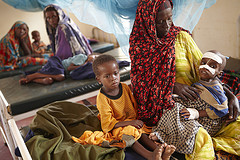
somalia-july11.jpgDrought and war have come together in Somalia, culminating in the worst famine to hit the region in decades. An estimated 800,000 children in the Horn of Africa are acutely malnourished, and over 80% of them are cut off from relief by warlords in the area. Today the UN World Food Programme intended to drop food supplies to the Somali capital to feed the 40,000 refugees gathered there, the first airlift in the two weeks since the UN declared the crisis an official famine.

Aid workers are rightfully focused on the immediate needs of the starving Somalis. But their plight may not be over once the famine ends, whenever that may be. Studies of past famines hint that children who endure severe malnutrition at a young age or while in the womb might be at a higher risk for certain diseases.

Scientists from the Chinese Center for Disease Control and Prevention in Beijing have used data from their country’s National Health and Nutrition Survey, taken by the government every ten years, to follow up on those citizens affected by the Great Chinese Famine that lasted from 1958 to 1961. The widespread famine officially resulted in 15 million deaths, but scholars estimate that the actual number is closer to 40 million.

One paper published last month from the Chinese analysis found that those born during the famine were more likely to suffer from high systolic blood pressure — a risk factor for cardiovascular disease. Additionally, those under the most severe famine conditions were more susceptible to hypertension later on. Famine survivors who ate a western diet high in fat, refined carbohydrates, and low in fruits in vegetables later in life had a more pronounced risk of blood pressure woes than their counterparts who ate the same foods but had never been exposed to famine. A study from the same group published in February came to similar conclusions regarding famine and metabolic syndrome.

Continue reading

Proposed regulation on mobile apps reevaluates the definition of a medical device

ihealth-726.jpgMedical devices were once the sole jurisdiction of hospitals and pharmacies. But the rapid intersection of consumer technology and healthcare technology has created mobile applications that put more health decisions into the hands of normal people — often with little regulatory oversight. Now, the ubiquity of these mobile medical apps has drawn the attention of the US Food and Drug Administration (FDA), which proposed new guidelines last week to regulate many of these programs as medical devices.

There are thousands of such apps currently on the market. Some allow users to input their own health data to manage their weight, running mileage or menstrual cycle; others are tailored specifically to physicians to help medical professionals review patient charts or offer diagnoses based on input patient statistics. The proliferation of medical apps even inspired the XPrize Foundation to create a $10 million award for a diagnostic medical device.

But the availability of these apps could be limited in the future if current apps fail to conform with the FDA’s proposed regulation, or new developers are scared away by its complexity. The new rules would require developers to submit their medical apps for FDA approval, following many of the same guidelines as medical devices. These include clinical trials, quality control guidelines for manufacturing, and adverse event reporting. The FDA will accept comments on the draft legislation for the next 90 days.

Continue reading

Genetic markers predict risk of second cancers

nm.2407-F1.jpg

Radiation treatment for one type of cancer can, unfortunately, raise the lifetime risk of developing a second malignancy somewhere else in the body. But doctors have until now had a tough time forecasting who is at the most risk of these secondary cancers.

Now, researchers have identified two genetic variations that can predict which people treated for Hodgkin’s lymphoma are most likely to develop other tumors decades later in life.

“They used very wise scientific intuition and they got some place very interesting,” says Stephen Channock, head of translational genomics at the US National Cancer Institute in Bethesda, Maryland, who was not involved in the study. “It’s a very exciting scientific finding.”

A team led by University of Chicago pediatrician Kenan Onel recruited around 200 people diagnosed with Hodgkin’s lymphoma as children, half of whom developed second cancers in adulthood. Reporting online in Nature Medicine yesterday, the researchers performed a genome-wide association study (GWAS) and discovered three single nucleotide changes that were far more prevalent in people with second cancers.

“They did a GWAS in a very small study — 100 cases and 100 controls — but the effect they saw was very strong,” says Channock. The study authors then repeated the analysis using a different set of cancer patients, and found that two of the three DNA markers remained significant. Specifically, people with either one of these two gene variants were two- to four-times more likely to develop second cancers.

Both of the DNA markers sit on chromosome 21 near a gene called PRDM1, which encodes a protein involved in the maturation of B cells — key immune cells that go awry in lymphoma. “Taken together,” the authors write, “our findings support a previously unknown role for PRDM1 as a radiation-responsive tumor suppressor.”

If the results are validated in larger cohorts, the authors suggest that physicians could screen for the markers and then tailor therapies accordingly to avoid giving radiation to those most susceptible to second cancers.

“This finding means we can better identify children who are most susceptible to radiation-induced cancers before treatment begins and modify their care to prevent this serious long-term complication,” Onel said in a statement. “Luckily our options for Hodgkin’s are broad enough that we can find ways to control the initial disease without relying on radiation therapy.”

Image: Best, T. et al. Nat. Med. doi:10.1038/nm.2407 (2011).

Centenarian genetics study retracted

Researchers from Boston University today issued a retraction notice for a controversial paper published last year that purportedly described a predictive test for living to and beyond 100 years. The July 2010 study identified 150 single nucleotide polymorphisms that clustered into three subgroups. On the basis of these genetic factors, the study authors claimed that they could predict an individual’s likelihood of exceedingly long life with 77% accuracy.

Shortly after being published in Science, the study’s methods drew fire from genomicists and biostatisticians, which prompted the journal’s editors to issue an expression of concern in November. Critics argued that the sample size, at 1,055 centenarians and 1,267 controls, was not large enough to draw robust conclusions, Nature reported at the time. In addition, the researchers analyzed the two experimental groups using slightly different SNP chips and in different labs, which could bias the data, Newsweek quoted Duke genomicist David Goldstein as saying.

The authors responded that they would reanalyze the data immediately in response to the criticisms, many of which were communicated over social media (see Nature’s January 2011 news feature: ‘Peer review: Trial by Twitter’).

In today’s retraction notice, the authors wrote that the analysis still found disease-related genetic factors associated with long life that clustered into subgroups — but they differed enough “from those originally published online to the point of becoming a new report.”

The original paper has been cited 25 times according to Google Scholar.

Protein defect linked to male infertility

Sperm.jpg

Here’s a common scenario: A couple is having trouble conceiving so they both go to their doctor to see what’s wrong. She gets check out are her ovaries are fine. He gets tested and his sperm count is normal. So what’s the problem? New research suggests that it could be the absence of a protein that coats the surface sperm and helps it travel through fluids in the female reproductive tract.

Reporting online yesterday in the journal Science Translational Medicine, a team led by Gary Scherr and Ted Tollner from the University of California–Davis showed that men with two copies of a mutation in the DEFB126 gene — which encodes a protein normally expressed in the epididymis, where sperm are stored — had a 30% lower chance of successful fertilization.

Above left, you can see healthy sperm with the proper DEFB126 surface coat covered in negatively charged sugars (green) that help sperm penetrate cervical mucus. On the right, sperm with only mutated DEFB126 proteins show fewer charged proteins and have trouble swimming through the mucosal fluids.

To borrow a phrase from Kermit the frog, here’s another reason why it’s good to be green.

Image: Ted Tollner

Shuttle’s end could spell a bumpy ride for biomedicine in space

Posted on behalf of Emma Marris

NASA_vaccine.jpgNASA’s Space Shuttle program is officially over. The final flight of the US National Aeronautics and Space Administration’s program — a 13-day jaunt by the Shuttle Atlantis to the International Space Station (ISS) and back — touched down today, marking the end of an era for space exploration.

It also marks the end of an era for the small group of life sciences researchers whose mice, bacteria and plants have flown on the orbital spacecrafts. Without any US government–run manned spaceflights planned for the foreseeable future, those in the field of space biomedicine have fewer options for getting their research samples into orbit and back home again. But some scientists are optimistic that the recent completion of the ISS will mark the beginning of a new golden age for biology ex terra.

“I don’t think space biomedicine is going to go away,” says Jeffrey Sutton, director of the National Space Biomedical Research Institute, a Houston-based consortium of NASA’s extramural biomedical research partners. “I think it can only really go one way, and that is we need to advance.”

Lingering too long in the weightlessness of space can cause bones to weaken, hearts to shrink and muscles to atrophy. So, most space-based biomedical research has tested ways to keep astronauts healthy, especially over longer missions. But more basic experiments that have looked at the effects of microgravity on genes, cells and whole organisms have also flown to the final frontier.

To date, though, both kinds of investigation have been largely afterthoughts — small experiments squeezed onto shuttles and conducted in a few scraps of the astronauts’ spare time. Similarly, NASA officials have placed funding for life sciences research low on the priority list, particularly after former President George W. Bush asked the agency to refocus on exploration in 2004.

An exciting development came in 2007 when the US National Institutes of Health (NIH) signed a memorandum of understanding with the space agency wherein projects funded by the NIH could get room in the ISS laboratories and transport from NASA (see Nat. Med. 13, 1123, 2007). But according to Joan McGowan, director of the musculoskeletal diseases division at the NIH, only three awards have been given out so far, and none of them is close to flying.

Continue reading