Eyes on the Nobel prize

In the wee hours of Monday morning, a few scientists will get a phone call from the Karolinska Institute in Stockholm, Sweden to let them know that they’ve just won the Nobel Prize in Physiology or Medicine. Last year’s honors went to UCSF’s Elizabeth Blackburn, Johns Hopkins’ Carol Greider and Harvard’s Jack Szostak for describing how telomeres protect DNA.

Who’s likely to get the call this year? According to Thompson Reuters, the leading contenders fall into three groups:

  • Douglas Coleman (Jackson Laboratory) and Jeffrey Friedman (Rockefeller University/Howard Hughes Medical Institute) for discovering the hormone leptin, which is involved in a host of metabolic functions, including regulation of appetite. (Coleman and Friedman also won this year’s Lasker awards and wrote commentaries about the discovery for Nature Medicine.)

  • Ernest McCulloch (Ontario Cancer Institute) and James Till (Ontario Cancer Institute) for the initial discovery of stem cells, plus Shinya Yamanaka (Kyoto University) for figuring out how to induce pluripotent stem cells from adult mouse fibroblasts. (Yamanaka won last year’s Lasker and wrote about it for the journal, too.)

  • Ralph Steinman (Rockefeller University) for discovering key immune regulators called dendritic cells. (Steinman — yes, you guessed it — won the 2007 Lasker. Read his commentary here.)

Last year, Thomson Reuters also predicted that James Rothman (Yale University) along with Randy Schekman (University of California, Berkeley) had a strong chance for their discovery of cellular membrane trafficking.

Our dark horse in this race is Craig Venter, for his work in creating a synthetic bacterium and sequencing the human genome. Back in 2005, Thomson Reuters touted Venter, along with Francis Collins and Eric Lander, as front runners for the prize, so Venter has been waiting a long time for another accolade to add wind to his sails.

Feel free to speculate on any other likely contenders in the comments!

Clinical trial names can be quite AMUSING, but they don’t include unicorns

batmanunicorn.jpgEarlier this summer, the results of the TORPEDO trial were released. And while we are very interested in whether or not “percutaneous interventions to remove thrombi in the popliteal, femoral, or iliac veins, when performed in conjunction with anticoagulant therapy is [sic] better than anticoagulant therapy alone in preventing recurrent venous thromboembolism”, what we really want to know is: why is it called the TORPEDO study?

In this case, it stands for “Thrombus Obliteration by Rapid Percutaneous Endovenous Intervention (PEVI) in Deep Venous Occlusion”, and if you browse the database of clinical trials maintained by the US government, there’s plenty of other amusing acronyms to be had.

Continue reading

Contraceptives with benefits

bcpills.jpgIn America, contraceptive marketing is the peppier cousin of antidepressant advertising (in this case, limber actresses doing yoga are substituted for the actresses strolling contemplatively through wheat fields). Birth control isn’t just about pregnancy prevention anymore; it’s become hormone therapy to treat everything from acne to mood swings. The prevention of birth defects has been added to that list, and cancer-clearing properties might soon follow.

Currently, the accepted treatment for endometrial cancers (which affect the lining of the uterus) is a complete hysterectomy. But a report in the Annals of Oncology describes how intrauterine devices (IUDs) that release estrogen might be used to treat endometrial cancer. In the 13-year study, 34 women with early-stage endometrial cancer had an IUD that released levonorgestrel inserted for one year, combined with six months of gonadotropin-releasing hormone (GnRH) shots. All were alive at the end of the study without evidence of disease, and nine were able to get pregnant after the IUD was removed.

This kind of hormone-releasing IUD is already on the market — there’s one called Mirena. The hormones are supposed to help with heavy periods, endometriosis and anemia.

Continue reading

HIV drug regimens diversify, but costs plateau

aidsribbon.jpgA report released today by the World Health Organization (WHO), UNICEF and UNAIDS paints a slightly encouraging picture of access to antiretroviral therapy (ART) in the world’s poorer countries.

The kind of antiretroviral therapy (ART) that patients receive has been steadily diversifying. Stavudine, which accounted for 67% of first-line treatments in 2006, represented 51.5% of first line treatments by the end of 2009. Zidovudine (AZT), which dipped in usage between 2006 and 2007 but has been on the rise since, accounted for around 40%, and tenofovir (TDF), a little more than 10%.

The WHO has encouraged countries to phase out the use of stavudine, due to irreversible side-effects like numb limbs and fat loss. This has proven difficult for poor countries, since the average annual cost of a course of stavudine in 2009 was $81 per person; for tenofovir, it’s $613.

Continue reading

What Avandia’s downfall means for pre-clinical experiments

Posted on behalf of Randy Levinson

Well it’s now official. Last week, drug regulators in Europe announced they would pull the plug on Avandia (rosiglitazone, or ‘rosi’, for short) while the US Food and Drug Administration decided to limit sales of the diabetes drug to only those people who can prove they have tried all other treatment options and grasp the increased risk of heart failure the drug can pose.

Needless to say a fair amount of ink has been, and will be, spilled discussing the events that have lead up to these announcements. But what do these regulatory decisions mean for the readers and the editors at Nature Medicine?

Continue reading

Never Let Me Go and The Island: these films are anything but clones

Never-Let-Me-Go-Movie-Poster.jpgWe’ve already taken the steps towards growing hearts, livers, and ovaries in the lab, but that hasn’t stopped movie-makers from exploring the dark side of cloning. This month saw the release of “Never Let Me Go”, directed by Mark Romanek and based on the novel by Kazuo Ishiguro. The movie chronicles the lives of Kathy (Carey Mulligan), Ruth (Keira Knightly), and Tommy (Andrew Garfield), who grow up together at Hailsham, an English boarding school with a sinister secret.

* Spoiler Alert* Even if you haven’t read the book, you should be able to figure out that secret within the first five or ten minutes. It helps that Hailsham is an English boarding school, which has been synonymous with “creepy child farm” from Dickens to Pink Floyd. Anyway, all of the children are clones of people outside, and will ‘donate’ their organs (have them forcibly harvested) one at a time until they ‘complete’ (die).

It was hard as an audience member to be horrified at the premise, because the main characters seem much more concerned with their inevitable love triangle than, you know, the fact that they’re going to be killed for their organs. Perhaps they’ve had treatments to make them more tractable? We don’t really know. Why don’t they run away? We don’t really know. Does the subcutaneous wrist implant they use to swipe in and out of buildings explode if they don’t check in? I suppose providing answers to these very obvious questions would be too gauche for a serious art movie.

Continue reading

Mammograms not all they’re cracked up to be?

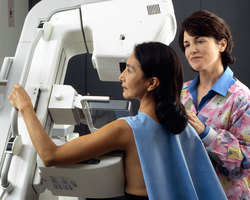
mammogram2.jpgThe utility of regular breast cancer screening is again being questioned after a study published yesterday found that mammogram testing does not reduce the breast cancer death rate as much as once thought. Instead, it appears, increased awareness and improved treatments are mostly responsible for improved survival rates.

A team led by Mette Kalager from the Oslo University Hospital in Norway analyzed medical records from more than 40,000 middle-aged Norwegian women with breast cancer taken from both before and after the Scandinavian country started a breast-cancer screening program in 1996. Reporting in the New England Journal of Medicine yesterday, the researchers found that mammograms reduced the rate of death from breast cancer, but only by around 10% — significantly less than previous estimates of up to 25%.

The new findings add to a growing debate about whether annual or bi-annual mammograms are necessary and useful for women in the 40s and 50s in the modern era of more advanced breast cancer therapies and awareness.

“It is quite plausible that screening mammography was more effective in the past than it is now,” Gilbert Welsh, who studies cancer screening at Dartmouth Medical School in Hanover, New Hampshire, wrote in an accompanying editorial. “The increased awareness about the importance of promptly seeking care for overt breast abnormalities… and the widespread use of adjuvant therapy have probably combined to make screening now less important.”

But the most recent research is not without its flaws, medical experts say. The NEJM study only followed women for around two years after receiving mammograms, which some argue is not long enough to realize the full benefits of screening.

Perhaps the controversy over mammographic screening will be settled not by foregoing the technology, but by improving it. An advisory panel to the US Food and Drug Administration today is set to review a new three-dimensional mammography system that might be a better tool for finding breast tumors than conventional mammography alone. Adding the third dimension means exposing women to more radiation, but the company developing the system, Massachusetts-based Hologic, claims that the reduction from finding breast cancer earlier “greatly outweighs” any extra health risks.

Image: Rhoda Baer / National Cancer Institute

National Children’s Study scales up

NCS.crLogo.JPGCross posted from Nature’s The Great Beyond blog.

While many agencies and programmes in the US government are watching their backs as the budget cutters sharpen their knives, the once-beleaguered National Children’s Study is entering an era of plenty.

The ambitious and controversial study funded and led by the National Institutes of Health (NIH) announced today that it is opening 30 new study locations that run the geographic and demographic gamut, from Benton County, Arkansas to Honolulu County, Hawaii. At these locations, pregnant women, and women likely to become pregnant, will be asked to make a 21-year-plus commitment: the long-term goal of the study, which will cost at least $3 billion over the next couple of decades, is to document environmental impacts on the health of more than 100,000 children beginning before birth and ending at age 21.

Read the rest of the post on The Great Beyond.

Special focus on neurodegeneration: Obstacles and solutions to translating research

SU6600-Neuron.jpg

In May, Nature Medicine, in collaboration with the Volkswagen Foundation, hosted a unique symposium in Seeon, Germany aimed at identifying obstacles to translational research on neurodegeneration and to put forward possible ways to overcome such roadblocks.

The meeting stimulated a lot of debate, the essence of which is captured in a series of seven articles published today that run the gamut from mechanisms of disease, animal models, genetics, biomarkers, clinical trials and organizational issues.

Although these articles summarize the key points that came out of each scientific session, they are not intended to be the end of the discussion among the symposium participants and the community at large.

We therefore invite you to share your views on the obstacles and solutions discussed in these commentaries by sending them to hhs@us.nature.com. We will publish a selection of the comments we receive, together with the original commentaries, in the November issue of Nature Medicine.

Image: Thomas Deerinck, University of California, San Diego