The 2010 Roche – Nature Medicine Translational Neuroscience Symposium

This past April, we were supposed to hold the 2010 Roche – Nature Medicine Translational Neuroscience Symposium “”https://www.nature.com/natureconferences/tns2010/index.html">Innovative Translational Approaches to Brain Disorders" in Buonas, Switzerland.

Unfortunately, we had to cancel the event because of the Eyjafjallajoekull volcano, the eruption of which made it impossible for many speakers and delegates to attend.

Last week, however, we got together at the Roche offices in Basel for a mini-symposium on the same topic, the goals of which were to reinforce our committment to this meeting series and to honor the recipients of the Roche – Nature Medicine Awards for Translational Neuroscience 2010, which we were supposed to present to the winners back in April.

The Junior Award recognizes a researcher at the doctoral, post-doctoral level or who has been an independent investigator for a maximum of seven years. This year, the recipient was Dr. Feng Zhang, from Harvard University, in recognition of his pioneering work in the field of optogenetics — a powerful tool to study the function of neural circuits. He is shown in the picture receiving his Award from Eric Prinssen (from CNS Research at Roche and co-organizer of the meeting).
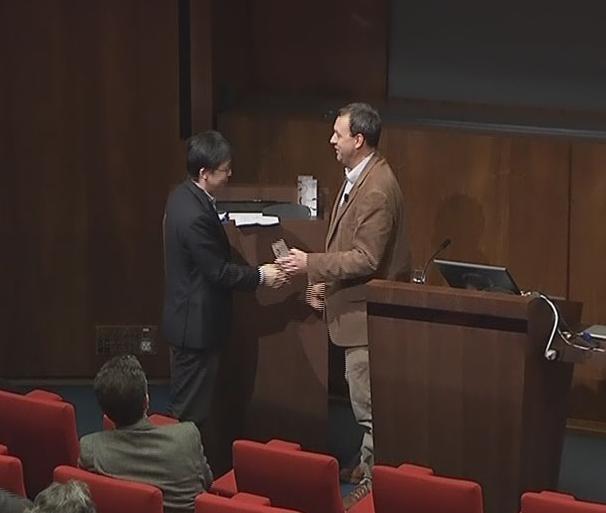
Feng.JPG

Continue reading

Q&A with Ellen ’t Hoen, head of the Medicines Patent Pool; “I hope to have licenses to produce drugs a year from now.”

Ellen.JPG

By Asher Mullard

In July, the global health financing mechanism UNITAID established an intellectual property–sharing scheme focused on scaling up access to new and lower-priced antiretroviral drugs in the developing world. The initiative—called the Medicines Patent Pool (MPP)—aims to streamline licensing processes, drive the combination of multiple HIV medicines into one pill and foster the development of drug formulations for children. In September, the US National Institutes of Health (NIH) became the first contributor to the venture, licensing a suite of patents related to protease inhibitors that are used to treat HIV. The task of bringing drug firms and other key stakeholders into the fold now falls on Ellen ‘t Hoen, a lawyer who became MPP’s executive director last month after previously heading up Médecins Sans Frontières’ Campaign for Access to Essential Medicines. Asher Mullard spoke to Hoen about the challenges of encouraging companies to share their intellectual property in a normally guarded sector.

(Click here to continue reading)

Image by ©IAS/Marcus Rose/Workers’ Photos

Universities evolve, looking to Darwin for new medical insights

DarwinasDoc.jpg

By Elie Dolgin

Humans are the products of millions of years of evolution through natural selection. Yet when it comes to the treatment of disease, physicians and biomedical researchers have long neglected our evolutionary pasts. Now, a number of research institutes are attempting to remedy that by launching new research centers dedicated to the burgeoning field of evolutionary medicine.

The newly minted Center for Evolutionary Medicine at the University of Zurich opened its doors in late October. Backed by a $10 million donation from the private Zurich-based Mäxi Foundation, the center will focus on analyzing ancient DNA and bones as well as dissecting microevolutionary changes in human morphology to better understand modern diseases. “It’s medical research, but it’s looking from an evolutionary perspective,” says the center’s director Frank Rühli, a physician who has studied ailments such as atherosclerosis in Egyptian mummies.

(Click here to continue reading)

CIRM chief stays on, but vows to find successor quickly

Klein.JPGThe architect and chairman of the California’s $3 billion stem cell agency is set to keep his job for a little longer. In a near-unanimous decision with one abstention, the agency’s board of directors resolved today to reelect Bob Klein — the man who co-wrote the ballot initiative that created the California Institute of Regenerative Medicine (CIRM) and then served as the agency’s only chairman for the past six years — to another six months to help the organization identify a suitable successor.

“I’m going to be aggressively trying to find a replacement,” Klein told Nature Medicine. “Going forward here, we’re going to have the time to go through a process to define the criteria" for the next chairman.

Klein had previously vowed to step down from the agency’s helm at the end of his term this week. In his place, state officials tasked with nominating his replacement originally tapped current vice-chairman Art Torres as well as Alan Bernstein, executive director of the New York-based Global HIV Vaccine Enterprise, as possible successors. But after Bernstein, a Canadian national who formerly headed the Canadian Institutes of Health Research, was forced to pull out of the race at the beginning of the month because of a state law requiring the head of a public agency to hold US citizenship, and Torres, a former state Senator, last week withdrew his nomination, Klein effectively became a shoo-in for the post.

Continue reading

What’s in the mix for TB? The drugome suggests new cocktail solutions

By Stu Hutson

The first-line regime of tuberculosis drugs has remained virtually unchanged for a half century. But instead of improving on these medications, some researchers say it’s time to scour the lists of already-approved drugs for other indications or start from scratch to curb the more than 1.7 million deaths from tuberculosis (TB) each year.

In early November, for example, the New York–based TB Alliance announced the launch of a clinical trial to test a radically different drug cocktail. “We see this as a paradigm shift in methodology,” says Ann Ginsberg, the organization’s chief medical officer, “And it’s been one that industry as well as regulators at institutions like the [US Food and Drug Administration] have been very supportive of.”

(Click here to continue reading)

Duke’s Discovery Genomics center rides pharmacogenomics wave

By Jessica Wapner

Last year, a research project led by David Goldstein of Duke University found that variations in the IL28B gene had profound effects on how people with hepatitis C respond to treatment. More specifically, those with certain mutations were twice as likely to respond to prolonged drug therapy (Nature 461, 399–401, 2009). The link’s impact on patient care and drug development served as a wake-up call for investigators to ramp up efforts to identify genetic variants associated with disease occurrence and treatment response.

Spurred by this homegrown insight, investigators at the Duke University School of Medicine in Durham, North Carolina decided to form Discovery Genomics. The new center—a collaboration between the Duke Clinical Research Institute (DCRI) and the university’s Center for Human Genome Variation (CHGV)—launched in October. Although projects within the university are its main focus, Discovery Genomics also operates as a fee-for-service business for pharmaceutical companies interested in finding genetic variations associated with drug efficacy and toxicity.

(Click here to continue reading)

With flu season comes new hope for fewer jabs in the future

shotsforflu.jpg

By Elie Dolgin

Each year, vaccine companies gamble on the flu strain they expect to make the most people sick in the coming season and develop a new influenza vaccine to protect against it. The strategy involves a risky calculus, so researchers have turned to targeting nonmutating components of the virus with an eye to forging a universal flu vaccine capable of providing lasting protection from a single shot.

“The hope is that if we make and develop a vaccine based on these conserved [regions], then the vaccine would last

longer than just one year,” says Peter Palese, a virologist at Mount Sinai School of Medicine in New York.

(Click here to continue reading)

Image by istockphoto

Amid legal uncertainties, NIH approves more embryonic stem cells

lo_OD21618006.jpgThe legal battle over whether taxpayer dollars can go toward human embryonic stem cells research continues to drag on, but the US National Institutes of Health (NIH) is not waiting for a final court decision before adding new cell lines to its list of those eligible for financial backing.

In August, a federal district judge issued a preliminary injunction against federally funded studies using such cells. But the nine-member working group tasked with determining whether embryonic stem cell lines are scientifically and ethically appropriate for federal backing has been “moving forward with our regular reviews” ever since an appeals court suspended the injunction in September, says the panel’s chair Jeffrey Botkin, a medical ethicist from the University of Utah School of Medicine in Salt Lake City.

Yesterday, the advisory committee to NIH director Francis Collins voted in agreement with the working group and approved four new lines from India and Sweden. These include two lines from the Swedish biotech firm Cellartis that had previously been eligible for funding under former US President George W. Bush but had to reapply under the new administration’s rules. The panel rejected five other cell lines derived at health centers in Houston and Chicago, citing a lack of adequate informed consent, and deferred the decision regarding six lines from Guangzhou Medical University in China until expert native-Chinese speakers could weigh in on the wording used in the consent forms.

Continue reading

Minipig, minipig, let me in – “Pigs are basically taking over as the large-animal model of choice”

By Elie Dolgin

Animal experimentation remains an essential component of drug safety testing. But that doesn’t mean that pharmaceutical companies have to rely on the same old animal models. According to a panel of European experts, diminutive strains of domestic hogs called minipigs could provide more suitable platforms for toxicity testing than monkeys, dogs, rats and other species routinely used to gauge drug safety.

“There are many features of the minipig that make it more amenable for being a toxicology model,” says Roy Forster, chief scientific officer of the French contract research organization CIT. “If you had to start the field of toxicology all over again and you didn’t have the history and the tradition that we do, then the minipig would certainly be an animal that we would readily turn to.”

(Click here to continue reading)

Animal testing alternatives come alive in US

By Elie Dolgin

In Europe, long-standing public opposition toward animal testing has led to a broad push to develop alternative means for assessing the potential hazards of drugs. But similar efforts across the Atlantic have often lagged far behind. Now, with the formation of a new society dedicated to finding nonanimal testing methods, as well as new government programs, many experts perceive a sea change in US policy.

(Click here to continue reading)