Bundled RNA balls silence brain cancer gene expression

{credit}Mirkin lab, Northwestern{/credit}

Scientists have developed a nanotechnology-based way to silence a key genetic switch involved in the formation of glioblastoma brain cancer. The technique, which delayed tumor growth in mice, consists of an injection of synthetic balls of RNA with a gold nanoparticle core. Researchers think similarly engineered RNA blobs, called spherical nucleic acids (SNAs), could eventually be used to treat Alzheimer’s disease and other neurodegenerative ailments.

“We are really excited about this,” says Alexander Stegh, a cancer biologist at the Northwestern University Feinberg School of Medicine in Chicago who helped develop the new cancer-killing SNA platform. “It’s a really novel approach.”

One of the biggest challenges for researchers wishing to treat brain-related diseases is crossing the blood-brain barrier, a separation of circulating blood that blocks bacteria and large molecules from entering the brain. Recent attempts to address this issue in brain cancer have involved injecting gene-silencing RNA directly into brain tumors. This method, called RNA interference (RNAi), is designed to neutralize the expression of important oncogenes. But injecting RNA through the skull poses a number of safety and logistical issues, and is inefficient in cases involving more than one tumor site.

Continue reading

Natural virus-killing RNA mechanism found in mammals

It’s Nobel week. And while all eyes are on this year’s winners of the medicine/physiology prize for their work on cell transport mechanisms, it’s worth looking back at another award granted seven years ago to the discoverers of RNA interference (RNAi), the biological process by which small RNA molecules inhibit gene expression. In recent years, various RNAi therapies have entered clinical trials, including one that researchers reported earlier this month can drastically reduce cholesterol levels. But although scientists know that the biological machinery for RNAi is conserved in humans and can be exploited for therapeutic purposes it has been unclear whether the system is ever put into play under natural circumstances like it is in plants and invertebrates.

NvirusNow, a pair of papers published in today’s issue of Science offers the most concrete evidence to date that humans and other mammals indeed use RNA to fight off their viral intruders. “This work is very important, because there’s no longer a question that mammals ever have an RNA-based antiviral response,” says Chris Sullivan, an RNA researcher at the University of Texas at Austin who was not involved in the research.

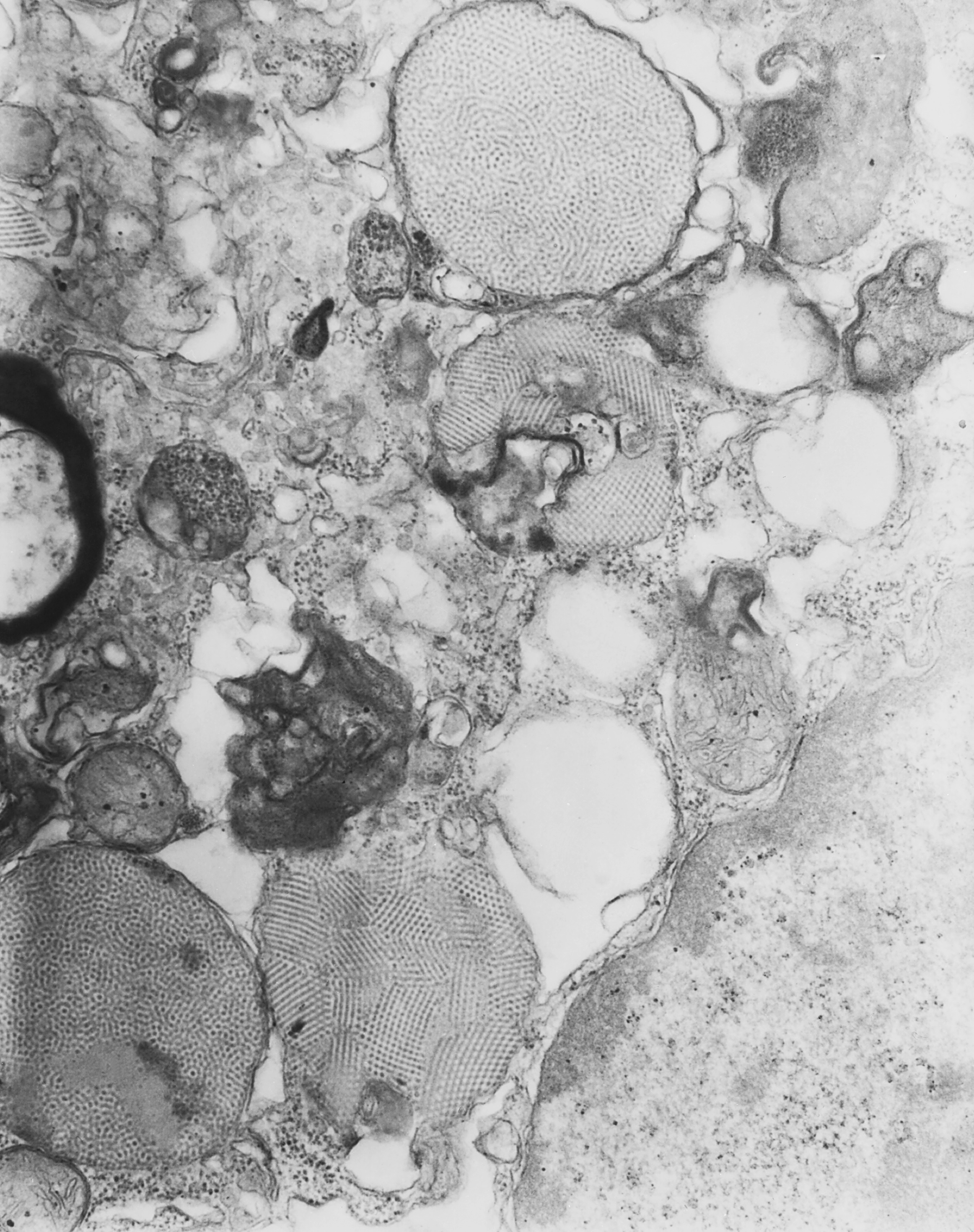
In these new studies, researchers from the University of California–Riverside (UCR) and the Swiss Federal Institute of Technology in Zurich infected either mice or embryonic mouse cells with a type of mosquito-transmissible RNA virus called the Nodamura virus (pictured here). After infection, they observed the accumulation of short RNA strands with all the signature features of an antiviral RNAi response. A viral protein called B2 could block the production of a host cell’s interfering RNA. But without this protein, the viruses were cleared by the RNAi mechanism—both in vitro, as the Zurich team showed, and in vivo, as demonstrated by the California researchers.

Although scientists have looked for this type of mechanism in mammals before, they’ve come up empty handed. Shou-Wei Ding, a UCR microbiologist who was involved in both research efforts, thinks those negative results probably arose because previous studies used viruses that inhibited RNAi, as Nodamura does if its B2 protein is intact. “This mechanism has been hidden from us until we were able to remove the suppressor the virus uses to block the antiviral RNA production,” he says.

Ding says it’s far too early to say whether this research could yield a druggable pathway. The next steps are to look for the suppressors that other viruses may use to block this line of RNA defense.

Image courtesy of the Centers for Disease Control and Prevention/ Dr. Fred Murphy; Sylvia Whitfield

Seeing through the smoke with the help of research: a conversation with Helen Meissner

{credit}NIH{/credit}

Most people stopped doubting the dangers of tobacco long ago. And yet, tobacco products continue to adorn the checkout kiosks of convenience stores and appear in the pages of magazines. The question is: which of these products should be allowed and which should not? It’s no longer a theoretical question: the US Food and Drug Administration (FDA) was granted the power to regulate these products four years ago.

More research will help the FDA make tough decisions in this area, says Helen Meissner, the director of the Tobacco Regulatory Science Program at the US National Institutes of Health (NIH). Meissner is leading a joint effort with the FDA to study how to bring science-based regulation to the manufacturing, marketing and distribution of products such as cigarettes. On 19 September, the two agencies announced that they would grant a total of $53 million to 14 research teams working on tobacco-related projects across the US. Nature Medicine asked Meissner about the newly formed Tobacco Centers of Regulatory Science (TCORS) and the challenges of government-funded research in this space.

What are the biggest research goals of this new funding effort, broadly speaking?

The FDA [needs] to understand tobacco products in order to review tobacco products. They need product standards. They need to know how best to monitor compliance and enforcement, say with advertising or youth access. And they also need information on the best ways to communicate about tobacco products through media and education campaigns.

And how will the 14 centers come together and communicate?

They will be coming together through grantee meetings, so there will be collaborative activities across the centers. Although each is independent and they have different seams—as I mentioned they cover different areas—there is synergy as well across the centers. So that is the role of NIH: to convene the groups.

Continue reading

Whole-exome sequencing rises to top in largest clinical application for undiagnosed disease

Numerous studies have demonstrated the promise of whole-exome sequencing, which focuses on the protein-coding regions of DNA, but the clinical use of this technology has remained limited. Now, the largest report of results from this technology in a population of patients with undiagnosed disease of suspected hereditary origin highlights that the value of this testing is considerable, and that it can even uncover recessive mutations not previously linked to a given disease.

There are an increasing number of genetic tests for various illnesses, and doctors faced with a difficult-to-diagnose patient will order tests that look for mutations in a predetermined set of genes or larger chromosomal abnormalities, such as that detected by karyotype analysis. But the diagnostic success rate of such assays disappoints: karyotype analysis is only about 5% to 15%, and other methods generally fall below 20%.

A pilot study published today in the New England Journal of Medicine offers hope. It suggests that whole-exome sequencing might have as high as a 25% success rate in solving these hereditary disease mysteries. “For years we’ve known that whole-exome sequencing can identify new disease-causing mutations,” says Yaping Yang, a clinical geneticist at the Baylor College of Medicine in Houston and a study coauthor. “But this puts it on the map as a tool for clinical medicine.”

The researchers offered whole-exome sequencing, which cost about $7,000, as part of the medical care given to 250 people with undiagnosed diseases—many of whom were pediatric patients—who were referred by physicians after other methods, microarray analysis or tests looking at a single gene, failed to pinpoint the source of their illness. Whole-exome sequencing resulted in a genetic diagnosis for 62 of the patients, 20 of whom had autosomal recessive diseases—a less common finding because both parents must pass along a faulty copy of the given gene for clinical symptoms to arise. In some cases, patients had recessive mutations that hadn’t previously been reported as associated with their disease. For example, the researchers found one patient with two mutated copies of the spastic ataxia of Charlevoix-Saguenay gene, or ‘SACS’ gene, which included a new DNA deletion not previously known to cause this progressive movement disorder.

Continue reading