Targeted vaccines against feline dander could be the cat’s meow

A man and a woman walk into a doctor’s office. She has a cat allergy; he has a cat. “They say, ‘You’ve got to do something or we can’t get married,’” says Michael Blaiss. It sounds like the beginning of a bad joke, but it’s actually a typical day at Blaiss’s private allergy practice in Memphis, Tennessee. People often face tough decisions when a loved one cannot cohabit with feline companions.

Cat dander—microscopic pieces of dry cat skin coated with Fel d 1, a protein responsible for most cat allergies that is secreted by cat glands onto the skin and transferred to fur from cat saliva through grooming—elicits a reaction in an estimated 17% of individuals in the US. Antihistamines and steroids can dull the symptoms, but the only disease-modifying therapy currently available is a series of injections made of cat dander extract, a soup of proteins literally washed from cat fur and bottled. Whole allergen treatment is time consuming, involving some 30–80 shots over three to five years, and risky, with the chance of rare life-threatening anaphylactic reactions to the injections.

An Oxford, UK–based company, Circassia, hopes to change all that with its new ToleroMune cat allergy vaccine, a molecular approach to the problem. The vaccine is made of seven synthetic peptides, each only 15–20 amino acids long and derived from Fel d 1. The carefully selected peptides quiet the immune system’s aberrant T cell response but avoid activating mast cells, which cause allergic reactions and anaphylaxis.

“We know exactly what is in every vial,” says Steve Harris, Circassia’s chief executive.

In a recently published phase 2 study, 21 people received four injections of the therapeutic vaccine over a three-month period in which they were exposed to cat dander. A year after starting the treatment, these individuals showed a significantly greater reduction in nose- and eye-related symptoms than 29 participants who received a placebo and the same allergen hazard.

Continue reading

Lupus antibodies may provide new option for cancer therapies

Radiation and chemotherapy are sometimes not strong enough to conquer aggressive tumors, but a new method promises to help cancer treatment become more effective. The approach uses antibodies produced by the body when a person has lupus, an autoimmune disorder that can affect the skin, joints, and other organs. These lupus antibodies can weaken cancerous cells by penetrating the cells’ nuclei and disrupting their DNA, priming the cells for destruction by radiation or chemotherapy, according to a preliminary study published in Science Translational Medicine on 24 October.

“It’s remarkable that an antibody could have this ability to penetrate a living cell,” says Jim Ford, an oncologist at the Stanford University School of Medicine in California, who authored a commentary piece on the paper. “It’s a totally new therapeutic approach.”

In the study, researchers implanted mice with breast cancer and brain cancer, and then gave the animals a one-time dose of lupus antibody. The scientists had isolated the antibody from cells from another group of mice that had been manipulated to have a rodent version of lupus. They followed the antibody injection with radiation in one experiment, and with chemotherapy in another test. In both experiments, the mice treated with the antibody showed significantly stronger response to the secondary treatment compared to the group receiving only radiation or chemotherapy.

For example, in the radiation experiment, the scientists considered the rate at which the tumors tripled in size. They found tumors treated with the antibody grew more slowly, taking 5.7 days longer (13.7 days total) to triple than tumors not treated with the antibody, which tripled after just 8 days. The treatment was also successful in human cells in a dish, according to study author Peter Glazer, a radiologist at the Yale University School of Medicine in New Haven, Connecticut .

Continue reading

Prisoners, hard hit by hepatitis C, decry lack of access to drugs

David Proulx was diagnosed with hepatitis C in 2003, but he suspects he contracted the virus decades earlier. He injected drugs in the 1970s and picked up several tattoos when he was first incarcerated in the early 1980s. Over the years, the infection wreaked havoc on his liver. Within a year of diagnosis, he received antiviral drugs to treat the disease, but the medicine failed to eliminate the virus. Proulx had run out of options. In 2011, however, the US Food and Drug Administration approved two new medications to treat hepatitis C. Clinical trials indicated that these drugs could help individuals like Proulx who had previously failed other therapies. But Proulx can’t access them. He’s incarcerated at the Massachusetts Treatment Center within the correctional complex in Bridgewater, and the state has not yet begun administering the new medications to inmates, according to Joel Thompson, a lawyer and prisoner advocate based in Boston.

The hepatitis C virus is the leading cause of liver cancer and the most common blood-borne infection in the US, affecting approximately 3.2 million people. Among prisoners, the infection is rampant. Between 12% and 30% of the roughly 1.6 million people living in state or federal prisons in the US are infected with the virus, as a result of exposures such as injection drug use and unsafe tattooing.

Fortunately, the infection can be cured. Antivirals can eliminate the infection in about half of all cases. Adding to the case to treat incarcerated individuals, a paper published this month by researchers at the University of Wisconsin–Madison concluded that inmates receiving traditional hepatitis C therapy fare just as well as individuals being treated in the community (Hepatology 56, 1252–1260, 2012). However, the newest, most effective medicines cost tens of thousands of dollars. Today, prison officials are facing tough choices about which inmates to treat and which medicines to administer.

“Prisoners are guaranteed access to community-standard health care,” says Josiah Rich, an infectious disease expert at Brown University’s Alpert Medical School in Providence, Rhode Island, and director of the university’s Center for Prisoner Health and Human Rights. But “this community-standard treatment is now, all of a sudden, god-awful expensive.”

Budget buster

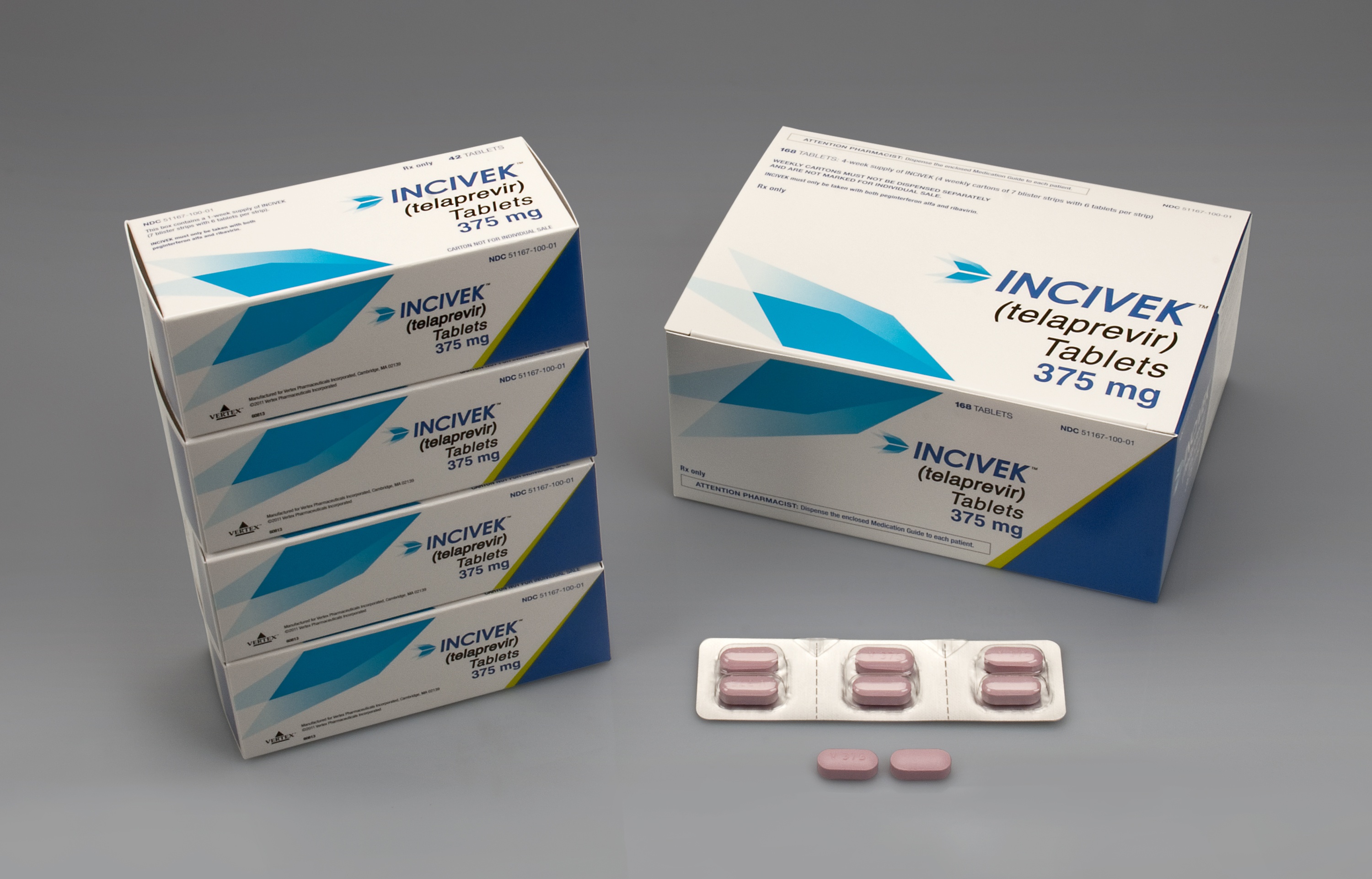
The American Association for the Study of Liver Diseases, a Virginia-based professional society for hepatologists, now recommends that people infected with the most common strain of hepatitis C receive the traditional combination of two antiviral medications, pegylated interferon and ribavirin, as well as one of two new protease inhibitors approved in 2011, Victrelis (boceprevir) from New Jersey’s Merck or Incivek (telaprevir) from Massachusetts-based Vertex Pharmaceuticals. The traditional combination therapy already costs between $15,000 and $30,000 per patient, depending on the length of treatment. The new protease inhibitors will add at least $26,000 and as much as $50,000 to the cost. “It could potentially be a budget buster,” says Robert Trestman, executive director of Correctional Managed Health Care at the University of Connecticut Health Center in Farmington, which cares for inmates in the state’s penitentiaries.

Patient selection and drug adherence are additional challenges. Not every individual who is infected with hepatitis C is eligible for treatment. “They need to meet certain criteria,” says Trestman. For example, because the medications have serious side effects, individuals must have signs of liver damage to receive them. That may happen years after the initial infection. Prison officials also want to be sure that inmates can complete their treatment, which typically lasts a year, before they’re released. That’s because inmates often have trouble accessing the drugs and sticking with the complicated dosing regimen once they’re back in the community, and missing just two or three doses of the new protease inhibitors can “eliminate the significant portion of the benefits,” according to Owen Murray, vice president of offender health services at the University of Texas Medical Branch (UTMB), which provides care for most of the state’s inmates.

Continue reading

Online trial registry proposed in Canada lacks teeth, critics say

The Canadian government announced plans yesterday to establish a Web-based list of all clinical trials conducted in Canada. Such a nationwide registry would create a centralized source of information for patients to find studies they can join and for drugmakers to identify trial participants. However, critics charge that the initiative may do little to increase transparency and accountability in the reporting of clinical research results.

“I find it somewhat cynical that here the government is supporting a website to encourage participation in clinical trials when they allow the companies to keep that information proprietary,” says Alan Cassels, a pharmaceutical policy researcher at the University of Victoria in British Columbia. “It’s hypocritical and it’s crass.”

Currently, only trials funded by Canadian taxpayers or conducted at hospitals that receive public funds must be listed on a trial registry. (With no Canada-specific repository, such studies can be listed on any registry that is compliant with certain criteria set by the World Health Organization or the International Committee of Medical Journal Editors, including the US government’s clinicaltrials.gov, the UK-based Current Controlled Trials International Standard Randomised Controlled Trials Number Register and more than a dozen other national registries around the world.)

Drug company-sponsored trials, in contrast, carry no such mandate. South of the border, US law requires that trial investigators publically release protocols and results for all experimental drugs and devices on clinicaltrials.gov, including for privately funded trials. But in Canada, drugmakers have no obligation to publically disclose study data or register their trials—and, to many researchers’ chagrin, the announcement this week from Health Canada makes no mention of plans to change that.

Without a mandatory disclosure requirement, Kay Dickerson, director of the Center for Clinical Trials at the Johns Hopkins Bloomberg School of Public Health in Baltimore, worries that the proposed Canadian registry will do little to actually increase access to information for both patients and medical professionals. “If it’s voluntary that you register the trials it’s unlikely that you’re going to get 100% ascertainment,” she says.

Hardly registered

Matthew Herder, a health law researcher at Dalhousie University in Halifax, Nova Scotia, has been one of the most vocal advocates of a mandatory reporting requirement. In a letter sent to the Canadian Senate’s Standing Committee on Social Affairs, Science and Technology in June 2012, Herder and two colleagues argued against a “labor-intensive, time-consuming and costly” Canadian portal like the one being proposed, calling instead for Canadian trial sponsors to use a limited number of the already established websites.

“What’s needed is a stronger commitment to enforcing the requirement that people conducting clinical trials actually register in those existing registries,” Herder told Nature Medicine.

Nothing is finalized in the government’s plan. According to the press release from Health Canada, stakeholders will be able to weigh in on the proposal once it is ready, which is expected in the coming months. Still, most onlookers aren’t expecting much.

“We have a staggeringly opaque system here,” says Michael McDonald, a bioethicist at the University of British Columbia in Vancouver. “I applaud anything that brings some semblance of transparency, but I don’t just want it to be window-dressing.” He adds, “The devil is in the details.”

Image: Shutterstock

Sangamo tries its hand with zinc fingers for Huntington’s

NEW ORLEANS — Sangamo BioSciences, the Richmond, California company that has sped ahead with engineered ‘zinc fingers’, is pointing to these proteins as a powerful tools in treating an ever-increasing list of illnesses. Clinicians at the Glandular Disease Research Clinic in San Antonio, Texas, began testing Sangamo’s first therapeutic in 2006, in individuals with diabetic neuropathy, but this was halted in 2011 at the end of phase 2 clinical trials because there was insufficient evidence of its efficacy. At present, the company is involved in on-going clinical trials of zinc fingers for glioblastoma and HIV. It hopes to eventually add Huntington’s disease to that roster, thanks to encouraging data from tests on cells. But the ease of applying the zinc finger approach to diseases affecting the brain presents a more challenging endeavor.

At the root of Huntington’s disease is a specific type of mutation, called a trinucleotide repeat expansion, in the Huntingtin (Htt) gene. The normal Htt gene contains up to 28 copies of the nucleotide sequence CAG, but this expands to more than 40 copies in the disease-causing allele. As a result of the expanded repeat, insoluble clumps of the Huntingtin protein accumulate inside neurons, causing cell death that leads to uncontrollable movements, dementia and, ultimately, death. Patients with between 28 and 35 repeats are unaffected, while those with between 36 and 40 have a form of the disease with reduced penetrance.

In animal models, reducing mutant Htt protein levels prevents disease progression and reverses some symptoms. However, most therapeutic approaches in development lower both versions of the huntingtin protein (the one produced by the normal gene, and the one made by the mutated gene). This has raised concerns about their safety for human use, because the normal protein has important, albeit as yet unknown, cellular function.

To overcome this, Sangamo researchers have developed zinc finger transcriptional repressors that specifically target the mutant Htt allele and block its expression while preserving near-normal expression levels of the normal allele. Zinc fingers are naturally occurring protein segments that recognize and bind to specific DNA sequences, typically regulating the output of a given gene. Using genetic engineering, the Sangamo researchers designed zinc finger proteins containing a DNA-binding site that recognizes the prolonged tricnucleotide repeat found in the mutant Htt gene. They then fused this binding site to a protein domain that recruits other molecules that zip closed the chromosomal region containing the Htt gene with the expanded repeat—thus hindering production of mutated huntingtin protein.

In a recent experiment in a lab dish, the group added the engineered zinc fingers to fibroblast cells obtained from six people with Huntington’s disease. This lowered production of the mutant protein by more than 90%, while reducing the amount of the normal protein by just 10% or less, the researchers reported at the annual meeting of the Society for Neuroscience, held here this week. “There was very potent discrimination between the mutant and normal alleles in cells from all six patients, even though each contained mutant alleles of different lengths,” explains Phillip Gregory*, chief scientific officer at Sangamo BioSciences. “The next step is to make that sure they operate at a broad range of doses, and then we need to move into animal studies of efficacy and safety.”

This is the first attempt to apply the zinc finger approach to Huntington’s disease, and the researchers eventually aim to deliver genes for the zinc finger proteins directly into the brain using adeno-associated viral vectors*, which are already being used to successfully deliver therapeutic genes into the brains of people with Parkinson’s disease in clinical trials.

“This is very promising and exciting work,” says Sarah Tabrizi, a professor at the Institute of Neurology in London, who was not involved in the study, “but it’s still at a very early and exploratory stage, and it’s a big jump going from cells in culture to the human brain.” One challenge is that targeting viral vectors to specified brain areas and then ensuring their proper distribution is difficult, and this is further complicated by the fact that Huntington’s disease begins in deep brain structures before spreading to the cerebral cortex. “Distributing the vector will be a challenge,” Tabrizi says, “but I don’t think it’s insurmountable.”

*Correction: The first version of this post incorrectly stated that the chief scientific officer at Sagamo BioSciences is Phillip Gordon, and that Sangamo are planning to use adenovirus vectors to deliver therapeutic genes into the brain.


Mouse stem cells manipulated to create egg-producing ovary

From recent news about uterus transplants to controversy over the possibility of so-called ‘three-parent children’, the lengths to which modern medicine will go to achieve conception are increasingly expanding. Creating an ovary that can itself produce viable eggs might soon be added to that list.

In a study published online today in Science, Japanese researchers report that embryonic stem cells from mice can be manipulated to form an ovary that produces viable eggs, the second known method of creating a viable gamete from stem cells.

The scientists, led by Katsuhiko Hayashi at Kyoto University in Kyoto, Japan, used both stem cells and fibroblasts taken from mouse embryos. They then manipulated the function of specific genes to create cells that were very similar to primordial germ cells, which become eggs. The manipulated cells were divided into two groups, with some being cultured in vitro with gonadal cells, a germ cell native to the ovary, and some not, ultimately creating two different types of “reconstituted ovaries.”

Continue reading