Drug target suggested for MERS as case count rises

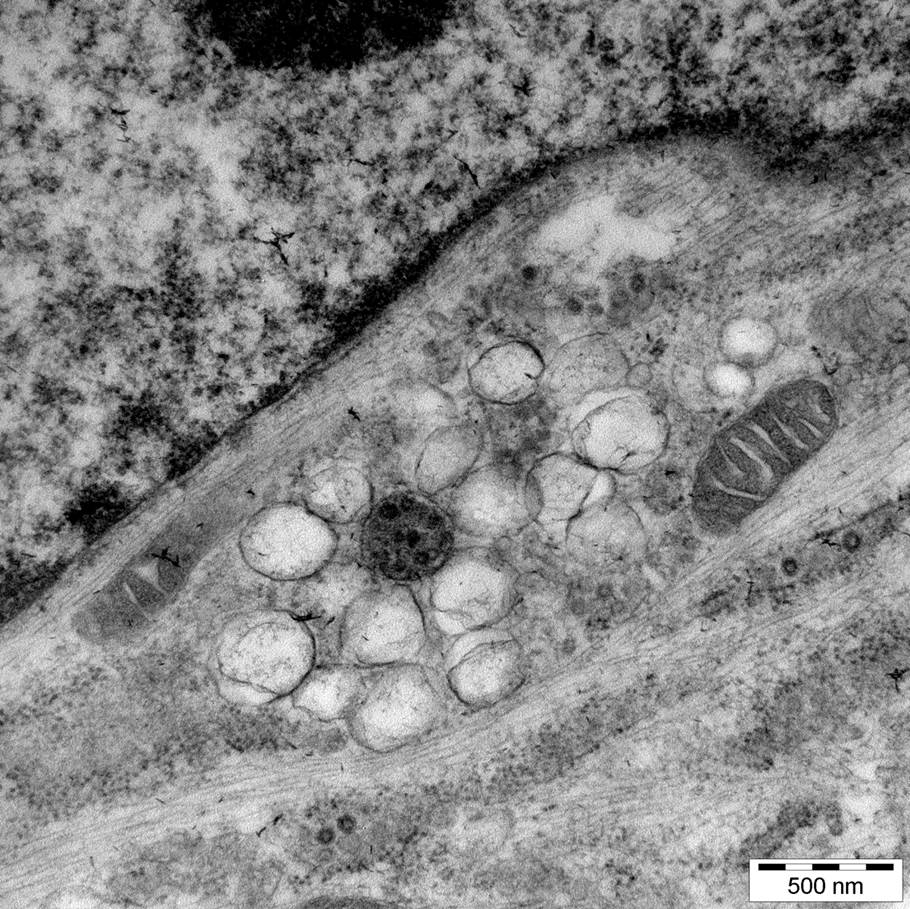
Cluster of vesicles made by virus from usurped and reshaped membranes.

Cluster of vesicles made by virus from usurped and reshaped membranes.{credit}Volker Thiel, Edward Trybala and colleagues{/credit}

Since its appearance in Saudi Arabia in 2012, Middle Eastern Respiratory Syndrome (MERS) has spread to fifteen countries, including the US, where two cases were confirmed in the past month. Worryingly, about 30% of confirmed cases have been fatal, and the lack of specific antiviral drugs for the MERS-coronavirus (MERS-CoV), which causes the illness, poses a threat to public health.

A new insight could help pave the way to treatments in the future for this type of virus. In a paper published today in Plos Pathogens, clinical virologist Edward Trybala and his colleagues at the University of Gothenburg in Sweden describe a compound called K22 that inhibits coronavirus growth in human cells.

Continue reading

Ebola outbreak in West Africa lends urgency to recently-funded research

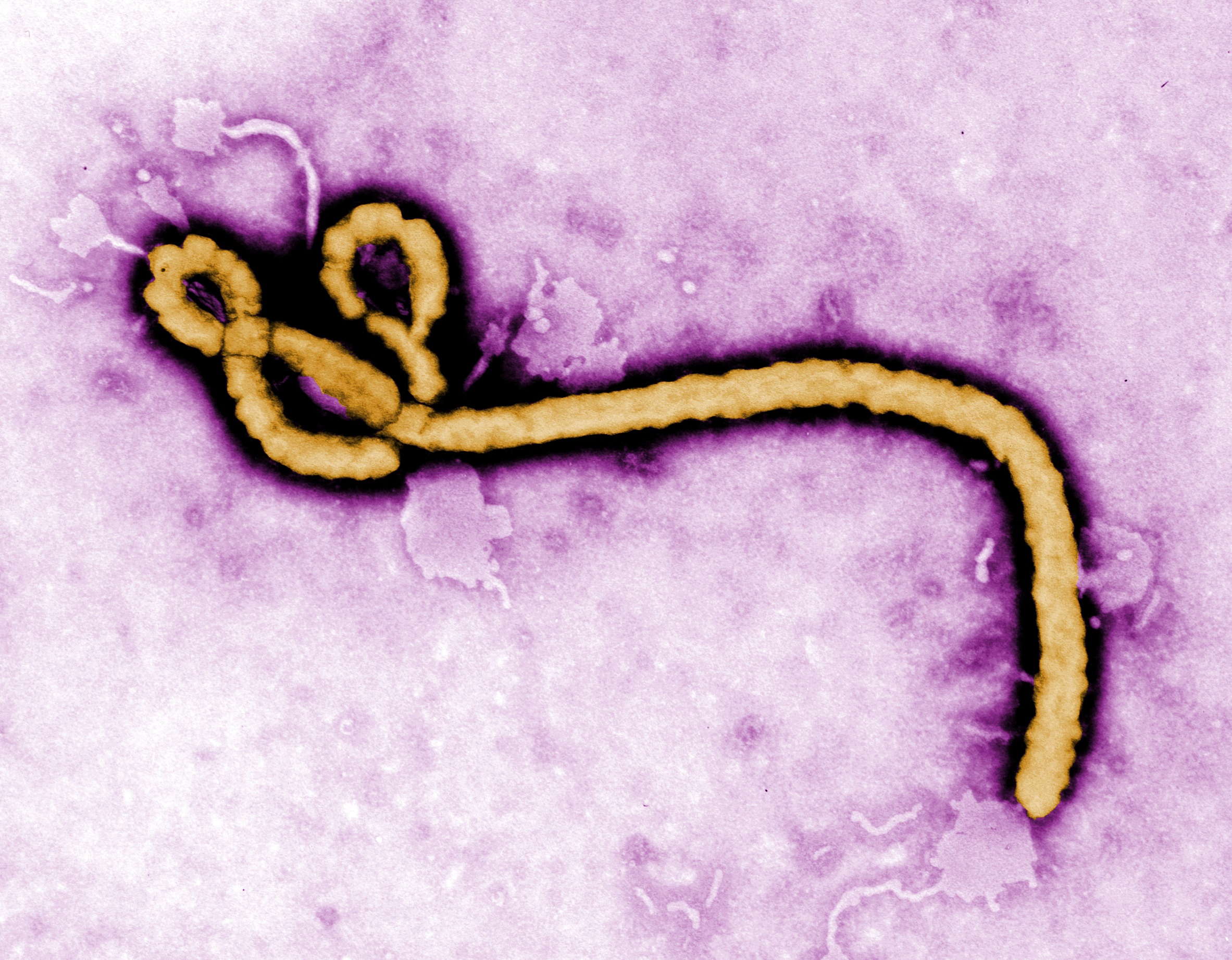
Electron micrograph of Ebola virus

Electron micrograph of Ebola virus{credit}CDC/ Frederick Murphy{/credit}

Earlier this year, the Ebola virus popped up for the first time ever in West Africa. How it got there, some 2,000 miles from previous Ebola hotspots in remote parts of Central Africa, remains a mystery. Experts are particularly concerned about the current outbreak, which has sickened more than 250 and killed at least 140, because the pathogen has made its way into Conakry, the densely populated capital city of Guinea.

Unfortunately, there are no vaccines or treatments approved to work specifically against the virus, which first emerged in the forests of Zaire (now the Democratic Republic of Congo) in 1976. The virus’s high virulence and lethality make it challenging to study, and its rarity means that any effective therapeutics that are developed will likely have limited commercial potential, leaving pharmaceutical companies little financial incentive to develop treatments against the pathogen.

Very few candidate therapeutics against Ebola have proven effective in non-human primates, the gold-standard animal model for research against such viruses. But there is, amidst the ongoing outbreak, mobilization of funding toward anti-Ebola agents that have proven their mettle in such models: last month the US National Institutes of Health announced that it was putting a combined total of more than $50 million towards a handful of the most promising approaches.

Continue reading

Natural virus-killing RNA mechanism found in mammals

It’s Nobel week. And while all eyes are on this year’s winners of the medicine/physiology prize for their work on cell transport mechanisms, it’s worth looking back at another award granted seven years ago to the discoverers of RNA interference (RNAi), the biological process by which small RNA molecules inhibit gene expression. In recent years, various RNAi therapies have entered clinical trials, including one that researchers reported earlier this month can drastically reduce cholesterol levels. But although scientists know that the biological machinery for RNAi is conserved in humans and can be exploited for therapeutic purposes it has been unclear whether the system is ever put into play under natural circumstances like it is in plants and invertebrates.

NvirusNow, a pair of papers published in today’s issue of Science offers the most concrete evidence to date that humans and other mammals indeed use RNA to fight off their viral intruders. “This work is very important, because there’s no longer a question that mammals ever have an RNA-based antiviral response,” says Chris Sullivan, an RNA researcher at the University of Texas at Austin who was not involved in the research.

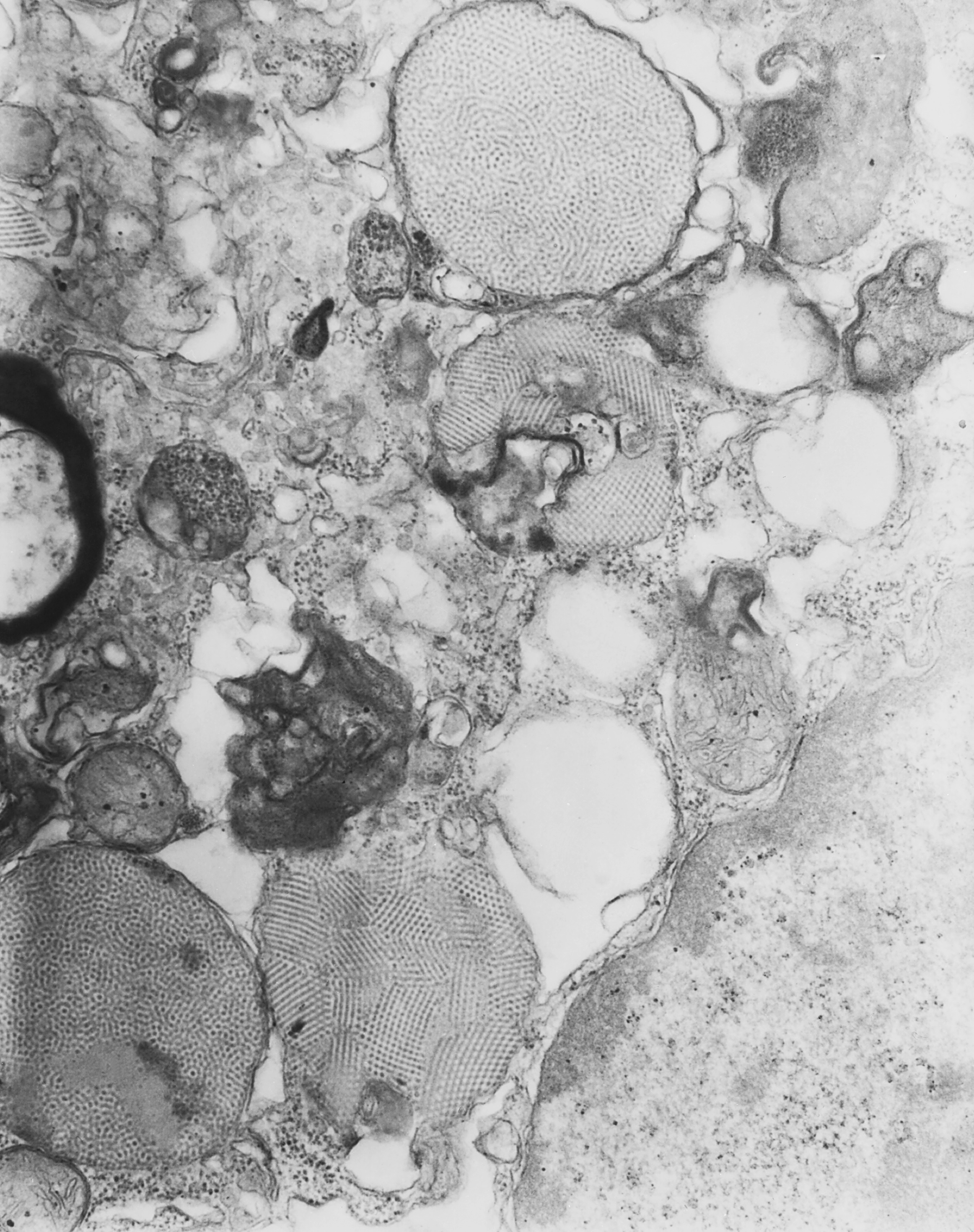
In these new studies, researchers from the University of California–Riverside (UCR) and the Swiss Federal Institute of Technology in Zurich infected either mice or embryonic mouse cells with a type of mosquito-transmissible RNA virus called the Nodamura virus (pictured here). After infection, they observed the accumulation of short RNA strands with all the signature features of an antiviral RNAi response. A viral protein called B2 could block the production of a host cell’s interfering RNA. But without this protein, the viruses were cleared by the RNAi mechanism—both in vitro, as the Zurich team showed, and in vivo, as demonstrated by the California researchers.

Although scientists have looked for this type of mechanism in mammals before, they’ve come up empty handed. Shou-Wei Ding, a UCR microbiologist who was involved in both research efforts, thinks those negative results probably arose because previous studies used viruses that inhibited RNAi, as Nodamura does if its B2 protein is intact. “This mechanism has been hidden from us until we were able to remove the suppressor the virus uses to block the antiviral RNA production,” he says.

Ding says it’s far too early to say whether this research could yield a druggable pathway. The next steps are to look for the suppressors that other viruses may use to block this line of RNA defense.

Image courtesy of the Centers for Disease Control and Prevention/ Dr. Fred Murphy; Sylvia Whitfield

Cytomegalovirus—a ‘stealth’ pathogen—gains attention in the drug development realm

OCytomegalovirus is sometimes called ‘the stealth virus’ because many people, including more than 50% of adults in the US, harbor the infection. But few individuals ever feel the effects of CMV unless something else squelches their immune system first—such as the immunosuppressing drugs given before a bone marrow transplant. Wherever the virus gains a foothold, it can create serious problems such as pneumonia, unrelenting diarrhea or inflammation in the eye. It’s also the most common viral infection in newborns and 1 out of every 750 infants born with CMV in the US will suffer permanent harm—hearing loss, brain damage, or even death—from this virus.

At present, more than three-quarters of people being treated for CMV infection who receive the antiviral drugs ganciclovir or valganciclovir respond to therapy. Both medications stop the virus from replicating, but they only work as long as the treatment is given. So the virus can make a comeback later on. Also, these drugs lower white blood cell counts, making it harder for the immune system to fight CMV on its own. If the virus develops resistance to these first-line drugs, then there are effective back-up treatments with foscarnet and cidofovir, but these compounds can cause kidney damage.

One new option, described in a paper published today in the New England Journal of Medicine, is an investigational drug called CMX001 that shows about the same efficacy as the current drugs. CMX001, also called brincidofovir, is a less-toxic, lipid-coated version of the current second-line drug, cidofovir. But this drug escapes the toxic kidney problems seen with cidofovir and doesn’t cause a drop in white blood cell counts. Additionally, CMX001 can be given in a pill form, an advantage over some of the other drugs used against CMV that must be injected intravenously.

“There’s a perception in the scientific community that we need to do better in our treatments for cytomegalovirus. This drug is better than what we’ve had,” says first author on the paper Francisco Marty, an oncologist at the Dana-Farber Cancer Institute in Boston.

Continue reading

A comprehensive virus survey now could save billions in avoided health care costs later, experts say

smallbat

Imagine if pandemics could be forecast by infectious disease scientists the way that bad weather can be tracked by meteorologists. New viruses would still infect people, but the cost of monitoring the emergence of those novel pathogens would be far less than the expense of dealing with a worldwide outbreak. At least that’s the reasoning behind a new study, published today in mBio, in which researchers propose launching a billion-dollar-plus global surveillance plan to find all the viruses lurking in mammalian wildlife before those same viruses find us.

A consortium of scientists, funded by the US Agency for International Development (USAID), headquartered in Washington, DC, estimated that at least 320,000 viruses remain unidentified in the world’s 5,500 mammals. They argue that the cost of systematically searching for those new viruses would pale in comparison to the estimated $16 billion another epidemic such as SARS could cost.

That epidemic, which started in China in 2003 after a coronavirus carried by bats and palm civets started infecting humans, eventually killed more than 700 people and spread to 37 countries worldwide. The ongoing outbreak of Middle East respiratory syndrome (MERS) hasn’t yet reached such pandemic levels. But with 108 laboratory-confirmed cases of infection in nine countries, including 50 deaths, public health officials remain on high alert.

Eric Delwart, a virologist at the Blood Systems Research Institute in San Francisco who was not involved in the study, describes the virus-hunting proposal as “a feasible approach” to looking for zoonotic diseases that animals could transmit to humans. “This study provides one of the first data-based estimates of the scope of the viro-diversity which humans and their livestock have to face and from which the next viral epidemic will emerge,” he says. “Although other people have looked at pathogen levels before and estimated that there are two new human viruses coming each year, we don’t know where they’re coming from.”

Continue reading

Mouse study illustrates how foreign herpes DNA triggers immune response

Herpes_vironFor the immune system to do its job in fighting off disease, it first has to be able to detect foreign intruders. Scientists have known for some time that when bacteria, viruses and other pathogens set off alarms in the immune system, this leads to the production of molecules such as interferon that rev up the body’s defenses. But until now, researchers lacked evidence from animal experiments to back up the theory of how the DNA from these pathogens first triggers this immune-activating cascade in the immediate, ‘innate’ immune response.

Previously, immunologist Zhijian “James” Chen, of the University of Texas Southwestern Medical Center in Dallas, and his colleagues showed that when bacteria or viruses wile their way into host cells—either by tricking cell receptors to allow entry or getting engulfed by the cell membrane—their foreign DNA activates an enzyme called cyclicguanosine monophosphate–adenosine monophosphate synthase (cGAS). This enzyme then binds to the intruder’s DNA and triggers the next step in the cascade of immune events: the production of a second messenger, a small molecule called cyclicguanosine monophosphate–adenosine monophosphate (cGAMP).

In a mouse study published online today, Chen’s team demonstrates evidence of cGAS activity, in vivo, against infectious agents such as herpes virus, which uses DNA as its genetic material (unlike influenza or rotaviruses, which are examples of RNA-based pathogens).

The researchers exposed five mice that they had genetically engineered to lack cGAS to herpes simplex virus 1 (HSV1). All of those mice died from viral encephalitis, as did five control mice that also were exposed to the virus. Crucially, though, several of the mice engineered to lack cGAS died three days after exposure and had high titers of HSV1 in their brain tissue, whereas their control counterparts died beginning on the sixth day and had no detectable HSV1 in the brain. The cGAS-deficient rodents also had markedly lower levels of interferon—a key signaling molecule in of the immune system—indicating that mice without cGAS couldn’t mobilize an effective immune defense.

The role of cGAS show in the earlier in vitro study and this new rodent experiment has impressed other scientists. “This is a brand new antiviral mechanism that we didn’t know before,” says Luke O’Neill, a biochemist at Trinity College in Dublin, Ireland. “This research has really galvanized the field.”

Continue reading

Potential treatment for severe influenza found in Omega-3 fatty acids

shutterstock_129688976Omega-3 fatty acids, which have an important role in promoting healthy growth and development, have made headlines in recent years for, among other things, their possible cardiovascular benefits. Found in high levels in fish oil, these fatty acids are the most consumed non-vitamin or non-mineral supplement in the US. Now, researchers have discovered another potential use for these fat building blocks: using them as a treatment for flu.

In a study published today in Cell, a modified omega-3 fatty acid known as protectin D1 was found to markedly increase the chances of survival in mice with infected with various strains of influenza, including the H1N1 strain behind the 2009 ‘swine flu’ epidemic.

“The authors show for the first time that [protectin D1] actually disrupts replication of influenza,” says Charles Serhan, an anesthesiologist at Brigham and Women’s Hospital in Boston. “It provides a natural template for new therapeutic development.”

When given microgram doses of protectin D1 intravenously 12 hours before and immediately after infection with a strain of influenza A, three out of eight treated animals survived past a two-week end point; by comparison, all seven control counterparts died within eight days. Mice infected with the 2009 strain of H1N1 swine flu fared even better when treated in this manner—all six survived, compared with only two out of six in the group that received only a saline solution.

Protectin D1 given two days post-infection appeared nearly as effective in preventing death in mice as Peramivir, an intravenous anti-viral drug marketed by BioCryst Pharmaceuticals of Durham, North Carolina. Approved in Japan and Korea for treating severe flu, Peramivir did not move past phase III clinical trials in the US for efficacy, but was subject to an emergency FDA authorization in 2009 as a treatment for H1N1 swine flu.

Remarkably, while less than half of treated animals survived past two weeks on either therapeutic alone after infection with influenza A, none died after receiving protectin D1 and Peramivir in conjunction.

In a petri dish model using human lung cells, protectin D1 appeared to reduce the virulence of influenza by blocking the export of viral mRNA from a cell’s nucleus, according to the new study. This is reflected in a massive decrease in the infection rate of cells.

Derived from omega-3 fatty acids, protectin D1 is one of a family of similar fat molecules with apparent antiinflammatory and antibiotic properties. Naturally produced, these compounds are thought to play a protective effect in the lung, brain and other organs. This study is the first to demonstrate anti-viral qualities for these molecules, with protectin D1 showing the greatest efficacy.

“I see this as opening a whole new avenue of research,” says Serhan, who was the first to characterize protectin D1 in 2007. He notes that this could represent a new class of antivirals that work by both reducing excessive inflammation and by disarming replication of the virus. The risk for side effects could be low as well since “it’s a natural mechanism,” says Serhan.

Many questions remain as to protecin D1’s therapeutic potential in humans, as well as if these omega-3 fatty acid-derived molecules could treat other types of viral infections. Future clinical trials and research are needed to prove efficacy and safety, says Serhan. For now, he recommends not over-doing it with fish oil supplements, until scientists know more about the underlying mechanisms. “You don’t want to be deficient in [omega-3], but I wouldn’t go the other direction. There could be unwanted side effects.”

Image: Shutterstock

EDITORIAL: A long pause

A version of this editorial appears in the February 2013 issue of Nature Medicine.

Last January, scientists voluntarily imposed a pause on research that could lead to the generation of highly pathogenic avian influenza viruses with increased transmissibility to mammals. Now, new restrictions currently under debate further risk stalling progress in avian flu research.

****

In late 2011, a firestorm erupted around two papers under peer review on highly pathogenic avian influenza (HPAI) H5N1 viruses. Both identified mutations that would permit airborne transmission of the viruses to ferrets. Although the viruses were not highly pathogenic in the ferrets, the papers sparked concerns that the mutant H5N1 viruses might have pandemic potential.

The concerns are not unwarranted given the history of H5N1 infections. The case fatality rate due to H5N1 in humans exceeds 50%, yet only 610 infections have been recorded since 2003, in part because of its low capacity for human-to-human transmission. However, there is fear that avian influenza could acquire the mutations necessary to rapidly transmit among humans, similar to seasonal influenza. Therefore, a better understanding of the mutations necessary to facilitate transmission of H5N1 in mammals and their effects on the fitness of the virus is considered by many to be crucial in developing countermeasures in the event of an avian flu pandemic.

Continue reading

A universal problem: One virologist’s 20-year effort to challenge an imperfect flu test

{credit}Bindu Marathe{/credit}

Recent headlines have promised that a ‘universal flu vaccine’ may be within reach, pointing to antibodies that offer broad protection in animal studies. But the scientists behind this effort had to first overcome great skepticism from their peers—as well as an imperfect laboratory test. Hannah Hoag reports on one virologist’s 20-year effort to challenge the tenets of the field.

****

Influenza is the Lady Gaga of viruses: it reinvents itself each year, often in unexpected ways. But the flu virus is far more dangerous than an infectious tune. Although the flu usually manifests as a mild illness, the virus kills as many as 500,000 people worldwide each year, and it continues to provide a challenge from a vaccination standpoint. Whereas most vaccines for illnesses such as measles or polio offer years or decades of protection, influenza vaccines tend to work for only one season. The relentless refashioning means new influenza vaccines must be routinely reformulated, all at a cost to consumers and global health systems of more than $4 billion each year.

A new type of vaccine could be on the way. In the past few years, a flurry of papers has provided firm evidence of antibodies capable of neutralizing multiple subtypes of the influenza virus. Immunologists say that isolating such antibodies is the first step toward the creation of a universal influenza vaccine that protects against seasonal flu year after year—and possibly prevents hundreds of millions of deaths when the next influenza pandemic sweeps across the globe. Several such universal flu vaccines are already in early human clinical testing. But convincing the biology community of the existence and potential of such antibodies was an uphill battle, and one complicated by a ‘gold standard’ test that masked the key findings.

Yoshinobu Okuno, who has chased the dream of a universal antibody against flu since 1989, knows these challenges well. Okuno, a virologist at Osaka University in Japan, is now viewed by many experts in the field as an important and early champion of the idea. Yet his discovery two decades ago of a broad-acting antibody called C179 didn’t make waves at the time. “People didn’t pay attention to it,” says Ian Wilson, a structural biologist at the Scripps Research Institute in La Jolla, California. “In those days, most people weren’t thinking about broadly neutralizing antibodies that you could develop for flu.”

The very test that prompted Okuno to look for these special antibodies—a tool known as the hemagglutination inhibition assay—tripped up the efforts of others in the field. In hindsight, the fault in the assay provides a cautionary tale of how the shortcomings of a test can mean that biomedical researchers miss what they are not looking for.

Continue reading

Computer program aims to rank vaccine development decisions

WASHINGTON, DC — Aligning the priorities of all stakeholders involved in vaccine development can be a convoluted and thorny process. An international health organization might emphasize a candidate vaccine’s expected health benefits for disadvantaged populations, a government agency might be more focused on its own backyard, and a drug company could be driven by its monetary bottom line. With so many competing interests, what experimental product does it make the most sense for these partners to pursue?

Soon, a mathematical model that’s particularly good at weighing complex alternatives may be able to help. It’s at the heart of a new computer program, called the Strategic Multi-Attribute Ranking Tool (SMART) for Vaccines, that scores potential avenues for vaccine research and development according to the priorities fed into its algorithm. Members of the US Institute of Medicine (IOM) panel behind the new tool, who discussed the algorithm’s prototype at a meeting here on 2 November, hope it will establish a shared vocabulary that will allow everyone working on preventative vaccines for infectious agents to better understand and share their own perspective. “We’re creating a common language for people to talk with, instead of everyone having their own language,” says IOM committee member Charles Phelps, a health economist at the University of Rochester in New York.

In the past, the IOM simply released reports that encouraged vaccine developers to prioritize tackling certain diseases on the basis of the balance of expected health benefits, the costs of developing and administering the vaccine and the projected savings from the preventative medicine. For instance, in the most recent report, published in 2000, the IOM strongly favored targeting influenza, a virus that kills up to 49,000 people each year in the US at a cost of tens of billions of dollars annually to the country’s economy. In contrast, the bacteria responsible for Lyme disease, a far less prevalent pathogen with a smaller economic burden, fell much lower on the priority list.

The IOM had intended for vaccine developers to take its rankings into account when making decisions. However, according to Paul Offit, chief of infectious diseases at the Children’s Hospital of Philadelphia and a co-inventor of the rotavirus vaccine, such lists tended to justify choices that had already been made. “When the IOM puts a list out,” he says, “[vaccine manufacturers] feel that validates what they’ve done.”

With the SMART tool, any organization can generate its own priority rankings, custom-tailored from a list of 29 different vaccine attributes, including the number of premature deaths expected to be prevented from immunization, the availability of other medical interventions and whether the targeted disease has been stigmatized. A vaccine maker could give more weight to economic considerations such as the costs of clinical trials and licenses, say, whereas a defense-related agency could flag diseases that tend to afflict military personnel serving abroad. Out pops a numerical score for each candidate under consideration, thanks to a computational method also used to weigh complicated options for expanding Mexico City’s airport decades ago. Each score is broken down to reveal how much the chosen priorities contributed to the final number.

Continue reading