Intravenous vaccine for malaria offers robust protection in small clinical trial

mosquito

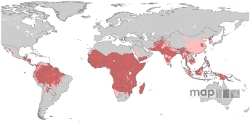
Almost half the world’s population lives in areas where malaria infection is a risk, yet no licensed vaccines exist to prevent this red blood cell parasite from causing almost half a million deaths each year. However, in a study published online today in Science, researchers report on a new vaccine that provided remarkable protection against Plasmodium falciparum, considered the deadliest of the four malaria strains.

“With this intravenous vaccine, we are striving to reach the World Health Organization goal of a [malaria] vaccine with 80 percent efficacy by 2025,” Anthony Fauci, director of the US National Institute of Allergy and Infectious Diseases (NIAID), in Bethesda, Maryland, told Nature Medicine. The clinical study was led by Robert Seder, an immunologist at the NIAID Vaccine Research Center, and involved a vaccine developed by Stephen Hoffman and his colleagues at Sanaria, a biotechnology company based in Rockville, Maryland.

Scientists have spent decades trying to block Plasmodium infections at different stages of the parasite’s life cycle—from the sporozoite that migrates out of the mosquito salivary gland and into host liver cells, to the merozoites that invade red blood cells before further developing into reproducing gametocytes.

To date, only one experimental vaccine, called RTS,S or Mosquirix, developed by GlaxoSmithKline Biologicals and the PATH Malaria Vaccine Initiative, with funding from the Bill & Melinda Gates Foundation, has demonstrated a consistent protective effect. It is made with a combination of antigens from part of a sporozoite and a hepatitis B virus surface receptor. Early results suggested that three doses of the vaccine could cut the risk of infection among children aged 5 months to 17 months by half. But last year the results of a phase 3 clinical trial indicated that it offered only about 30–35% protection when given to infants between 6 weeks and 12 weeks of age.

Seder and his colleagues set their sights on developing a vaccine with at least 80% efficacy and also decided to focus on stopping malarial infections at the sporozoite stage—before the parasite ever gets into the red blood cells. The phase 1 clinical trial reported today included a total of 34 adults completing a series of intravenous vaccines at varying doses, with the most promising results at the highest dose levels. Six adults who received five vaccine injections at the highest dose all showed complete protection after they were subsequently infected deliberately with P. falciparum, while six of nine adults who received a series of four of the high-dose vaccines experienced similar protection following the immunization schedule.

Continue reading

Computer program aims to rank vaccine development decisions

WASHINGTON, DC — Aligning the priorities of all stakeholders involved in vaccine development can be a convoluted and thorny process. An international health organization might emphasize a candidate vaccine’s expected health benefits for disadvantaged populations, a government agency might be more focused on its own backyard, and a drug company could be driven by its monetary bottom line. With so many competing interests, what experimental product does it make the most sense for these partners to pursue?

Soon, a mathematical model that’s particularly good at weighing complex alternatives may be able to help. It’s at the heart of a new computer program, called the Strategic Multi-Attribute Ranking Tool (SMART) for Vaccines, that scores potential avenues for vaccine research and development according to the priorities fed into its algorithm. Members of the US Institute of Medicine (IOM) panel behind the new tool, who discussed the algorithm’s prototype at a meeting here on 2 November, hope it will establish a shared vocabulary that will allow everyone working on preventative vaccines for infectious agents to better understand and share their own perspective. “We’re creating a common language for people to talk with, instead of everyone having their own language,” says IOM committee member Charles Phelps, a health economist at the University of Rochester in New York.

In the past, the IOM simply released reports that encouraged vaccine developers to prioritize tackling certain diseases on the basis of the balance of expected health benefits, the costs of developing and administering the vaccine and the projected savings from the preventative medicine. For instance, in the most recent report, published in 2000, the IOM strongly favored targeting influenza, a virus that kills up to 49,000 people each year in the US at a cost of tens of billions of dollars annually to the country’s economy. In contrast, the bacteria responsible for Lyme disease, a far less prevalent pathogen with a smaller economic burden, fell much lower on the priority list.

The IOM had intended for vaccine developers to take its rankings into account when making decisions. However, according to Paul Offit, chief of infectious diseases at the Children’s Hospital of Philadelphia and a co-inventor of the rotavirus vaccine, such lists tended to justify choices that had already been made. “When the IOM puts a list out,” he says, “[vaccine manufacturers] feel that validates what they’ve done.”

With the SMART tool, any organization can generate its own priority rankings, custom-tailored from a list of 29 different vaccine attributes, including the number of premature deaths expected to be prevented from immunization, the availability of other medical interventions and whether the targeted disease has been stigmatized. A vaccine maker could give more weight to economic considerations such as the costs of clinical trials and licenses, say, whereas a defense-related agency could flag diseases that tend to afflict military personnel serving abroad. Out pops a numerical score for each candidate under consideration, thanks to a computational method also used to weigh complicated options for expanding Mexico City’s airport decades ago. Each score is broken down to reveal how much the chosen priorities contributed to the final number.

Continue reading

Malaria vaccine results present infant immunization quandary

{credit}CDC{/credit}

Babies receive a battery of vaccines after they’re born to protect them against dreaded diseases such as tetanus, whooping cough and polio. Public health officials in the developing world had hoped to soon add a malaria (Plasmodium falciparum) vaccine to the childhood immunization schedule to take advantage of the existing vaccine distribution system. However, new results from a trial of the leading candidate—a shot known as RTS,S, or Mosquirix—suggest that the vaccine reduces the risk of malaria by only a third in infants.

Given the low efficacy, some experts are now questioning whether RTS,S would be a useful addition to the childhood vaccination roster. John Lusingu, a malaria researcher at the National Institute for Medical Research in Tanga, Tanzania, and a principal investigator on the trial, points out that children six months and older are most affected by the disease, so it might make sense to administer the vaccine to older children, for whom the vaccine is more protective. But that would probably require an expansion of the routine immunization program to include additional clinic visits, which can be burdensome for health workers and families.

The vaccine’s developers, GlaxoSmithKline (GSK) and the PATH Malaria Vaccine Initiative, plan to push on with the phase 3 trial, which is slated to end in 2014. “This is not a mission we should just walk away from,” Andrew Witty, chief executive of GSK, said in a press conference on 9 November. The London-based company has spent approximately $300 million on RTS,S to date and expects to invest another $200 million before the project is finished.

The study, published last week in the New England Journal of Medicine, included more than 6,500 infants between 6 and 12 weeks old from across seven African countries. The vaccine reduced the risk of clinical episodes of malaria by 31% in this young cohort, a lower level than that found in children vaccinated between 5 and 17 months for whom the vaccine provided up to 56% protection.

Why the vaccine is less effective in infants than it is in toddlers isn’t yet clear, but the research team behind the trial has a number of hypotheses. One complicating factor could be antibodies passed on from the babies’ mothers during pregnancy. These maternal antibodies protect infants from disease, but they can also prevent vaccines from eliciting a strong immune response .

Those same antibodies decay over time, though, so the older group of children would probably have had lower levels of them, says Rick Fairhurst, chief of the malaria pathogenesis and human immunity unit at the US National Institute of Allergy and Infectious Diseases in Rockville, Maryland. The effect could be especially pronounced in areas with the highest burden of malaria. Repeated exposure to the parasite results in higher levels of antibodies in the mothers, which can then be passed on to the children.

Continue reading

Antimalarial armament remains strong, despite lingering concerns over drug resistance

naturemed20111108.jpgEarlier this month, Indian regulatory authorities granted conditional approval to the country’s first homegrown drug, a malaria-fighting pill that combines a new synthetic form of artemisinin with an older antimalarial compound called piperaquine. If the decision is ratified by the country’s Central Drugs Standard Control Organization, the new drug — developed from start to finish by the New Delhi-based pharmaceutical company Ranbaxy Laboratories — will add to doctors’ armament of artemisinin-based combination therapies (ACTs), the World Health Organization’s medicine of choice for tackling the parasite. Yet with so many options, the question is: which ACT is actually best at treating the infectious disease?

A study comparing four ACTs should go a long way to answering that question. In a randomized clinical trial involving more than 4,100 newly infected children at 12 sites across seven sub-Saharan African countries, three widely-used artemisinin variants proved equally effective at ridding youngsters of the malaria parasite. All three ACTs cleared the infection in more than 95% of trial participants up to 63 days post-treatment. But a fourth combo drug — a newer antimalarial that combines chlorproguanil, dapsone and artesunate — proved only around 85% effective, and was removed from the study after its maker, London-based GlaxoSmithKline, pulled it from the market in 2008 because of adverse effects. The results were published today in PLoS Medicine.

“This should reassure people that these are good drugs that are highly effective and well tolerated and that we should get them to people that need them,” says Nicholas White, a malaria epidemiologist at the University of Oxford in the UK, who was not involved in the study.

Continue reading

Better animal models needed for malaria vaccine development, experts say

malariavaccine.jpegOn Tuesday, highly-anticipated preliminary results from a phase 3 clinical trial of the RTS,S vaccine against malaria found that vaccinated young children had a 56% lower risk of developing the infection. The vaccine’s maker, London’s GlaxoSmithKline (GSK), has been involved with the vaccine since the early 1980s. But its history goes back further to mouse research conducted at New York University (NYU) in the 1960s. Yet, despite a half century of research into malaria vaccines and numerous clinical trials, laboratory models of the disease have changed little — a fact that experts say could be hindering the development of new vaccines.

“The mouse models have not been very predictive,” says Jean Langhorne, an immunopathologist at the MRC National Institute for Medical Research in London. “They’re very good at telling us what vaccines don’t work, but not very good at telling us what vaccines should work.”

When NYU immunologist Ruth Nussenzweig started her hunt for malaria vaccines in the 1960s, mouse models for the disease were brand new. The parasite that causes malaria in humans, Plasmodium falciparum, does not naturally infect mice, so researchers were at a loss for how to study even malaria’s basic immunology. In the 1950s, scientists traveled to the Congo to collect parasites related to malaria from tree-dwelling African thicket rats, and then adapted them to infect mice in the lab. And, thus, scientists developed the mouse model first used for RTS,S: a lab mouse artificially infected with Plasmodium berghei.

Continue reading

New malaria studies challenges us to think outside the net

baby_under_net_kenya_hamel_CDC.jpgWe’ve seen prophylactic use of medicines in the headlines, most recently with the November 2010 news that taking a preventative dose of the HIV drug Truvada cut the risk of infection by 44% among gay and bisexual men. Two studies published yesterday apply the idea of prophylactic drug use to malaria, and suggest that giving young children anti-malarial drugs might outweigh the risk of facing future resistant parasites in malaria-endemic countries.
One study, led by Diadier Diallo of the London School of Hygiene and Tropical Medicine, followed more than 3,000 children in Burkina Faso. It found that those treated with the antimalarial drugs sulphadoxine pyrimethamine and amodiaqune experienced at least 65% fewer malaria episodes than those protected by long-lasting insecticide-treated bed nets alone. The other trial, conducted in Mali by Alassane Dicko from the University of Bamako and his colleagues produced similar results. “Malaria control depends on a combination of strategies,” says Diallo.

Sulphadoxine pyrimethamine and amodiaqune are not the primary antimalarials in use, which makes some experts less worried that prophylactic administration of these particular medicines will result in the explosion of drug-resistant malaria parasites.

“We know there is resistance to both of the components of the drug but they’re still able to deliver this long lasting preventative effect,” says Patrick Kucher, a malaria expert at the US Centers for Disease Control and Prevention.

Christopher Plowe, who studies malaria at the University of Maryland School of Medicine, agrees that this strategy may outweigh the risks. Still, he adds that it’s important that health officials keep an eye out for resistant strains: “To me, if there is a clear evidence of a public health benefit, it may be well worth going from clinical trials to pilot programs with careful monitoring of resistance.”

Image from the CDC

Malaria vaccine holds strong in trial

freeborniwithlogo_300crop.jpgResearchers reported today that the most advanced experimental malaria vaccine developed to date, GlaxoSmithKline’s Mosquirix, provides African children with long-lasting protection against the infectious disease.

In the phase 2 trial, which tracked nearly 900 children in Kenya and Tanzania for 15 months, the risk of infection was cut by about half in those who received the experimental vaccine. The results are comparable with initial findings reported in 2008.

The study authors caution, however, that follow-up trials are still needed to test the efficacy of Mosquirix in children who are malnourished or are HIV-positive, according to Reuters.

With vaccine efficacy hovering at only around 50%, Louis Miller, head of malaria research at the US National Institute of Allergy and Infectious Disease in Bethesda, Maryland, says that a more protective vaccine is still needed. “It’s good, but they can do much better,” he told Nature Medicine.

To increase protection levels against the disease, last April UK-based GlaxoSmithKline announced a partnership with the Dutch biotech Crucell — the manufacturer of another vaccine currently in phase 1 trials in Burkina Faso — to develop a combined vaccine that integrates both companies’ candidate interventions.

Mosquirix is being co-developed by the PATH Malaria Vaccine Initiative, funded in part by the Bill & Melinda Gates Foundation. The vaccine is currently in phase 3 clinical trials in 11 sites in seven countries across sub-Saharan Africa.

For more on the challenges of developing a malaria vaccine, see the Bench to Bedside and Bedside to Bench commentaries from this month’s issue of Nature Medicine.

Image of the malaria-spreading mosquito from the CDC

India’s hidden malaria burden

indianchildren.jpgThe World Health Organization (WHO) may be vastly underestimating the number of deaths from malaria in India, according to a report appearing in The Lancet today. Currently, the WHO pegs India’s malaria death rate at 15,000 per year. The authors estimate that the figure is actually thirteen-fold higher, somewhere between 125,000 and 277,000 deaths per year; their best estimate is about 205,000 deaths per year.

The new estimates are based on interviews with family members of more than 120,000 people who died between 2001-2003. Of the 75,000 deaths that occurred before age 70, more than 2,600 were attributed to malaria. Of course, the cause of death was based solely on the judgment of the physicians analyzing the interviews, rather than a clinical test. Many symptoms common to malaria (fever, vomiting, fatigue) can easily be the result of another kind of tropical disease.

Nevertheless, it seems clear that an accurate picture of India’s malaria burden has yet to resolve fully. Part of the problem is that most deaths in the country do not take place in a health care facility, especially in rural areas. Furthermore, in India, the more common malaria parasite is not the widely studied Plasmodium falciparum but the oft-neglected Plasmodium vivax.

Image by The Dream Sky via Flickr Creative Commons

Once-maligned malaria drug could get a second chance

SP.jpg

The medication sulfadoxine-pyrimethamine, or “SP”, is currently used to treat malaria in pregnant women in the developing world. It works by disrupting the malaria parasite’s ability to make folic acid, which is a key component of nucleotide synthesis. It’s inexpensive, too, costing 15 cents for a course of treatment as opposed to $1 for a similar course of artemisin-based therapy. This alone should make it an attractive option for widespread use, but for a not-so-slight problem: up until now, research seemed to show that the most common malaria parasite, Plasmodium falciparum, was rapidly becoming resistant to SP.

Now come two papers that challenge that notion. Reporting in the International Journal for Parasitology, researchers from the University of Bamako in Mali working with American and European collaborators suggest that the severity of SP resistance has been overplayed. Although administration of SP does increase the prevalence of SP-resistant genes, it’s possible that SP affects the infectiousness of the malaria parasite to such a degree that the effect of that resistance is negligible.

In the first study, 14 volunteers in Mali who had been previously treated with SP were exposed to the bites of mosquitoes (Anopheles gambiae) uninfected with the malaria parasite. A week after feeding on the participants, the mosquitoes were dissected to look for malaria spores. Out of 928 mosquitoes, only seven had them.

The second article looks closer at the mechanism by which SP affects gametocytes, the sexually reproductive stage of P. falciparum that is transmitted via the gut of mosquitos. They found that SP causes those gametocytes to become deformed, and they don’t mature to the next stage of the parasite’s life cycle.

If the results can be replicated, it could be a strong argument for using SP to treat malaria in infants and children in areas where the drug is effective.

Image: SP-treated Plasmodium falciparum gametocytes from Kone et al.

Is malaria research focusing its efforts in the right place?

malariamap01.jpgCurrently, the bulk of the scientific community’s firepower is aimed at Plasmodium falciparum, the deadliest of the four known malaria-causing parasites. But researchers are starting to pay closer attention to Plasmodium vivax, which has heretofore lurked in its cousin’s shadow. Both P. falciparum and P. vivax invade liver cells as part of their life cycle, but P. vivax can lie dormant in the liver for much longer periods of time, potentially causing a relapse of malaria years after the initial infection.

Papers on P. vivax malaria frequently carry the word “neglected” in the title — there’s a lack of understanding of just how widespread the parasite is, which would be key to any sort of control or eradication strategy. In a paper published in PLoS Neglected Tropical Diseases, a team of Oxford scientists offers the most up-to-date picture yet of the global burden of P. vivax. Their maps are based on both incidence of malaria cases known to be caused by P. vivax, and also portray the likely dynamics of parasite transmission, which were calculated using factors like climate, proximity to urban centers and parasite-free areas, and the presence or absence of a certain blood genotype— Duffy negative— that is thought to confer resistance specifically against P. vivax malaria.

They found that, in 2009, up to 2.85 billion people had some risk of P. vivax transmission. Previous estimates from 2005 pegged the at-risk population for P. vivax at about 2.59 billion, and for P. falciparum, 2.51 billion. The burden fell overwhelmingly in Central and Southeast Asia, where over 90% of the at-risk population resides. More than half of the at-risk population lives in areas where P. vivax transmission is low or unstable, suggesting that eradication efforts in these areas could have bright prospects. While P. falciparum remains more deadly, the broader range of P. vivax may place a heavier strain on the health of global populations than previously imagined.

Meanwhile, the author of an essay in PLoS Medicine critiques the messianic single-mindedness of malaria eradication campaigns, such as those funded by the Bill and Melinda Gates Foundation. While acknowledging the good faith on the part of these groups, Naman Shah from the University of North Carolina at Chapel Hill writes that the traditional malaria control measures used in eradication efforts may not work in high-transmission zones, which require new tools and a strategy more suited to their varied on-the-ground conditions.

Malaria map courtesy Guerra et al.