Compound kills drug-resistant tuberculosis through novel mechanism

Tuberculosis is an old disease that demands new drugs. More than one million people die each year from Mycobacterium tuberculosis infections and a growing percentage of new infections—at least 9%—are caused by strains of the bacterium that can’t be killed with many of the drugs now available.
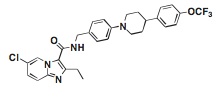
Q203

Q203

A new experimental compound could help. In a paper published online today in Nature Medicine, researchers describe a small molecule called Q203 that thwarts drug resistant tuberculosis infections in mice by targeting the mycobacterial cytochrome bc1 complex—a mechanism distinct from that of existing agents.

“Q203 works in ways [other] drugs do not,” says Kevin Pethe, project head of the antitubercular program at the Institute Pasteur Korea in Gyeonggi-do, who led the study, “and it can work against the resistant bacteria.”

To find the new drug, Pethe and his colleagues screened more than 100,000 different chemical compounds for their ability to inhibit tuberculosis growth in mouse macrophages. They identified 106 molecules that killed the infectious agent without harming the cells. One compound—a kind of imidazopyridine amide (IPA)—stood out for its ability to wipe out drug-resistant strains of tuberculosis isolated from human clinical specimens. The researchers made small changes in the chemical structure of this molecule to derive Q203. They then tested the compound in mice infected with tuberculosis, and observed that animals given Q203 showed fewer lung lesions than those treated with isoniazid, a commonly used first-line anti-tuberculosis agent. Plus, the mice tolerated high doses of Q203 without any noticeable side effects.

To understand how Q203 stopped the bacteria from replicating, Pethe’s team studied six tuberculosis strains that were resistant to the killing power of Q203. By sequencing the genome of these strains, the researchers pinpointed a common mutation affecting the cytochrome bc1 complex, which is involved in energy metabolism. They then measured ATP levels in Q203-sensitive cells and showed that ATP production dropped significantly after treatment with the experimental agent.

The finding that the cytochrome bc1 complex is the primary target of Q203 is consistent with the results of two recent reports showing that IPAs can broadly inhibit energy transduction systems in the tuberculosis pathogen. In one study, a British team from the University of Birmingham and the pharma giant GlaxoSmithKline discovered a series of molecules in this same chemical class directed at the same target, although these compounds were less effective at inhibiting tuberculosis growth as Q203. In the other report, Pethe and his former colleagues at the Novartis Institute for Tropical Diseases in Singapore showed that a panel of 13 different IPA compounds could kill tuberculosis by depleting ATP.

“The IPAs are getting a lot of attention because they are really inexpensive to make, seem to be safe, and work against drug-resistant tuberculosis,” says Marvin Miller, an organic chemist at the University of Notre Dame in South Bend, Indiana, who, together with colleagues at Indiana’s Eli Lilly, reported earlier this year on yet another set of IPAs with promising anti-tuberculosis and pharmacokinetic properties. “They could be very practical.”

Rwandan model proposed as solution to deadly scourge of counterfeit drugs

The problem of counterfeit drugs has made headlines in recent years with, for example, the discovery of fake versions of the cancer drug Avastin showing up in US hospitals. But the problem is worst in developing countries, where up to 25% of drugs in developing countries are falsified or substandard, according to the World Health organization (WHO).

Some global health advocates say that international players such as the WHO have not outlined sufficiently effective plans to deal with the problem of counterfeit drugs. In an essay published online today in PLOS Medicine, health policy specialists, including the Rwandan Minister of Health, Agnes Binagwaho, review data from 17 countries and suggest that Rwanda, a country once engulfed in conflict, serves as an example of how a committed approach can safeguard drug supplies.

The essay highlights the safety of Rwanda’s tuberculosis drugs, as reported in a March 2013 study published in The International Journal of Tuberculosis and Lung Disease. In that earlier study, researchers posing as local customers visited 19 cities to obtain 713 samples of tuberculosis treatment medications. No active ingredient was found in almost 10% of all the samples. The proportion of counterfeit drugs rose to 17% among medications taken from the 11 African nations in the study. However, no falsified medications came from Rwanda.

The East African nation’s success is founded on the government’s integrated approach, linking health and enforcement agencies to regulatory control, says Amir Attaran, a senior author on the new essay and a health law expert at the University of Ottawa. Some of the stringent steps the Rwandan government takes include giving drug contracts only to manufacturers with current WHO-approved certificates of good manufacturing practices, mandatory inspections of incoming drug shipments and routine sampling of medications. The country’s Ministry of Health drafted guidelines  in 2011 detailing measures to ensure drug quality, such as setting up agency outposts at 469 health centers to the rollout of patient forms for reporting adverse drug events. Rwanda also banned the majority of private pharmacies in the nation from selling tuberculosis drugs, making it easier to control the drug supply chain.

Continue reading

Ahead of WHO meeting, experts clash over tuberculosis targets

Diagnostics tubes in a Tanzania clinic show the need for updating tools{credit}Amy Maxmen{/credit}

The deadline for the 2015 Millennium Development Goals (MDGs) is fast approaching, and global governance bodies including the World Health Organization (WHO) are already busy discussing what they might propose for the list of new aims going forward. Tuberculosis was named within goal number 6 in the initial set of MDGs, a set of international developmental targets established by the UN 13 years ago, but the objective was to simply reduce its global incidence. So, as health officials take stock of targets, the tuberculosis community is itching to get its goals included with more definition in the post-2015 development agenda. They will meet to discuss a consensus on the appropriate post-2015 tuberculosis goals at a two-day meeting, sponsored by the WHO, taking place in Geneva beginning 7 February. “My aim is to reach a consensus right now,” says Mario Raviglione, director of the WHO’s Stop TB Department in Geneva. “If we wait, we may miss the train.”

The gathering will be tense. Although the stakeholders all hope to eliminate the pulmonary disease that kills about 1.4 million people worldwide each year, they disagree about what the next ten-year objective should be. One possible target, says Raviglione, would be to cut the projected 2015 annual deaths in half by 2025. The aim echoes Stop TB’s earlier goal of a 50% mortality reduction by 2015 from 1990 baseline numbers, which piggybacked on the MDGs. Although the global numbers are on track to meet Stop TB’s 2015 objective, the incidence of tuberculosis is not coming down in certain regions. For example, Eastern Europe and Africa will probably not have halved their mortality rates by the 2015 deadline. To reduce tuberculosis deaths by 50% in the next ten years, the incidence of the disease must decline three times as quickly and the percentage of tuberculosis patients who die from the disease must drop from 16% to 10%. Experts say that progress will require better drugs—only half of patients with drug-resistant tuberculosis are currently cured with the options available—and countries plagued by HIV will have to scale up antiretroviral treatments to protect these particularly vulnerable populations from active tuberculosis.

Shots on goal
Raviglione calls a 50% target feasible yet challenging enough to drive change, given the imperfect tools to prevent, diagnose and treat tuberculosis that currently exist. But some of his contemporaries say that the 50% target will not inspire sufficient action and enthusiasm. “As usual, [health officials] are suffering from a lack of ambition that has marred the fight against tuberculosis all along,” says Mark Harrington, director of Treatment Action Group, an advocacy organization in New York fighting for better treatment of HIV, hepatitis C and tuberculosis. Having been an activist in the early days of HIV, Harrington has seen the progress catalyzed by lofty—but motivating—goals set by the AIDS community, such as the section of MDG goal number 6 that shot for universal access to HIV treatment by 2010. Harrington says that although some people still go without, the objective resulted in a massive scale-up in antiretrovirals, which now reach more than 8 million people per year. “Aspirational goals are better because you need to try harder to get there,” he says. Even Lucica Ditiu, executive secretary of the Stop TB Partnership—an international group of partners who operate through the Stop TB Department—backs a push for more ambitious targets. She claims that a death reduction of 80% by 2025 would be possible if disease models factor in upcoming changes expected in this decade, including universal access to tuberculosis care, more convenient diagnostics, faster-acting drugs and vaccines against the disease.

Continue reading

Computer program aims to rank vaccine development decisions

WASHINGTON, DC — Aligning the priorities of all stakeholders involved in vaccine development can be a convoluted and thorny process. An international health organization might emphasize a candidate vaccine’s expected health benefits for disadvantaged populations, a government agency might be more focused on its own backyard, and a drug company could be driven by its monetary bottom line. With so many competing interests, what experimental product does it make the most sense for these partners to pursue?

Soon, a mathematical model that’s particularly good at weighing complex alternatives may be able to help. It’s at the heart of a new computer program, called the Strategic Multi-Attribute Ranking Tool (SMART) for Vaccines, that scores potential avenues for vaccine research and development according to the priorities fed into its algorithm. Members of the US Institute of Medicine (IOM) panel behind the new tool, who discussed the algorithm’s prototype at a meeting here on 2 November, hope it will establish a shared vocabulary that will allow everyone working on preventative vaccines for infectious agents to better understand and share their own perspective. “We’re creating a common language for people to talk with, instead of everyone having their own language,” says IOM committee member Charles Phelps, a health economist at the University of Rochester in New York.

In the past, the IOM simply released reports that encouraged vaccine developers to prioritize tackling certain diseases on the basis of the balance of expected health benefits, the costs of developing and administering the vaccine and the projected savings from the preventative medicine. For instance, in the most recent report, published in 2000, the IOM strongly favored targeting influenza, a virus that kills up to 49,000 people each year in the US at a cost of tens of billions of dollars annually to the country’s economy. In contrast, the bacteria responsible for Lyme disease, a far less prevalent pathogen with a smaller economic burden, fell much lower on the priority list.

The IOM had intended for vaccine developers to take its rankings into account when making decisions. However, according to Paul Offit, chief of infectious diseases at the Children’s Hospital of Philadelphia and a co-inventor of the rotavirus vaccine, such lists tended to justify choices that had already been made. “When the IOM puts a list out,” he says, “[vaccine manufacturers] feel that validates what they’ve done.”

With the SMART tool, any organization can generate its own priority rankings, custom-tailored from a list of 29 different vaccine attributes, including the number of premature deaths expected to be prevented from immunization, the availability of other medical interventions and whether the targeted disease has been stigmatized. A vaccine maker could give more weight to economic considerations such as the costs of clinical trials and licenses, say, whereas a defense-related agency could flag diseases that tend to afflict military personnel serving abroad. Out pops a numerical score for each candidate under consideration, thanks to a computational method also used to weigh complicated options for expanding Mexico City’s airport decades ago. Each score is broken down to reveal how much the chosen priorities contributed to the final number.

Continue reading

Childhood tuberculosis treatment remains imprecise science

By Julie Manoharan

fighttuberculosis.jpgLast year, the World Health Organization released updated procedures on how best to tackle the global scourge of tuberculosis. The fourth edition of the “Treatment of tuberculosis: Guidelines” recommended, among other changes, increasing the dosage of tuberculosis medication required to treat children. But, in a sense, the new guidance provided a destination without a map: it failed to address the larger problem of how to improve the accuracy of pediatric dosing.

In recent months, researchers have pointed to a host of problems plaguing the diagnosis and treatment of tuberculosis in children, especially those younger than age 5. For example, at a June workshop held by a taskforce of the US Centers for Disease Control and Prevention, Steve Graham of the Royal Children’s Hospital in Melbourne, Australia called for new and better means of pediatric tuberculosis diagnosis, which can be complicated by concurrent ailments such as malnourishment, HIV infection and pneumonia. And, in September, scientists noted that a negative result from the new interferon-gamma release assays cannot definitively rule out tuberculosis in children (Pediatr. Infect. Dis. J. 30, 817–818, 2011). Also in September, another group urged that animal models for tuberculosis “must be designed and utilized in a manner that is also pertinent to the pediatric population” by addressing age-related variance in drug metabolism (Pharmacol Res. 64, 176–179, 2011).

(Click here to continue reading.)

Image: 1930s US poster via Wikimedia Commons

Good reason TB nervous

By now, you’ve all heard about Andrew Speaker, the man who brought extensively drug-resistant tuberculosis to full-blown US attention.

The case is undeniably bizarre. Man has deadly infection, health officials try in vain to get him to stop flying, he puts hundreds of passengers at risk despite being on a so-called “no-fly” list, a customs official lets him in because he doesn’t look sick… oh, and most bizarrely of all, his father-in-law is a researcher at the Centers for Disease Control and Prevention specializing in, wait for it, TB.

My first response was to think that the US was over-reacting. After all, XDR-TB has been found everywhere in the world. What’s so special about this one case? And it’s not as if the US is teeming with HIV-infected individuals, who are most at risk of catching TB. The reports all said too that his wife hadn’t become infected despite presumably spending lots of time with her husband.

But then the newspapers started detailing the many missteps that led to Speaker’s dangerous jaunts across the Atlantic. Now I, and no doubt every health official in the world, am wondering how we can ever hope to sucecssfully contain something like a flu pandemic, if we can’t get one guy to stay put. I’m not really for the idea of quarantining people. When SARS hit, some governments went a little 1984-ish nutso with nonstop surveillance and what-have-you. But I can’t argue that in the end, that’s what stopped SARS in its tracks, nor that most models show that containing the first few infections will be key in stopping a flu pandemic.

What I think we need is some updated quarantine laws, that make sense and take into account individual liberties. But even before that, I hope governments quickly learn how to stop infected people from putting everyone around them at risk.

TB’s day in the sun

Well, sort of. For the past few days, I’ve been in rainy Vancouver, where TB researchers from all over the world have gathered for a Keystone meeting on the topic. As we reported in our free TB special this month, TB kills 4,400 people every day and together with HIV, is creating a serious crisis in Africa, Asia and eastern Europe.

Not that you would know it from the WHO’s press release on the occasion of World TB Day (today, although the release came out Thursday). The WHO takes a self-congratulatory tone, announcing that TB has leveled off for the first time since 1993. It’s not until the third para that you find out in actual numbers, TB continued to rise in 2005, just more slowly than it had in 2004. That’s worth trumpeting?

TB scientists complain that one of their biggest obstacles is the abysmal funding, about a tenth of the money available for research on HIV/AIDS. It seems to me that the WHO’s positive spin is going to make donors even less likely to chip in. I don’t doubt that the situation could be worse, but when a disease kills nearly 2 million people a year, that’s no time for pats on the back.

A few scientists at the meeting have said that they find the WHO’s stance unhelpful and demoralizing. Fortunately, it dosn’t seem to be affecting their research too much. This is my first TB keystone meeting, but people here have been marveling at how well attended it is this year.

Even better, many of the attendees are young grad students and postdocs. After decades of no drugs, no vaccines and absolutely no money, TB is making a comeback. You could almost say that attention from celebrities like Angelina Jolie and Bono has made TB sort of… sexy.

As offensive as that might sound, anything that brings this horrible killer more attention is all right with me. I’m heading back now to hear more about clinical trials for new TB vaccines, the first good candidates to be tested in almost a 100 years.

That “ancient” scourge, TB

Did you know that one out of every three people is infected with the bacteria that cuase tuberculosis (TB)?

There’s this mistaken impression that TB is no longer a problem, that ‘consumption’ as it was once called, long ago lost its power to kill. But in fact, 125 years after Mycobacterium tuberculosis was identified, the disease kills nearly 2 million people a year.

24 March 2007 is World TB day and partly in recognition of that, we’ve put together a special supplement about TB in our March issue.

News from the special is chock full of statistics, features and profiles of key players. One feature article exposes a power struggle between scientists who work with HIV and those who work with tuberculosis (TB), which is undermining the fight against both diseases.

TB is the leading cause of death among those infected with HIV and in some African countries, about 60% of those with TB are also HIV-positive. Yet, the two communities continue to work separately, diagnosing and treating one disease without taking the other into account.

One sore point for TB scientists is that TB research gets less than a tenth of the money allotted to HIV/AIDS each year. Existing drugs and vaccines for TB were developed decades ago so the infrastructure and expertise for TB need to be built up from scratch. But without enough money, says another article in the special, researchers are struggling to do the research needed to find new drugs and vaccines.

Other news articles describe the public-private partnerships that are helping to solve this funding crisis and the new drugs, vaccines and diagnostic tests in the pipeline.

The special also carries scientific commentaries about the threat of extensively drug-resistant TB, which is virtually incurable, and about the scientific challenges in developing new TB drugs.

We’d love to hear your thoughts about this special. Tell us what you liked—and what you didn’t like—about our coverage.

TB or not TB

Did you know that although AIDS and TB kill about the same number of people, AIDS research gets roughly 20 times the money given for TB research? I didn’t either, until I went to a meeting last week organized by MSF (Doctors without Borders). The theme of the meeting was the urgent need to get some more money—a common cry in science, but in this case, fully warranted.

The numbers are shocking:TB gets about $120 million, less money than even anthrax and smallpox. Of that, only about $20 million goes to clinical trials. That’s maybe enough for one large trial, but that’s it. Scientists are meanwhile desperate to test combinations of drugs we already have, but just don’t have the money.

Who should pay? Europe, which has a rising problem with drug-resistant TB, sets aside a pittance. At the moment, most of the cases are in poor eastern European countries, but If their richer Western neighbors don’t take this seriously, they’ll soon start to see outbreaks of drug-resistant TB.

Despite the bleak numbers, though, I was really inspired by the meeting. TB researchers, maybe because they’re so used to adversity, are an energetic bunch. Unlike in many other scientific fields, most TB researchers get out into the field and see the need for their work first hand. To them, whether to continue doing this important work and push for more money is not really a question.

Going after Gates

When I worked at Fred Hutchinson Cancer Research Center in Seattle I was struck by the chemicals researchers routinely tossed away—often down the drain. It seemed paradoxical that the attempt to understand cancer involved the manufacture of some nasty carcinogens.

Of course, in the big scheme of things the amount of chemicals used in cancer research is small. And almost any positive endeavor has its shades of grey.

Take the Bill and Melinda Gates Foundation. Its role in public health has been extraordinary—but as a report in the Los Angeles Times reveals, the financial arm of the foundation invests in companies that spew some pretty toxic stuff, and may otherwise undermine the mission of the foundation.

These investments include oil companies that pollute regions of Africa where the foundation operates and a health care company embroiled in lawsuits for allegedly unnecessary surgeries. The Times claims that at least 41% of the foundation’s assets, or $8.7 billion, are in companies that “countered the foundation’s charitable goals or socially concerned philosophy.

Unlike some other philanthropies, such as the Ford Foundation, the Gates Foundation has apparently set up a firewall between its investment and granting arms—to try to keep the fund as flush as possible.

It may be easy to quibble with some of the standards used by the LA Times to criticize the Gates Foundation. Nonetheless, with an endowment boosted by Warren Buffett to more than $60 billion, it seems that the foundation could wield its substantial investment power in ways more in keeping with its public health mission.