Course correction

The following editorial appears in the November issue of Nature Medicine.

The international response to the ongoing Ebola epidemic has in many respects been more reactive than proactive. But there are changes that, if made, may shift the balance toward future readiness. 

The projections are appalling. At the time of this writing, the World Health Organization (WHO) stated that the number of new Ebola virus disease cases could reach 10,000 per week before the end of the year. The three most heavily afflicted nations—Guinea, Liberia and Sierra Leone—remain woefully underequipped to stem the tide of infection. Severe shortages in medical personnel, protective gear, treatment beds and burial teams hinder almost every aspect of the effort. Cases of transmission were also reported in the US and Spain.

One thing is clear: the international community was not prepared to respond to this outbreak. Less clear is how, with limited resources, to stop the current epidemic. But several broad areas stand out as particularly important for efforts to stem Ebola’s spread and improve preparedness for future outbreaks. Continue reading
Ebola: a call to action

The following editorial appears in the September issue of Nature Medicine.

The size, speed and potential reach of the 2014 Ebola virus outbreak in West Africa presents a wake-up call to the research and pharmaceutical communities—and to federal governments—of the continuing need to invest resources in the study and cure of emerging infectious diseases.

At the time of this writing, more than 2,200 people are estimated to have been infected by a new strain of Zaire ebolavirus in four West African nations, and more than 1,200 have died. Infection can cause fever, vomiting, diarrhea and internal and external hemorrhaging that can lead to death. Neighboring as well as non-neighboring countries are at risk because of porous borders and air travel of presymptomatic infected individuals, the latter having resulted in the spread of infection to Nigeria. And while the death rate—estimated at 55%—is lower than that of many previous Ebola outbreaks, the total number of cases exceeds all ebolavirus infections since 1976. We don’t know when the outbreak will end, or how far it will spread, but its control is expected to take months and may involve extraordinary measures.

Ebola virus first emerged in the Democratic Republic of the Congo (DRC) and in South Sudan in 1976 and reappeared in South Sudan in 1979, but it caused no further outbreaks until 1994. Since then, there have been several outbreaks in Africa, but none approached the magnitude of the current outbreak. The natural reservoir of the virus remains unclear, but it is suspected to be the fruit bat. However, Ebola virus also infects nonhuman primates, a species of antelope and porcupines, all of which could be sources of human transmission.

The unusually rapid and far-reaching spread of the virus during the current outbreak has been facilitated by insufficient treatment and containment facilities in West African nations that had no prior experience with Ebola; a distrust of Western medical practices; the stigma associated with infection, causing failure to seek early treatment; as well as the long asymptomatic incubation period of the virus (up to 21 days), which enables dissemination through travel.

Continue reading

Ebola outbreak in West Africa lends urgency to recently-funded research

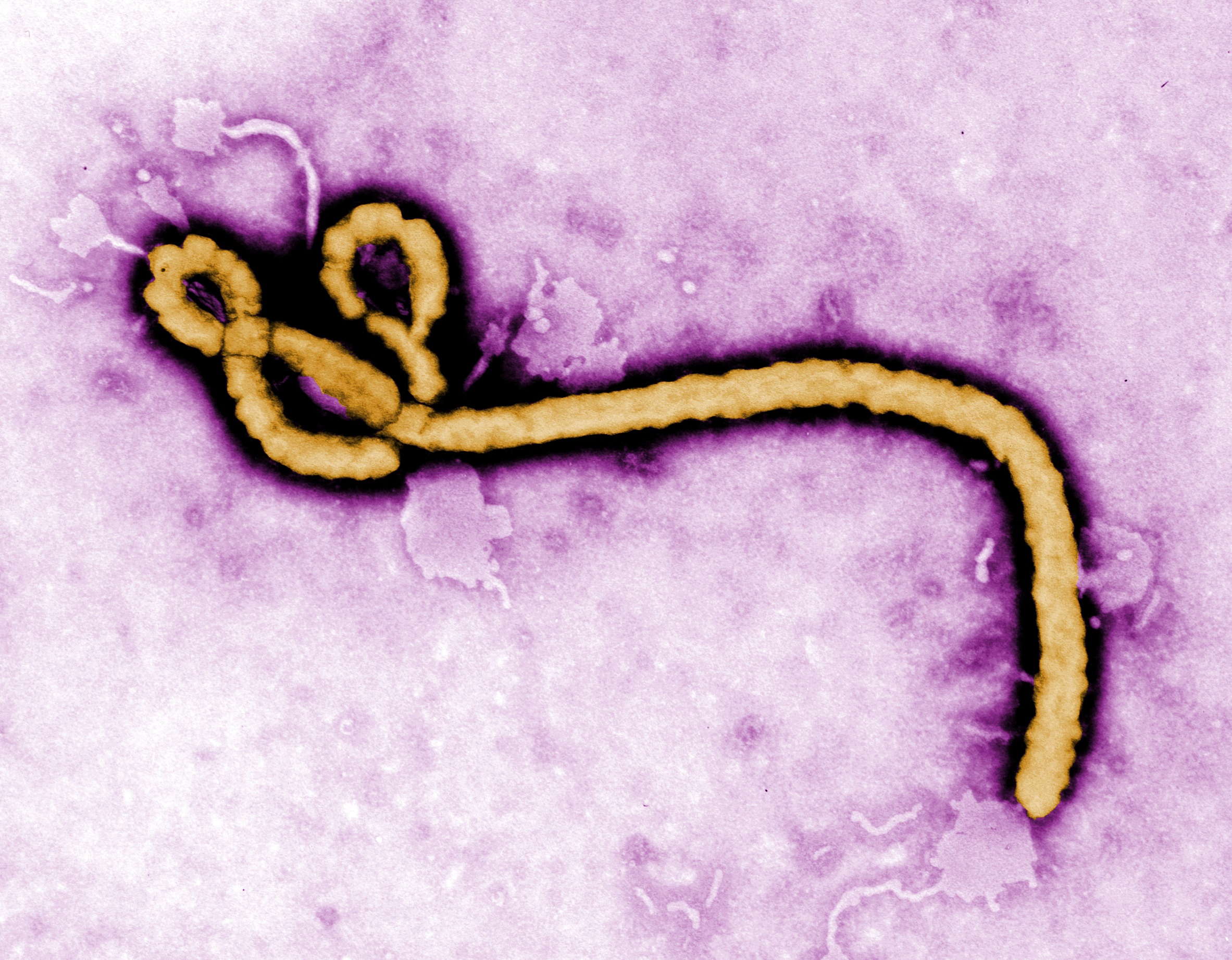
Electron micrograph of Ebola virus

Electron micrograph of Ebola virus{credit}CDC/ Frederick Murphy{/credit}

Earlier this year, the Ebola virus popped up for the first time ever in West Africa. How it got there, some 2,000 miles from previous Ebola hotspots in remote parts of Central Africa, remains a mystery. Experts are particularly concerned about the current outbreak, which has sickened more than 250 and killed at least 140, because the pathogen has made its way into Conakry, the densely populated capital city of Guinea.

Unfortunately, there are no vaccines or treatments approved to work specifically against the virus, which first emerged in the forests of Zaire (now the Democratic Republic of Congo) in 1976. The virus’s high virulence and lethality make it challenging to study, and its rarity means that any effective therapeutics that are developed will likely have limited commercial potential, leaving pharmaceutical companies little financial incentive to develop treatments against the pathogen.

Very few candidate therapeutics against Ebola have proven effective in non-human primates, the gold-standard animal model for research against such viruses. But there is, amidst the ongoing outbreak, mobilization of funding toward anti-Ebola agents that have proven their mettle in such models: last month the US National Institutes of Health announced that it was putting a combined total of more than $50 million towards a handful of the most promising approaches.

Continue reading