Becoming a global researcher

Posted on behalf of Hywel Curtis

What would it take for your research to go global? At Vitae’s international researcher development conference, held in Manchester in the United Kingdom last week, several speakers offered advice on how to boost your international profile. It’s an expanding area of interest: Emma Gillaspy, Vitae’s north-west hub manager, explains that institutions throughout academia are looking at how they can support the development of truly global researchers, and half of respondents to a recent Naturejobs poll said it was ‘very important’ for young researchers to work abroad early in their careers.

Furthermore, an increasing focus on international collaboration in funding calls and the development of new platforms and technologies mean it is easier than ever before for researchers to operate internationally. Adopting a global outlook is also highly beneficial for careers in a growing number of fields — not solely in disciplines that traditionally expect it, such as astrophysics. So how do you take those first steps towards gaining international credentials?

Work on ‘international’ research

Most fields of research offer scope for you to gain international experience. “Research is inherently a global endeavour,” says Claire McNulty, adviser on life sciences and science policy at the British Council. To start with, find out which areas of research your current institution recognises as being of international significance, as you are likely to receive more support in these areas. “International ties lend greater prestige to institutions,” explains Julie Reeves, the early career researcher (ECR) training coordinator at the UK’s University of Southampton. Quite simply, if you aren’t working in an area that offers international opportunities, you’ll need to consider moving into one that does.

Make connections, seize opportunities

Your network of contacts is potentially the best source of international opportunities. Lynn Clark of the graduate skills team at the UK’s University of Liverpool says that making connections with those who have a “global mindset” and value international collaboration could be the catalyst for your global experience. As with all aspects of your research career it is vital to identify and develop meaningful relationships with those in your field — whether they are someone you met at a conference, a previous collaborator or a personal connection. In addition, opportunities may arise in calls for funding, research partners or collaborations that have international elements, so be aware of these. Also watch out for industry research and development projects and exchanges.

Explore working abroad

If you’re considering working in another country, be sure this is really the right choice for you. Seek advice from those with experience and consider your family, financial situation and career prospects when evaluating options. “It is about your physical mobility to some degree,” says Clark.

You need to be willing and able to travel and live in a foreign culture for extended periods. Employers “are looking for someone who can cope with diversity”, explains Reeves. Consider whether you will really be able to thrive in a new environment despite professional or cultural differences. For example, “one particular problem for UK researchers is the language barrier,” says McNulty of the British Council, which is why many choose to gain international experience in the US.

Move successfully

To prepare for an international move, find out what support your home institution offers and query the internationalisation strategy it has in place. Additional help may be available at national and international levels; in Europe, for example, a scientific visa programme, coordinated by EURAXESS, helps researchers from non-European countries to work in the region. As part of the programme, research organizations sign hosting agreements with individual researchers. “The hosting agreement is fast-track immigration for researchers,” says Magdalena Wislocka, hosting agreement scheme manager at the Irish Universities Association. Support such as this can simplify your relocation significantly.

Succeed overseas

Once you have acquired a position, there are many ways to make your international experience a success. One area to focus on is preserving the same standards and professional integrity that you maintained previously. Cross-cultural supervision issues are a key concern for those managing researchers internationally, says Vitae’s Gillaspy, so it’s important to foster self-management skills. These can also benefit your career in general (see ‘Getting a pay rise in academia’).

In addition, operating effectively abroad will require you to develop global awareness and think beyond literature reviews to the people, institutions and cultures that those citations represent. This approach is used in Japan to improve graduate education, helping to foster researchers with a “comprehensive and panoramic” view of their field, particularly in the natural sciences, says Mutsuhiro Arinobu, comptroller of the University of Tokyo.

Finally, an important aspect of an effective global research experience is the new relationships you develop while abroad. Working alongside successful researchers in other countries will enhance your own international standing and benefit your career both during and after the placement.

If you have any other advice for researchers looking to gain international experience please feel free to share it below.
Tips for chemists on succeeding in academia

Are you applying for faculty positions in academia, or new in your role at a university? Speaking yesterday at the American Chemical Society (ACS) career fair, three US academics representing different types of institutions shared their advice on job applications, interviews and how to succeed in your first two years.

Applying for a position

The composition of your application package will vary between institutions. For a faculty position at a research-intensive (R1) university, Jason Ritchie, associate professor of chemistry and biochemistry at the University of Mississippi, recommends formatting the research proposals that you submit as if they are mini grant proposals. “You want to show the committee that you’re going to write grant proposals that are going to get funded,” he says.

When applying for a role at a primarily undergraduate institution (PUI), where there is more emphasis on teaching, it’s still important to show your commitment to securing funding, says Laurel Goj, a tenure-track faculty member at Rollins College in Florida. “It may not be that gigantic NIH [National Institutes of Health] grant but we do expect that you are going to obtain some funding.”

For a community college vacancy, teaching experience is key. When describing your teaching philosophy, Christine Gaudinski, chemistry professor and chair of the science department at Aims Community College in Colorado, recommends making clear how your approach will serve the college’s mission and vision. She also suggests emphasizing your commitment to community service, and your experiences of working with diversity — which covers more than just race, gender or disability — in the classroom.

You may be applying for several positions at once, so keep a copy of the job adverts and your applications for reference. “It’s often a long time between the time you apply and the time you hear back,” says David Harwell, assistant director for career management and development at ACS. “You don’t want to look like you don’t remember [what you’ve applied for].”

The interview

If you get invited for interview at an R1 university, be prepared for a long campus visit that may last two days. “You’re going to eat breakfast, lunch and dinner with the committee,” says Ritchie. Interviews at a PUI can also be two days long, with the second day often reserved for a teaching demonstration. “We’ll have you in a classroom with an assigned topic and students,” says Goj. Gaudinski says the process is generally shorter and simpler at a community college; the campus visit may only last a couple of hours, for example.

When discussing your start-up package, make sure you’ve considered the minimum that you would be prepared to accept, but remember that there are often other resources available once you’re in position. “I was able to get everything I needed with less than I thought was necessary,” says Ritchie. “I was able to find that money [from elsewhere].” Also think carefully about the top end of what you ask for, as the university will expect to see a return on its investment in you. “The benchmark is you should be able to earn back enough money [through grants] to cover your start-up before you get to tenure,” Ritchie explains. “The more you ask for, the bigger the expectation is.” Start-up packages are generally smaller at PUIs — expect to use departmental instruments — and basically non-existent at community colleges, says Gaudinski.

Your first two years

Ritchie says it’s important to obtain early research results in your first two years at an R1 university, and try to teach a graduate class in your first semester. “Demonstrate purpose,” he recommends. Also remember that your existing graduate students will pass on their opinions of you to new or prospective students, who will be working for you during the critical time when you apply for tenure. “The graduate students that you recruit in your first two years are going to do the research that makes up your tenure package,” he says.

At a PUI, Goj recommends spending your first year preparing for new classes and labs, recruiting interesting students for summer research and setting up your research lab. In your second year you should start to contribute towards the development of courses.

Share your tips

Do you have any advice to add? Let us know below.

Careers hold scientists back from having children

Many scientists at top US institutions have had fewer children than they wanted as a result of their careers, according to a new study.

Nearly half of all female scientists and a quarter of male scientists said they would have liked more children — and a quarter of both women and men said they are likely to consider moving to a career outside science as a result.

Sociologists Elaine Howard Ecklund from Rice University and Anne Lincoln from Southern Methodist University surveyed 2,500 scientists at more than 30 leading universities in the United States for the study, which was published last week in PLoS ONE.

The survey showed that 36 percent of male postdocs and 22 percent of female postdocs had children, rising to 75 percent of male faculty members and 64 percent of female faculty members. Female faculty members had fewer children on average than their male colleagues — 1.2 children for women versus 1.5 for men.

Despite women being more likely to have wanted more children, men were unhappier about having fewer children than desired. Both men and women with children worked fewer hours than those without children. However, contrary to the researchers’ expectations, women with children worked the same number of hours as men with children — approximately 54 hours a week on average.

“Academic science careers are tough on family life,” says Ecklund, citing long hours and the pressures of working towards tenure as the main pressure points. She and Lincoln suggest on-site day care and improved mentoring programmes may help improve scientists’ work-life balance. “Universities would do well to re-evaluate how family-friendly their policies are,” says Ecklund.

What’s your reaction? Are you putting off having children as a result of your career? Is the situation similar outside the United States? Share your thoughts below.

Getting a pay rise in academia

How long has it been since your last pay rise? For almost half of current respondents to a recent Naturejobs poll, the answer is more than two years – and with ever-increasing inflation, that’s effectively a year-on-year pay cut. So is there anything you can do to improve your salary prospects, particularly in academia, where there is often a lack of flexibility in pay?

Know your opportunities

Setting your starting salary

At universities in the UK, where research positions are appointed at a particular grade, there is often a window of opportunity to negotiate the precise point within the grade after you have been offered the job. “That depends on your level of experience and what you’re earning already,” says Rob Hardwick, co-chair of the UK Research Staff Association (UKRSA) and a postdoc at the University of Leicester. It’s likely you will be able to match your current salary, and you may be able to move up one additional point. If you find yourself applying for a position at a lower grade due to the current economic climate, propose that you are appointed at the top of that grade’s scale. In Germany, where positions in public universities are also appointed at a set grade within each district, with defined increments every two years, there are fewer options to discuss the fine details. “The public wage agreements leave no space for negotiation,” says Ute Heckel, project leader for Kisswin, a career development and information platform for young researchers in Germany. “Scientists have fixed contracts, and the contracts have fixed wages.”

In the United States, PhD students can earn a few extra thousand dollars a year by becoming teaching assistants, but there is little else you can do to improve your pay at that stage. The starting salary for postdocs in academia depends on whether your university follows the National Institutes of Health (NIH) guidelines of a minimum stipend of just over $38,000 per year. If it does, there is not much negotiation to be had, says Zoe Fonseca-Kelly, chair of the US National Postdoc Association (NPA). “For the most part, to negotiate a higher salary you’re looking at a promotion,” she says.

Securing higher pay

Pay at UK universities usually increases by a small increment each year until you reach the top of your grade. If you’ve hit the ceiling, make the case to the university that you should be promoted up to the next grade — you’ll need a letter of support from your supervisor for this. Also ensure you double-check your contract — one of Hardwick’s fellow researchers was automatically promoted up a level as they were appointed at the top of a grade, but their contract still said they were entitled to annual increments.

In the US, if you’re getting paid less than the NIH minimum guideline, Fonseca-Kelly recommends that you try to secure your own funding: “A postdoc’s best way to make sure they get at least the NIH minimum is to apply for their own training grants and get their own money.” If you are able to secure funding that can also benefit your career in general by demonstrating early independence. Scientists in Germany searching for funding at a more senior level to develop their career should apply for several grants or prizes at the same time, says Heckel. “You will be more successful if you hand in more applications. That’s perfectly all right.” She also cautions against having a single narrow research focus. “We advise people to have at least two specialisations that they follow in order to increase their chances of getting funded.”

Gather evidence of your value

Whichever opportunity for a pay rise you pursue, you’ll need to justify why you should get more money. “Frame the request in terms of the value you bring to your employer,” says Deb Koen, president and chief executive of Career Development Services in Rochester, New York (see ‘Salary boost’ for more of Koen’s advice).

If there’s an appraisal system in place at your institute, make sure you use it. “People don’t really do that enough,” says Hardwick. He also recommends using self-help tools such as Vitae’s Researcher Developer Framework to self-assess and quantify your full range of skills. “The research things go without saying,” he says. “Aside from that, there are many [other skills] you can use to your advantage.”

The US NPA provides a similar resource called the Postdoctoral Core Competencies Toolkit. Fonseca-Kelly suggests using the toolkit to set a two- or five-year plan either by yourself or with the help of a mentor. “That gives you bargaining ground and a results-orientated output you can use as a negotiating tool to get a promotion,” she says. “The people that I’ve seen successfully get a promotion in academia have had a very good plan of what they want to do and have been able to market themselves to their PI. It takes a lot of planning and communication skills.”

As well as identifying your full range of skills, remember that your publication record is still one of the main ways your value is judged. “That’s always been the most important thing,” says Hardwick.

Do you have any other advice to add? Have you recently secured a pay rise or a promotion? Share your thoughts below.

Female scientists in UK report improved prospects – but there’s still a long way to go

The gap between men’s and women’s careers in academia in the UK is closing as women become more ambitious, according to the 2010 Athena Survey of Science, Engineering and Technology (ASSET) summary report published earlier this month.

The 2010 survey, which included responses from over 7,000 male and female academics and postdocs from 84 UK universities, found that women are increasingly likely to aspire to senior leadership positions and are as likely as men to hold posts such as head of research and director of postgraduate studies.

Female postdocs are more positive about their career success to date than female academics, suggesting a more positive outlook for younger generations of scientists, and the availability of flexible working is having a beneficial effect on career development.

However, there are still significant differences between men’s and women’s experiences at every career stage. For example, on average:

  • Women are more likely to be employed on temporary contracts
  • Men are more likely to receive routine appraisals
  • Women have less understanding of the promotion process and criteria
  • Men feel more valued and visible in their departments and have more control over their employment choice

In the foreword to the report, Royal Society president Paul Nurse said there is still a long way to go before the UK can be confident it is making the most of the talents of female scientists. “It is more important than ever that we ensure the best scientists can flourish,” he wrote. “All groups should be able to participate to the full extent of their abilities.”

What is your opinion on prospects in the UK? Share your thoughts below.

Do women need to act like men to be successful managers?

Women who take on leadership roles in academia and business should resist the urge to adopt ‘masculine’ traits such as aggression to get results and use emotional intelligence instead, says psychologist Paula Nicolson from Royal Holloway, University of London in the United Kingdom.

In a recent study of leadership and management in the UK’s National Health Service (NHS), Nicolson found that women in senior positions tend to behave as they think men behave. “This notion drives women away from a healthy assertiveness into emulating more aggressive male models,” she says.

Nicolson says the issue is exacerbated by a lack of support at the top. “Organisations feel that provided they have appointed enough women at a certain level, their job ends there,” she tells Naturejobs. “There don’t seem to be enough role models who [use] emotional intelligence.”

Both women and men should use emotional intelligence more to understand the needs and motivations of employees, says Nicolson: “There are different approaches for different situations, but you still need to make it worth their while to do something with and for you and the organisation.”

Although the study was conducted in the healthcare sector, Nicolson says the findings also apply to labs and research departments. “As the primary investigator, you still need to think about how your staff are managing their own roles,” she says. “You can’t make assumptions.”

Rachel Webster, an astrophysicist at the University of Melbourne in Australia and winner of one of Nature‘s 2006 mentoring awards, is a good example of how using emotional intelligence can help you succeed as a leader in science. In her nomination for the mentoring award, she was commended for recognising the skills of individuals in her team and for appreciating that not everyone will have the same career trajectory as her. “She assumes you are a complex person who also happens to be a scientist, instead of a scientist who it so happens turns out to be a complex individual,” says Maurizio Toscano of the University of Melbourne (see ’Model mentors’ for more).

Webster says she works hard at using emotional intelligence in her professional interactions. “As a supervisor, I try to work as a collaborator, to allow my students to develop their own agendas rather than imposing my own,” she says. Her management style eschews the stereotypical ‘male’ model of leadership, which she says is characterised by traits such as low levels of empathy, a rigid hierarchy and a reluctance to express divergent opinions. “I try to understand things from my students’ point of view,” she says.

What do you think? What is your experience of different management styles, and what style would you say is most effective in a research environment? Share your thoughts below.

UPDATE: 14 July, 2011 – A new meta-analysis published in Psychological Bulletin supports the notion that men fit the cultural stereotype of leadership better than women, but shows that the perception of women in leadership roles is improving.

FameLab: Secrets of successful science communicators

This Saturday evening The Times Cheltenham Science Festival in the United Kingdom will host the 2011 international final of the FameLab competition, featuring leading science communicators from Europe, Asia and the Middle East. Naturejobs caught up with three of the 14 finalists to get their tips on how you can improve the way you present and discuss your research to those outside your field.

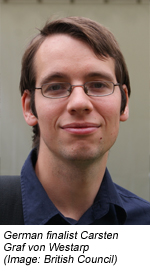
carsten.jpgCarsten Graf von Westarp, a PhD student from Germany studying semiconductor physics at the University of Hamburg, says the key to successful communication is to show how your research relates to everyday life. “Be aware of the interests of the audience or reader,” he says. Use simple language: keep technical terms to a minimum, and make sure you explain any that you do use.
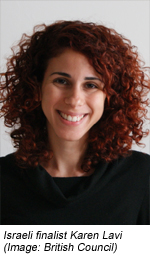
Another tip from Graf von Westarp is to show your fascination with your topic, advice that is echoed by the other two finalists. Karen Lavi, a PhD student studying memory and learning at the Bar-Ilan University and Haifa University in Israel, says enthusiasm is essential for good communication. “Keep in mind that [to you] your subject is the most interesting topic that ever existed — otherwise you wouldn’t have chosen to invest your whole life in it,” she says. “Try to pass on this feeling to your audience.”

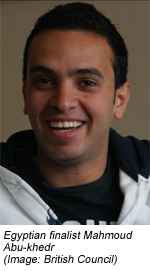
karen.jpgFellow finalist Mahmoud Abu-khedr, a third-year student at the University of Alexandria in Egypt, agrees that talking from your heart is key, and adds that you also need to believe in the importance of science communication itself.
In addition, Lavi emphasises the power of using metaphors and story-telling, suggesting that you talk about your research as if it were a detective story rather than a presentation at a conference. She also recommends you try to personalise your audience — “Imagine you are talking with your mother,” she says — and make sure that you can sum up your entire talk in a few sentences: “What is the message your audience should take home with them? What will they tell their friends and family?”

mahmoud.jpgConsidering how you present yourself can also help you communicate better, says Abu-khedr. Remember to smile, and work on your charisma: “You have to act as well as present,” he says. Lavi adds that you should also inject some humour if you can. But don’t force it so that you become uncomfortable — it’s important to have confidence in yourself. “Be how you are,” concludes Abu-khedr.

Do you have any tips to add? Share your advice and experiences below. And best of luck to all the FameLab international finalists.

UPDATE: Congratulations to Karen Lavi and Mahmoud Abu-khedr, who took second and third places respectively in the competition. You can read more about the results on the FameLab website.

Trends in the wording of job adverts

Personal drive has replaced the ability to cooperate as the most requested characteristic in job adverts, according to a study of recruitment advertising in Sweden from 1955 to 2005.

Karin Helgesson, who studied the wording of job adverts for her doctoral thesis at the University of Gothenburg, found that being driven, able to cooperate and able to work independently have been the three most frequently cited requirements for the majority of the 50-year period, with personal drive taking the top spot since 2000.

The study also suggests there has been a change in attitude from employers towards employees over the past decade. “Ads from the last ten years or so tend to focus more on the employee,” says Helgesson. “Employers who used to offer workers the security of belonging to large and successful organisations have become partners who are offering their co-workers personal development and stimulating work tasks.”

Have you noticed any other trends in recruitment adverts over the past 10 years? Share your thoughts below.

Writing a paper: habits of successful authors

If you’d like to boost your chances of getting your research published in the right journal, it’s worth knowing some of the habits of successful authors. Bernd Pulverer, head of scientific publications at the European Molecular Biology Organisation (EMBO), shared some insights with attendees at last week’s Naturejobs Career Expo in Heidelberg, Germany.

Consider the final paper when you first plan your project

Pulverer advises authors to “plan carefully and think holistically”.

Choose your journal with care

“There are many good journals out there,” Pulverer says. Study what kind of papers the journal publishes to see if its scope is suitable.

Don’t hold back data

“I can’t emphasise this enough,” Pulverer says, adding that the “cat and mouse game” between authors and referees is a huge problem. Don’t hold back data that you think the referees will ask for later in order to please them — include it with your initial submission.

Write a cover letter

Pulverer says a cover letter allows you to explain the importance of your research to editors and referees in a less formalised manner than in your paper. “It’s not essential, but it provides a good opportunity to give a different flavour to the results,” he says.

Tell a story, but avoid spin

Think about the ‘story’ of your paper, but don’t over-labour it — and don’t oversell your findings.

Be thorough when responding to referees

If you make it to peer review and get recommended changes from referees, “make sure you address every single point raised”, says Pulverer. If you don’t agree with something, write a thorough, point-by-point rebuttal.

Respond well to rejection

If your paper is rejected, don’t simply resubmit it to the same journal with a different title and list of authors. “It sounds trivial, but we see this quite a lot,” says Pulverer. “There are many other good journals at the same level.”

Have your say

Do you have any other tips or advice to share? Let us know below.

Nature welcomes six new Careers columnists

After considering almost 300 applications Nature’s Careers editors have chosen six young scientists as winners of the 2011 Careers columnist competition.

The successful entries cover a diverse range of topics, including how to cope with setbacks in the first year of your PhD, the struggles of postdocs in Canada and selling yourself to prospective employers. The six scientists — three PhD students and three postdocs — will each write at least two columns for the Careers section of Nature over the next year. Their columns will also be published on naturejobs.com.

The six winners are:

  • Adam James, a PhD student in synthetic chemistry at the University of Tasmania in Australia
  • Lucie Low, a postdoc in neuroscience at McGill University in Canada
  • Mariano A. Loza-Coll, a postdoc in genetics at the Salk Institute for Biological Studies in the United States
  • Lydia Soraya Murray, a PhD student in molecular genetics and cell biology at the University of Glasgow in the United Kingdom
  • Andrew Peterman, a PhD student in civil and environmental engineering at Stanford University in the United States
  • Gaston Small, a postdoc in ecology at the University of Minnesota in the United States

You can read more about the new columnists and their writing ambitions in the 2nd June issue of Nature.

Thanks to everyone who applied — for those of you who were unsuccessful this time, we hope you keep writing.