Our news internship

As described in the job listing earlier this month, Nature Medicine is currently accepting applications for its science writing internship.

The intern will be closely involved in the editorial process and write news articles and briefs. This is not a paper-pushing internship! The person selected for the position will be reporting stories and working on editorial content full-time, including the blog (https://blogs.nature.com/spoonful/).

Applicants should have completed one year in a graduate program in journalism or have equivalent work experience in journalism. Additionally, a strong understanding of biology and current issues in medicine is required. The six-month, paid internship will start in late May and be based in New York City.

The deadline for applications is 2 April 2012.

Please send an email to r.khamsi@us.nature.com with “Nature Medicine news internship” in the subject line and include 1) a cover letter, 2) your resume and 3) three published writing clips.

Chimeras: bloodthirsty myth or genetic revolution?

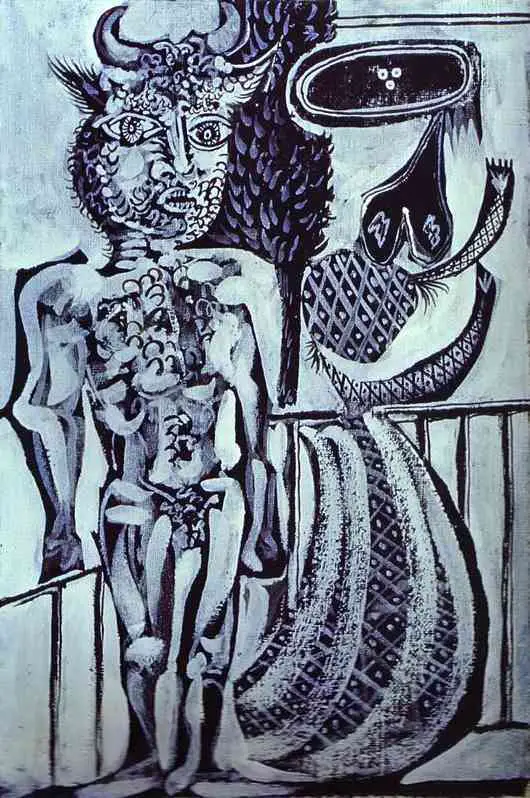
NEW YORK — Chimeras, part one species and part another, have a long and violent history in the world of art and religion. But the way society views the mythical creatures is changing, thanks in part to the advent of genetic engineering.

“If you look back at depictions of chimeras, it is clear that there have been changes in our relationship with the animal within us, whether we fear it or try to harness its power,” Robert Klitzman, a psychiatrist and bioethicist at Columbia University in New York, told Nature Medicine.

At a lecture here this week at the Solomon R. Guggenheim Museum, Klitzman argued that art reflects our changing attitudes toward the differences between humans and animals, a line which is increasingly being blurred by genetic technologies such as the creation of chimeric mice and monkeys for research.

Klitzman’s survey of artistic representations of chimeras began in ancient Egypt, when the duality of the gods was their most terrifying trait. For example, Anubis, god of the afterlife, had the head of a conniving jackal and the body of a man, and Sekhmet, the warrior goddess who carried out heavenly punishments on earth bore the head of a lion. By the time of the Greeks, the most famous chimera, the murderous sphinx, had evolved to have the haunches of a lion, the wings of an eagle, the tail of a serpent and the head of a woman.

But attitudes have changed, Klitzman said, and “modern artists like Magritte, Picasso, and Dali saw animalistic traits as integral and powerful parts of their identities.” Their paintings reflected this, featuring powerfully self-aware chimeras that appeared to gain strength and poise from their animal traits rather than becoming blood-thirsty beings, banished like their predecessors in art and myth. In this way, early twentieth-century art signaled the beginning of a greater modern acceptance of the line between human and animal, a feeling which has only grown with the advent of modern genome manipulation.

“To some extent, we still fear chimeras,” said Klitzman, author of the new book Am I My Genes?: Confronting Fate and Family Secrets in the Age of Genetic Testing. “But it’s also becoming clear that there is a lot to be gained—longer, healthier, more productive lives—from genetic engineering.” How we decide to adjust our beliefs and morals as a society faced with new biological possibilities, he noted, could ultimately determine how future generations view chimeras and where they draw the line between man and beast.

Photo courtesy of Shutterstock


Even without antibodies, B cells can thwart viruses

Evidence is emerging that B cells, once thought to fight infection solely by producing antibodies, might also prevent disease without them. In the traditional view, antibodies specific to a bacterium or virus are produced by B cells and maintained against future infection by certain classes of T cells as part of the slow-but-smart ‘adaptive’ immune response. However, it seems that B cells also play an important role in the short-term immediate immune response to pathogens.

Recent research on this expanded B cell function was thought to apply only to bacterial infection, but a paper published today in Immunity suggests it also applies to viral infection. The study demonstrates that mice without adaptive immune systems, whose B cells have been rendered incapable of producing antibodies, nonetheless survive infection by vesicular stomatitis virus (VSV), a pathogen closely related to rabies that attacks the nervous system. They found B cells were producing type 1 interferon signaling protein that prompted macrophages to recognize the virus and destroy it, protecting the body from invasion, all without antibodies.

“B cells are clearly the difference between life and death from this virus, but antibodies are not the reason for this difference,” says senior author Ulrich von Andrian, an immunologist at Harvard Medical School in Boston.

Taken together, the bacterial and viral studies revolutionize how immunologists understand B cells. “These findings are getting a lot of attention, as they should,” says Lyle Moldawer, an immunologist at the University of Florida in Gainesville and the first to publish evidence of an innate B-cell response in bacterial infection. “B cells are the last cell population that anyone considered to be involved in primary response to a viral or bacterial infection.” Moldawer’s August 2011 study was the first to demonstrate that B cells communicating via type 1 interferon contributed to protection against primary infection.

Immunologists are quick to warn that their findings do not undercut the importance of vaccines, which guard against future infection by priming B cells to create antibodies against a particular pathogen. “What we are beginning to understand is an additional function of B cells in preventing infection, not an alternative function,” says von Andrian. However, the additional role of B cells could provide new targets for treating bacterial and viral disease, he says, potentially by boosting the interferon response to protect the body soon after infection.

Photo courtesy of Spectral Design via Shutterstock

Chip promises better diagnosis for common blood disorder

For more than fifty years, blood smear tests for sickle cell disease have been the standard diagnostic tool for physicians. But the tests, which show whether the patient’s red blood cells have an abnormal form of the iron-carrying protein hemoglobin that will cause them to take on a crescent shape in response to low oxygen levels in the blood, fails to predict the severity of symptoms. It is a large diagnostic loophole, considering that the symptoms of sickle cell disease, which affects more than 13 million people worldwide, can range from tiredness to life-threatening blood vessel clogs. A new microfluidic chip promises to change that by providing a way to measure the risk of dangerous vascular clogging before it happens.

The microfluidic chip, described today in Science Translational Medicine and pictured here, measures the flow of blood through a silicon capillary measuring just 15 micrometers across. When red blood cells from someone with sickle cell anemia pass through the tiny tube, their signature crescent moon shape makes them stick to each other, which clogs the tube and slows blood flow. By measuring how quickly a person’s blood sample slows down in the tube in response to lowered oxygen levels, the device can predict how severe vascular symptoms will be in that individual. A test of blood samples from 29 patients with sickle cell disease using the chip showed that the more severe a person’s symptoms—as measured by the medical interventions he required over the course of a year—the more his blood slowed down in response to decreased oxygen levels in the chip. In other words, sluggish blood was correlated to more doctor visits.

“We don’t know all the different triggers for clogging—it could be exercise, dehydration, non-physical stress,” says study author Lakshminarayanan Mahadevan, an applied mathematician at Harvard University in Cambridge, Massachusetts who co-developed the technology with colleagues at the Massachusetts Institute of Technology, also in Cambridge. “With so many potential triggers, we realized we needed an integrative marker like blood flow rate that predicts how low oxygen levels caused by any number of triggers will affect the patient.”

Continue reading →

From the queen of butter to the queen of diabetes

Deep-fried butter balls. Egg-bacon-burgers on donuts. Fried cheesecake. These are not recommended foods for someone suffering from a chronic metabolic disorder, but this week Paula Deen, the Food Network cooking show host behind such heart disease-inducing recipes, made public that she has type 2 diabetes, a disease she was diagnosed with three years ago. Deen also announced that she is leading a campaign called ‘Diabetes in a New Light’, which is being launched by Denmark’s Novo Nordisk to promote the company’s $500 million-a-year diabetes drug Victoza (liraglutide) in the US.

Deen, who disclosed that she takes Victoza to control her blood sugar, isn’t the first star to turn around and warn against the very thing that made her famous when faced with a life-threatening illness. Actor Wayne McLaren, who posed as the Marlboro Man in cigarette ad campaigns, testified before the US Congress in favor of anti-smoking legislation prior his untimely death from lung cancer.

Celebrity endorsements of drugs are not without controversy either. In 2008, in response to a congressional probe, New York-based Pfizer ended its long television ad campaign for its cholesterol treatment Lipitor (atorvastatin), which featured the celebrity “doctor” Robert Jarvik, who developed an artificial heart implant but was not licensed to practice medicine.

But Novo Nordisk may have a bigger problem than proper execution of celebrity branding. Allen Adamson, managing director at the New York branding firm Landor, expressed surprise at Novo’s decision to work with Deen. “She’s very provocative,” he told Nature Medicine. “How do you take a poster child for what not to eat and turn her into an asset?” But, he acknowledges, she could also turn heads in a good way, by being folksy, credible and intimately related with the disease.

Success for Deen and her new pharma partner is going to require an earnest and complete transformation on her part, one that clearly did not begin immediately after her diagnosis in 2008. Since then, Deen has continued to host cooking shows featuring ultra-high-fat, carbohydrate-rich dishes—not exactly the healthy diet she is now promoting on behalf of Novo. But “she’s relatable, she’s charismatic and she is living with diabetes,” says Ken Inchausti, director of media relations for Novo’s US operations. “We need people to see her as a patient now.”

Causes are hard. Explaining pharma’s problems is harder

We all know the pharmaceutical industry is in trouble — what, with the precipitous patent cliff, soaring price of drug development and the death of the megablockbuster. And much ink has been spilled about the potential solutions to pharma’s problems, from mergers to academic partnerships to new research units. But what if the entire R&D enterprise is fundamentally flawed?

That’s the hypothesis of a new article in Wired magazine by science writer Jonah Lehrer postulating that the reductionist dogma of modern biomedicine has prompted scientists to desperately seek causal narratives where there are only statistical correlations to be found. In turn, Lehrer’s theory goes, such causal stories that scientists tell themselves have led drug developers on expensive and ultimately futile pharmaceutical goose chases.

It’s a provocative idea. The only problem is that Lehrer himself seems to be creating a causal explanation of his own for the industry’s woes on the basis of a reductionist extrapolation from a few flawed examples of pharma failures.

Lehrer’s primary example is torcetrapib, a much-touted experimental cholesterol drug from New York-based Pfizer that flopped in phase 3 trials. Torcetrapib works to raise levels of high density lipoprotein (HDL), a.k.a. ‘good’ cholesterol. And since preclinical and observational data had shown that higher HDL counts translate into better cardiovascular health, torcetrapib was expected to “redefine cardiovascular treatment,” according to former Pfizer CEO Jeff Kindler. That didn’t pan out. Pfizer pulled the plug on the drug’s pivotal trial after the compound was linked to higher rates of chest pain, heart failure and death than placebo.

“The story of torcetrapib is a tale of mistaken causation,” Lehrer writes. “Pfizer was operating on the assumption that raising levels of HDL cholesterol and lowering LDL would lead to a predictable outcome: Improved cardiovascular health. Less arterial plaque. Cleaner pipes. But that didn’t happen.”

He’s right that it didn’t happen for torcetrapib. But it could happen for torcetrapib’s drug class.

Continue reading →

First mutation-specific treatment for cystic fibrosis filed for approval

‘Kalydeco’ may sound like a type of Californian interior design style, but it’s actually the name of a new cystic fibrosis drug that Vertex Pharmaceutical announced today it has submitted for market approval in the US.

It’s been a good year for Cambridge, Massachusetts-based Vertex. In May, the US Food and Drug Administration approved the company’s protease inhibitor drug Incivek (telaprevir) — one of the first therapies designed to specifically target proteins of the hepatitis C virus. And now Vertex is hoping to be provide the first treatment that specifically hits the mutated protein responsible for cystic fibrosis, a fatal genetic disorder that afflicts around 80,000 people worldwide.

The small molecule drug formerly known as VX-770 is designed to treat the 4% of people with cystic fibrosis who have a rare mutation called G551D in their CFTR (cystic fibrosis transmembrane conductance regulator) gene. Kalydeco — which, according to Vertex’s press release, is actually pronounced more like the first part of ‘kaleidoscope’ — works by propping open the defective chloride channel protein encoded by CFTR to allow the transport of ions across the cell membrane. As we reported earlier this year, in a study of 161 people with at least one copy of the G551D mutation participants taking the Vertex drug saw their ability to blow air from their lungs improve by 10% and their sweat levels also returned to normal. (See ‘Mutation-specific cystic fibrosis treatments on verge of approval’ for more.)

In a statement, Robert Beall, president and chief executive of the Cystic Fibrosis Foundation, which has invested approximately $75 million in Vertex’s product pipeline, remarked that Kalydeco is “an important potential new medicine for the treatment of some people with CF.” But his words hint at the fact that the vast majority of the people living with the disease will not benefit from Kalydeco alone. Instead of the G551D mutation, 90% of cystic fibrosis sufferers carry an alternate coding error that prevents the CFTR protein from folding properly in addition to disturbing its chloride pumping activity.

In hopes of treating these people, Vertex is combining Kalydeco with another experimental agent called VX-809 in a 160-person clinical trial that is currently enrolling participants. Meanwhile, the company said it plans to turn in its EU application of Kalydeco for people with the G551D mutation by the end of the month.

Natural killer cells caught on film while attacking disease

One of the most potent players within the immune system is the so-called ‘natural killer cell’. The ‘NK’ cell attacks by emptying sacks full of destructive proteins, known as lytic granules, across its membrane into a diseased cell, causing the target to dissolve. And, in research published today in PLoS Biology, molecular immunologists from Imperial College London caught it all on film using specialized microscopy technology.

In the video below (skip to 1:20), you can watch a natural killer cell assail a target cell. The movie shows the two cells layered on top of one another; their point of contact is indicated by the green-stained ring, composed of clusters of fluorescent receptors on the surface of the natural killer cell. The contact itself activates these receptors, which in turn recruit the red-stained lytic granules to the cell membrane. In the final act, these potent granules fuse with the target cell’s membrane, and empty their contents to kill it. Cue the credits.