Boyfriends and husbands may put female researchers at a hiring disadvantage

Married and partnered female researchers may be less likely than their male counterparts to land a junior-faculty position at US universities, finds a study.

Divorce wedding cake

By Paul Smaglik

Female candidates’ – but not male candidates’ — relationship status was a primary consideration in hiring committees’ discussions and decisions, according to study co-author Lauren Rivera, an associate professor at the Kellogg School of Management at Northwestern University in Evanston, Illinois. She found that committee members assumed that heterosexual female candidates whose partners or husbands held academic or high-status jobs could not relocate for the job, and excluded them from offers when the committee had viable male or unpartnered female options. Yet, she says, committees — whose members included women — rarely discussed male applicants’ relationship status and assumed that those candidates’ partners or wives would be able to move for the position if an offer were made.
Continue reading

Growing the next generation of scientists

Scientists have a duty to inspire the next generation of students. To do this, we need greater interaction with young people and the local community.

Naturejobs journalism competition winner Jessica Gorrill

The future of STEM (science, technology, engineering and mathematics) in the UK is on shaky ground. The numbers of entries at A-level for Biology, Physics and Chemistry dropped by 1%, 2.6% and 1.6% respectively in 2016, according to statistics collected by the Joint Council for Qualifications. This ends the steady increase seen since 2009. Whilst this drop may be attributed to the first year of new government reforms, it could be the beginning of a worrying trend of students neglecting careers in science.

Ideas-naturejobs-blog

{credit}Topp_Yimgrimm/ThinkStock{/credit}

Continue reading

Dealing with dyslexia: Let’s redefine the term “smart”

Collin Diedrich

Collin Diedrich

Despite having a PhD in molecular virology and microbiology, Collin Diedrich’s dyslexia caused him to doubt his intelligence in a world where “smartness” is revered.  But having this learning disability has helped him to think critically and made him more driven in his career. His advice to students with dyslexia? Get the support you need. There’s plenty out there.

Continue reading

Remapping the scientific landscape: moving from a closed to open science world

Science is changing – and we will change with it, says Anastasia Greenberg

Better Science through Better Data writing competition winner Anastasia Greenberg

“Information is power. But like all power, there are those who want to keep it for themselves.” Those were the words of Aaron Swartz, a young programming prodigy and the creator of Reddit, in his Guerilla Open Access Manifesto. In 2011, Swartz wrote some code that systematically downloaded millions of academic papers from the JSTOR database onto his computer, which was hidden in a basement closet at the Massachusetts Institute of Technology (MIT). This act of hacktivism resulted in felony charges, with potential for decades of jail time. Swartz hanged himself in 2013.

To some, Swartz’s story embodies the open-science movement, but it is far from clear what his motives for downloading JSOR’s database were, and which, if any, segments of the open science movement Swartz identified with. Continue reading

The real climate debate

Young scientists on the ground at Lindau share their thoughts on scientists’ place in the climate change debate

In the scientific community, the big question is not whether action on climate change is required, but what form it should take and the part that scientists should play, says the recent Nature Outlook on Climate Change. Three early-career researchers share their thoughts on the current state on climate action worldwide and the place of science in society.

You can find the full Nature Outlook on Climate change here.

Julie Fenton

Julia Nimke/Lindau Nobel Laureate Meetings

Graduate student, Pennsylvania State University, USA

It’s hard for scientists to make definitive statements about the ‘truth’. Just as we don’t believe exactly the same things as we did 50 years ago, we expect our understanding of the things we’re learning now will change over time.

It doesn’t mean our current understanding should be dismissed as incomplete, but it can be a challenge to communicate this concept to non-scientists. It’s become evident that my communication skills are something I have to invest time in. It’s too easy to forget that we have a broader responsibility to the public. In my experience, public engagement is not a routine part of academic training. Every scientist can start by talking with people they know in their everyday lives. That’s not hard. Continue reading

Sports science: An athlete-researcher’s experience

NATURE_SPORT_400-smaller

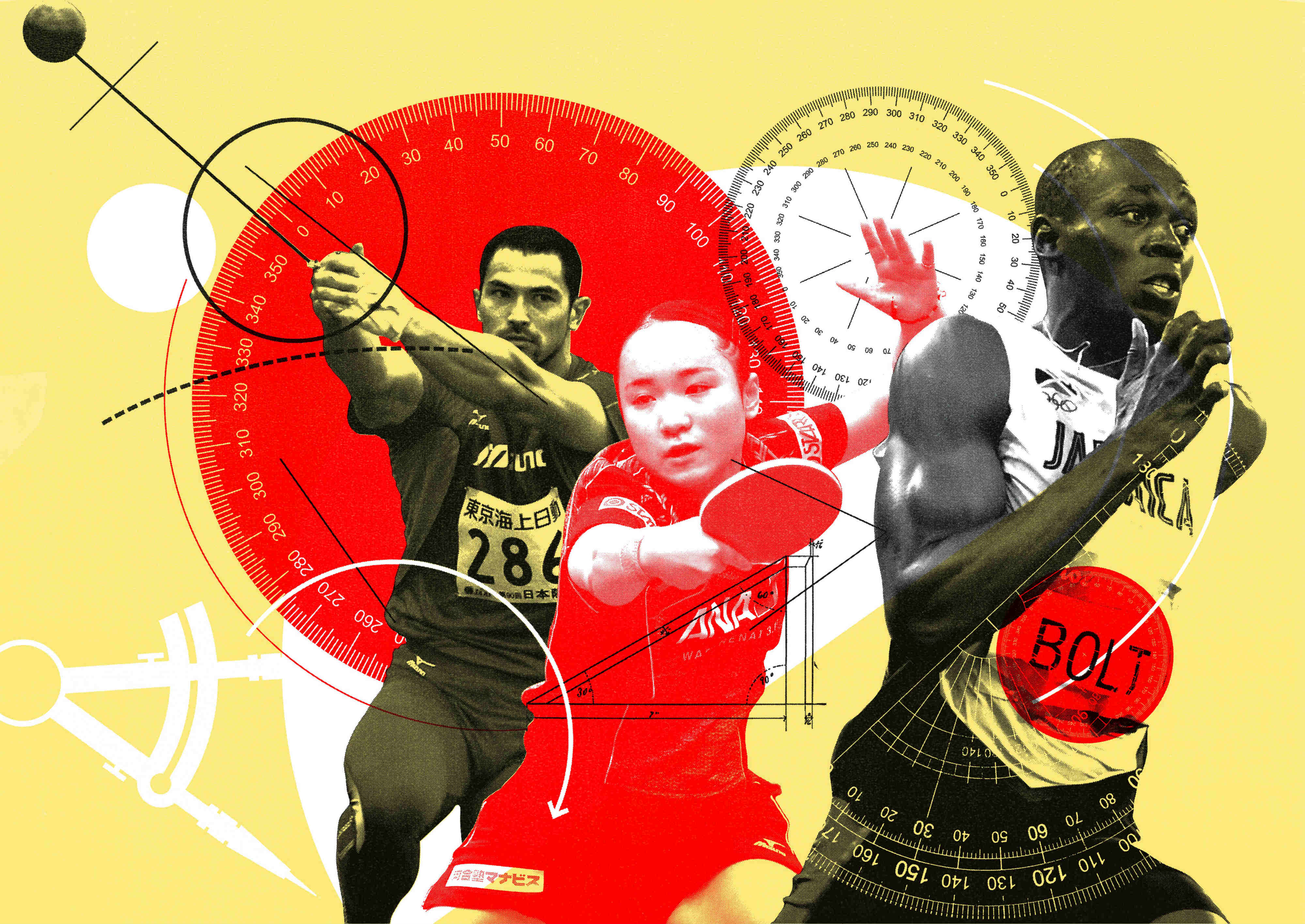
Koji Murofushi’s career has been a mix of tradition and innovation in sports science. He shares his thoughts on a new training approach.

By Tim Hornyak

Sports science is the study of the body as a performance machine. Its specialties span biomechanics and psychology, and demand for its experts is growing. Whether it’s helping everyday people with their physical wellbeing or training elite athletes to react faster endure longer or jump farther, sports scientists and performance consultants are playing an increasingly important role in exercise and competition.

Evidence of growing demand for sports science mavens can be seen everywhere from new university programmes such as the University of Michigan’s Exercise & Sport Science Initiative, launched in 2016, to mass media events. In one example of the latter, before Irish mixed martial artist Conor McGregor went up against boxing champion Floyd Mayweather in a much-hyped showdown in August, he trained at the UFC Performance Institute, a $12 million facility that opened earlier this year in Las Vegas. McGregor used altitude chambers to improve aerobic capacity and ran on an underwater treadmill to build endurance. That may have helped him go more than nine rounds with Mayweather, the overwhelming favorite and eventual winner of the bought. Continue reading

The three-year PhD program: good for students? Or too good to be true?

Calls to modernize the PhD to meet the demands of the job market are being answered by the introduction of a more streamlined three-year PhD program. But such changes are not necessarily in the best interests of students, say Alice Risely and Adam Cardilini

PhD students are the backbone of the research industry, often responsible for compiling precious datasets for their lab and learning the cutting-edge techniques required for analysis. But completing a PhD is hard, and getting harder as scientific standards creep steadily upwards. It takes over a year longer for current students to publish their first scientific paper than those 30 years ago because of the increasing data requirements of top journals. Across Europe and Australia, this is one reason why students are taking an average of four to six years (or longer) to complete their PhDs, despite candidature contracts usually being a maximum of four years, and government scholarships lasting at most three and a half years.

Delays in completion reflect badly on universities, and can threaten future funding. They can also threaten the job prospects of graduates, who are increasingly expected to have excellent time and project management skills for careers outside academia. In an attempt to combat lagging completion times and increase employability of graduates, universities are redesigning the PhD by rolling out three-year PhD programs. These shorter programs are intended to provide increased structural support to students, whilst also promoting broader and more applied skills required by non-academic employers. The catch is that these PhDs must be completed within three years, unless the student faces project delays that were unequivocally beyond their control. But is the three-year PhD program really in the best interests of all, or even most, students?

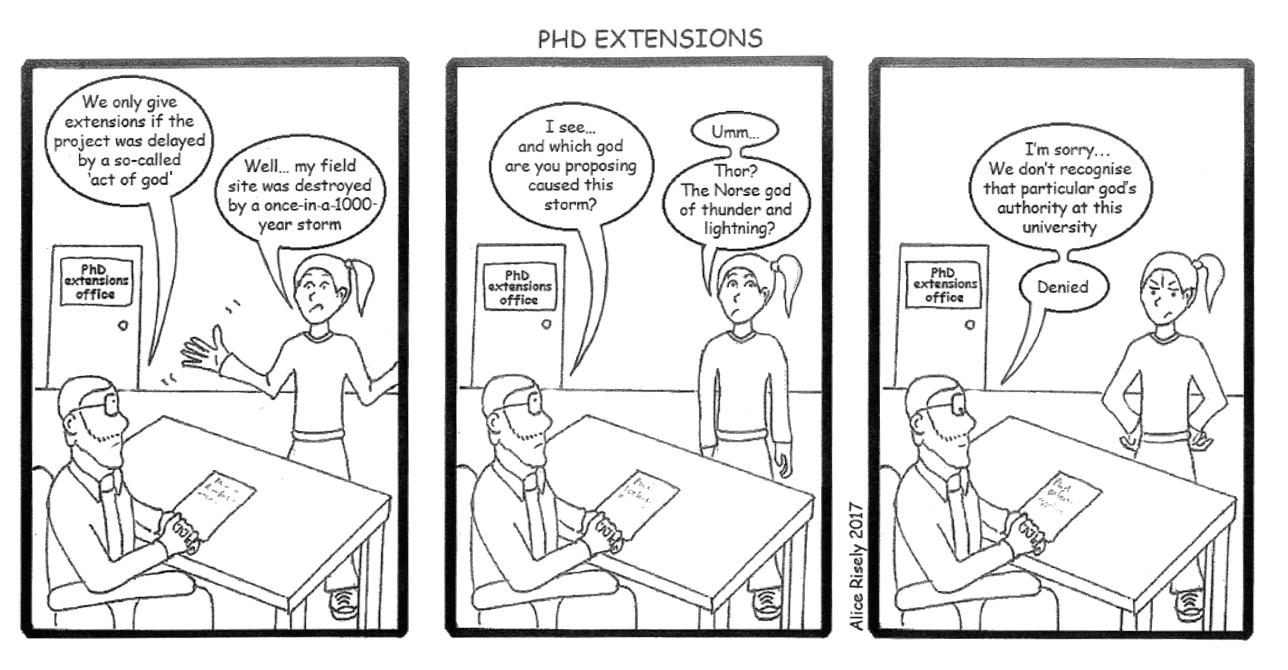
It will be harder to get PhD extensions under the new model.

It will be harder to get PhD extensions under the new model.

Continue reading

Q&A: Progress for Congress

A neuroscientist wants to see change in the government — and he’s creating it.

Thomas Prigg is a brain cell circuitry researcher at Carnegie Mellon University in Pittsburgh, Pennsylvania, US. Now he’s using his science skills to fuel his campaign for Congress in 2018. He talks to Nikki Forrester. Continue reading

Mental health problems: Should you tell your boss?

A survey of more than 1000 UK adults to mark Mental Health Awareness Week found that almost half are unlikely to tell their boss about problems such as anxiety, depression or bipolar disorder.

Sue Baker, head of the charity Time to Change, says telling your boss about a psychiatric illness is not always advised, particularly if an employer is not openly supportive of mental health problems in the workplace.

nj7628-319a-i1

{credit}Getth{/credit}

Continue reading

Being proactive about mental health during your PhD: a very short guide

Psychologist Karra Harrington shares some tips for Mental Health Awareness week.

When I started out in my PhD I was excited about the challenges I would face. Two and a half years later I’m still excited about my research, but, like most PhD projects, it‘s not all been smooth sailing. Rather than let how I was feeling derail my progress, I decided to use my training as a psychologist to develop ways to be proactive about managing mental health during the course of a PhD.

Mental Health Wellness Psychology Mind

Continue reading