Networking: a very short cheat sheet

We all know the value of networking. Here’s a very quick rundown of best practises, from Amali H. Thrimawithana

Networking plays a vital role in any scientist’s career development, being one of the main ingredients in building a professional profile. It feels especially essential in my own field of informatics and data science, where techniques and technology are rapidly evolving and cross-discipline collaborations are rampant.

Networking helps us stay up to date with developments, provides a space to learn, enhances communication skills, creates new opportunities, and helps to build a professional profile.

IMG_3286-smaller

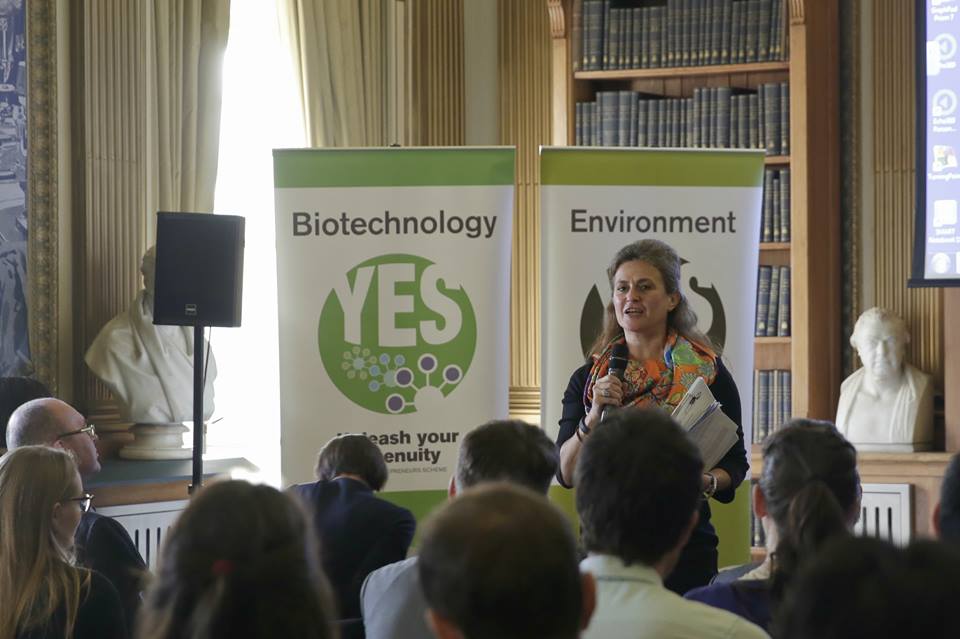
Conferences provide you with a literal stage to gain connections

Continue reading

Let’s talk about #SciComm

Science communication is a young field with many voices and few guidelines. Let’s find a way to combine our voices in order to protect the integrity of research endeavors, says Judith Reichel.

There are plenty of reasons to become active in the field of science communication, and for many early career researchers (ECRs) still exploring research, it’s a great way to find their niche and voice their opinions.

Yet, like many of its participants, the field of science communication itself is fairly young, and is constantly evolving from its original aim — to translate scientific findings to the public, in order to raise awareness and funding for the grand scientific endeavor. When 3000 new academic papers are published every day, it‘s impossible for any single scientist to keep track of every development.

GettyImages-550382899-smaller

Science communication is practiced by a range of journalists, editors, freelance writers and free-time writers, yet the aim remains the same: to communicate important findings in quick soundbites that provide enough information for scientists but are still digestible to the general public. Continue reading

The competition that likes to say YES!

Enterprising early career researchers get some high-level mentoring to handle the rough and tumble of the boardroom. David Payne meets finalists in the 21st annual Young Entrepreneurs Scheme (YES)

Epitome is a Singapore biotech start-up whose product pipeline is based on engineered tail proteins to tackle bacterial diseases. It wants a slice of the US’s $6bn acne market. Epitome’s founders are seeking raise $10m to build a factory where its cosmetic products can be manufactured. Investors will be rewarded with a seat on its board.

The launch team describe the company at a presentation attended by other young entrepreneurs. They brace themselves for some tough questions from a judging panel. One judge asks how a factory can be built for $10m Another challenges the team’s plan to launch an acne treatment as a cosmetic product, which means they won’t mention acne on the label (the team adopted this approach to make the US regulatory process more straightforward).

15390900_1695305427446706_286911818743892859_n

‎Elena Lurieluke, Head of Global Life Sciences Open Innovation, Corporate R&D at P&G, addresses fellow YES judges and finalists.

Continue reading

How is the rise of data-intensive research changing what it means to be a scientist?

Data-intensive research requires a new breed of scientist: interdisciplinary analysts who enjoy swimming in data, says Atma Ivancevic.

There has always been an emphasis on the generation of novel data in science. Being a scientist involves progressing from observation to hypothesis to experiment to output. In the past, a combination of scarce data to look at and low throughput machinery to make more has led to limited experimental outcomes.

2016-09-12-Atma Ivancevic 04-smaller-cropped

Atma Ivancevic

Continue reading

Careers in industry: Medicine maker

Pauline Williams shares her thoughts on her career outside of academia.

As a junior doctor working in geriatrics, I could never have imagined that in 20 years time I would have led the development of a medicine which has the potential to save hundreds of thousands of babies’ lives.


Pauline Williams

Pauline Williams

Continue reading

May issue cover: What’s going on here?

May2016This month’s cover image is inspired by the Article on p. 528 of this issue, by Jeff Wall, Nicola Illing, Nadav Ahituv and colleagues. The paper reports the genome of the bat Miniopterus natalensis and transcriptional dynamics in the developing bat wing. This species, one of a group known as vesper bats, is also known as the Natal long-fingered bat and is found in parts of Africa.

The image chosen for the cover is a frontal view of a bat embryo at a late stage of development (stage CS21) taken by study co-author Mandy Mason. This developmental stage is known as
“Translucent Wing”, as you can clearly see the skeletal structures in the wing and the membrane between the outstretched digits. The embryo in this image was stained with Alizarin red (maroon-red-pink) for bone and Alcian blue (blue-cyan) for cartilage. The image was actually taken as part of an earlier study to understand the progression of limb development in this species and to compare it with that of the mouse.

The current study presents not only the genome sequence of the Natal long-fingered bat, but also RNA-seq and ChIP-seq (for H3K27ac and H3K27me3) profiling of the developing limbs. The authors identified more than 7,000 genes that were differentially expressed between the forelimbs—the eventual wings—and the hindlimbs. Through comparative genomics analyses, they found nearly 3,000 regions showing evidence of accelerated evolution along the bat lineage that overlapped with H3K27ac peaks, suggesting that these are candidate enhancer regions for wing development. “This study offers a comprehensive resource for future work in comparative limb development,” co-author Mandy Mason told us. “Aside from the results that we have presented in this paper, these open datasets can be queried to help answer additional questions that may be asked by both our and other research groups.”


Ancient regulatory logic

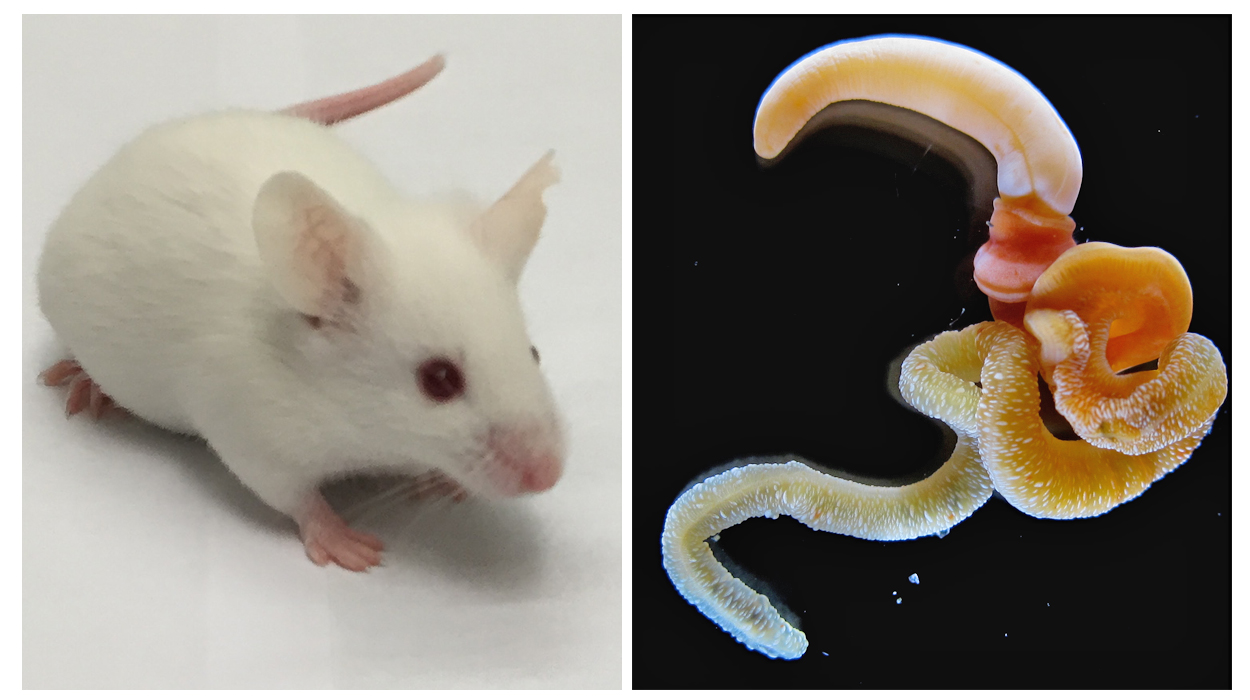
Yao et al. found that certain brain enhancers were functionally conserved between mice (left) and acorn worm (right), despite very limited sequence conservation.

Yao et al. found that certain brain enhancers were functionally conserved between mice (left) and acorn worm (right), despite very limited sequence conservation. {credit}Douglas Epstein{/credit}

A study published this week in Nature Genetics shows that enhancers can be conserved across very long evolutionary distances, even without extensive sequence conservation. Continue reading

Science communication: How to get a job

Start writing and presenting in your spare time whilst in academia, say panelists at the 2015 London Naturejobs Career Expo.

Developing extra skills in your spare time will help demonstrate your passion for science communication in an interview.

You are currently viewing a placeholder content from YouTube. To access the actual content, click the button below. Please note that doing so will share data with third-party providers.

More Information

Top tips:

  1. Look for opportunities within departments/universities to present your work. this is a safe environment in which you can trial out different techniques, whether for academic conferences or a chat down the pub.
  2. Look for, or start, other forums where you can explain your science to a lay audience. One of the most challenging things is explaining science to consumers. Speak to friends and family about your research and see if you can get them to understand what you do.
  3. Reflect on how to improve your communication; ask for feedback from the people you speak to.
  4. Joining writing groups to develop your writing skills. Having an external, objective input on your writing will help improve it.
  5. Ask your supervisor if they have any writing projects that they need help with, whether it’s writing a book chapter or website copy.
  6. Join a learned society and write for their blogs. They also have public engagement teams that are always looking for volunteers to help at events
  7. Build a network of people from within the science communication field that you can turn to.
  8. Although you might feel that you have no time to do any of the above, if you have a passion for it, you’ll make time. One way to manage your time is to use those brief moments of freedom in a productive way. When an experiment is running, read your favourite popular science books, write a blog, pursue an interview.

Further reading:

Science communication: Whose responsibility is it?

Science communication: Sculpting your role

Science communication: How to deal with misrepresented science in the media

Science communication: Do you need a PhD?

Science communication: Making the transition

Developmentally regulated genes break the rules

A new study published online this week in Nature Genetics reports that a certain class of genes, those with expression restricted to a specific developmental time point, follow a different set of rules than the rest of the genome.

The modifications to histones in promoter and enhancer regions are generally predictive of gene expression. For example, when a promoter is highly methylated at lysine 4 on histone H3 (H3K4me3), its associated gene is generally highly transcribed. Other marks may also be associated with activation, while different marks are associated with gene repression.

Developmentally regulated genes show similar H3K4me3 levels to silent genes, even though they are highly expressed during development.

Developmentally regulated genes show similar H3K4me3 levels to silent genes, even though they are highly expressed during development.{credit}Pérez-Lluch et al. Nat. Genet. doi: 10.1038/ng.3381{/credit}

SÍlvia Pérez-Lluch et al. examined the expression levels and histone modifications for all genes in the Drosophila modENCODE data set and identified a surprising pattern. Genes that were restricted in their expression to a specific developmental timepoint (called “developmentally regulated genes”) lacked epigenetic marks of active transcription, even when they were highly expressed. The authors confirmed the same pattern using modENCODE data for the netmatode C. elegans. 

Developmentally regulated genes  showed  expression levels during their actively transcribed period that were similar to those of  genes that are expressed stably throughout development. Another pattern identified by the authors was that strong histone marking is also associated with transcriptional stability. Comparable expression and chromatin modification data to that of the fly and worm aren’t yet available for mammals across multiple developmental timepoints. However, using data from ENCODE, the authors were able to show that mammalian cells showed a similar trend with regards to transcriptional stability.

We asked the lead authors of the study,  SÍlvia Pérez-Lluch, Montserrat Corominas and Roderic Guigo to give us a little insight into the history of this study and where they see this research going in the future:

When you began this study, what were your expectations? Did you expect to find that active chromatin marks were missing from so many actively transcribed genes?

We did not. Actually, our initial aim was not to investigate the relationship between chromatin marking and transcription, but the role of histone modifications in the regulation of splicing. We designed our initial experiments to compare levels of histone modifications in exons that were differentially included between Eye-antenna and Wing imaginal discs (EID and WID)—our hypothesis at that time being that the levels of some histone modifications would correlate with differential exon inclusion between these two tissues. But the results were quite frustrating, since we did find, in general, very low levels of marking in exons that were differentially included between WID and EID. This was initially very disappointing to us.  However, we also found, more generally, that many genes that were differentially expressed between WID and EID had also very low levels of a number of histone modifications typically associated to active transcription—even genes with very high expression levels. Since many such genes are likely to be regulated during development, this led us to hypothesize that lack of active histone modifications could be a general feature of developmentally regulated genes. This seemed an implausible hypothesis, going against the current models of the relationship between chromatin marking and transcription. Nevertheless, we turned to modENCODE data to further test it. The results were so strikingly consistent with our model that we “forgot” about our initial aim, and we focused our efforts instead into gathering additional supporting evidence. Understandably, our results were initially met with skepticism—the concern being that lack of chromatin marking could be a technical artifact derived from developmentally regulated genes having restricted expression patterns, and therefore making histone modifications difficult to detect using current technologies. Thus, a substantial amount of our work has been directed to address this concern.

Why do you think this pattern had not been observed before?

We are actually not the first to observe transcription with apparent lack of histone modifications. There have been a few reports of genes being transcribed in the absence of some histone modifications. Our main contribution is to show that this phenomenon is more widespread that generally assumed, and that it characterizes specifically genes that are regulated during development (at least in fly and worm). Why has this not been observed before? Mostly because data containing estimates of gene expression and histone modification along a sufficiently large number of developmental time points were not available before the modENCODE project. Then, we used a very simple, but effective measure to identify genes regulated during development, the coefficient of variation of gene expression. In summary, to make this observation you need both the data and the right approach to look at it

Your study showed that the link with transcriptional stability is also present in mammalian cells. If the association between chromatin marks and developmental regulation also holds in mammals, what, if any, do you think are the implications for biomedical research?

This is difficult to answer. Our initial results suggest that the model could be also applicable to mammals, but the data to test it are not yet available. Here we need to emphasize the importance of well-designed large-scale data production projects that monitor genome activity (transcription, chromatin structure, 3-dimensional genome organization, transcription factor binding, etc.) in a systematic and consistent way. We also want to emphasize that, at this point, our research is very basic. However, one could speculate that if our model holds in mammals, it could contribute to design better-informed approaches to manipulate/modulate expression levels of genes. Extrapolated to mammals, our results suggest that transcription factors play a comparatively more important role than histone modifications in the regulation of tissue specific genes. It has been shown that, in humans, tissue specific genes are more likely to be involved in diseases.

Are you able to speculate as to why developmentally regulated genes use a different epigenetic program compared to other genes?

What we call developmentally regulated genes correspond to genes with variable expression along time, which are often expressed only at a particular time point. Since development is a continuous process, one could speculate that rapid activation and de-activation of genes that are specific to a particular time point is more likely to occur without the need of modifying histone residues in chromatin.

What do you see as the most important next steps in this area?

Maybe the most important issue is to further challenge the model by investigating additional systems—in particular, mammalian systems—including differentiation processes, and additional histone modifications. The ultimate test of the model would come, however, from single-cell analysis, that is, from monitoring whether gene transcription does occur without histone modifications within the same cell. This is currently not possible given available technologies, but it may be feasible in the near future. It would be also important to investigate the role of distal enhancers, and of 3D chromatin structure, in the expression of developmentally regulated genes. Furthermore, we need to dig into the mechanism, by analyzing, for instance, how different classes of genes respond to perturbations of histone modification systems.

 

A tale of three papers

From Figure 1, Li et al.

I wanted the title of this post to be “A tale of two one two three papers” but I couldn’t figure out how to get strikethroughs in the title field. And I thought “A tale of two, make that one, no make that two again, oops now three” might be a bit cumbersome. As promised, here’s another installment of the discussion of what happens when we receive conceptually related/overlapping papers. It starts with a paper that appeared just yesterday in Neuron by Kenichi Ohki and colleagues describing how mouse visual cortex neurons that developed from the same neural progenitor cell tend to be more similar functionally than those that did not.

Why is this significant? First a little background. Cells in visual cortex are tuned to different aspects of visual stimuli, such as orientation or direction, and anatomically are organized quite specifically. Cells with similar preferences tend to cluster together and to be selectively connected with each other (though to differing degrees in different species), and this specificity may underlie some of the many computations required to turn photons of light hitting our eyes into comprehensible percepts.  It’s been proposed that this clustering could start in early development; neurons born from the same neural progenitor migrate vertically to form columns of sibling neurons, and could be the basis for clusters of adult cells with similar properties. That link hasn’t been demonstrated experimentally until now, and Ohtsuki et al. provides some evidence in support of it.

Now, visual cortex aficionados among you may think this sounds a bit similar to Li et al., a paper by Yang Dan and colleagues that appeared a few months ago, and indeed it is. And you may also recall that THAT paper appeared alongside Yu et al. from Songhai Shi’s lab about the development of synapses between sibling neurons.

So here’s the story from the beginning (or rather, the beginning of our involvement with the manuscripts).

Continue reading