US report calls for international action in the fight against counterfeit drugs

Seized counterfeit Viagra {credit}Wikimedia Commons{/credit}

The distribution of counterfeit drugs represents a significant and ever increasing public health concern. Estimated to generate $70 billion in annual sales worldwide, fake or ineffective medications can harm or kill patients, increase legitimate medicine costs, fund criminal activity and even fuel drug-resistance in diseases such as tuberculosis and malaria.

Developing countries are disproportionately affected—researchers reported in The Lancet that more than a third of antimalarial drugs are falsified in sub-Saharan Africa, for example—but no country is immune. As recently as last Tuesday, the US Food and Drug Administration (FDA) issued yet another warning to healthcare providers in the country over batches of counterfeit Avastin (bevacizumab), the blockbuster cancer medication marketed by South San Francisco’s Genentech. This was the third such alert for Avastin in a year.

Although internationally acknowledged as a major public health problem, the fight against counterfeiting has been marred by issues of inconsistent regulatory responses, unclear solutions and even the ambiguity over definition of the term ‘counterfeit’. In response, the US Institute of Medicine, with funding from the FDA, released a report today detailing the scope of the problem and offering recommendations for solutions.

The committee emphasized the need for cooperation between international governments, big pharma companies and civil society groups, such as academia, non-governmental organizations and non-profits—all of which have had contentious relationships of late when it comes to combating counterfeits. (See our April 2010 ‘focus on counterfeit drugs’ for more.)

For example, some member states of the World Health Organization (WHO), including India and Brazil, have accused Western governments of being influenced by major pharmaceutical companies and attempting to use anti-counterfeit measures to stifle unpatented, unregistered or generic drug competition. Versions of these drugs with legitimate formulations represent the only affordable sources of medication in many low-income communities, and some are labeled as counterfeit even if they are neither fake nor ineffective.

“I was shocked in talking with all the stakeholders how deep the suspicion was, and how it caused really a harmful dynamic and lack of cooperation,” committee chair Lawrence Gostin, a global health legal scholar at the Georgetown University Law Center in Washington, DC, told Nature Medicine.

Continue reading

Proposal to overhaul disease’s name could boost awareness and funding

{credit}Shutterstock{/credit}

There’s an idea in linguistics known as the Whorfian hypothesis. It proposes that language is inexorably linked with how we perceive and think about the world. The classic argument is this: an Inuit person, possessing different names for snow, has the ability to think about, and even see, subtle differences in snow that speakers of some other languages do not.

Could the same apply to biomedicine?

Last week, a panel convened by the US National Institutes of Health (NIH) released a series of recommendations about how best to study and diagnose a common hormonal disorder in women known as polycystic ovary syndrome (PCOS). At the top of their list: a call for a name change.

It might seem counterintuitive that a name could be critical to scientific investigation. After all, a disease such as PCOS, which affects one in ten women of reproductive age and is a major cause of infertility, is still just that—no more or less common, no more or less severe, regardless of the name. Still, the semantics of a particular moniker can have potential repercussions, from levels of research funding to how patients find the right doctor.

PCOS affects an estimated five million women in the US and encompasses a range of symptoms, including high levels of the male hormone androgen, insulin-resistance, an increased risk of type 2 diabetes, abnormal hair growth and growths on the ovaries. However, little is known about the underlying causal mechanisms of the disease. As a result, there are currently no cures, only treatments for symptoms. Combined with the fact that many women express only some of these symptoms, the diagnostic criteria for PCOS are still under debate.

A distraction and an impediment

Late last year, the NIH called for an independent panel—four experts not involved in PCOS research—to assess this issue. Over the course of the December 2012 workshop, the panelists soon came to a realization: “We believe the name ‘PCOS’ is a distraction and an impediment to progress.  It causes confusion and is a barrier to effective education of clinicians and communication with the public and research funders,” panel member Robert Rizza, executive dean for research at the Mayo Clinic in Rochester, Minnesota, said in a teleconference last week unveiling the committee’s findings.

After reviewing the current state of research and different diagnosing standards, Rizza and his colleagues concluded that the presence of “polycystic ovary”—which is actually a misnomer, as the numerous ‘cysts’ on the ovary are really immature eggs known as follicles—is not sufficient to diagnose PCOS. Some women with excess follicular growth show no signs of having the disease; others show some combination of symptoms but have no ovarian abnormalities.

In their report, the panelists agreed with the relatively-contentious ‘Rotterdam criteria‘, which require patients to have two out of three major symptoms—increased androgen levels, irregular periods, and “polycystic ovary”—for a diagnosis. Therefore, they wrote, “It is time to expeditiously assign a name that reflects the complex metabolic, hypothalamic, pituitary, ovarian and adrenal interactions that characterize the syndrome,” and not just focus on one particular symptom. But being outsiders to PCOS research, they declined to propose a new name.

“Our feeling was that this was the right time to rebrand,” panelist Timothy Johnson, chair of the department of obstetrics and gynecology at the University of Michigan Medical School in Ann Arbor, told Nature Medicine. “The new name would really make people think about the disease in a broader way, do research in a broader way and get a broader range of funding.”

Continue reading

Better labeling aimed to spur development of abuse-resistant painkillers

Prescription opioid pain relievers such as codeine and oxycodone are among the most widely abused drugs in the US. The country’s Centers for Disease Control and Prevention (CDC) estimated that in 2010 around 12 million Americans aged 12 or older used this class of drugs for nonmedical purposes, at a cost of up to $72.5 billion in direct healthcare expenses. Worse, the CDC estimates that around 15,000 fatalities occur each year due to overdoses from these meds, a number comparable to the total number of annual murders nationwide.

In response to this growing public health crisis, the US Food and Drug Administration (FDA) yesterday released a draft guidance detailing how the agency plans to evaluate new opioid pain relievers with special formulations designed to reduce abuse. Importantly, it gave pharmaceutical companies labeling guidelines.

“Our goal here is to encourage the development of abuse deterrent formulations that work to reduce abuse in the real world, in the community. The intent of this guidance is to incentivize that, to encourage the development of that science,” said Douglas Throckmorton, deputy director of the FDA’s Center for Drug Evaluation and Research, in a conference call to reporters.

Drugs with abuse-deterrent properties have already been developed and sold on the market. For example, Endo Pharmaceuticals of Chadds Ford, Pennsylvania, sells a tablet called Opana ER that releases its active painkilling ingredient slowly over time and is harder to abuse by crushing or snorting. But Endo is not allowed to include any permutation of the term “abuse-deterrent” on the drug’s label, a major issue for a company that’s trying to differentiate its product from the pharmacopeia of other painkillers. Last year, Endo went so far as to sue the FDA to prevent a generic version of their drug’s older, non-abuse-deterrent formulation from entering the market. The generic was ultimately approved, but the timing and language of yesterday’s draft guidance should help mitigate some of the concerns raised by Endo going forward.

Despite the added clarity for drugmakers, questions remain for the health care industry as to whether doctors will ultimately prescribe the abuse-resistant painkillers, not to mention whether health insurers and patients will be willing to pay for their higher premiums next to the cheaper generic—and tamperable—alternatives.

Nathaniel Katz, president of Analgesic Solutions, a Massachusetts-based consulting firm, believes there are obvious incentives. “[Doctors] want to always prescribe the safer product,” he says. For health insurers, “from a pure financial perspective, prescription opioid abuse is a huge problem. They will increasingly recognize that, and recognize there’s a financial return on investment.”

That just leaves patients. Many people seeking pain relief, especially those who do not identify as at-risk for abuse issues, will probably not accept higher co-pays when much cheaper but abusable options are still available. Katz sees a simple solution to that problem: “Eventually the idea is perhaps that the option will no longer be available to them,” he says. As yet, however, the FDA hasn’t taken that option off the table.

Image: Ondřej Karlík, Wikimedia Commons

Timeline of events: A brief history of what made news this year

This year has proven to be a veritable cliff-hanger for the world of biomedicine. At the same time that the US government stands poised on the brink of the so-called ‘fiscal cliff’, pharmaceutical companies are stumbling with the industry’s ‘patent cliff’ and academic researchers face the looming ‘funding cliff’. But not everything in 2012 was so dire, with dozens of new drugs to hit worldwide markets and countless discoveries made to enable the next generation of medicines. What follows are a set of ‘Cliff’s notes’ to the year that was for the field.

Brain gain: The US Department of Health and Human Services published a draft framework on 9 January laying out a national plan for fighting Alzheimer’s disease. The document, which was finalized in May 2012, calls for effectively preventing and treating the disorder by 2025. A month later, the EU’s Joint Programme in Neurodegenerative Disease Research launched a strategy to improve coordination between research and funding efforts on such diseases.

Continue reading

FDA announces partnership to speed development of new medical device technologies

US regulators are teaming up with medical device companies and non-profit organizations in an effort to advance better and safer tools for evaluating the safety, quality and efficacy of medical technologies.

The new Medical Device Innovation Consortium (MDIC)—a public-private partnership established jointly by the US Food and Drug Adminsitration (FDA) and LifeScience Alley, a Minnesota-based trade association, and other industry representatives—will “create a safe haven for pre-competitive collaborative research between academia and industry focusing on medical devices,” FDA commissioner Margaret Hamburg said at a press conference earlier today to unveil the initiative.

The path to developing new medical devices for clinical use in the US is a lengthy one. Unlike in Europe, where companies only have to show that a device is safe, in the US they must also demonstrate a device’s clinical effectiveness in treating a disease or medical condition. This has led to an approval lag in which devices typically reach US patients only after they have been on the market in the EU for several years.

To shorten that time lag, the FDA is now looking to industry for ideas—which is where the consortium comes in. By sharing resources between MDIC members, for example, the FDA hopes to create effective, efficient and standardized ways to validate and review devices and to prioritize funding and regulatory science decisions. “For the first time, we can determine priorities, bring together collaborative minds and analyze post-market values to determine safety and efficacy,” Jeffrey Shuren, director of the FDA’s Center for Devices and Radiological Health, said at the press conference.

Dale Nordenberg, executive director of the Medical Device Innovation, Safety and Security Consortium (MDISS), a nonprofit professional organization not associated with MDIC, praised the FDA for bringing together stakeholders through the private-public partnership. “However, the success depends on robust governance by FDA to ensure effective representation across stakeholder groups for public health needs,” he told Nature Medicine.

Image courtesy of Shutterstock

Select agent status could slow development of anti-SARS therapies

Saudi Arabian doctors scrambled last month to treat a third person who had fallen ill from a new strain of coronavirus that emerged earlier this year in the Middle East. The man survived with the help of supportive care from his physicians, but one of the other two patients who fell victim to the mysterious virus—a pathogen that resembles the coronavirus responsible for severe acute respiratory syndrome (SARS)—was not so fortunate.

{credit}CDC{/credit}

These recent cases drive home an all too stark reality: a decade on from the SARS outbreak that killed close to 800 people worldwide, scientists still have no proven effective vaccines or drugs that can stop the spread of SARS or SARS-like viruses, let alone mitigate their symptoms. Now, to make matters worse in the face of an emerging threat, a new reclassification of the bioterrorism risk posed by SARS may hamper efforts at novel medical strategies.

“Many labs are going to destroy their [SARS] virus instead of continue to work on it because the burden of regulation is quite high,” says Rachel Roper, a microbiologist at East Carolina University Brody School of Medicine in Greenville, North Carolina.

Roper has worked with SARS since the global pandemic ten years ago. She led the team that sequenced the virus’s genome, and, more recently, she and her colleagues created two experimental vaccines: a whole, killed SARS virus shot and an adenovirus-based vector carrying key SARS structural proteins. Both products elicited some degree of immune response and partially prevented viral replication in mice and ferrets. However, the protection was incomplete.

She had been working to improve both strategies and was already struggling with how she would advance a lead candidate into the clinic in the absence of any natural human SARS challenge against which to test it. Then, on 5 October, the US government announced plans to add SARS to its list of select agents. This reclassification, which goes into effect on 4 December, requires labs to now obtain additional licenses and adhere to stricter levels of biosafety and biosecurity to conduct any experiments with the virus. Although Roper recognizes that the move was made in the interest of protecting public health, for her this was the last straw. She says she no longer plans to work on SARS, opting to destroy her live virus instead of seeking certification for her lab.

Continue reading

Prisoners, hard hit by hepatitis C, decry lack of access to drugs

David Proulx was diagnosed with hepatitis C in 2003, but he suspects he contracted the virus decades earlier. He injected drugs in the 1970s and picked up several tattoos when he was first incarcerated in the early 1980s. Over the years, the infection wreaked havoc on his liver. Within a year of diagnosis, he received antiviral drugs to treat the disease, but the medicine failed to eliminate the virus. Proulx had run out of options. In 2011, however, the US Food and Drug Administration approved two new medications to treat hepatitis C. Clinical trials indicated that these drugs could help individuals like Proulx who had previously failed other therapies. But Proulx can’t access them. He’s incarcerated at the Massachusetts Treatment Center within the correctional complex in Bridgewater, and the state has not yet begun administering the new medications to inmates, according to Joel Thompson, a lawyer and prisoner advocate based in Boston.

The hepatitis C virus is the leading cause of liver cancer and the most common blood-borne infection in the US, affecting approximately 3.2 million people. Among prisoners, the infection is rampant. Between 12% and 30% of the roughly 1.6 million people living in state or federal prisons in the US are infected with the virus, as a result of exposures such as injection drug use and unsafe tattooing.

Fortunately, the infection can be cured. Antivirals can eliminate the infection in about half of all cases. Adding to the case to treat incarcerated individuals, a paper published this month by researchers at the University of Wisconsin–Madison concluded that inmates receiving traditional hepatitis C therapy fare just as well as individuals being treated in the community (Hepatology 56, 1252–1260, 2012). However, the newest, most effective medicines cost tens of thousands of dollars. Today, prison officials are facing tough choices about which inmates to treat and which medicines to administer.

“Prisoners are guaranteed access to community-standard health care,” says Josiah Rich, an infectious disease expert at Brown University’s Alpert Medical School in Providence, Rhode Island, and director of the university’s Center for Prisoner Health and Human Rights. But “this community-standard treatment is now, all of a sudden, god-awful expensive.”

Budget buster

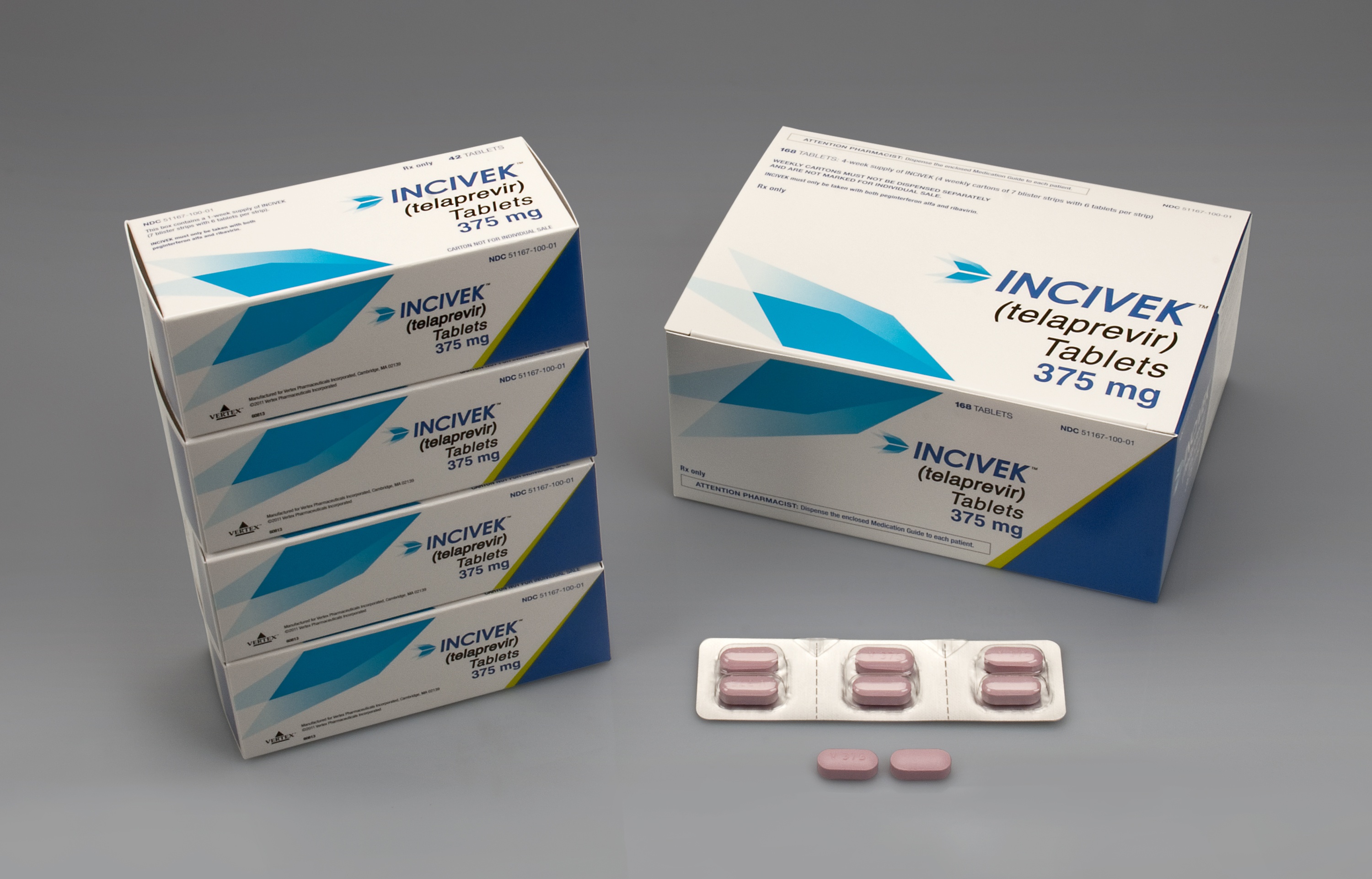
The American Association for the Study of Liver Diseases, a Virginia-based professional society for hepatologists, now recommends that people infected with the most common strain of hepatitis C receive the traditional combination of two antiviral medications, pegylated interferon and ribavirin, as well as one of two new protease inhibitors approved in 2011, Victrelis (boceprevir) from New Jersey’s Merck or Incivek (telaprevir) from Massachusetts-based Vertex Pharmaceuticals. The traditional combination therapy already costs between $15,000 and $30,000 per patient, depending on the length of treatment. The new protease inhibitors will add at least $26,000 and as much as $50,000 to the cost. “It could potentially be a budget buster,” says Robert Trestman, executive director of Correctional Managed Health Care at the University of Connecticut Health Center in Farmington, which cares for inmates in the state’s penitentiaries.

Patient selection and drug adherence are additional challenges. Not every individual who is infected with hepatitis C is eligible for treatment. “They need to meet certain criteria,” says Trestman. For example, because the medications have serious side effects, individuals must have signs of liver damage to receive them. That may happen years after the initial infection. Prison officials also want to be sure that inmates can complete their treatment, which typically lasts a year, before they’re released. That’s because inmates often have trouble accessing the drugs and sticking with the complicated dosing regimen once they’re back in the community, and missing just two or three doses of the new protease inhibitors can “eliminate the significant portion of the benefits,” according to Owen Murray, vice president of offender health services at the University of Texas Medical Branch (UTMB), which provides care for most of the state’s inmates.

Continue reading

Online trial registry proposed in Canada lacks teeth, critics say

The Canadian government announced plans yesterday to establish a Web-based list of all clinical trials conducted in Canada. Such a nationwide registry would create a centralized source of information for patients to find studies they can join and for drugmakers to identify trial participants. However, critics charge that the initiative may do little to increase transparency and accountability in the reporting of clinical research results.

“I find it somewhat cynical that here the government is supporting a website to encourage participation in clinical trials when they allow the companies to keep that information proprietary,” says Alan Cassels, a pharmaceutical policy researcher at the University of Victoria in British Columbia. “It’s hypocritical and it’s crass.”

Currently, only trials funded by Canadian taxpayers or conducted at hospitals that receive public funds must be listed on a trial registry. (With no Canada-specific repository, such studies can be listed on any registry that is compliant with certain criteria set by the World Health Organization or the International Committee of Medical Journal Editors, including the US government’s clinicaltrials.gov, the UK-based Current Controlled Trials International Standard Randomised Controlled Trials Number Register and more than a dozen other national registries around the world.)

Drug company-sponsored trials, in contrast, carry no such mandate. South of the border, US law requires that trial investigators publically release protocols and results for all experimental drugs and devices on clinicaltrials.gov, including for privately funded trials. But in Canada, drugmakers have no obligation to publically disclose study data or register their trials—and, to many researchers’ chagrin, the announcement this week from Health Canada makes no mention of plans to change that.

Without a mandatory disclosure requirement, Kay Dickerson, director of the Center for Clinical Trials at the Johns Hopkins Bloomberg School of Public Health in Baltimore, worries that the proposed Canadian registry will do little to actually increase access to information for both patients and medical professionals. “If it’s voluntary that you register the trials it’s unlikely that you’re going to get 100% ascertainment,” she says.

Hardly registered

Matthew Herder, a health law researcher at Dalhousie University in Halifax, Nova Scotia, has been one of the most vocal advocates of a mandatory reporting requirement. In a letter sent to the Canadian Senate’s Standing Committee on Social Affairs, Science and Technology in June 2012, Herder and two colleagues argued against a “labor-intensive, time-consuming and costly” Canadian portal like the one being proposed, calling instead for Canadian trial sponsors to use a limited number of the already established websites.

“What’s needed is a stronger commitment to enforcing the requirement that people conducting clinical trials actually register in those existing registries,” Herder told Nature Medicine.

Nothing is finalized in the government’s plan. According to the press release from Health Canada, stakeholders will be able to weigh in on the proposal once it is ready, which is expected in the coming months. Still, most onlookers aren’t expecting much.

“We have a staggeringly opaque system here,” says Michael McDonald, a bioethicist at the University of British Columbia in Vancouver. “I applaud anything that brings some semblance of transparency, but I don’t just want it to be window-dressing.” He adds, “The devil is in the details.”

Image: Shutterstock

US experts demand compensation for injured trial participants

Before Karen Maschke boarded a plane for Haiti several years ago, she received several routine vaccinations for whooping cough, tetanus and hepatitis B from a local medical school clinic. Maschke, a bioethicist at the Hastings Center in Garrison, New York, who edits the journal IRB: Ethics & Human Research, obtained the shots with the comfort of knowing that if something went wrong she would be eligible for compensation under the US National Vaccine Injury Compensation Program. But she worried about the estimated 2 million Americans participating in clinical trials each year who receive much riskier, experimental treatments. For these people, Maschke notes, anyone “who feels she has been harmed has few recourses.”

Currently, US research sponsors have no obligations to pay for patients’ medical care if they are harmed during a clinical trial (although a handful of organizations have voluntarily agreed to provide free, short term care for injured subjects). Carl Elliott, a bioethicist at the University of Minnesota in Minneapolis, wants such compensation schemes to become mandatory. “There are powerful economic interests in the status quo, and injured research subjects have few advocates,” Elliott told Nature Medicine in an email. “The fact that an injured subject in an exploitative research study can be required to pay for his or her own medical bills is, quite frankly, a disgrace.”

Elliott’s criticisms are just the latest in a long line of attacks on the US’s policy for not compensating injured research subjects. Several government-commissioned panels, beginning with the Tuskegee syphilis panel in 1973, have convened and recommended possible reimbursement protocols. Last year, for example, the US Presidential Commission for the Study of Bioethical Issues released a scathing report of the federal government’s treatment of Guatemalan patients in the 1940s. The report suggested implementing a system modeled after the National Vaccine Injury Compensation Program for all trial participants. To date, however, no actions have been taken.

Continue reading

NIH working group changes tune, recommends more training grants

Graduate students and post-docs in the biomedical field compete for limited research money from the US National Institutes of Health (NIH) and, after spending years in training, face uncertain career paths. A working group charged with studying these problems presented a report to NIH Director Francis Collins and his advisory committee yesterday—and offered some new solutions.

Back in March, the group said it was considering suggestions to reduce post-doc training grants and shifting the focus to programs that support work outside tenure-track academic research, where jobs are scarce. But it has shifted its tune about the means to achieving this goal. In their final report, they recommend increasing training grants, which require principal investigators to submit detailed research and mentoring plans as part of the application for funding. The NIH’s ‘R01’ research grants, however, make no such requirements.

At yesterday’s meeting, Shirley Tilghman, who co-chaired the working group and is also president of Princeton University in New Jersey, pointed to the current NIH budget crunch as forcing the rethink about its granting schemes. Ultimately, they hope that institutions will use more training and research grant money to support staff scientists, who are experienced researchers with graduate or doctoral degrees. “These trained scientists are sometimes treated like second-class citizens and they are the glue of our labs,” Tilghman told Collins and his advisors.

One way to shorten training time and free up individuals to kick-start their careers is for the NIH to cap funded projects at five years for institutions and six years for individuals, according to the report. It says that a faster track to the workplace would help the 45% of US-trained PhDs who pursue careers outside of academia. The committee also had ideas for helping graduate students get a head start on career development should they want to later leave the ivory tower. They recommended the creation of a program allowing academic institutions to apply for NIH money to develop programs that provide project management, business and entrepreneurial skills for graduate students only. The most successful programs could then be used as models at universities around the country. “What we’ve heard from industry is, ‘We get your graduates [from NIH] and we have to retrain them,’” says Tilghman.

But more than training, the best ideas come from a diverse group and a separate working group on diversity reported yesterday that the biomedical field still measured up short. With all other factors controlled for, African-Americans are still 10% less likely to be awarded NIH grants, said Reed Tuckson, co-chair of the working group and vice president of UnitedHealth Group headquartered in Minneapolis. Among other recommendations, the group suggested adding a chief diversity position to the NIH’s advisory committee to the director and encouraged Collins to use his “social capital” to encourage minorities to join the biomedical workforce. For his part, Collins promised both groups that today’s recommendations, unlike others in the past, would not be relegated to a shelf to collect dust. “A career in biomedicine is one of the most exciting things possible,” Collins told the group. “We want to make the field as attractive as possible for our young people.”