Government video lets you choose your own clinical research (mis)adventure

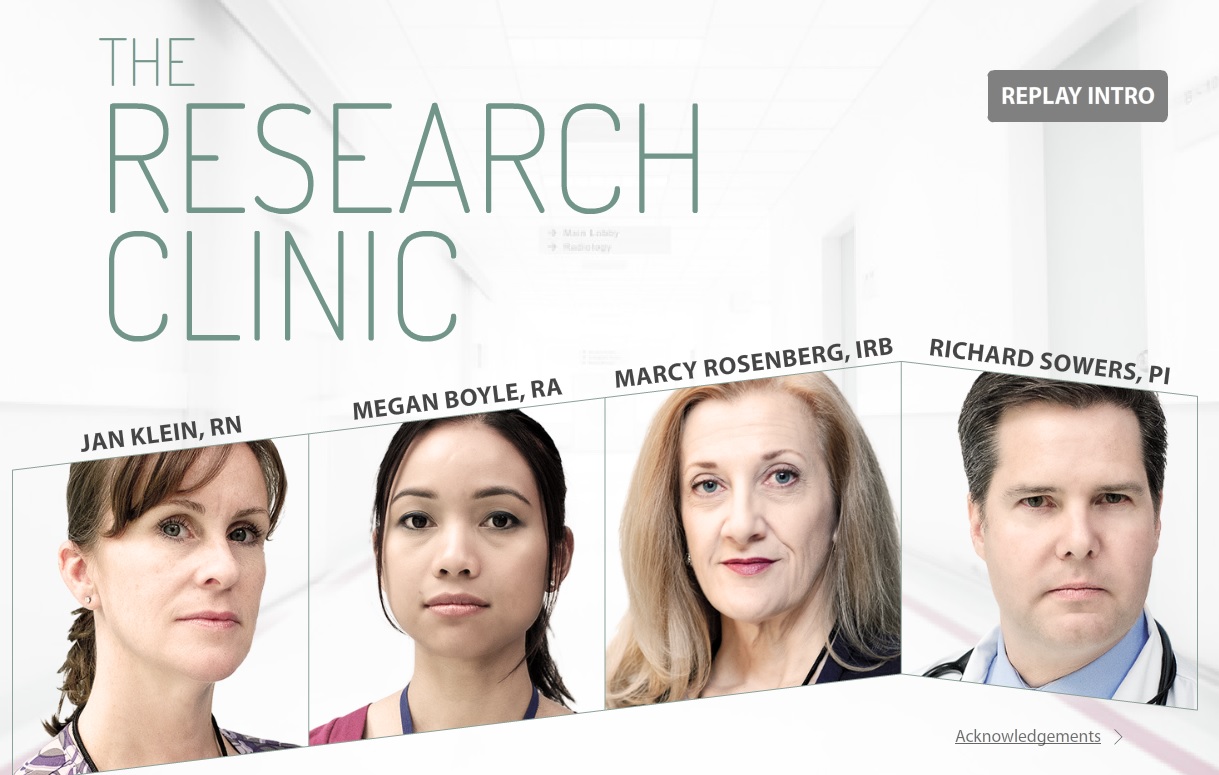
UntitledIt seems hardly a day goes by without a new report of research misconduct. To help prevent such behavior from occurring, the US Department of Health and Human Services has released an  interactive training video called ‘The Research Clinic’ that gives viewers the opportunity to assume the role of one of four decision-makers who are frequently involved in clinical research: a principal investigator, a clinical research coordinator, a research assistant and the chair of an institutional review board.

The interactive video puts each character in a variety of real-world scenarios that require the viewer to choose from among a series of options, each of which is accompanied by a different outcome and educational messages about the potential consequences of each choice. For example, one part follows a research assistant and her struggles to follow protocol for obtaining informed consent from participants involved in a study she’s working on, and describes the potential consequences of her different courses of actions.

But the video isn’t all seriousness, all the time. It manages to mix in a few humorous moments, and at times almost feels like a bizarre episode of The Office that was shot in a clinical setting.

So have a look, and let us know what you think—will this interactive video help to curb research misconduct?

Image via the US Department of Health and Human Services

Discrepancies in serious adverse event reporting may distort the medical evidence base

CT blog

The worst thing that can happen to a person participating in a clinical trial is what’s known as a ‘serious adverse event’, which can describe anything from permanent kidney damage or liver failure to hospitalization or even death. Federal law in the US mandates that researchers conducting trials of drugs or other products regulated by the country’s Food and Drug Administration (FDA) report adverse events on ClinicalTrials.gov, a data repository open to the public. But a new study shows that many of these serious adverse events don’t appear in medical journals, making some interventions seem more favorable than they may actually be.

Reporting online today in the Archives of Internal Medicine, a group of researchers led by Daniel Hartung, a drug safety and policy analyst at Oregon Health & Science University in Portland, looked at how the data reported on ClincialTrials.gov stack up against the results published in the medical literature. The team limited their focus to phase 3 or 4 trials with results reported on ClinicalTrials.gov and completed prior to 2009, to allow sufficient time for the trials’ results to be published in medical journals. Hartung’s group then randomly selected 10% of those trials that had matching publications, yielding a total of 110 trials.

Hartung’s team found that 33 of the trials reported a greater number of serious adverse events on ClinicalTrials.gov than in the medical literature. For example, a 13,608-person study comparing the blood-thinning drugs Effient (prasugrel) and Plavix (clopidogrel) reported in the online database a total of 3,406 serious adverse events among all participants in the trial, and 3,082 in a related publication. (The patients in the trial were at high risk of heart attack, and were undergoing angioplasty, so it’s important to note that these adverse events were not necessarily linked to the drugs.)

Of the 84 trials that reported the occurrence of serious adverse events in the public database, 16 of the matching publications either failed to mention them or incorrectly reported that they did not occur. (Notably, 5 trials actually reported more serious adverse events in related medical papers than they did in the public database.)

Continue reading

Intern at Nature Medicine

Have a passion for reporting on biomedical news? We’re currently accepting applications for our science writing internship. The intern will be closely involved in the editorial process and write news articles and briefs. This is not a paper-pushing internship! The person selected for the position will be reporting stories and working on editorial content, including the blog (https://blogs.nature.com/spoonful/).

Applicants should have completed one year in a graduate program in journalism or have equivalent work experience in journalism. Additionally, a strong understanding of biology and current issues in medicine is required.

This four-month, paid internship and will start in May or early June and be based in our New York offices.

The deadline for applications is March 31st. To apply please send 1) a cover letter, 2) your resume and 3) three published writing clips to r.khamsi@us.nature.com.

‘Google Earth’ of the brain slated for planetarium show

If you’re anything like me, you love a good planetarium show. I don’t mean the trippy laser light shows set to Pink Floyd tunes (although these certainly have their place), but rather the kind of immersive experience that gives you a glimpse into the untold depths of the universe and a few wondrous moments of what it feels like to soar through outer space. Now, a team of neuroscientists, astronomers, software engineers and film specialists are working on a new planetarium show to give us a fly-through experience in a different kind of vast and awe-inspiring space: the human brain.

The project is called the Neurodome. It’s the brainchild of Jonathan Fisher, a neuroscientist at New York Medical College who also has a background in astrophysics. Although the planetarium version of the Neurodome is not yet complete, you can get a taste of what to expect tomorrow evening at Columbia University in New York, where Fisher and Columbia astronomer Matt Turk will guide viewers through pictures of outer space and images of human brains, explaining how light travels across the universe from distant stars and into the eye, triggering electrical impulses in the brain’s neural pathways. “Just like you can walk through Google Earth, we’ll walk through the brain,” says Fisher.

Continue reading

One in six clinical trials might fall outside federal oversight, study estimates

Bioethicists have long known about a potential regulatory loophole that excludes certain types of clinical trials from federal regulations designed to protect the safety of human research subjects in the US. However, the number of clinical trials that fell into this gap remained unknown. Now, a letter published online today in the Journal of the American Medical Association reveals just how many trials may fall outside federal government supervision at present.

In the US, two federal policies provide oversight for research involving people. One is the so-called Common Rule, which applies to the majority of human studies that are performed or funded by the federal government. The other is the set of regulations issued by the US Food and Drug Administration (FDA) that apply to human tests of drugs, devices and biological products such as vaccines regardless of funding source. Some clinical trials are subject to only one of these regulations; others are governed by both. However, some privately funded trials are neither subject to oversight by the FDA nor the Common Rule.

A team led by Deborah Zarin, director of the site ClinicalTrials.gov—a federal registry of publicly and privately funded human trials—decided to find out just how many active trials fall into each of the various categories of oversight. The researchers compiled a list of some 24,000 US-based clinical trials that were listed as active in that database as of 13 September 2013, and estimated that at least 19% of the sampled trials were covered by both policies. Furthermore, between 1,285 and 3,696 trials, or approximately 5%–16%, were not subject to the Common Rule or the FDA, because they weren’t federally funded and didn’t involve drugs, devices or biologics. “That might include things like surgical interventions,” Zarin says.

The unregulated trials raise concerns for human safety, says Robert Califf, vice chancellor for clinical research at Duke University in Durham, North Carolina. “Put yourself in the shoes of a person that volunteers for a study,” he says. “I think most people would agree it would be good to make sure that there’s an encompassing system so you can be assured that the institution that’s conducting the trial has agreed to a common set of rules about how human studies should be done.”

At the same time that Zarin voices concern about studies falling outside the regulatory domain of both the FDA and Common Rule, she says it’s not ideal for trials to be subject to oversight by both rules. This double oversight, according to Zarin, could create a potential burden to researchers due to differences in reporting requirements and extra paperwork: “When people consider possible changes to the regulatory framework, these are the kinds of things that should be thought about.”

Head injury documentary points to global concussion crisis

headgames_global_ landscapeAlthough it wasn’t a contender for last night’s Academy Awards, there’s a powerful new film out this week that you may want to see. It’s the sports documentary, Head Games: The Global Concussion Crisis, and it provides a human face to the seemingly endless stream of high-profile reports linking repetitive head trauma to degenerative brain disease.

Early in the film, we meet Christopher Nowinski, who confesses that he once “loved the violence” of football. “It’s the closest thing to being a warrior without actually having to go to war,” says Nowinski, a former Harvard football defensive lineman turned pro-wrestler. But not long after that, we see him lying on a cold concrete floor, clutching his head after what would turn out to be a career-ending concussion he sustained during a wrestling match in 2003.

As Nowinski continued to experience headaches, memory problems and sleepwalking for the next year, he decided to see Boston University School of Medicine concussion expert Robert Cantu, who asked Nowinski how often he saw stars or felt woozy after being hit in the wrestling ring or on the football field. “All the time,” Nowinski recalls sheepishly, dumbfounded that he had likely been experiencing regular concussions but had never before given much thought to the potential long-term consequences of such injuries.

That experience led Nowinski on a crusade to better understand his condition, and in 2006 he published the book, “Head Games: Football’s Concussion Crisis,” which inspired the documentary from director Steve James (who also gave us the 1994 Oscar-nominated documentary, Hoop Dreams). But whereas Nowinski’s book largely focused on the brain hazards associated with professional and amateur football, the new film makes painfully clear that all athletes who engage in contact sports—be it hockey, rugby, soccer or any of a variety of games—are potentially at risk.

Continue reading

Promising psoriasis treatment signals hope for microRNA therapies

guinea1HR

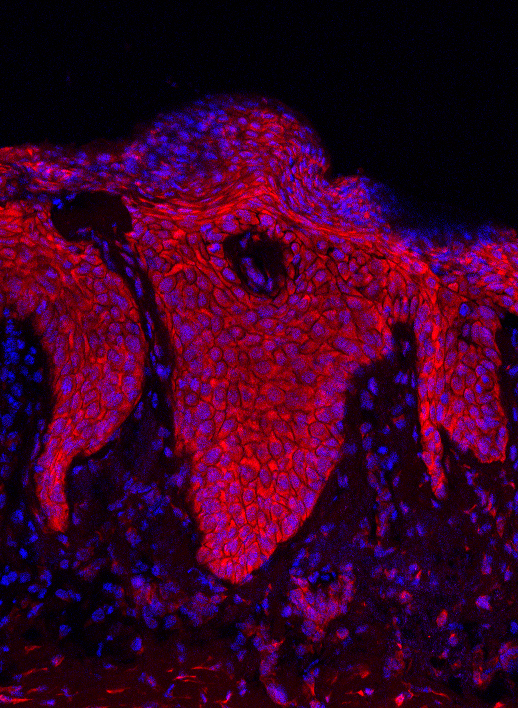
Human psoriatic skin treated with anti-miR-21 {credit}María Jiménez and Juan Guinea-Viniegra{/credit}

Nearly 2% of people worldwide chronically suffer from itchy and painful patches on their bodies, the manifestation of psoriasis, an incurable inflammatory disease in which immune cells infiltrate the skin and release molecules called cytokines that stimulate the skin cells to grow too rapidly. Treatments such as corticosteroids and immunosuppressants can help alleviate mild forms of the disease, and newer antibody-based therapies provide some relief for some of the most severe cases, but some patients fail to respond to these treatments or experience harmful side effects. Now, a new study shows that inhibiting a specific microRNA—a short bit of genetic material that influences the production of proteins in cells—appears to be an effective psoriasis treatment in mice, leaving researchers hopeful that this therapeutic approach will one day be tested in clinical trials.

Psoriasis researchers have known for some time that the levels of a microRNA called miR-21 are elevated in the skin lesions of patients with psoriasis. To determine whether miR-21 plays a crucial role in the disease, a team of scientists led by Erwin Wagner at the Spanish National Cancer Research Centre in Madrid inhibited these genetic elements using an anti-miR-21 treatment. The anti-miR-21 molecules are tiny strands of nucleotides that specifically glom onto miR-21 and prevent it from functioning. Wagner and his colleagues injected this treatment into the skin of mice bearing grafts of diseased tissue from human patients with psoriasis. The anti-miR-21 reduced the thickness of the human skin lesions by about half, a response similar to that obtained using the antibody-based psoriasis therapy etanercept (commercially available from California-based Amgen as Enbrel).

Continue reading

Experimental diabetes drug reverses emphysema in mice

Lung tissue damaged by emphysema

Lung tissue damaged by emphysema

This year marks the 50th anniversary of the US Surgeon General’s first ever report, which implicated smoking as the primary cause of emphysema and other chronic diseases. Despite decades of research, emphysema—a form of chronic obstructive pulmonary disease (COPD), which ranks among the third leading cause of death in the US—remains incurable.

But a new study provides a glimmer of hope. In a paper published online yesterday in the Journal of Clinical Investigation, researchers show that a compound belonging to the class of drugs known as thiazolidinediones (TZDs) can reverse smoking-induced lung damage in mice. What makes the discovery even more intriguing is that TZDs activate a protein called PPAR-gamma, which acts on DNA, and two of these drugs—namely, Takeda’s Actos (pioglitazone) and GlaxoSmithKline’s Avandia (rosiglitazone)—have been used clinically to treat type 2 diabetes.

At first glance, type 2 diabetes and emphysema might appear to have little in common. But in the last decade several studies have suggested that smoking triggers heightened lung inflammatory responses through pathways that are normally held in check by PPAR-gamma, which is perhaps best known for its crucial role in the development of fat cells and regulation of metabolism.

In the new study, led by David Corry and Farrah Kheradmand at Baylor College of Medicine in Houston, the researchers investigated the genetic changes induced by tobacco smoke, and discovered that levels of PPAR-gamma mRNA were depleted in a subset of immune cells from the lungs of smokers with emphysema and mice exposed to cigarette smoke. What’s more, emphysema-associated lung damage began to heal in animals that had ongoing exposure to smoke when they received ciglitazone, an experimental antidiabetic medicine belonging to the TZD class drug that activates PPAR-gamma.

Continue reading

As drug target reemerges, the question is to block or stimulate it

More than two decades ago, drugmakers searching for new hypertension medications unearthed a mysterious new cell receptor that responded to a hormone known as angiotensin II. This peptide hormone constricts blood vessels, but, oddly, blocking the so-called angiotensin II receptor type 2 (AT2) appeared to have no effect on blood pressure, so the target was largely ignored by drug developers. “Big pharma really just left the AT2 receptor by the side of the road,” says Tom McCarthy, chief executive of Spinifex Pharamceuticals, a company based in Melbourne, Australia, that is exploring the promise of targeting AT2.

Fast forward to today, and scientists now know that AT2 plays a role in everything from tissue repair to inflammation to pain response. A handful of companies are hustling to develop compounds that either block or stimulate this receptor to treat inflammatory diseases, nerve injuries, hypertension and more. In a paper published today, researchers from Spinifex and their collaborators published the first clinical data on a compound that binds to AT2, called EMA401. Results from the placebo-controlled, phase 2 trial suggest that EMA401, which blocks the receptor, can blunt lingering nerve pain due to damage caused by the shingles virus.

AT2 is just one of two receptors known to bind angiotensin II. Several medications that block the other receptor, AT1, have already received market approval for hypertension, diabetic nephropathy and congestive heart failure. When AT2 was first discovered, researchers thought the receptor was “just a little brother,” says Thomas Unger, scientific director of CARIM, Maastricht University’s School for Cardiovascular Diseases in the Netherlands. But Unger and his colleagues now know that AT2 has a “very peculiar and unique combination of effects, which is completely different from the AT1 receptor.”

Continue reading

Peanut allergy therapy produces epigenetic changes in immune cells

Earlier this week, news that six months of exposure therapy to peanuts enabled almost 100 children with an allergy to this food to eat the equivalent of ten peanuts stirred a lot of optimism. It was just one of many studies showing that some patients with severe peanut allergies can actually gain the ability to consume small amounts of the food by eating a little bit of this nut each day, gradually increasing the dose over several months.

Scientists may now have a better handle on how this ability to shrug off peanut allergy forms, and why some individuals respond to the treatment while others do not. A study published today in the Journal of Allergy and Clinical Immunology reports that the immune cells of some patients with peanut allergies who became tolerant to peanuts after exposure therapy showed DNA modifications thought to perhaps have a role in defending against allergies. “By understanding what changes occur,” says lead author Kari Nadeau, an immunologist at the Stanford School of Medicine in California, “we can identify targets for new therapy and biomarkers by which we can decide whether or not to keep treating a patient.”

Continue reading