Roman Egypt was home to “a good citizenship” youth organisation 2,000 years ago

Ancient Egypt GOODSHOOT

{credit}© GOODSHOOT{/credit}

Following a study of over 7,500 ancient documents on papyrus, originating from Oxyrhynchos in Egypt and discovered over a hundred years back in a rubbish dump, University of Oslo and the University of Newcastle presented what is perhaps the most systematic research of childhood in Roman Egypt, according to the university’s website.

Among their discoveries? Some 2,000 years ago, Oxyrhynchos, a town of around 25,000 inhabitants, had a youth organisation, called a “gymnasium,” in which any free-born child could enroll – slaves and girls not allowed.

Somewhere between 10 and 25% of local Egyptian boys, in addition to Greek and Roman residents of Egypt would have qualified, but typically members of affluent families and higher tax classes enrolled, according to an overview of the study released earlier this month by social historian Ville Vuolanto of the University of Oslo and April Pudsey of the University of Newcastle.

Enrollment in the gymnasium marked the transition to adulthood.

“It’s like putting together a jigsaw puzzle. By examining papyri, pottery fragments with writing on, toys and other objects, we are trying to form a picture of how children lived in Roman Egypt,” explains Vuolanto.

While well-off boys were part of the prestigious gymnasium, learning to be good citizens, others worked or landed what is termed “apprenticeship contracts,” mainly in the weaving industry. Either way, boys in ancient Egypt were not considered fully adult until they got married, usually in their early twenties. Most girls remained or worked at home, according to the study.

Slave children could also become apprentices, however, unlike “free-born” citizens they lived with their owners or “masters” not their parents during. Vuolanto says that children as young as two were separated from kin and sold as slaves.

“Little is known about the lives of children until they turn up in official documents, which is usually not before they are in their early teens,” says University of Oslo’s press release.

‘End of world plague’ remains uncovered in Egypt

Two skulls, two bricks and a third century AD jug found inside the remains of the bonfire

Two skulls, two bricks and a third century AD jug found inside the remains of the bonfire{credit}© N. Cijan{/credit}

The remains of one of the most notorious epidemics to have hit the region—one so bad that it killed two Roman emperors and was labeled “the end of the world” plague—were uncovered in Luxor, archaeologists announced earlier this week.

According to Live Science, the team of scientists were working at the Funerary Complex of Harwa and Akhimenru between 1997 and 2012 in the west bank of the ancient city of Thebes (now known as Luxor) when they came across a body-disposal factory and a large bonfire with human remains. Nearby, the remains of what used to be kilns where lime—an ancient disinfectant—was produced were also found.

The site appears to be where bodies infected with the plague—whose nature remains mysterious but could very well be either smallpox or measles—were destroyed. The bodies, when they were found, were covered in thick layers of lime, and are believed to belong to plague victims.

The discovery was made by the Italian Archaeological Mission to Luxor, otherwise known as MAIL, and was made public this week.

Pottery remains found in the kilns allowed the researchers to date the grisly body-disposal operation to the third century, says Live Science, a time when a series of epidemics historically named the “Plague of Cyprian” had ravaged the Roman Empire, which Egypt was part of at the time.  

The science news hub quoted Francesco Tiradritti, director of the MAIL, as saying that the plague had occurred roughly between A.D. 250-271 and was said to have offed more than 5,000 people a day in Rome alone.

In Egypt, the bodies of victims of the epidemic were apparently burnt at a seventh century B.C. complex that was originally built for a grand steward named Hawra but after its use during the plague, it gained a bad reputation. Back then, Saint Cyprian, a bishop of Carthage, gave a graphic description of how the disease ravaged its victims, believing that the world was coming to an end.

“It killed two Emperors, Hostilian in A.D. 251 and Claudius II Gothicus in A.D. 270,” Live Science quoted Tiradritti as saying. It is “a generally held opinion that the ‘Plague of Cyprian’ seriously weakened the Roman Empire, hastening its fall.”

Bronze age weather report solves some ancient mysteries

A revised translation of a Bronze Age Egyptian stela corrects the timeline of Ahmose’s reign and offers a more precise geological and political map of the old region.

The world’s oldest weather report is here in Egypt – and it describes the devastation of the entire country due to an atypical “tempest”; a thorough and detailed description that finally helped scholars determine the precise timeline of Ahmose’s rule, and in turn shed light on the chronology of ancient events in this region.

The record of the sweeping rains and thunder described in the 3,500-year-old 6-foot block of stone, otherwise known as Tempest Stela, is not metaphor, explain the two scholars in their new translation of the record, published in the Journal of Near Eastern Studies. Robert K. Ritner and Nadine Moeller, of the Oriental Institute of the University of Chicago, wrote that the weather events described on the block appear to be the aftermath of a very real geological event: the famous volcano eruption at Thera (present-day Santorini, an island in the Mediterranean) whose effects reverberated across the region.
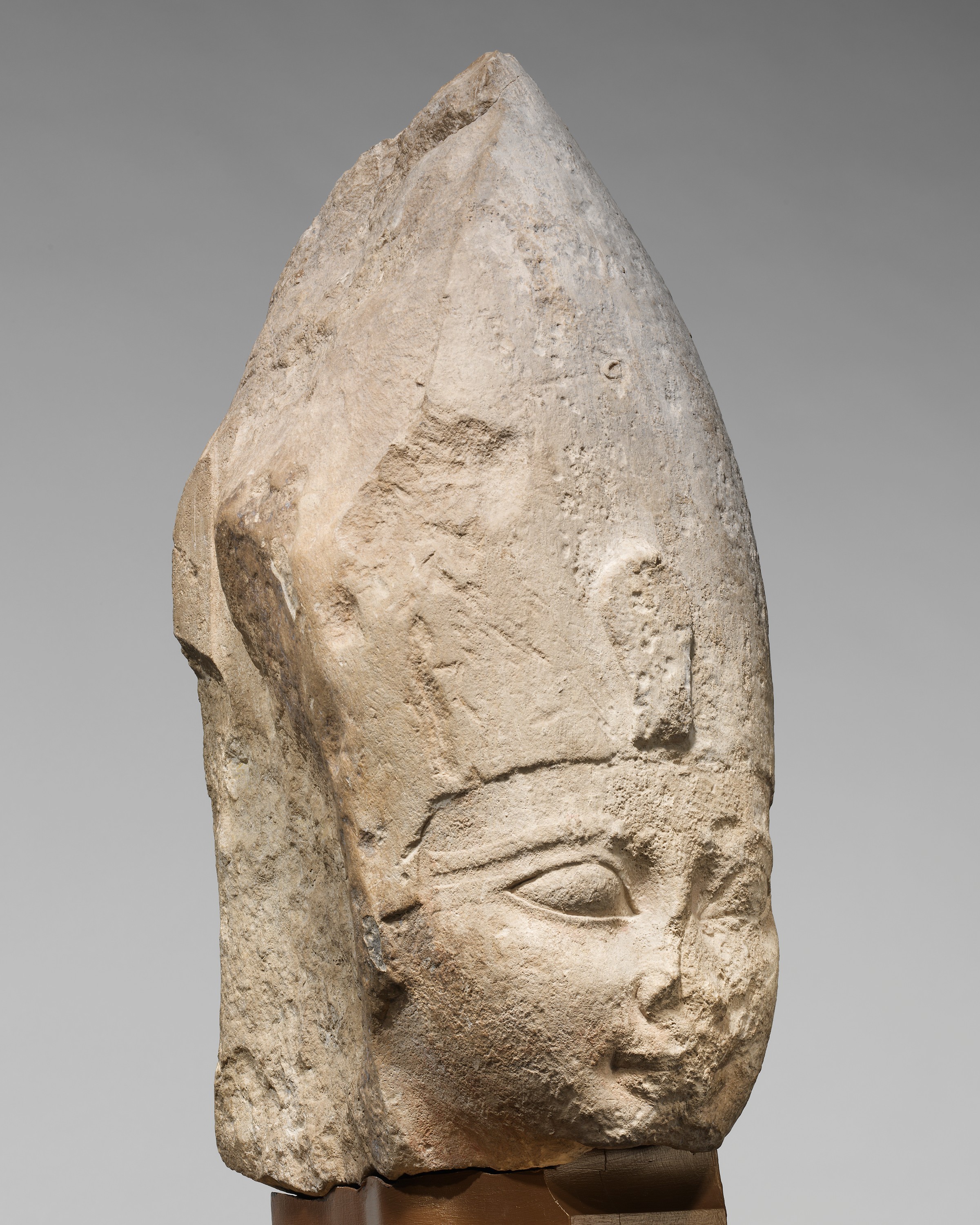
Ahmose I of Dynasty 18

Ahmose I of Dynasty 18{credit}The Metropolitan Museum of Art{/credit}

Ahmose I was the founder of the 18th dynasty and a pharaoh of ancient Egypt, famous for military campaigns that saw him drive the Hyksos out of Lower Egypt, clinch their stronghold in modern-day Gaza and take over lands in Syria and Nubia—heralding the birth of the New Kingdom. The stela was written down during his reign.

Scholars previously believed that the records of thunder and rain described on the stela were figurative –perhaps analogical references to Ahmose’s political conquests. But Ritner and Moeller beg to differ. The stela’s reports are not only literal, but are “further proof that the scholars under Ahmose paid close and particular attention to matters of weather,” they say.

The natural catastrophe lasted for an extended period, and was “unparalleled in intensity and extent,” as per the stela. Although the precise number of days is lost, the storm could have lasted for up to a month, according to some estimates, suggested the scholars.

The Egyptian stela mentions vivid imagery from the resulting chaos: “construction debris, household furnishings and […] human victims are washed by the driving rains into the river.” And it clearly states that the devastation extended into the “Two lands” a reference to north and south of Egypt.

“What Ahmose experienced and recorded was neither a typical storm, nor a masked reference to Hyksos destruction and royal defeat of primordial chaos,” say the researchers. “Whether the Tempest Stela records the actual events of Thera or later after-effects cannot be proved conclusively since the text cannot be expected to state that the storm ‘originated in Santorini’ or ‘among the Aegean islanders’.”

“The events described need not be testimony of the initial explosion, but rather of climactic after-effects that would have continued for some years,” the researchers added in their paper. “The Ahmose text’s further statement that those on the east and west lacked “clothing” … proves that this is a reference to the specific rain event, not a general metaphor for long term Hyksos domination.”

The researchers suggest that other scholars may have been reluctant to link the eruption at Thera to the Tempest Stela not because of the text itself, but because of chronological implications of such a link. “With newer and better dates for the eruption, there yet remains another possibility for reconciliation […] If Thera cannot be moved to Ahmose, it is becoming clearer that Ahmose might be moved toward Thera.”

The link between Ahmose’s reign plus the stela on one hand and Thera on the other has meant that scholars have now accurately placed his reign 30 to 50 years earlier than the previously recorded dating.

David Schloen, associate professor in the Oriental Institute and Near Eastern Languages & Civilizations on ancient cultures in the Middle East told EurekAlert!, science news agency, that Ritner and Moeller’s revised translation and their new conclusions helps “realign the dates of important events such as the fall of the power of the Canaanites and the collapse of the Babylonian Empire” in the ancient Near East, fitting the dates of other events more logically.

“This new information would provide a better understanding of the role of the environment in the development and destruction of empires in the ancient Middle East,” he said.

Tomb of ancient Egypt chief physician unearthed in Giza

The massive tomb carries the mark of elevated status.

The massive tomb carries the mark of elevated status.{credit}Arab Republic of Egypt Ministry of State for Antiquities Affairs{/credit}

The tomb of a top ancient Egyptian physician, who treated royals, was discovered in the Abusir necropolis, a site of excavations just 25 kilometres south of Cairo. A Czech archaeological mission unearthed the limestone tomb last week, confirming through press interviews and on its Facebook page that the tomb does indeed belong to the head of the physicians of the north and south of Egypt some 4,400 years ago.

Shepseskaf-Ankh, which translates to “Shepseskaf is living,” was associated with royalty, including a ruler of Egypt named Niuserre. The same site, which shelters the remains of 14 pyramids, served as the resting place of two other physicians from the fifth dynasty, as well as Old Kingdom rulers and a number of high temple priests close to the kings.

The architecture of the tomb, and its size, stretching across 21 by 14 meters and rising up 4 meters in height as well as housing an open court and eight burial chambers, gives away the high and noble status of the chief physician—who is believed to come from an elite Egyptian family, according to Ali Al-Asfar, deputy head of the ancient Egyptian section of the Ministry of State of Antiquities.

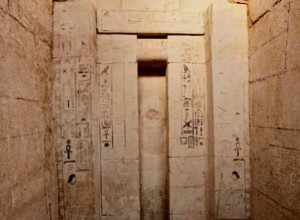
In one section of the tomb, a false door carries some of the ancient doctor’s prestigious titles, including Priest of Ra—the sun god—and Priest of Magic.

Miroslav Bárta, director of the archaeological team from the Czech Institute of Egyptology, told the National Geographic that he is pleased with the historical details contained in the tomb. “This microcosmos illustrates general trends that ruled the society of the day,” he said. “This is exactly the moment when the empire starts to break down due to rising expenses and increasing independence of powerful families.”

Refining the dates of Ancient Egypt’s first dynasty

Wall art

{credit}GOODSHOOT{/credit}

What we know of the history of the First Dynasty of Ancient Egypt, which was the first state formed in Egypt about a thousand years before the building of the first pyramids, has largely depended so far on archaeological findings of ceramics. Archaeologists studied the evolving style of ceramics used in burial chambers to determine the order of the kings and queens of the dynasty, which offered a rough estimate at best.

Now, researchers from the Research Laboratory for Archaeology at the University of Oxford have used radiocarbon dating to determine a more accurate estimate for this little known period of Egyptian history, publishing their findings in the Proceedings of the Royal Society A. They used radiocarbon dating on samples of hair, bone and plant excavated from the tombs of the monarchs and the surrounding region to determine their age.

By combining the radiocarbon dating and archeological evidence, the researchers used a mathematical model to produce more accurate estimates of when the state was formed, and when each king or queen came to power. They also found that the Predynastic period, which is when inhabitants started settling along the River Nile and focusing on agriculture before the formation of the first state, was shorter than previously thought.

The first king of the dynasty, King Aha, succeeded King Narmer (Menes) who is most credited with unifying Upper and Lower Egypt for the first time. His reign started between 3111 and 3045 BC. Additionally, the Predynastic period, which was previously thought to have started somewhere around 4000 BC, has been refined in the new study to ~3800 BC. This shrinks the period between concentrated agriculture and the formation of the state to 600 – 700 years. This is in contrast with neighbouring civilizations such as Mesopotamia, where there were between four and five millennia in the transition from agriculture to a centralized state. Despite being geographic neighbours, the rise of political centralization between the two regions took different paths.

The researchers dated the reigns of all eight kinds and queens of Egypt’s first dynasty: Aha, Djer, Djet, Queen Merneith, Den, Anedjib, Semerkhet and Qa’a.

The radiocarbon dating has found a rather long period between Djer and Djet that raises some questions. This would suggest that Djer reigned for over 50 years. This long period of rule may be unlikely, however, and could mean there are other kings or queens missing or ” be the result of a political hiatus,” as the paper suggests.

Researchers have used radiocarbon dating before on ancient Egyptian artefacts from the Old, Medium and New Kingdoms and managed to settle some differences that archaeologists had on the order of kings.

Voluntary slavery? Ancient Egyptians paid a monthly fee to become temple slaves

{credit}MACMILLAN SOUTH AFRICA{/credit}

Becoming bound by eternal, unquestioning servitude as someone’s property is not likely most people’s career of choice. 2200 years ago, however, it seems some Egyptians voluntarily signed up to become temple slaves.

Not only that, they even paid a monthly fee for the “privilege.”

The revelation comes from the work of Egyptologist Kim Ryholt of the University of Copenhagen, who has been studying papyrus slave contracts found in a rubbish dump in the ancient Egyptian temple city of Tebtunis.

“I am your servant from this day onwards, and I shall pay 2½ copper-pieces every month as my slave-fee before Soknebtunis, the great god.”

This is part of the translation of 100 of these papyrus slave contracts that Ryholt has spent years trying to collect and analyse. The documents were scattered in fragments across Egypt, Europe and the US after they were illicitly excavated. In one example, a contract was divided between Copenhagen and the British Museum.

Ryholt is the first to analyze these papyri collectively, publishing his findings in a recent article titled: A Self-Dedication Addressed to Anubis – Divine Protection against Malevolent Forces or Forced Labour?

Among his findings was that these voluntary slaves also signed up their descendants.

“I am your servant with my children and the children of my children,” read the contracts, which were written in Demotic script – an ancient Egyptian language.

It is unclear how the temple slaves generated any income in order to pay their monthly fee, but Ryholt says that they likely performed various kinds of manual labour in their “spare” time.

“Slaves in antiquity, as in modern times, were generally allowed to earn some money on their own,” says Ryholt. However, he concedes that we are rarely told how they generated income, though he does mention one example of a literate slave called Ptolemy who made some earnings working as a “dream interpreter.”

Ultimately, the real mystery is why anybody would willingly become a slave. Ryholt argues that these individuals were not driven by some inexplicable masochist streak – as one may be tempted to assume – but were poor individuals at the bottom of the social hierarchy seeking asylum from a worse fate: forced labour.

While these contracts bound them as slaves, they also protected them from being subject to forced labours such as digging canals and other harsh and often fatal projects. However, as temple slaves, they were mainly engaged in agriculture and were exempt from forced labour.

This loophole for escaping forced labour was likely only open during a 60 year period from around 190 BC to 130 BC, with no other evidence that this practice existed during other periods in ancient Egypt. Ryholt speculates that this is because reigning monarchs could not afford losing too many potential labourers to temples in the long-run.