Alive in the universe

This is a guest post by Sarah Hiddleston 

Nature Middle East has an exciting contribution to the grande dame of art events –The Venice Biennale. For more than 120 years the Biennale has attracted hundreds of thousands of visitors to the floating city, whose sweeping squares, crumbling palazzos and beautiful churches play host to the world’s foremost cutting-edge creative minds. Now in its 58th iteration, it takes as its theme May you live in interesting times and promises to be a showcase of what its artistic director Ralph Rugoff describes as “art’s potential for looking into things that we do not already know”.

Nature Middle East’s film-short charts the contribution of Syrian artist Issam Kourbaj as he examines the nature of reality, life, death, migration and the passage of time. Together with the British poet Ruth Padel, Kourbaj will open a 28-day exhibition entitled Alive in the Universe with a three-piece performance installation at the Palazzo Pesaro Papafava on May 8. The film, shot last year in Kourbaj’s studio in Cambridge, will be shown alongside the installation.

Alive in the Universe is a creative take on the wonder and anguish of existence including some of the most perplexing questions in science. Masterminded by co-curators Caroline Wiseman and David Baldry, it was inspired by Albert Einstein’s dictum that “art is the expression of the profoundest thoughts in the simplest way”. The exhibition seeks to challenge and deepen our understanding of life and death, gender and procreation, the cosmos, water, dark matter, technology and time among others.

Watch: the video  https://www.youtube.com/watch?v=vpUOx-wTUz4

UAE’s first nanosatellite launched

Nayif-1 before it was shipped out of the UAE for the launch.

Nayif-1 before it was shipped out of the UAE for the launch.{credit}@Nayifone on Twitter{/credit}

The United Arab Emirates first ever nanosatellite, Nayif-1, was launched a few hours earlier – it was among 104 satellites propelled into outer space on board the PSLV-C37 rocket from Satish Dhawan Space Centre in India.

It’s the Gulf country’s first CubeSat mission led by seven Emirati engineering students from the American University of Sharjah, in collaboration with the Mohammad bin Rashid Space Centre. The first signal was heard in North America during the night hours (local time), roughly 18 minutes into the launch.

The AUS team will monitor the satellite’s direction and control until it’s switched to autonomous mode.

An educational CubeSat project, Nayif-1 will send and receive messages that will be picked up by amateur radio frequencies; it’s programmed to transfer messages in Arabic, also a first.

A CubeSat is a type of miniaturized satellite for space research that is made up of small cubic units, with a mass that typically doesn’t exceed 1.33 kilograms per unit. They often use commercial off-the-shelf components for their electronics and structure.

According to its makers, the Emirati CubeSat also holds an active control system board that is being launched in space for the first time.

From counting to caring

Sympathy with mass human crises may capture attention but do not always translate into action – and even in cases where it does, the action is more often than not transient, at least according to a new research studying the ebb and flow of empathetic response to humanitarian disasters.

Researchers from the US, Canada and Sweden probed the spike of donations for Syrian refugees and related internet searches after a photograph of a dead Syrian child washed up on a beach in Turkey emerged and went viral. It garnered views by 20 million people on social media alone on September 2, 2015, the day it was published for the first time.

The iconic photo of the lifeless body of three-year-old Aylan Kurdi lying face-down at an empty shoreline highlighted the plight of Syrian refugees and the many dangers they face fleeing war. And the research shows that the photo did quickly draw people’s attention to a much greater extent than hundreds of thousands of deaths, judging by previous statistical reports. “New behavioral data from information searches and donations demonstrates that, in this case, an iconic photo of a single child was worth more than hundreds of thousands of statistical lives,” says the research published in the Proceedings of the National Academy of Sciences of the United States of America.

But people’s empathy also waned quickly. “This empathetic response was short-lived,” reads the research, which noted that donations subsided significantly even as the Syrian crisis endured.

“These data illustrate the iconic victim effect …. Does the iconic victim response diminish rapidly as the image fades from memory and the media lose interest? Judging from the foregoing data, this appears to be the case.”

You can read the full research here.

This injectable biomaterial can control bleeding

The biomaterial can maintain its shape upon injection, only becoming liquid after a force is applied.

The biomaterial can maintain its shape upon injection, only becoming liquid after a force is applied. {credit}Ali Khademhosseini, Brigham and Women’s Hospital{/credit}

Scientists swap metallic coils, classically used to treat aneurysms and uncontrolled hemorrhaging, with a a hydrogel that can hold its shape within a blood vessel to prevent bleeding.

The agent, tagged a shear-thinning biomaterial, is similar to toothpaste in consistency and is made up of both gelatin and nanoparticles. The research by a team of scientists led by Ali Khademhosseini, from Brigham and Women’s Hospital and the department of physics, King Abdulaziz University, Saudi Arabia, developed the agent to overcome the limitations of the coils. In 47% of patients on blood thinning medications or in those who cannot form blood clots, dangerous break-through bleeding, with rebleeding, occurs when the coils are inserted into their blood vessels.

The new biomaterial doesn’t rely on the formation of blood clots to obstruct the vessel and halt bleeding. It can also withstand high pressure, and naturally degrades over time. It was tested on porcine models, whose blood vessels have similar dimensions to human’s. And the scientists plan to test it on humans next.

“This work is an example of how bioengineering can help address the challenges that clinicians and patients face,” says Khademhosseini of the research, published this month in Science Translational Medicine. “Our work thus far has been in the lab, but we are on a translational path to bring this new biomaterial for embolization to the clinic to improve patient care.”

Can garlic-derived creams cure cutaneous leishmanisis?

A few months after a flesh-eating disease has resurfaced in the Middle East, a research team from Saudi Arabia and Egypt has released a new study which claims that allicin, a sulfur compound found in garlic, can hold the key to a cure.

Leishmaniasis is a protozoal parasitic disease spread by the bite of certain types of sandflies. From cutaneous lesions to fatal visceral infections, the parasite is vicious, but now these scientists are saying that the compound that is derived from the oldest medicinal plant and a cream based on it can heal cutaneous leishmaniasis in mice.

The study published in PLOS One says that at a concentration of 50 micromoles of allicin put a stopper on the growth of Leishmania parasites. Topical application of allicin cream have successfully reduced lesion sizes.

The scientists studied the toxic effects of allicin on the liver and kidney, but they discovered no significant differences in their biochemical analysis between the control and treated groups.

The potential cure’s promise lies in the fact that it overcomes the disease’s drug resistance, according to the study.

Foe to friend: Can phages help combat this notorious pathogenic predator?

phages - blog

{credit}Ahmed Askora{/credit}

A new research in Zagazig University offers insight into the dynamics of phage genomes and some phage-host interactions and regulation, hoping to use phages to combat a broadly-spread lethal and persistent strain of land pathogenic bacteria.

The research wants to use bacteriophages – found in soil, air, water and everywhere around us – to decrease the virulence of this land pathogen, known as Ralstonia solanacearum, which typically infects a variety of crops, devastating them.

Bacteriophages are already cropping up as possible alternatives to antibiotics due to rising antibiotic resistance.

What are bacteriophages?

More colloquially known as phages, these viral organisms that infect bacteria are essential to life. Perhaps the best description of how they function comes from Microbial ecologist Forest Rohwer. ”[The phages] float about, awaiting a microbial encounter, then attach themselves to their preferred targets using a remarkable array of equipment—arms like grappling hooks, tails like hypodermic needles, fibres like teeth—each of which is perfectly adapted to bind to, and then sneak genetic material through, the bacterial membrane,” he tells The New Yorker. “Once inside the cell, some phages replicate at speed, destroying the host by bursting out of it, like a fungus dispersing its spores. Others are parasitic, integrating their DNA with that of their host. Sometimes they even provide it a benefit of some kind.”

Two lines diverged in a lab

It is this benefit that Ahmed Askora, the researcher from Zagazig, speaks of when he tells me that he is trying to turn a phage from a killer to a friend.

Studying two lines of phage strains, Askora says he has found that one line of the bacteriophages harbours what he calls a “repressor” gene, in other words, a phage-encoded regulator that somehow affects the expression of host genes involved in bacterium Ralstonia’s virulence. In short, it suppresses the “toxic gene” when the DNA of the parasite, the phage, and its host, the bacteria, are integrated.

And that’s a first, he says.

But first, let’s talk Ralstonia

The notorious Ralstonia is a sort of grassroots predator; it invades plants through roots or vascular bundles and replicates inside, with the wilting working its way up. It can colonise an entire water system, contaminating it and eventually causing the death of said plants.

The bacterial wilt, caused by Ralstonia, affects around 200 plant species over the world.

According to Askora, the US spends heavily to control the disease using pesticides, antibiotics and disinfectants, and the virulence also affects crops in the Middle East, including principle crops like potatoes, eggplants and tomatoes. Egypt in particular is in crisis, he says, and is short on resources to fight the disease.

But it just so happens that Egypt is the only country in the Arab world, Askora claims, who’s studying the bacteriophage genomes and their effect on the virulence of Ralstonia in an attempt to nip its offensive in the bud.

… A sneaky invader

Ralstonia‘s invasion strategies, on the molecular level, have been scrutinised before. A study published this month in Cell showed that Ralstonia uses a decoy in which it injects specific pathogen molecules or “effectors” into host cells to block its immune defenses.

Among these effectors is a type of protein that blocks transcription factors responsible for regulating the expression of defense-related genes, neutralising them, then allowing the invasion to “clean up.”

Some plant species have improved their arsenal against this, but if anything, this recent research shows that new immune receptors in the plant cells need to be developed to better intercept virulence factors of pathogens, such as Ralstonia, which cause wide scale agricultural losses.

But there are many ways to fight the same enemy

phage - blog 2

{credit}Ahmed Askora{/credit}

Phages are widely spread and exist in different strains of pathogenic bacteria. They might evolve rapidly and play roles in the introduction of new genes into their hosts.

Askora wants to use this dynamic to manipulate the pathogenic bacteria itself – in simpler terms, put it in therapy, where the plant’s bacteria, with the help of its parasite’s DNA, would be able to repress its own poisonous genes.

Askora’s experiment involves isolating specific filamentous bacteriophages from the soil, where the affected plants live. The bacteriophages – an obligate parasite that needs its host in order to survive and complete its lifecycle – has to be tested against the pathogenic bacteria in vitro, and then added to said bacteria to see if it can kill it.

This is to begin with.

Most bacteriophages include some virulent genes; when the bacteriophage infects the bacteria, the phage transfers this gene to the bacteria through a process called “integration,” where the genomic DNA of the phage is integrated into the genomic DNA of the bacteria.

The phage changes the transcription of the bacterial genes, resulting in genes that are toxic when activated.

But Askora found a specific gene in that second line of phages that does the opposite of this; it causes loss of virulence in Ralstonia – “the first discovery of its kind in the world,” he boasts repeatedly.

“Phages sometimes help host bacteria infect plants by enhancing bacterial virulence, and they sometimes interrupt bacterial infection of plants by repressing host genes involved in virulence,” reads the study published last week in the open-source journal Frontiers of Genetics. “Such contradictory effects of these phages largely depend on the phage state.”

The research is done collaboratively with Japanese researcher Takashi Yamada whose lab has the specific technology that can isolate and test the phages, something that’s not available in Zagazig University.

It’s not final, future trials should reveal more

“We need more and more experiments to confirm this phenomenon,” says Askora as an afterthought, “There are many questions; is it a stable phenomenon? Do we need to modify some genes? The idea is to extract the repressor gene, amplify this gene in the phage, then we will clone it or insert it into a specific vector then transform this vector to a highly virulent bacteria, then see what happens when we do this.”

Askora hopes that with further trials he and his research partner can develop a global application of such repressor. “We want to make it wide scale,” he says.

Health situation in Yemen more desperate than ever

The World Health Organisation’s Margaret Chan published a statement this week decrying the health situation in Yemen, in which conflict killed almost 2,000 people, and injured 8,000, according to the latest death and casualty tolls.

Around 8.6 million are in need of urgent medical help, the statement said, adding that although WHO has delivered around 48 tonnes of medicine during a recent ceasefire, this is “vastly insufficient.” The aid can only serve some 400,000 people, and more continue to suffer, “not only from war-related injuries, but from inability to get basic treatment for the most common health conditions, or get obstetric care during childbirth.”

The statement reiterates that lives are lost not just in conflict, but in the throes of an ailing health system, a reality that Nature Middle East‘s correspondent Sophie Cousins has explored in an earlier report on May 4.

Ahmed Shadoul, WHO representative for Yemen, had told Cousins that health facilities are coping with “critical shortages of life-saving medicines, trauma care, and surgical and medical supplies, as well as medical staff to cope with the growing influx of patients.” At the time, the Yemeni ministry of public health and population had predicted that major hospitals will be unable to provide services, perform operations or provide intensive care to patients.

And indeed, WHO’s latest statement reported that hospitals around the country are already closing down their emergency operations rooms and intensive care units due to shortages in staff and fuel for generators. Medicines for diabetes, hypertension and cancer are no longer available, as per the WHO. The National Tuberculosis Programme has shut down in some areas, and infectious diseases such as malaria and dengue fever are spreading.

Outbreaks of polio and measles are also serious risks.

The statement in full can be read here.

Researchers can now tell who will be depressed, or not, in response to stressors

Two people, with similar circumstances, can experience the same stressor – death, trauma or even bankruptcy – and one could go on to develop depression while the other would weather the crisis and come out unharmed. What makes the difference between one and the other? Why do some function normally following a crisis, or are more resilient, while others become emotionally crippled by it?

Scientists from Duke University, Durham, believe they have a clue in the form of an almond-shaped group of nuclei in the temporal lobe of the brain called the amygdala whose reactivity during such circumstances can indicate future vulnerability to depression or anxiety – essentially acting as a predicative marker of risk.

It’s not the first study that attempts to link individual differences in brain activity to the ability to handle trauma and stress; activity of this area is crucial for detecting and responding to danger.

Previous studies, however, looked at participants who endured highly traumatic events, like war and active combat, but this study focuses on the general population, who encounter less punishing forms of stress, like divorce, or loss of a loved one.

A longitudinal study of 340 healthy young adults published this February in Neuron, and flagged in Duke Today, the university’s e-publication, explores how experiencing stressors increases the likelihood of developing treatment-resistant, chronic psychological problems, including depression and anxiety, for some, but not others.

The scientists measured the intensity of this activation using functional magnetic resonance imaging.

The research, done in the lab of senior author Ahmad Hariri, professor of psychology and neuroscience, concludes that amygdala reactivity interacts with stress to predict internalizing symptoms, occurring as much as 1 to 4 years after scanning. The study also traces individual differences in how the brain reacts. “These results highlight a readily assayed biomarker, threat-related amygdala reactivity, which predicts psychological vulnerability to commonly experienced stressors and represents a discrete target for intervention and prevention,” reads the paper.

Depression, globally, is responsible for more “years lost” to disability than any other conditions, revealed Nature magazine in a special portfolio on depression. Some 350 million suffer from it, according to the WHO, and it remains widely undiagnosed and untreated in many places because of stigma, or underreported or misdiagnosed in others. In November 2014, Nature tracked prevalence of depression across countries, and many Arab countries came on top of those highly affected by the mental condition. In fact, of the first 20 countries with highest prevalence of depression worldwide, 12 of those were Arab.

“Often, individuals only access treatment when depression and anxiety has become so chronic and difficult to live with that it forces them to go to a clinic,” explains the study’s first author Johnna Swartz, a Duke postdoctoral researcher, in Duke Today. “With a brain marker, we could potentially guide people to seek treatment earlier on, before the disorders become so life altering and disruptive that the person can’t go on.”

Hariri and his team say they will continue to follow up with, and monitor, their study participants – with the ultimate goal of understanding why some are more susceptible to mental health problems, as per a long-term project launched by Duke Neurogenetics Study.

“We [also] want to know just how far in the future knowing something about an individual’s brain helps us understand their risk,” says Hariri.

“Revolutionary” type 2 diabetes therapy to be released soon

SGLT2 diabetes

{credit}Boehringer Ingelheim{/credit}

A new class of diabetes therapy, soon to be available on the markets, including in the UAE and Saudi Arabia, is the first to target the kidney, say experts, and is hailed as “revolutionary” by Boehringer Ingelheim, the pharmaceutical producing it.

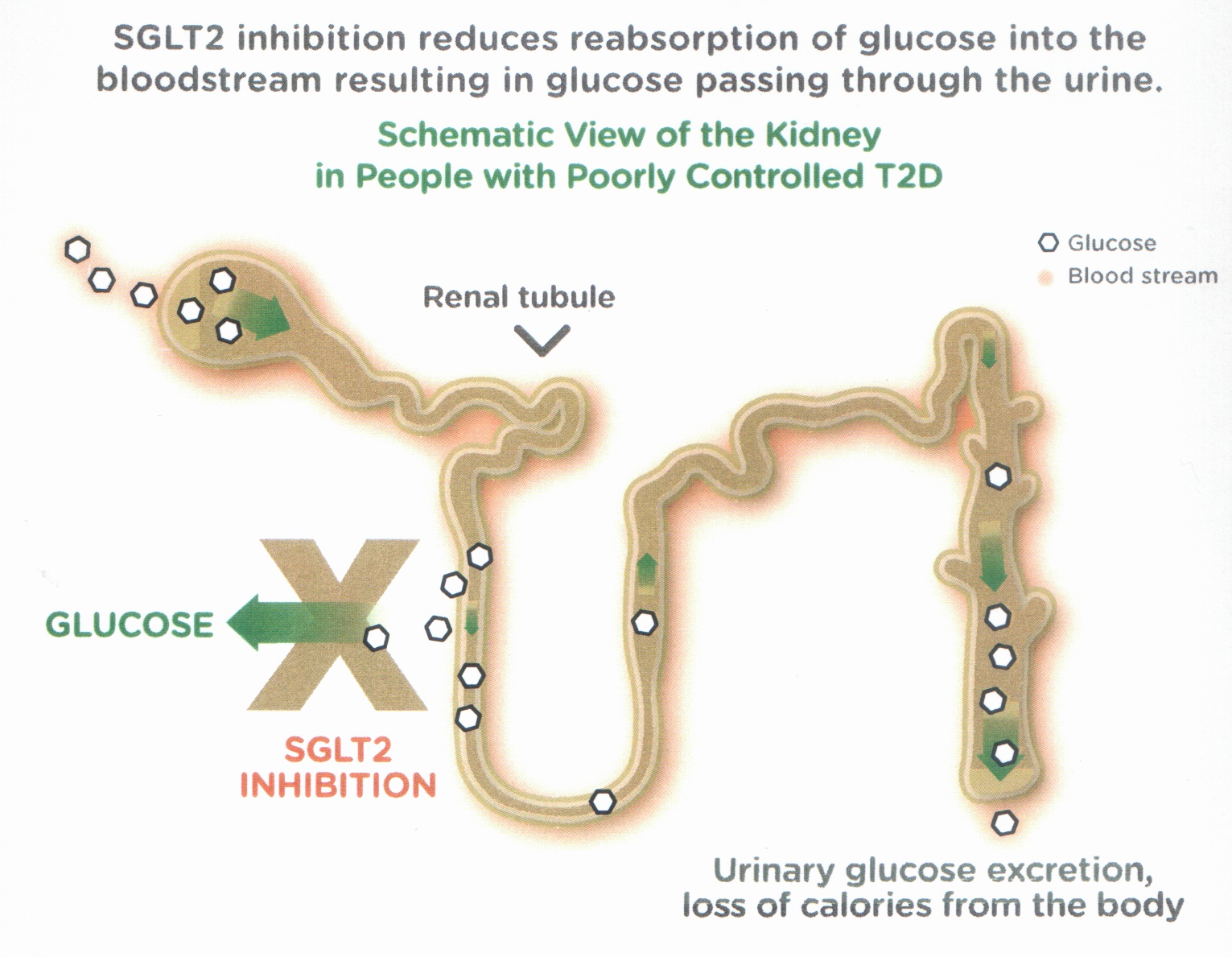
The modus operandi of the treatment, targeting type 2 diabetes (T2D), was revealed to the press during Dubai’s Arab Health conference last week – and it works by targeting glucose directly, independent of impaired ß-cell function and insulin pathways.

T2D is the most common of the two types of the disease accounting for 90% of diabetes cases and affecting approximately 382 million worldwide – 36.8 million of which are based in the Middle East and North Africa, a number that is expected to double by 2035. This type is marked by high blood glucose levels over a long period, reduced ability of the pancreas to produce insulin, and insulin’s inability to lower blood glucose.

Diabetics, with poorly controlled T2D, have very high renal threshold for glucose reabsorption in their kidneys. The novel treatment inhibits sodium glucose co-transporters (SGLTs) – proteins responsible to the kidneys’ role in reabsorbing glucose into the bloodstream. Specifically, it blocks SGLT2, which reabsorbs 90 % of glucose filtered by the kidney.

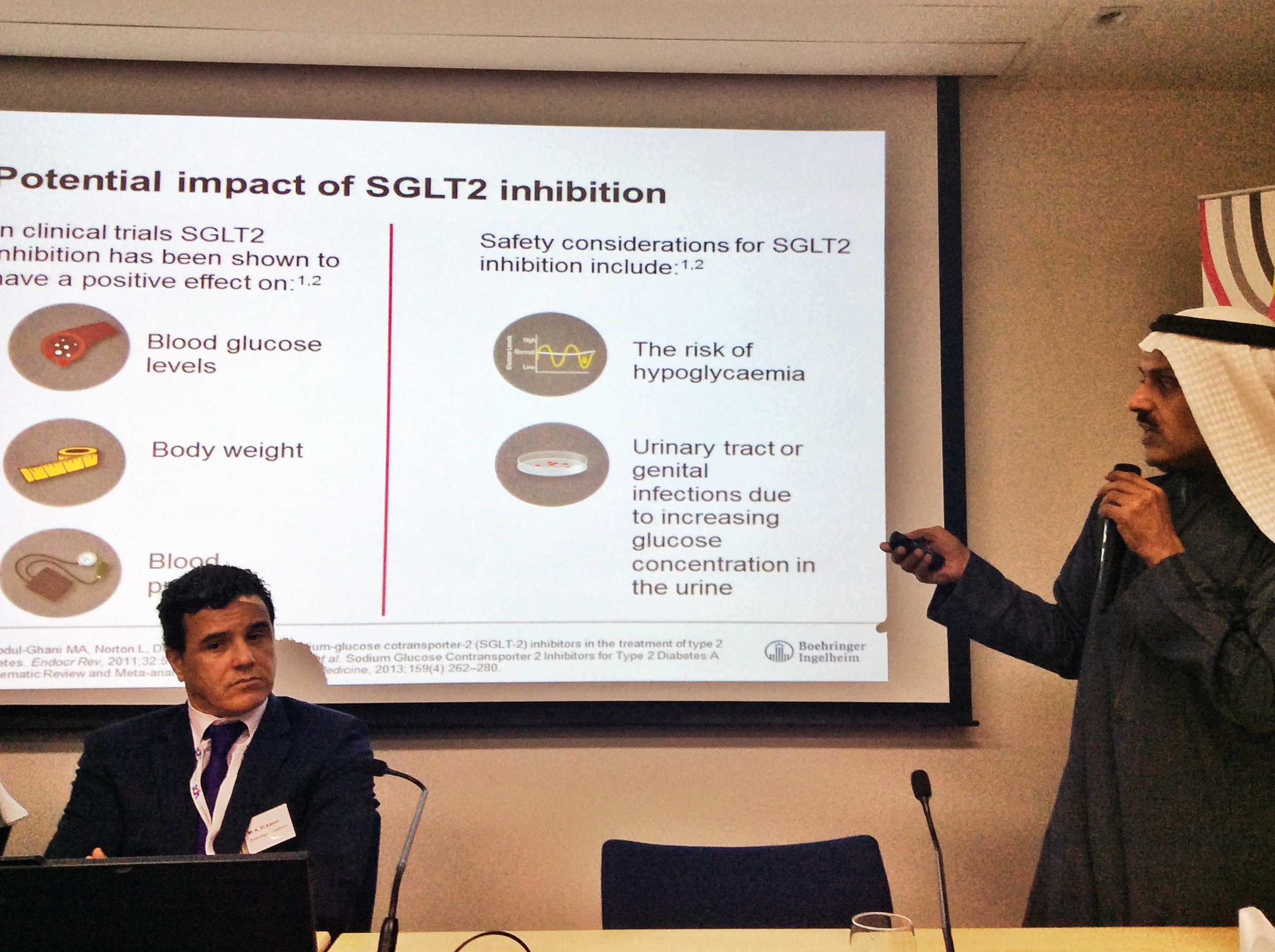
Al Sifri describes SGLT2 inhibition as a breakthrough therapy, with few side effects.

Al Sifri describes SGLT2 inhibition as a breakthrough therapy, with few side effects.

Through reducing reabsorption of glucose into the bloodstream, the SGLT2 inhibitor allows excess glucose to pass through the urine, leading to urinary glucose excretion. It’s one of the few treatments available that also guarantees loss of weight, besides regulating blood glucose. It also has a positive effect on blood pressure.

So far, when prescribing this medication, the primary side effects that doctors should look out for are hypoglycaemia (low blood sugar levels) and urinary tract and genital infections, explains Saud Al Sifri, chairman of the endocrinology, and diabetes department at Al Hada Armed Forces Hospitals, Saudi Arabia. Al Sifri, a proponent of the drug, however explains that so early in its introduction, it’s unclear what long-term effects the medication could have on the kidney or otherwise. “We’re not aware of long-term complications,” he says.

Al Sifri explains that considering diabetes is “very complicated; a disease with different faces, and with many subsets,” new classes of treatment provide a range of viable options, since patients require different sets of treatment and drug combinations, especially if the disease progresses. “There are no templates when it comes to diabetes,” he adds.

“It’s FDA-approved. [And ] the risks are very low with this one, as far as we know,” he adds. “It has a different mode of mechanism; other medications work through the pancreas, namely beta and alpha cells. This is the first therapy that cures diabetes through the kidney.”

Ancient Egyptian artwork tells of extinction

Carved rows of animals, including elephants, lions, a giraffe, and sheep, cover both sides of the ivory handle of a ritual knife from the Predynastic Period in Egypt.

Carved rows of animals, including elephants, lions, a giraffe, and sheep, cover both sides of the ivory handle of a ritual knife from the Predynastic Period in Egypt.{credit}Charles Edwin Wilbour Fund, Brooklyn Museum{/credit}

Around 6,000 years ago, Egypt was home to 37 large-bodied mammals, including lions, elephants, giraffes and oryx. Today, however, only eight of these remain.

While the Nile Valley region north of Aswan today is mostly made up of a hot, arid desert today with very little vegetation, it was very different back then. It was cooler, wetter and probably covered with lush vegetation driven by monsoonal rains which made it a much better habitat for the mammals.

The sharp decline of mammals over the years was not random, however, according to research published in PNAS. The paper suggests that the decline that occurred over the past 6,000 years was coupled with a drying climate and the rise of human settlements in the region.

“The trajectory of extinctions over 6,000 years of Egyptian history is a window into the influence that both climatic and anthropogenic impacts have on animal communities,” write the authors in the paper.

Ancient Egyptian artwork depicted on monuments and tools that were radiocarboned helped the researchers trace the changes in the animal populations. For example, depictions or lions in artwork up to the Second Dynasty (~4,645 years ago) show a long-maned lion, while latter depictions after that and up to the Twentieth Dynasty (~2,430 years ago) show a short-maned lion instead, which are two separate subspecies.

The increased extinction of species led to a decline in the stability of animal communities around the Nile Valley. When one species in a rich ecosystem disappears the effect is less pronounced, but with fewer numbers of species remaining, it becomes much more profound, shifting the prey-predator ratio in the region.

The researchers identified three episodes of extinction over the past 6,000 years, the most recent one 100 years ago and coinciding with the rise of industrialisation in Egypt. Three of the other drops in animal populations were coupled with periods of sharp increase in aridity with the earliest 5,000 years ago.

During these events, smaller herbivores, such as gazelles, started to decline sharply. These species are important for the ecosystem since many different predators prey on them. Their decline and eventual disappearance can lead to further decline in the populations of predators, such as lions and wild dogs.

While the authors point out that the actual cause of extinction of any single species cannot be identified, they suggested three scenarios that may have caused the decline. The first suggests that herbivores may have declined due to human overkill as Egyptians shifted to agriculture and supported it through hunting. The second scenario suggests that competition for habitats from humans who wanted to move to the floodplains for agriculture could have pushed out the animals there and reduced the available resources to them. The final scenario suggests that the climatic changes during that period may have affected both the herbivores and the carnivores populations.