UAE’s first nanosatellite launched

Nayif-1 before it was shipped out of the UAE for the launch.

Nayif-1 before it was shipped out of the UAE for the launch.{credit}@Nayifone on Twitter{/credit}

The United Arab Emirates first ever nanosatellite, Nayif-1, was launched a few hours earlier – it was among 104 satellites propelled into outer space on board the PSLV-C37 rocket from Satish Dhawan Space Centre in India.

It’s the Gulf country’s first CubeSat mission led by seven Emirati engineering students from the American University of Sharjah, in collaboration with the Mohammad bin Rashid Space Centre. The first signal was heard in North America during the night hours (local time), roughly 18 minutes into the launch.

The AUS team will monitor the satellite’s direction and control until it’s switched to autonomous mode.

An educational CubeSat project, Nayif-1 will send and receive messages that will be picked up by amateur radio frequencies; it’s programmed to transfer messages in Arabic, also a first.

A CubeSat is a type of miniaturized satellite for space research that is made up of small cubic units, with a mass that typically doesn’t exceed 1.33 kilograms per unit. They often use commercial off-the-shelf components for their electronics and structure.

According to its makers, the Emirati CubeSat also holds an active control system board that is being launched in space for the first time.

UAE unveils its Mars exploration amibitions

29982

{credit}PHOTODISC{/credit}

The United Arab Emirates yesterday announced its plan to create the country’s space agency and to send its first unmanned exploration probe to Mars by 2021. Mohammed bin Rashid Al Maktoum, vice-president of UAE and monarch of Dubai, said that the country has already raised 20 billion dirham (~US$5.44 billion) for the agency, which will be responsible for all of space exploration activities in the country as well as developing the technologies needed.

“The more than 60 million kilometres journey to Mars will mark UAE out as one of few countries with space programmes to explore the Red Planet,” said Al Maktoum in a released statement.

If the UAE can pull this off, it would be an impressive feat, and a very ambitious endeavour in general. “They will succeed, because they will make sure they get the right people and the right collaborations,” comments Nidhal Guessoum, associate dean of the College of Arts and Sciences at the American University of Sharjah, UAE.

Is it realistic to make the trip in just seven years from now? Maybe not. It is very hard to land a mission on Mars, even for veteran space nations like Russia. The United States is the only country so far that has landed a rover on the surface of our closest planet. But that is really besides the point. Whether they get to Mars by 2021 or not may not be that important. In fact, it’s the journey to that ambitious aim that is particularly interesting, and how the UAE will work for it.

This is a true chance for the UAE to change its international image. Everyone knows Dubai as a luxurious shopping city with the largest skyscrapers and the biggest malls. But this is a chance for the country to change its international image and become known as a science-producing country. “What I’m excited about is that this is the kind of great project that will now entice young people and will be associated with the UAE,” adds Guessoum.

It is also a chance to create a true sense of excitement about science in the rich Gulf state. Arabs have a rich history of astronomy that they are particularly proud of, but that was lost over the years. This is a chance to rekindle that. It can inspire young people to be interested in space and science again and can drive research and high-tech industry, much like NASA’s mission to the moon did for the US in the 1960’s.

While the UAE is rich enough to be able to import much of the expertise and technologies it needs, this is also a chance for the country to use this target to drive local research. It can promote education, international collaborations and attract world-class expertise who would be interested in working as part of this target.

“Our region is a cradle of great civilizations. Given the right tools, Arabs, once again, can deliver new scientific contributions to humanity,” said Al Maktoum in his statement. That vision is the most important part of the country’s announcement, and it’s more important than whether they would actually be able to land a research probe on Mars in 2021. And if they do, then that will be the next phase of the research boost that the project can offer the UAE and the region in general.

Arab world gets chance to name an asteroid

Maryam AljoaanA young Kuwait scientist has launched a campaign in the Middle East to give people a chance to name an asteroid, hoping it would reignite Arab’s passion with science and space.

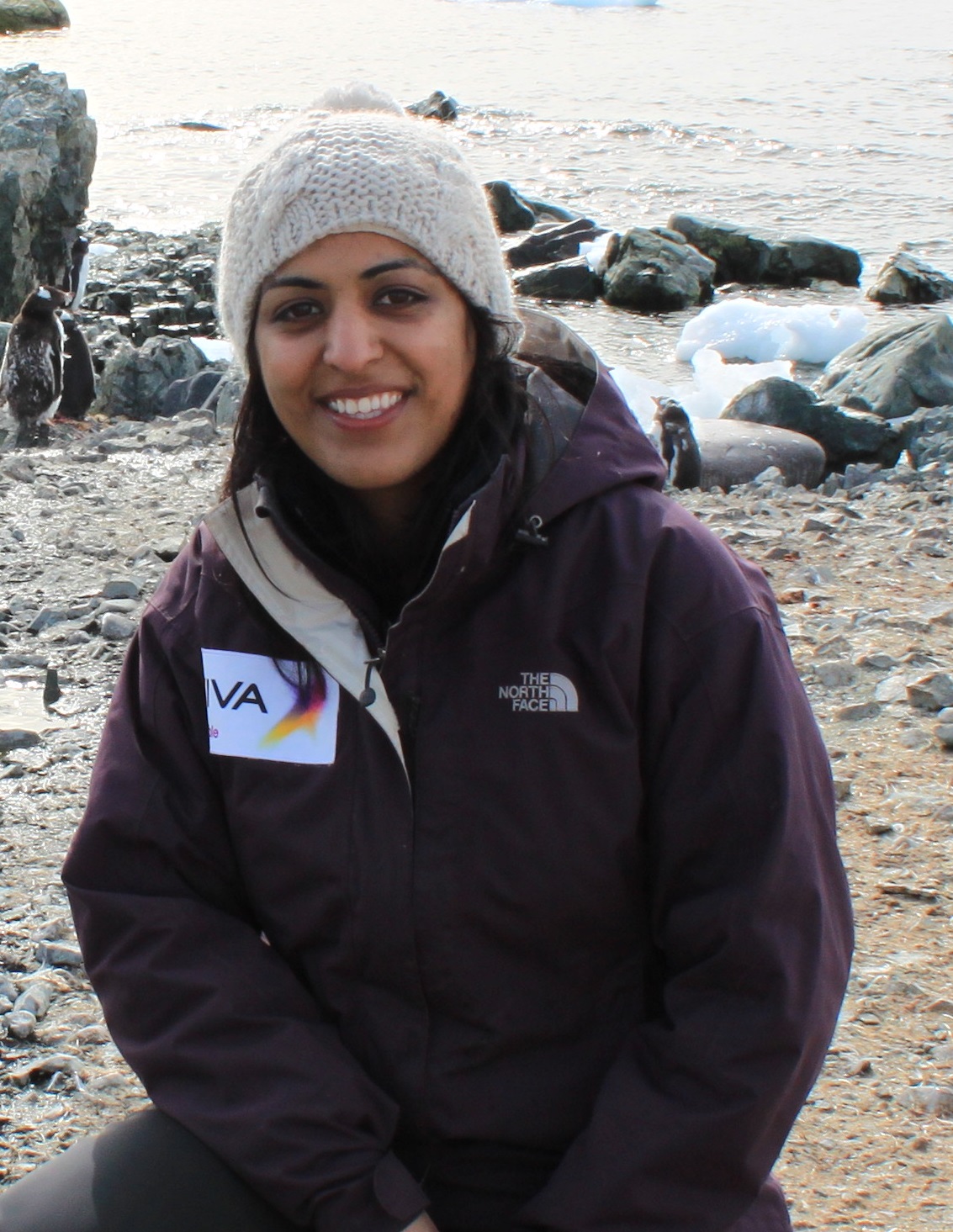
Maryam Aljoaan is not your average run-of-the-mill young scientist. The young Kuwaiti has been fascinated with exploring the Earth – and space – since she was very young. In February 2011, she became the first Kuwaiti female to set foot on Antarctica as part of a Canadian science expedition.

Since then, her fascination with Earth continued to grow, leading her to Jacobs University Bremen in Germany where she received her bachelor’s degree in oceanography. Now, the young scientist has set up an NGO to channel her fascination with science to others in the Arab world.

Her first project to do so is by partnering with the International Astronomical Union through a large regional campaign that offers everyone in the Arab world the chance to name an asteroid.

Following the launch of the campaign, I caught up with Maryam for a quick interview.

Can you give me more details about your campaign?

The asteroid naming campaign is aimed at the general public of all ages and backgrounds in the Arab world. We offer this first of a kind opportunity in partnership with the Minor Planet Center, the nerve center of asteroid detection in the solar system. Participants are invited to submit their naming suggestions on our website www.lazurd.org by 31st March, 2014.

I understand you want to raise awareness in the Arab world about the planet and asteroids through the campaign, but how do you think naming an asteroid can help do that? 

We hope that this campaign will spark some people’s interest to learn more about asteroids. However naming an asteroid gives the general public the opportunity to be part of the scientific world, and maybe to break their limiting beliefs that they cannot contribute to science.

Is the naming campaign for a certain asteroid as agreed with the International Astronomical Union?

Yes, there is a certain asteroid to be named. We will announce which asteroid once the name has been approved by the Committee for Small-Body Nomenclature of the International Astronomical Union.

Tell me more about the NGO Azurd that you set up in Belgium.

Lazurd is the Arabic word for azure – a hue of blue. Azure represents Earth as seen from space, which is our focus at Lazurd. We aim to provide educational opportunities for the Arab youth to explore and deepen their understanding of Earth beyond textbooks. Our vision is to create the next generation of Arabs who learn about our place in space and identify themselves as caretakers of Earth.

What exactly are you doing through it?

Our motto is to explore, understand, and protect Earth. We provide access for Arab youth to a range of scientific experiences and opportunities through our global partners. These first-hand experiences could be snorkeling with a marine biologist, testing experiments in a weightless environment, going on an expedition to the Arctic or presenting ideas to the scientific community. Since we don’t have financial partners yet, we started the asteroid naming campaign as our first project.

And is there a reason why you did not launch it in Kuwait?

I am mostly based in Belgium; therefore it was more convenient to found the organization here. Also it is easier to make contacts in the scientific community and to create and maintain links between organizations worldwide.

Can you tell me more about yourself and your interest in science?

I am a Kuwaiti social entrepreneur. I founded Lazurd in Belgium and am currently the executive director. I am an oceanographer by training, and received my bachelor’s degree in Earth and Space Sciences with specialization in Oceanography from Jacobs University Bremen in Germany. In addition, I have several field experiences on land and sea including the North Sea, the Antarctic Peninsula and the Southern Ocean.

As far as I can remember I have always been interested in science since I was a little girl. Later in high school I majored in mathematics, and enjoyed studying natural sciences.