Academic speakers at the Naturejobs Career Expo, London, 2016, discuss sexism in academia.
https://www.youtube.com/watch?v=rdfqXdibc0k

https://www.youtube.com/watch?v=rdfqXdibc0k
Guest contributor Viviane Callier
Gender stereotypes affect our attitudes and behaviours, even if we’re unaware of them. But the habit of implicit bias can be broken: an intervention with faculty at the University of Wisconsin helped to break the bias habit, led to an improved department climate for everyone, and increased faculty hires of women and underrepresented minorities, a new study shows.

Bias, perhaps?
Guest contributor Viviane Callier
Connections matter – in terms of productivity, in terms of obtaining grants, in terms of promotion and advancement, and in terms of retention in academic positions, a new Harvard-based study shows. Women and underrepresented minorities (URMs) have a smaller “reach” – a measure of second-order connections – and the discrepancy between the reach of women & URMs and that of white men is greatest at the junior faculty level. This discrepancy may account for differences in productivity, promotion, and retention of women and URMs in academia.

CREDIT: CC-BY-SA Atos/Flickr
Naturejobs journalism competition winner Ulrike Träger.
If you look for advice on work-life balance in science online, the message seems clear: it’s possible to fit a 10-hour work day around quality time with your kids and family as long as you’re organized. Flexible hours of working in the lab help. Experiments don’t mind when you do them, and can be postponed until your kids are asleep. But still, long hours are expected in order to be successful, and finding childcare during midnight experiments is not always easy if you don’t live close by. So for many (including myself, a post-doc in my late twenties pondering the right time to start a family) the prospect of having to plan each and every minute of the day to be a good parent and scientist is daunting. This leaves promising young scientists everywhere feeling like they have to choose between family and career.
First up this month is our ever-popular post on the value of Liebeth Aerts’ PhD, where she takes a look back one year after graduating.
Guest contributor Sarah-Jane Lonsdale
The Institute of Physics ran an event in November 2015 targeted at PhD students and early career researchers on “Taking Control of your Career as a Female Physicist”. After the event, I spoke with Dr Valerie Berryman-Bousquet, R&D Manager at SHARP Laboratories, and Dr Jenny Wooldridge, Associate Programme Manager at the National Physical Laboratory, about their career paths in industry. After our first discussion, we continued our conversation.

Sarah-Jane Lonsdale
Answering the most-feared interview question is high on everyone’s mind. Our guide to expressing your greatest weakness in a positive way is on the leader board as the most read piece on Naturejobs this month. Glad you liked it!
Chris Woolston talked us through the best make-up for a lab in group dynamics: a lab of their own in March. Your research group is important, and finding the right balance between different members of staff may just tip you into academic success. Continue reading
Guest contributor Helen Cammack
In my last blog post, I discussed career progression, publishing and gender equality with Professors Donald and Gibson. Here, we continue our conversation.

Did you relocate often as a postdoc?
AD: I moved around – I had a postdoc in the States, then returned to Cambridge. But at that stage I wasn’t really thinking about a career, so I wasn’t that bothered about what happened next. I didn’t intend to be an academic, so the pressure wasn’t on me. Nowadays everyone has to be calculating and publish in the right journals, and the pressure can detract from that freedom.
VG: When I was in my early career, I was just enjoying the moment, and I wasn’t thinking about my future career. The postdocs of today seem to more aware about career opportunities; they know that the majority of them won’t stay in academia; they’re looking around for what they would like to do and they’re picking up the skills they need for the future. It’s not just the academic side, it’s also the personal aspects – they’re concerned about getting on the housing ladder and potentially having families. At that stage those concerns never crossed my mind.
Guest contributors Philipp Gramlich and Karen Bodewits
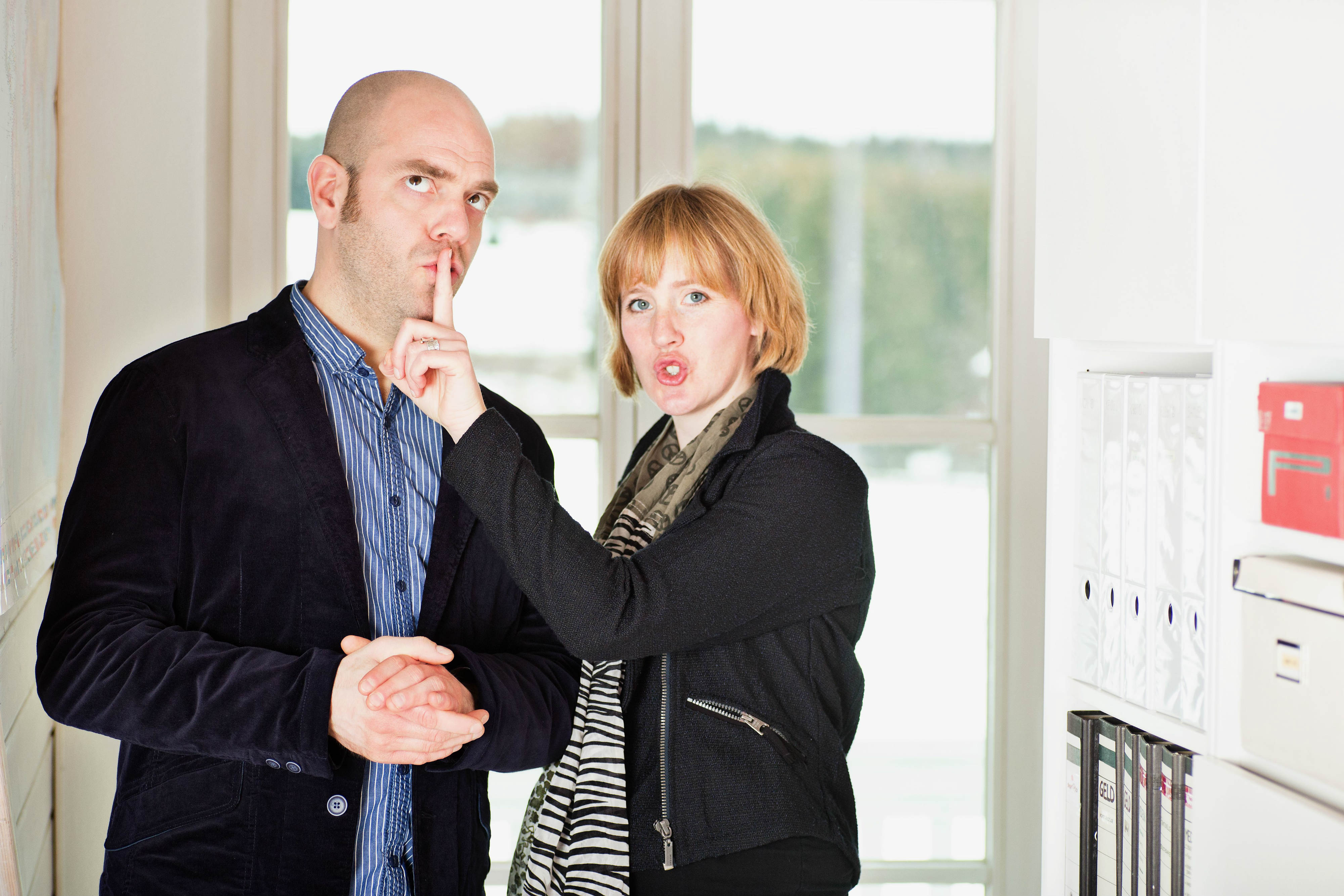
Philipp Gramlich and Karin Bodewits
Guest contributor Sarah-Jane Lonsdale
The Institute of Physics ran an event in November 2015 targeted at PhD students and early career researchers on “Taking Control of your Career as a Female Physicist”. It was a rallying cry which attracted women in physics from all walks of life, working in both academia and industry.
As a first year PhD student, I attended the event hoping to explore possible career options in a supportive environment. My interest in engaging more women in science comes from several supportive female mentors that helped me through my formative years, both at school and as I honed my skills as an undergraduate. They facilitated my first steps into STEM and research, but not everyone has the same good fortune. I hoped to be able to share my experiences and support others, while hearing the inspirational stories of women who have “made it” in physics. After the event, I spoke with Dr Valerie Berryman-Bousquet, R&D manager at SHARP Laboratories, and Dr Jenny Wooldridge, associate programme manager at the National Physical Laboratory, about their career paths in industry.
Sarah-Jane Lonsdale