How metformin works

Chris Triggle, Gnanapragasam Arunachalam and Hong Ding

Chris Triggle, Gnanapragasam Arunachalam and Hong Ding{credit}WCMC-Q{/credit}

Researchers at Weill Cornell Medical College in Qatar (WCMC-Q) have managed to understand how metformin, a widely used oral diabetes drug, interacts with the body to control the blood glucose level.

According to the researchers, metformin works on the ‘longevity gene’ SIRT1 to protect the user’s vascular system against deterioration caused by glucose toxicity.

When the researchers exposed mouse microvascular endothelial cells to high blood glucose levels, they noticed a significant reduction in the expression of SIRT1 and aging of endothelial  cells. Treating the mice with metformin countered this reduction in SIRT1 expression and protected endothelial  cells from this premature aging. However, after knockdown of SIRT1 the mice lost the protective effect produced by metformin. This suggests that the protection the drug offers for diabetes is at least partly due to its effect on the expression of SIRT1.

“The most common cause of death for diabetes patients is vascular and microvascular deterioration – it’s like an advanced aging of the vascular system – so metformin is an extremely useful drug,” said Chris Triggle, professor of pharmacology at WCMC-Q and one of the authors of the research that was published in the British Journal of Pharmacology.

He adds that metformin has long been known to reduce morbidity in patients with diabetes-associated microvascular disease, but that until now the reason for this beneficial effect had not been understood.

In the past, metformin was thought to act by reducing gluconeogenesis – or the formation of glucose from non-carbohydrate sources – in the liver, which in turn would reduce the amount of glucose in the blood and decrease vascular damage. “We realized some years ago that the reported and generally accepted mechanisms of metformin did not really fit with the pharmacokinetic profile – the way the drug interacts with the body – of the drug. Our study proves that metformin does indeed have a direct protective action on the vasculature,” said Triggle.

New hepatitis C treatment may be too expensive

Egypt has the highest hepatitis C burden in the world, with some 14.7% of Egyptians testing positive for HCV antibody. Therefore, it was no surprise that news of the latest oral HCV treatments approved by the FDA in the United States generated quite a buzz in local Egyptian media. The new drugs are very effective and have nearly no side effects, unlike the current regimens that cause depression, anaemia and severe nausea and do not have high success rates.

However, Raymond Schinazi, an Italian-Egyptian pharmacologist who oversaw the development of the new antiviral sofosbuvir which has generated excitement, warned that Egyptians should not be rejoicing just yet, in an interview with the Al-Ahram daily.

The new drug might be too expensive for developing countries, he warns. A 12-week treatment regimen could cost US$86,000 – which is far well more than 0.5 million EGP – much more than most people can afford. With the large number of people needing treatment, it would be impossible for the government to use the new drug instead of its current regimen, in which a full, 48-week course of HCV medication using the antiviral drug ribavirin and interferon costs around US$3,500.

“The drug can save the lives of millions around the world. But at its current price, it can bankrupt developing countries,” Schinazi tells Al-Ahram.

He goes on to stress that most of the studies conducted on sofosbuvir were on genotype 1, which is the genotype most present in North America and Europe. However, it has not been widely tested against genotype 4 which is the predominant one in Egypt and the Middle East.

“The cost of treatment will eventually go down, similar to what happened with antiretroviral treatments for HIV/AIDS. However, I think it may still be a huge burden for Egypt due to the large number of people infected with the virus,” adds Schinazi in his interview.

He goes on to suggest that a more reliable strategy for Egypt would be to invest in medical and pharmacological research and develop it’s own affordable drugs, similar to what countries in Southeast Asia have done. “You spend millions annually to treat a few thousand people and the infection rate is still high. This money should be better managed to improve research and raise awareness to limit new infections.”

Qatar’s peculiar research funding dilemma

Qatar Foundation

{credit}Qatar Foundation{/credit}

While most countries around the world are dealing with shrinking budgets for science research, Qatar has a surplus that the small Gulf state doesn’t know what to do with.

A few years ago, Qatar pledged 2.8% of its annual GDP to science and research – more than any other Arab state. However, according to Faisal Alsuwaidi, president of Research and Development at Qatar Foundation, the country isn’t currently spending even 10% of that amount annually.

“Our current spending is a fraction of what is available. The reason is that we are still recruiting, we do not have enough manpower yet,” he says. “The latest statistics show that Qatar has about 600 scientists, we need to add 1500 more by the year 2018 to meet our research targets.”

While Alsuwaidi declined to give an exact number for the amount of money that Qatar is currently spending on science, he said it is substantial when compared to other states similar to Qatar in size and population. The budget pledged for science research will continue to increase year by year by 15-20% until they hit the 2.8% of GDP target, and he stressed there are no plans to decrease funding. “This would cut into our plans and that is the last thing Her Highness [Sheikha Moza bint Nasser] wants to see.”

While money is not holding back research and innovation in the rich Gulf state, Alsuwaidi acknowledges the real challenge Qatar Foundation is facing is changing the general culture. “In the Arab world we do not have a science culture. I come from industry and when I had an issue with my plant I contacted engineers or manufacturers, I didn’t call in scientists. We want to change that.”

Thomas Zacharia, executive vice president of Research and Development at Qatar Foundation, says this is the long-term plan that they are working on. “The research we are trying to build is a central part of how the country is moving forward. We have to do many things systemically, we are not going to get [a science culture] in one day. You have to do various things to make this successful.”

During this year’s Annual Research Conference in Qatar, Qatar Foundation announced its new research strategy – which focuses on three grand challenges they want to tackle through science by 2020: energy, water and cyber security.

“We thought there was a disconnect between the ambition of diversifying the economy of the country with the scope and scale of the research so what we did is focus the research in a particular way in order to achieve the goals of the country,” says Zacharia.

“I am very pleased with the outcome of this year’s strategy,” adds Alsuwaidi. “In theory it encompasses a number of objectives from last year and we are trying to hire experts of international renown. We are attracting international attention and we are making ourselves known internationally.”

Qatar hones its national research focus areas

Qatar ARC 2013

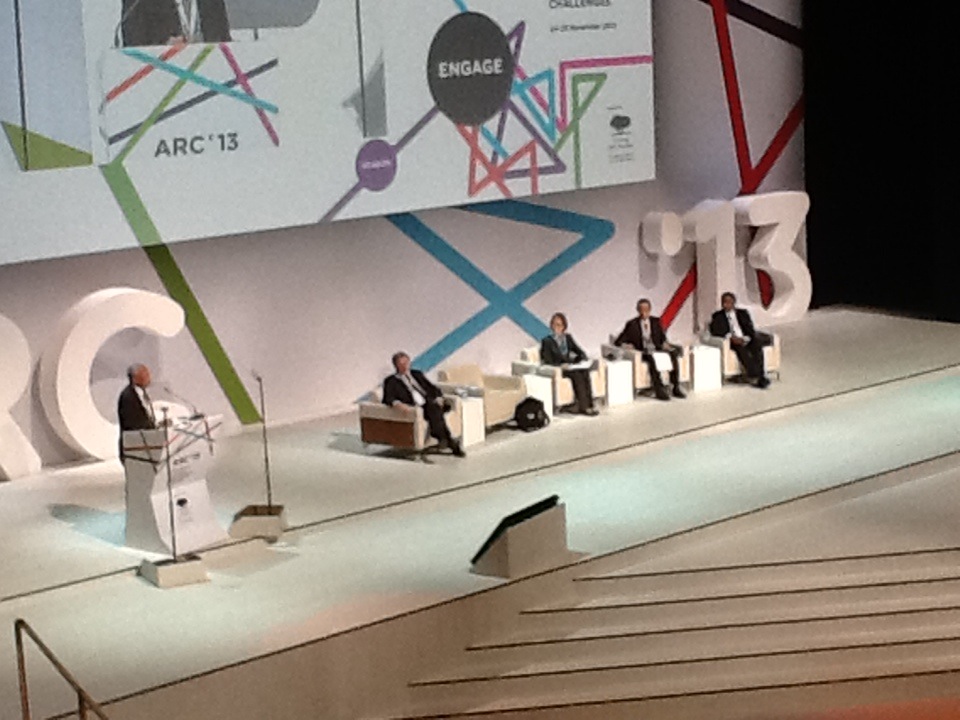
The opening session of Qatar’s Annual Research Conference 2013

One year ago, Qatar Foundation for Education, Science and Community Development (QF) unveiled the Qatar National Research Strategy (QNRS), a long-term plan to create a knowledge economy in the small state. Today, during the Qatar Annual Research Conference, the foundation announced further honing their research targets to three broad areas: water security, energy security and cyber security.

The three topics were selected after long deliberations amongst 100 experts from all the different sectors involved in research in the country. They rounded them down to 12 main areas, and finally Sheikha Moza bint Nasser, chairperson of QF, handpicked the final three as the most important challenges facing Qatar.

“It is not really a change in our research strategy, but an evaluation of the past as we move forward,” says Thomas Zacharia, executive vice president of Research and Development in QF.

The national strategy – and the renewed areas of focus – represent a shift in the country’s research activities. While QF used to fund research that addresses problems in different countries, it is now focusing on issues that are primarily relevant to problems that Qatar faces directly. For example, the energy security target aims at funding research to produce 1000MW of power from solar energy by 2020, around 7-10% of Qatar’s expected energy needs by then.

“But the majority of Qatar’s problems are the same as the rest of the Arab world, so solving them here will solve them in all Arab states as well,” says Faisal Alsuwaidi, president of QF’s research and development. “For example, our research into diabetes – a major health issue in Qatar – can help other countries in the region having the same problem.”

“We are eager to continue nurturing productive partnerships and a collaborative research culture that brings together the most intelligent scientific minds, as they engage in stimulating discussions and debate some of the nation’s grand challenges,” adds Alsuwaidi.

Desert farming pilot yields positive results

Sahara Forest Project

{credit}Sahara Forest Project{/credit}

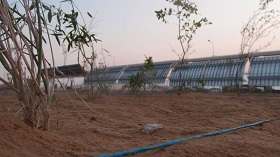
After two and a half years of research and testing, the Sahara Forest Project pilot in Qatar has started to yield results, and initial findings are showing good results for arid land agriculture.

The pilot project, built on one hectare of land, produced 75 kg/m2 in three crops annually, which is competitive with those obtained in commercial farms in Europe. The project, however, uses seawater instead of freshwater. The greenhouse, where the plants are grown, uses seawater and blowing winds to create a cooling effect which allows the plants to grow even under the scorching summer heats of Qatar, explains a news story in Science. Pipes with cold seawater passing in them causes some air moisture to condense, which is the source of freshwater plants use.

The cold moisture coming out of the greenhouse also allowed plants to grow outside the greenhouse, and the operators were able to use “evaporative hedges” which brought temperature down by a further 10°C, which allowed desert plants to grow quicker than normal and throughout the whole year. The final component of the pilot is a concentrated solar power plant which provides energy to run the project and any surplus is used in desalination of saltwater for extra freshwater. The salt end product was collected in large pools, and researchers are trying to grow salt-tolerant algae that can be used as animal fodder or grown for bioenergy production in the pools formed.

“The remarkable results demonstrated on the ground reveal the potential for enabling restorative growth and value creation in arid land,” Joakim Hauge, CEO of the Sahara Forest Project, told reporters. According to Hauge, scaling the project to 60 hectares can cover all of Qatar’s current  imports of  cucumbers, tomatoes, peppers, and egglants. The question is, however, is this commercially feasible? The reports don’t explain how much producing these food crops would cost.

The Sahara Forest Project will launch a new, 20 hectares pilot near Aqaba in Jordan to test the commercial feasibility of the project.

Tomb of ancient Egypt chief physician unearthed in Giza

The massive tomb carries the mark of elevated status.

The massive tomb carries the mark of elevated status.{credit}Arab Republic of Egypt Ministry of State for Antiquities Affairs{/credit}

The tomb of a top ancient Egyptian physician, who treated royals, was discovered in the Abusir necropolis, a site of excavations just 25 kilometres south of Cairo. A Czech archaeological mission unearthed the limestone tomb last week, confirming through press interviews and on its Facebook page that the tomb does indeed belong to the head of the physicians of the north and south of Egypt some 4,400 years ago.

Shepseskaf-Ankh, which translates to “Shepseskaf is living,” was associated with royalty, including a ruler of Egypt named Niuserre. The same site, which shelters the remains of 14 pyramids, served as the resting place of two other physicians from the fifth dynasty, as well as Old Kingdom rulers and a number of high temple priests close to the kings.

The architecture of the tomb, and its size, stretching across 21 by 14 meters and rising up 4 meters in height as well as housing an open court and eight burial chambers, gives away the high and noble status of the chief physician—who is believed to come from an elite Egyptian family, according to Ali Al-Asfar, deputy head of the ancient Egyptian section of the Ministry of State of Antiquities.

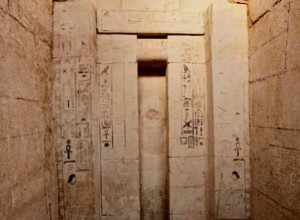
In one section of the tomb, a false door carries some of the ancient doctor’s prestigious titles, including Priest of Ra—the sun god—and Priest of Magic.

Miroslav Bárta, director of the archaeological team from the Czech Institute of Egyptology, told the National Geographic that he is pleased with the historical details contained in the tomb. “This microcosmos illustrates general trends that ruled the society of the day,” he said. “This is exactly the moment when the empire starts to break down due to rising expenses and increasing independence of powerful families.”

First Arab fellow of the Lister Institute of Preventive Medicine in the UK

sherif el khamisy

{credit}Sherif El-Khamisy{/credit}

Sherif El-Khamisy, director of the Center for Genomics at Zewail City of Science and Technology, became the first Egyptian and Arab to win a prize fellowship at the Lister Institute of Preventive Medicine, a UK medical research charity which supports young researchers. He beat a total of 164 nominees to be one of the four fellows who will receive £200,000 to further his research.

El-Khamisy and his team are working on repairing DNA breakage and the impact this can have on human health. “Our programme will utilise a combination of cellular and whole animal approaches to unravel the mechanisms by which breaks in one strand of DNA – the most abundant DNA lesion in cells – are repaired and determine the impact of loss of these mechanisms on tissue viability,” he explains. “This work will expand our knowledge of DNA repair and translate it into tangible ideas and new treatment paradigms for cancer and degenerative disorders.”

Using the research fund, El-Khamisy will maintain his current lab at the University of Sussex while also running a new one at the University of Sheffield. “The Sussex lab work will focus primarily on the drug discovery aspects of our work – very exciting leas are already in the pipeline,” he says. The new lab at Sheffield will focus on molecular, cellular and whole animal approaches – particularly zebra fish – to study the mechanisms involved in DINA breakage and repair.

“Both labs will feed and interact with the Genome Center at Zewail City, focusing on Egypt-related problems – primarily living with cancer,” he adds. Ultimately, El-Khamisy hopes his research can produce new treatments which would improve patient quality-of-life, particularly at old age.

“Besides the research financial award and recognition, [the fellowship] puts us on the map of top quality scientists and allows us to be part of a prestigious network of people who meet routinely to collaborate and discuss science. It is all about the network,” says El-Khamisy. “I am thrilled that the award now goes to an Egyptian scientist and hope that our research will open new frontiers in medicine, particularly in the field of genome stability”

NME’s weekly science dose (Oct 25 – Oct 31)

If there is one thing that the Middle East has an abundance of (besides oil), it would be conflicts. We start our weekly update with a visit to two of these conflict zones: Iraq and Syria.

A recent the survey on the number of people killed in Iraq, the first since 2006, has found that nearly half a million people have died due to the war, though not all deaths are a direct result of violence. Around 40% of those deaths were due to poor healthcare and sanitation, as well as infrastructure failures, which have increased since the US-led invasion of Iraq. Baghdad was the worst hit with violence, but even though the news tend to report most about explosive cars and suicide bombs, gunshots were responsible for 63% of the war-related violent deaths – more than three times those killed by bombs and explosives actually.

In neighbouring Syria, the ongoing civil war is creating a healthcare crisis across the country. Many doctors have fled in fear for their lives, leaving inexperienced doctors – and often veterinarians – to handle the influx of injured people due to the fighting. Experienced doctors outside the country are trying to ease these doctors into these daunting situations using modern technology to help them. Webcams and Skype are being set up in operation rooms to allow doctors thousands of kilometres away to guide local doctors on tricky operations. They are also offering video tutorials to teach them about other conditions they are likely to meet as they try to fill the healthcare void in their country.

On a non-conflict related threat (but still a very real one), researchers found that the increasing aridity of global drylands due to climate change may alter the nutrients cycle in the soil, leading to a decrease in carbon and nitrogen but an increase in inorganic phosphorous in the soil. This could negatively affect the people who depend on drylands for living, since it could lead to a decrease in the plant productivity. It will also decrease the capacity of these ecosystems to act as CO2 sinks and capture the greenhouse gas from the atmosphere.

Beyond the hood

The Kepler telescope has found an interesting new exoplanet, reported in yesterday’s Nature. It has a similar size to Earth, a similar density to Earth and probably has a similar core to Earth. But that’s where the similarities end. The exoplanet which is dubbed Kepler-78b, is a lava planet, with temperatures on the surface usually reaching 2000-2800°C. It’s year is only 8.5 hours long, orbiting its star about 100 times closer than our planet orbits the Sun.

In fact, it is so close to its star that scientists are confused it could form where it did. While it may not the habitable planet we are all waiting for, it’s an important step in the search for Earth-like planets, now that scientists can measure planets this small.

On a more earthly note, two new treatments for Hepatitis C are nearing approval, with scientists saying these can make a cure for the viral epidemic, for the first time, a real option. This is the first HCV treatment since interfeuron came into use, and and when taken with ribavirin, eliminates hepatitis C in around 80% of people. The main hurdle for these drugs would be the cost, since most of the people who carry the hepatitis C virus worldwide may not be able to afford the treatment. However, for countries such as Egypt where nearly one in every five carries the virus, the new treatment may be the most important break the healthcare system ever got to fight the spread of the epidemic.

Female Saudi scientist to join UN Scientific Advisory Board

?????????????Hayat Sindi,  a nanotechnologist and biotechnology entrepreneur from Saudi Arabia, has become the first Arab woman invited to the newly formed UN Scientific Advisory Board. She joins two other Middle Eastern scientists appointed to the board, Nobel laureate Ahmed Zewail from Egypt and Abdullah Daar, a professor of public health at the University of Toronto originally from Oman.

The 26-member board has scientists from all over the world who represent natural, social and human sciences and engineering to provide advice on science, technology and innovation (STI) for sustainable development to the UN.  “It brings together scientists of international stature, and will serve as a global reference point to improve links between science and public policies,” said UNESCO director-general Irina Bokova in a press statement.

Last year, Sindi was elected to be the first Saudi to become a UN goodwill ambassador to support science education, specially inspiring more girls to enroll in science subjects. Besides her work with the UN, Sindi is also a well-known speaker on entrepreneurship and has been vocal in her home country to promote education for girls. Born in Mecca, Saudi Arabia, she was the first Saudi woman to receive a PhD in biotechnology from Cambridge University.

She is the co-founder and director of Diagnostics for All, a non-profit institution that aims to create low-cost easy-to-use diagnostics tools for developing markets. Earlier this year, she also set up the ‘i2nstitute for Innovation and Ingenuity’ to promote entrepreneurship for young scientists in the Middle East.

NME’s weekly science dose (Oct 11 – Oct 18)

Cancer – this is our focus this week. In a special report (the first of several) at Nature Middle East, this week we are putting cancer in the Arab World under the spotlight. Our editorial will set you off on where the problem lies: we have a serious problem, but there’s little we actually know about it. Doctors are basically stumbling in the dark trying to fend off an unseen enemy. For example, some researchers suspect that Arab women may be getting a more aggressive form of breast cancer than their Western counterparts. But without proper registries in Arab states, we cannot really be sure. Genetic studies are already showing links between cancer and common diseases in the region, such as diabetes.

That’s why several states are taking a more research-focused look at the region now. Some countries, such as Egypt, have started setting up registries to monitor cases. The disease burden varies across the region too, as well as how the states deal with it. Gulf states have been more successful than most states in the region with monitoring, where nearly everyone gets screened. Other states, mostly those in Northern Africa, have poorly managed to the disease, which has led to fast growth that the healthcare systems are unable to deal with.

On a different note, researchers studying the fossils of ancient insects that lived hundreds of millions of years ago found that they show an unexpected level of diversity. In the past, these insects were overlooked due to their tiny sizes, which pit them as miniature versions of their current ancestors. They do offer a unique look at that period of time, however, showing there was already wide diversity of insects some 300 million years ago.

Beyond the hood

You might think that monkey communities are noisy, with all the monkeys calling out at the same time, but seems you would be mistaken. Unlike some humans, other primates may actually be used to taking turns in conversations. Researchers decided to study how marmosets communicate and found that they never repeat the same line. Instead, after one marmoset has finished its call, the other monkey waits roughly five seconds before replying. Like humans, they also reacted to the speed of the call. So when one marmoset increased the speed of its call, the other responded in the same manner.

Finally, for our last piece in the highlight this week we go out to the stars, where NASA has discovered the first “tilted” solar system. our solar system is flat, with all the planets orbiting around the Sun’s equator. But Kepler-56, a star that is roughly some 2,800 light years away is different. It’s two stars rotate around the star at a skewed angle of 45 degrees to the star’s equator. By measuring the velocity of Kepler-56, the researchers found that there was a huge body that pulled the star and shifted the angle of its equator. the planets keep its other in track by their gravitational forces, keeping their orbits co-planar.