Talking “rubbish” with Egypt’s environment minister

laila iskandarSitting down with Minister of Environment Laila Iskandar at Alexandria’s ongoing Biovision conference, she talked to Nature Middle East about going back to the basics in terms of solid waste sorting and recycling–a thing that was overdue, according to her.

“We have tried everything else, and all has failed,” she says. Before becoming minister, Iskandar was consultant to the ministry on waste management issues in Egypt, and changing the current disposal system was what she’d been lobbying for ever since the government contracted Spanish, Italian and French waste management companies for rubbish disposal.

With Egypt’s tight budget, and rampant poverty, one would think that investing in an already-integrated community that does what big waste companies are doing, with lesser costs, instead of outsourcing the operation, is a no-brainer. However, in the minister’s words, the country chose to pool money into a “modern” management system that was practically set for failure, instead of re-organizing the work of informal garbage collectors–casually known as the “zabaleen”–who are already doing this without an extra fee from the government.

But she’s out to change that. Coordinating with municipalities, she’s bringing the “zabaleen,” whose number ranges from 80,000 to 150,000, under the jurisdiction of the ministry–giving them salaries, uniforms and all. The modern companies only moved the garbage from garbage collecting points to disposal facilities, she says, but “the ‘zabaleen’ have an invested interest in the materials because they want to recycle it.”

The informal garbage collectors usually haul the piles of refuse on donkey-pulled carts across Cairo to the seedbed of their operations, where they live and work, in Manshiyet Nasser, a squalid densely-populated settlement tucked away in Moqattam–at once experiencing the worst that the city has to offer (in terms of infrastructure) and creating a model for what an active strata of the urban poor can still contribute to the community despite living hand-to-mouth.

Like clockwork, the garbage is sorted by hand, and 80% of the organic waste gathered is reused or recycled, keeping the community’s carbon footprint to a minimum, before “sustainability” came into fashion.

“The [foreign] companies didn’t do a good job and they weren’t regular. They weren’t experts in managing so they fell apart,” she explains, labeling the contracts with multinationals, “a big disaster.” Giza has “disentangled itself” from these contracts, but Cairo is still caught up in their throes, she says.

Of course, it’s difficult–and extremely costly–to sever delicately-crafted multimillion-dollar contracts with international companies; they’re currently in arbitration. For now, Iskandar says that they’re re-introducing the work of the “zabaleen” on a limited scale, to areas not heavily covered by the companies. And let’s face it, for the “zabaleen” or rogue garbage collectors, it was business as usual, only now they’re happy to have garnered recognition by the government for a job they inherited from their fathers, and their forefathers, and had been doing for decades. Especially that until last year, it was illegal to employ garbage collectors.

Iskandar herself seems both sympathetic to their cause and impressed by the efficiency of their recycling operation. In her speech to the delegates of the conference, she described the collectors as the “honest poor,” pointing out to the audience that they’d been facing one blow after another; first the introduction of foreign companies that threatened to throw them out of business and forced them to be clandestine about it, and second, the 2009 culling of their swine population amidst the “pig influenza panic” that Egypt had experienced with the emergence of some H1N1 virus infections.

The utilization of this vast workforce, while working to better their living conditions, is a win for the ministry. But the over-powered institution still faces difficulties in other areas, especially that its environmental protection guidelines are more “advisory” than compulsory, with very few enforceable laws and a low-stake penalty code for violators. “How bad is the situation?” we asked, referring generally to conservation efforts, industrial pollution issues to name a few of the problems facing the ministry. “Pretty bad,” Iskandar shot back. “But I’m hopeful that things can get better,” she added as an afterthought.
Who knew? Popular teens are not immune to bullying either

Turns out being popular might not save you from sneering, jabbing and harassment in school yards, a new University of California study concludes – the persecution is certainly not exclusive to those who are poor or “physically vulnerable.” In fact, becoming popular increases the risk of getting bullied, and worsens the negative consequences of being victimized, according to the same study.

“In contrast to stereotypes of wallflowers as the sole targets of peer aggression, adolescents who are relatively popular are also at high risk of harassment, the invisible victims of school-based aggression,” says Robert Faris, associate professor of sociology at UC Davis and co-author of the study, “Casualties of Social Combat: School Networks of Peer Victimization and their Consequences.”

“Do aggressors attack the weak?,” the study asks. “According to our findings, the answer to this question is: not as often as they attack the strong. Aside from a few isolated students, the highest rates of victimization are observed among students of relatively high social standing.” The brunt of it decreases however as students rise to the pinnacle of the hierarchy of social standing.

Being “easier targets,” girls face much harassment too, but are not under-represented in studies on school violence and bullying. And what usually goes unchecked is their repertoire of retaliation, like using gossip in counter strikes for instance. Girls are not always physically aggressive, while guys are expected to “defend their honor with brute force.” It’s a play between social expectations and constraints, the study explains.

It’s worth noting however that “girls do not harass other girls generally, but focus their harassment on girls who date,” since they pose threats to other female students’ social standing, and “represent potential rivals when it comes to securing a boyfriend.” It’s also interesting that once a victim of bullying, you put your friends at higher risk of being victimized by proxy.

“It’s kind of a hidden pattern of victimization that is rooted in the competition for social status,” the author was quoted as saying in a press release.

“We view aggression as fundamentally rooted in status processes, and we identify an overlooked class of victims, who, by virtue of their relatively lofty social positions, experience at least as much distress—at the margin—as do those for whom victimization is routine,” reads the study, which used social network centrality as an indicator of status. The research sample was predominantly white and African American but roughly split between genders.

There isn’t a country or community that is absolutely immune to school victimization, it seems – in Egypt alone, statistics by the National Centre for Social and Criminal Research suggest that 30 per cent of students suffer from some type of harassment or bullying in schools, and across the Arab World, a 2012 study published in the Arab Journal of Psychiatry, confirmed that the phenomenon is prevalent, especially among middle-school adolescents. In the United Arab Emirates, 20 per cent of teens are bullied, in Morocco, 31.9 per cent are, in Lebanon the number rises to 33.6 per cent, as per the same study, and Oman and Jordan reportedly suffer from the highest prevalence of school bullying at 39.1 per cent and 44.2 per cent respectively.

During reporting on sectarian violence in several towns in Upper Egypt, this writer has personally come across several cases where Coptic Christian students complained they were specifically targeted –sometimes physically attacked– by their Muslim peers for their beliefs. But no official figures or studies that assess the extent or range of religious-based bullying –or bullying of minorities– in Egypt have yet been released. The same goes for studies that measure the relation between bullying and social status within school hierarchy.

Bullying –unlike school violence—usually happens in the absence of provocation, and is marked by a clear power imbalance between the bully and the bullied. Recent scholarship, according to Faris’ study, even points out traditional views that saw bullies as mentally troubled or socially marginalized seem to be outdated, and that students usually harass their peers, not to reenact their troubled home lives, but to gain status.

I showed Faris’ research to Melanie Hayden, a secondary school counselor based in Cairo, Egypt. She found the findings “interesting” adding that she has “occasionally been aware of a ‘popular’ student being targeted in some way by others who saw them as a threat (either to their own ‘popularity’ position or a jealousy issue).” And as a psychologist, she “can certainly understand where a student trying to ‘work their way up’ the hierarchy is also vulnerable to being bullied, certainly before they’ve ‘arrived’ and they’re becoming a threat to others’ status etc.”

“For those ‘at the top’ I can see how they’re much less vulnerable due to the ‘power’ of being very popular, or very successful – and likely better self-esteem, which I’d think is a key factor,” she says.

It’s not clear however whether the conclusions of this study can be used to generalize about bullying dynamics across cultures; and whether or not school structures in the United States, or the degree of competitiveness between students in certain schools, contribute to the instrumental factors that shape this brand of victimization. Then again, sample students from the research played sports, went on dates, and lived with parents, at least one of who attended college.

These factors may not be present in many Arab schools that are often gender-segregated, may not be as ripe with extra-curricular activities as U.S. schools are, may not place strong emphasis on sports as an indicator of student status and are certainly more conservative than their American counterparts in terms of tolerating “cross-gender” relationships.

Finally, the study mentions how such findings related to bullying are not merely theoretical and carry practical implications—as they should—on national discourse; the ranks of victims are not exclusively dominated by vulnerable, socially marginal students, but are also full of many students who relatively popular, and who seem well-adjusted, at least on the surface. “We hope these more central victims, hidden in plain sight, are acknowledged in the national dialogue,” says Faris. “And that the current focus on bullying expands to include more subtle forms of harassment and cruelty.”

Sir Magdi talks about the glory and threats of science

There is a glorious side to science, to the ability to explain things and make people’s lives better. But there are also pitfalls that many researchers may fall in.

Sir Magdi Yagoub, professor of cardiothoracic surgery at the National Heart and Lung Institute, Imperial College London, UK, and chairman of Magdi Yagoub Heart Foundation in Egypt, held a lecture to students and science faculty at the Zewail City of Science and Technology to talk about “The Glory and Threat of Science and Medicine.”

Sir Magdi addresses issues of destructive competition, over recognition and commercialism – and talks about the brighter side of science as a beacon of light for all humans everywhere.

You can watch Sir Magdi’s talk (in English, only the first few minutes are in Arabic) below. Let us know what you think are the pitfalls that researchers may fall in in  the comments section below.

Must science and religion be at odds?

Similar to most regions of the world, the Arabic-speaking Middle East is home to a rising ‘anti-science’ sentiment, as people are becoming increasingly distrustful of science and seeing it as a force in conflict with their religious beliefs. Poor educational systems and limited understanding of science and science procedures can make this even more profound in our corner of the world.

But while it may be becoming harder to convince the layperson to appreciate science, Nidhal Guessoum, an astrophysicist and associate dean of the college of arts and science in the American University of Sharjah, argues that it can be even harder to convince scientists to appreciate religion.

Science and religion are vastly different in many ways, as Guessoum points out. The first problem that arises is a problem of definition. While the definition of science is obvious to most, a process of rigorous analysis and discovery of the world, religion is far from it. People often confuse religion, faith and spirituality. These are all different and one may possess one and not the others.

Guessoum raises the issue of  our understanding of both science and religion, the boundaries between the two, and if they can/should coexist, in a lively discussion that attracted hundreds of posts. The discussion is over now, but it has raised some very interesting points and – while it is a long read due to the high interactivity – it is definitely worth the time to read.

You can read the Guessoum’s original article here, then follow the whole discussion with valuable insights here.

Why the Gulf is attracting young scientists

For many researchers around the world, Arab states in the Middle East do not sound like the place to move to for a career in science research. A recent boom in the quantity and quality of universities and research centres in the region, however, is turning many eyes.

The draw of generous funding, top-of-the-line laboratories and high salaries are attracting many researchers to leave their careers in the West for – at least a brief – stint in the Middle East. Countries like Qatar, the United Arab Emirates and to a lesser degree Saudi Arabia are becoming increasingly multicultural with a large expatriate community which helps these researchers override their biggest fear: the cultural shift of moving to more conservative countries.

This week’s Nature podcast explores what is pulling young researchers to the Middle East, and what they hope to gain from their time there. You can listen to it in the second section of the podcast, titled “The draw of the Gulf”, on the Nature podcast homepage here.

Google doodle celebrates Muslim physicist

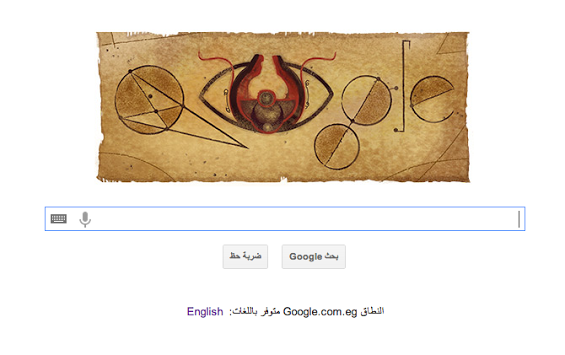
If you live in one of the Arab states of the Middle East, then you will likely have been greeted by an interesting new Google doodle today for the anniversary of one of the most celebrated Muslim medeival scientists.


Google doodle AlhazenIbn al-Haytham, known in the West by his Latinized name Alhazen, was born 1 July, 956 AD, in Basra in present-day Iraq but lived most of his life in Egypt. A polymath, Alhazen has contributed to the sciences of optics, astronomy, mathematics and philosophy. He is one of the earliest, if not the first, theoretical physicists in the world, using mathematics to prove his theories of optics.

Alhazen is best known for his work to prove experimentally how we see objects. He disproved the emission theory, which was popular at that time and stated that the eyes shine light on objects that we see, and countered that we see objects because light from them falls on our eyes instead. He was also the first to prove that light moved in straight lines through experimentation on mirrors and lenses  and studying refraction and reflection.

This led to the discovery he is best known for, the camera obscura, or pinhole camera. His books had the first clear description of it and an analysis of how it worked.

Most of this research was done when he was under house arrest, after feigning madness when he had promised the caliph of Egypt, Al-Hakim bi-Amr Allah, he would be able to control the flow of the Nile but it proved too daunting a task for him. His arrest was lifted following the death of the caliph and he continued his research and made money copying books.

The most important contribution of Alhazen to science must be his “Book of Optics”, a seven-volume study of optics and other related disciplines. The book was quite influential in Europe when it was translated in the 12th century. The experimental approaches and mathematical verification that Alhazen took when writing the book were essential for laying the foundation of the scientific method. It was considered the most important book on optics in Europe until Kepler’s work.

In addition to his work on optics, Alhazen is thought to have published 200 books of science in total, with at least 96 being currently known. Most of his work has been lost, but nearly 50 books have survived and are still being studied.

A science culture for democracy

bruce alberts Cairo Science Festival 2013

{credit}© Mohammed Yahia{/credit}

Science is the only way to pave the road to a real democracy following the revolutions of the Arab Spring, said Bruce Alberts, outgoing editor-in-chief of Science, during the opening of the annual Cairo Science Festival.

Speaking to various students and science enthusiasts from across the Egyptian capital, Alberts stressed that the key to the future is creating a “science culture” to change the way people think and approach life. He defines this as a shift in the way of thinking that is influenced by science and science education, and suggests that India may be the best place for Egypt to look for a role model.

“President Nehru always talked about having a scientific temper. That is a way of thinking influenced by science where people are tolerant and make decisions based on facts, pretty much like scientists,” he explains.

“The society of scientists is simple… it must inspire the single scientist to be independent, and the body of science to be tolerant ” says Alberts. “In Egypt today, there’s something important to learn from science. People have to be more tolerant and learn to live together or your democracy will fail. People have to move away from dogma and focus on evidence-based decisions.

“If you are going to have a successful democracy then your young people should learn to think like scientists. They don’t  need to be scientists, just learn how to think like one.”

This shift to a science culture will require a serious overhaul of science education that moves away from the current model of memorization of scientific facts to to focus on the actual practice of science. “This means that science education should have students solving problems in class, have them experience thinking like scientists.” This overhaul should extend from the very first levels of school and all the way into college.

Another lesson that Egypt and other developing countries can learn from India, says Alberts, is how to work to make the Internet available in as many places as possible, even the poorest villages furthest away from the main cities. India has been using optic fibres to increase Internet access in its villages. “You need to support institutions in Egypt that would connect science and technology to ways to improve the livelihoods of the poor. That was the core of your revolution,” he adds.

Finally, Alberts stressed how important it is to build up local institutions that can actually help Egypt retain all the talented people who often leave the country for greener pastures. “America is full of talented people who came here because they couldn’t be successful at home. You must set up institutions based on merit-based rewards and funding.”

The rise of autism awareness in the Arab world

world autism awareness dayFor decades, children in many rural -and sometimes urban – areas across the Arab world were thought to have been touched by black magic or the ‘evil eye’ when they started to exhibit poor social skills or impaired communication. They were often shunned and hidden away from the world because they are ‘different.’

In recent years, however, pediatricians in several countries in the region are recognizing the symptoms of autism and autistic spectrum disorders. Thousands of cases that would have gone unreported are now being diagnosed early enough for successful intervention. Many physicians have also set up organizations to increase awareness among doctors and parents to aid in early diagnosis. One of the earliest such efforts is The Egyptian Autistic Society – which has for over a decade been a place parents can turn to if they suspect their child may be autistic.

More recent efforts sprung up in the Gulf States, such as the Doha-based Shafallah Centre which won first place in the European Union’s Chaillot Award in 2011. Dubai is home to the Dubai Autism Center and in 2007 neighbouring Abu Dhabi signed an agreement with the New England Center for Children (NECC) in Massachusetts, United States, to bring autism research and cutting edge treatments to the United Arab Emirates. The Autism Research and Treatment (ART) Center at the King Saud University in Saudi Arabia is also offering basic research in autism – a first in the region.

On the other hand, psychologists argue that there is still a long way to go. The main problem is that most research – and thus treatments – have been created in the West for a primarily Anglo-Saxon population and may not be relevant to the Arab world. In an interview on Nature Middle East, Ziad Kronfol, a psychiatrist at Weill Cornell Medical College in Qatar (WCMC-Q), argues that the region needs a serious overhaul to bring proper psychology education into medical school curricula.

Amr Mostafa, a psychiatrist at the King Faisal University, Saudi Arabia, argues that governments in the Arab world need to do more to support autistic children and their parents. They should provide the qualified teachers needed and help parents, especially since the financial burden of raising an autistic child can be very high.

Ultimately, it will take a consorted effort to address autism in the Arab world, pretty much like anywhere else in the world. The key cornerstone will be, however, to continue raising awareness and fighting stigma. Two decades ago, parents would have petitioned a school to remove an autistic child so he or she does not mingle with their children. Attitudes have changed now, but that situation is still not far-fetched, and less educated parents might still try to hide their autistic children from the world in embarrassment  It will take a societal effort to change these perceptions, led by more easily available information about autism for the public.

Google celebrates polymath Tusi

Nasir al-Din Tusi

Yesterday, Google celebrated another renowned scientist from the Islamic Golden Age of Science with his own doodle, though this time it was only available in Arab countries Google portals instead of internationally.

Nasir al-Din Tusi is one of the most famous Persian scientists, dwelling on matters ranging from astronomy and mathematics to biology, chemistry, physics and medicine.

Born on the 18th of February, 1201, in what is now modern-day Iran, Tusi lived for 73 years and wrote over 150 book on the different subjects he studied such as trigonometry, astronomy, philosophy and even mysticism. He died in 1274 in Baghdad.

Tusi is most known for his contribution to astronomy, after convincing Hulegu, the Mongol chief responsible for sacking Baghdad whom he had to join after he won, to build an observatory to study the stars. This was probably the most advanced observatory of its time, and Tusi used it to create the most accurate tables to calculate planetary movements back then and determine the position of stars and planets in the sky.

His model is often agreed to be the best since Ptolemy’s model, and was employed until Copernicus developed his heliocentric model some 250 years later.

Additionally, Tusi is credited with establishing the science of trigonometry as an independent line of mathematics away from astronomy, after the two have been attached for so long.

Biology

In biology, Tusi seems to have been one of the earliest supporters of the theory of evolution many years before Darwin’s model. he proposed that the universe was created with equal and similar elements, but these started to develop at different rates, and evolved into minerals, plants, animals and humans.

In his book “Akhlaq-i-Nasri”, he argues that heredity and variability played an important role in driving forth evolution, saying that “the organisms that can gain the new features faster are more variable. As a result, they gain advantages over other creatures. […] The bodies are changing as a result of the internal and external interactions.”

Interestingly, he did not shy away from human evolution – which remains taboo in many places of the Arab world today. He argued in the same book that humans evolved from other primates from Africa.

Tusi was famous during his time, and many of his pupils went on to become prominent scientists as well. He is often credited with reviving science in the eastern Islamic states through his work and his observatory. Today, a 60-km wide crater on the moon, Nasireddin, is named after him.

Science blogging in the Arab world (or the lack thereof)

This is a guest post from Rayna Stamboliyska

When I started browsing the web for science blogs from the Middle East and North Africa (MENA) region, I didn’t think it would be such an adventure. And for a quest, it was one.

I thus started entering keywords in the search engine. The outcome was disappointing: one or two blogs in English popped up. I thought it is because I was only searching in English, but French and Arabic searches did not harbour significantly more results. When I asked friends to point me out my wrongdoing, they just laughed and the comment invariably was: “Dear, spare your efforts, there is no such thing like science blogging in the region.”

The blogging culture in the Arab world thus seems to mainly touch opinionated people with a say in politics and economy. There is nothing wrong with this. I’ll spare you a lecture on the importance of social media for changing the society we live in, this has been thoroughly discussed elsewhere. Loads of bits and ink have also been spilled to demonstrate the importance of science blogging. Given the paucity of science blogs in the Arab World, I guess a reminder is more than useful.

Why write about science? Reason #1: scientists get to speak directly to the public. Reason #2: lay scientists or enthusiasts engage and keep up to date with developments in various scientific fields. Reason #3: open discussions on research topics are promoted among peers.

This sounds great, motivating and all that. There is, however, a recurrent feature pointing its nose from this shortlist: scientists should initiate and nurture this dynamics, ideally complemented by active science writers and journalists.

If you are reading this piece, it means you are aware that science is an emerging field in the Arab world. Funding is far from sufficient to secure comfortable or even basal equipment for research. Moreover, political influence in science making and communication is a fundamental characteristics in the region. Doctoral degrees are, however, greatly appreciated in all MENA countries. Additionally, journalism and mass communication are a frequently taught discipline. But science and journalism do not really mingle, after all.

If you browse the websites of major universities in the Arab countries, you realize that they are rarely updated. Even if they are so, press releases about endeavours and achievements seldom land on journalists’ desks. Very often, the few science-related articles one stumbles upon in a newspaper are just a translation from foreign sources. This clearly gives the bitter taste of “nothing happens in our part of the world.” Even such admirable initiatives as publishing 50,000 PhD theses online and using the platform as a networking hub finally fail: the dedicated website does not exist at all.

A different dynamics is operated in the Gulf states where Western universities have started to settle, and scarce reports about conferences see the day. Although progress is clear, science communication still has much room for improvement.

Continue reading →