2014 Year in Review: Nature Middle East highlights

In retrospect, 2014 was a mixed bag for the region – with some significant research produced on one hand, but on the other, in some countries, education, health and sectors in academia received some hard blows as a result of conflict and war.

In Syria for instance, the risk of infectious diseases is at its highest, warned a study published in PLOS Pathogens. The crisis was branded “a public health emergency of global concern” – with vaccine-preventable diseases not only reappearing in Syria but spreading to other countries with the outpouring of refugees, such as Lebanon and Iraq, which itself is reeling from years of damage to infrastructure and a myriad of health disasters.

Outbreaks of polio were reported – years after the Middle East was deemed “clean” – with WHO, UNICEF and ministries of health rushing to contain it. But even the largest vaccination campaign in the region’s history couldn’t reach its target as hundreds of thousands of children remain vaccinated, especially with access to hot zones barred.

Measles and rubella continue to be a burden in Syria, and in one instance, the vaccine killed instead of saved. At least 15 children died last September after being administered vaccines that were wrongly formulated, probably turning families away from seeking it and leaving many children unprotected.

Also in Syria, the lack of medical personnel is forcing untrained volunteers to tend to the injured and sick in hospitals.

Adding insult to injury, a study in The Lancet this year says that civilians aren’t even a priority for hospitals in a country like Syria, torn by civil wars. Fighters take up the majority of the available spots. In other hospitals, doctors risk their lives when they treat patients from the “opposite camps.”

In Iraq, the Islamic State (IS) is spreading its own brand of terror – taking over big universities and closing them down, including the historic University of Mosul. The education hubs are now used as makeshift camps for the militants. An independent Baghdad-based research tells Nature Middle East that soon conducting quality research in Iraq will be impossible. Skilled professors are already migrating in droves, in fear for their lives. “Many won’t come back even if the conflict ends,” says the researcher.

The International Center for Agricultural Research in the Dry Areas (ICARDA) conservation agriculture project that helps local farmers increase food production has been in jeopardy in Iraq since IS takeover. Insecurity, fuel shortages and lack of necessary equipment is breaking them, they decry.

Nearby, an estimated 3,900 schools in Syria had been destroyed or closed down during the first two years of the war. By April 2013, “22% of the country’s 22,000 schools [were] rendered unusable,” according to UNICEF.

The year 2014 also saw a comeback by Middle East respiratory syndrome coronavirus (MERS-CoV), which killed and inflected hundreds worldwide across 19 countries, with most of the infections concentrated in Saudi Arabia, where the virus was first discovered.

Nature Middle East was lucky to exclusively speak to the Egyptian virologist who first identified the virus, telling us the story of “patient zero” who died from an acute respiratory condition which was later revealed to be MERS itself. The mystery of MERS’ transmission was not lifted in 2014, but at least some countries are speeding up research into antiviral drugs that could contain it, or hinder its spread. Still, the fact remains, there are no anti-MERS drugs on the market so far.

In fact, overall things have been going south – health wise – for many in the region; not counting conflict victims and health complications due to war. A silent yet lethal predator, diabetes, has been preying upon the masses – with 35 million diagnosed with type 2 diabetes in the region.

Essentially, we have the  highest prevalence level of  in the world – with 1 in every 10 people living with it. Type 2 is tied to lifestyle, while type 1 has to do with genetics, autoimmune and environmental factors – and the incidence of the latter is rising sharply.

The highest rate of type 1 diabetes is in Saudi Arabia, with a shocking incidence of 14,900 children living with the disease, approximately a quarter of those in the Middle East and North Africa.

But in slightly better news, the region has managed (so far) to evade Ebola, which transmits through direct contact with bodily fluids and gains access to the body through skin abrasions and mucous membranes. The virus, however, has culled many in the central parts of Africa, and has fatality rates of up to 90%.

In terms of research, the region has been more prolific. Nature Middle East‘s chief editor Mohammed Yahia writes about the freshly released Nature Index, which was released in November and tracks where high impact research is being conducted around the world, and it shows many positive trends in the region – with Saudi Arabia leading with 358 papers, followed by Egypt.

Examples of prominent regional research includes one showing how Neolithic North Africans began exploiting cereal crops at least 500 years earlier than previously thought, published in PLOS ONE. The earliest evidence of cereal crop domestication in North Africa comes from the Fayum area of middle Egypt, and dates back to around 4350 BC.

In Lebanon, researchers from the American University of Beirut identified an algae species that can be a possible source of superfood and cheap renewable energy. In neighboring Syria, it turns out, two areas have the world’s highest concentration of wild-growing crops. The potential for these crops, distantly related to today’s agriculturally produced crops, lies in their gene pool, and adaptability – something that can provide breeders with genes that could enhance crop resistance to stresses such as climate change, pests, and disease.

Other breakthroughs include: In Sudan, a stunning discovery of a 3,000-year-old skeleton with metastatic carcinoma challenges the notion that cancer is a modern disease, opening new horizons for specialists to research cancer’s etiology and evolution. The ancient Nubian is probably the first cancer victim in archaeological record. As well, dinosaurs lived in Saudi Arabia, it seems. Fossilized remains identify specific dinosaur species from millions of years ago in the Arabian Peninsula when the area was covered by lush vegetation.

That being said, this year was not easy on the region, and infrastructures that provide the backbone of scientific endeavors have bore the brunt of political upheavals. In terms of progress – if we choose to compare notes with developed countries – we’re only barely inching forward.

Independent or university-backed research in the Arab world, collaborations with world-class institutions notwithstanding, is not enough to help Arab-affiliated researchers catch up with an incredibly prolific West. Governments must step in, opines Nobel laureate Ahmed Zewail and the academic president of Zewail City of Science and Technology Sherif Sedky.

“Renaissance in the Arab world will not be possible without genuine government recognition of the critical role of science in development and policies providing commensurate funding for basic research and reform of rigid bureaucracy which thwarts progress,” the experts say.

And considering it’s politics that seems to be setting the region back, Zewail and Sedky’s words ring true.

It is essentially a tug of war – between competent scientists and experts who’re aspiring to propel this region into the future, and governments staggering to make ends meet for their people, giving science a cold shoulder in the process. The next year may not tell us who wins, but it may very well give us indications – through statistics above all – of who is tugging harder.

Rise of ascetic, moralizing religions result of affluence not politics

A new research, published this month in Current Biology, devised a statistical model that could explain how absolute affluence impacted human motivation and reward systems and in turn affected ascetic wisdoms and religions’ austere moralizing systems – across Islam, Buddhism, Judaism, Hinduism, and Christianity.

The researchers, through looking at life history theory, human psychology, development of literacy and urban life, confirmed that economic development, not political complexity or population size, accounts for the timing of the Axial Age – a time of “cultural convergence” when many world religions originated.

During the time, new doctrines appeared in three places in Eurasia, including the Eastern Mediterranean; the Levant, Greece, Turkey and Egypt. These doctrines put unprecedented emphasis on self-discipline and asceticism, and the “otherworldly.”

“These doctrines all emphasized the value of ‘personal transcendence,” reads the research. “the notion that human existence has a purpose, distinct from material success, that lies in a moral existence and the control of one’s own material desires, through moderation (in food, sex, ambition, etc.), asceticism (fasting, abstinence, detachment), and compassion (helping, suffering with others).”

The study put forward the idea that an exceptional uptake of affluence, marked by higher standards of living, has nudged people away from short-term strategies (resource acquisition and coercive interactions) and promoted long-term strategies (self-control techniques and cooperative interactions).

“One implication is that world religions and secular spiritualties probably share more than we think,” lead author Nicolas Baumard of the Ecole Normale Supérieure in Paris is quoted in Science Daily as saying. “Beyond very different doctrines, they probably all tap into the same reward systems [in the human brain].”

It seems almost self-evident today that religion is on the side of spiritual and moral concerns, but that was not always so, reports the online science hub citing Baumard. “In hunter-gatherer societies and early chiefdoms, for instance, religious tradition focused on rituals, sacrificial offerings, and taboos designed to ward off misfortune and evil.”

Baumard and his colleagues say they aren’t so sure societies functioned better because of moralizing religions. “Some of the most successful ancient empires all had strikingly non-moral high gods. Think of Egypt, the Roman Empire, the Aztecs, the Incas, and the Mayans.”

In their study, the researchers combined statistical modeling on very long-term quantitative series with psychological theories based on experimental approaches. Their model showed that “there was a sharp transition toward moralizing religions when individuals were provided with 20,000 kcal/day, a level of affluence suggesting that people were generally safe, with roofs over their heads and plenty of food to eat, both in the present time and into the foreseeable future.”

“This seems very basic to us today, but this peace of mind was totally new at the time,” Baumard tells Science Daily. “Humans living in tribal societies or even archaic empires often experience famine and diseases, and they live in very rudimentary houses. By contrast, the high increase in population and urbanization rate in the Axial Age suggests that, for certain people, things started to get much better.”

Roman Egypt was home to “a good citizenship” youth organisation 2,000 years ago

Ancient Egypt GOODSHOOT

{credit}© GOODSHOOT{/credit}

Following a study of over 7,500 ancient documents on papyrus, originating from Oxyrhynchos in Egypt and discovered over a hundred years back in a rubbish dump, University of Oslo and the University of Newcastle presented what is perhaps the most systematic research of childhood in Roman Egypt, according to the university’s website.

Among their discoveries? Some 2,000 years ago, Oxyrhynchos, a town of around 25,000 inhabitants, had a youth organisation, called a “gymnasium,” in which any free-born child could enroll – slaves and girls not allowed.

Somewhere between 10 and 25% of local Egyptian boys, in addition to Greek and Roman residents of Egypt would have qualified, but typically members of affluent families and higher tax classes enrolled, according to an overview of the study released earlier this month by social historian Ville Vuolanto of the University of Oslo and April Pudsey of the University of Newcastle.

Enrollment in the gymnasium marked the transition to adulthood.

“It’s like putting together a jigsaw puzzle. By examining papyri, pottery fragments with writing on, toys and other objects, we are trying to form a picture of how children lived in Roman Egypt,” explains Vuolanto.

While well-off boys were part of the prestigious gymnasium, learning to be good citizens, others worked or landed what is termed “apprenticeship contracts,” mainly in the weaving industry. Either way, boys in ancient Egypt were not considered fully adult until they got married, usually in their early twenties. Most girls remained or worked at home, according to the study.

Slave children could also become apprentices, however, unlike “free-born” citizens they lived with their owners or “masters” not their parents during. Vuolanto says that children as young as two were separated from kin and sold as slaves.

“Little is known about the lives of children until they turn up in official documents, which is usually not before they are in their early teens,” says University of Oslo’s press release.

UAE unveils its Mars exploration amibitions

29982

{credit}PHOTODISC{/credit}

The United Arab Emirates yesterday announced its plan to create the country’s space agency and to send its first unmanned exploration probe to Mars by 2021. Mohammed bin Rashid Al Maktoum, vice-president of UAE and monarch of Dubai, said that the country has already raised 20 billion dirham (~US$5.44 billion) for the agency, which will be responsible for all of space exploration activities in the country as well as developing the technologies needed.

“The more than 60 million kilometres journey to Mars will mark UAE out as one of few countries with space programmes to explore the Red Planet,” said Al Maktoum in a released statement.

If the UAE can pull this off, it would be an impressive feat, and a very ambitious endeavour in general. “They will succeed, because they will make sure they get the right people and the right collaborations,” comments Nidhal Guessoum, associate dean of the College of Arts and Sciences at the American University of Sharjah, UAE.

Is it realistic to make the trip in just seven years from now? Maybe not. It is very hard to land a mission on Mars, even for veteran space nations like Russia. The United States is the only country so far that has landed a rover on the surface of our closest planet. But that is really besides the point. Whether they get to Mars by 2021 or not may not be that important. In fact, it’s the journey to that ambitious aim that is particularly interesting, and how the UAE will work for it.

This is a true chance for the UAE to change its international image. Everyone knows Dubai as a luxurious shopping city with the largest skyscrapers and the biggest malls. But this is a chance for the country to change its international image and become known as a science-producing country. “What I’m excited about is that this is the kind of great project that will now entice young people and will be associated with the UAE,” adds Guessoum.

It is also a chance to create a true sense of excitement about science in the rich Gulf state. Arabs have a rich history of astronomy that they are particularly proud of, but that was lost over the years. This is a chance to rekindle that. It can inspire young people to be interested in space and science again and can drive research and high-tech industry, much like NASA’s mission to the moon did for the US in the 1960’s.

While the UAE is rich enough to be able to import much of the expertise and technologies it needs, this is also a chance for the country to use this target to drive local research. It can promote education, international collaborations and attract world-class expertise who would be interested in working as part of this target.

“Our region is a cradle of great civilizations. Given the right tools, Arabs, once again, can deliver new scientific contributions to humanity,” said Al Maktoum in his statement. That vision is the most important part of the country’s announcement, and it’s more important than whether they would actually be able to land a research probe on Mars in 2021. And if they do, then that will be the next phase of the research boost that the project can offer the UAE and the region in general.

Ramadan fasting can help protect from diabetes, bad cholesterol

New research on prediabetics reveals that periodic fasting can guard against cardiovascular diseases, eliminate “bad cholesterol” and reduce weight.

The study, whose results were presented at the 2014 American Diabetes Association Scientific Sessions in San Francisco, earlier in June, comes as the Muslim world is preparing to mark Ramadan, a holy month of ritual and fasting, where observant Muslims abstain from eating and drinking from dawn to dusk.

According to the research, after 10 to 12 hours of fasting time, the body enters into a self-protection mode and starts scavenging for other sources of energy throughout the body to sustain itself—something that on the long haul can help it combat diabetes, among other things.

After multiple episodes of fasting, going into this mode pulls LDL, otherwise known as “bad cholesterol,” from the cells of the body—it’s not clear however how it is used up, but its levels are certainly reduced.

“Though we’ve studied fasting and its health benefits for years, we didn’t know why fasting could provide the health benefits we observed.” says Benjamin Horne, director of cardio vascular and genetic epidemiology at the Intermountain Medical Center, and author of the study. “It is likely that Ramadan fasting would provide a similar level of risk reduction,” he adds.

Prior research done by Horne and his team in 2011 monitored healthy people during one day of fasting and showed that routine, water-only fasting was associated with lower glucose levels and weight loss. Other research by the team has shown that glucose and triglycerides are reduced over the long-term in association with fasting.

“When we studied the effects of fasting in apparently healthy people, cholesterol levels increased during the one-time 24-hour fast,” said Horne. “The changes that were most interesting or unexpected were all related to metabolic health and diabetes risk. Together with our prior studies, this showed that decades of routine fasting was associated with a lower risk of diabetes and coronary artery disease, this led us to think that fasting is most impactful for reducing the risk of diabetes and related metabolic problems.”

Horne launched this new study to look at the effects of fasting in prediabetics over an extended period of time. The study participants included men and women between the ages of 30 and 69 with a least three metabolic risk factors, like large waistlines (the “apple shape” where fat is concentrated in the abdomen), high triglyceride levels, low HDL cholesterol level, high blood pressure or high fasting sugar.

Prior studies have examined obese participants, and focused on weight loss that resulted from fasting, however Horne’s team’s main focus was diabetes intervention—although participants, naturally, also lost weight during this one, precisely three pounds over six weeks.

“During actual fasting days, cholesterol went up slightly in this study, as it did in our prior study of healthy people, but we did notice that over a six-week period cholesterol levels decreased by about 12 percent in addition to the weight loss,” says Horne. “It is unclear how the cholesterol is used during the fasting episodes, but this adds to the list of potential biological mechanisms that fasting affects. What it does suggest is that the health benefits of fasting can be obtained with a less intense regimen than some that are becoming popular today.”

The researches speculate that fasting uses the body’s fat cells for energy, which should help negate insulin resistance. “The fat cells themselves are a major contributor to insulin resistance, which can lead to diabetes,” Horne says. “Because fasting may help to eliminate and break down fat cells, insulin resistance may be frustrated by fasting.”

Horne explains to Nature Middle East that he doesn’t think that abstaining from water, as Muslims do during their fast, will eliminate any benefits of fasting.

“With the duration of fasting being around 16 hours during a Ramadan fast, it is plausible that the lower risk of diabetes is obtained by those engaging in Ramadan fasting,” he says.

Horne adds that they have also studied fasting effects on individuals with a higher risk of chronic diseases. However, in these studies, they have taken the approach of less frequent fasting compared to other groups being studied, but the fasting extends for a longer continuous duration, with one day per week of 24-hour water-only fasting. “With the dawn to dusk fasting of Ramadan, the total duration of the fast is around 16 hours,” he remarks, even less than what these participants endured.

The health benefits of fasting of course are not instantaneous—the episodes of fasting have to recur over a long period of time for results to show.

It is not clear yet what the optimal duration, frequency, or extended period of practice is that is needed or is optimal for the potential health benefits of fasting to be realized, Horne says.

The scientist says that they’re only just starting to examine these questions, and interventional trials will probably still take years to determine what the appropriate balance is between the safety and efficacy of fasting regimens.

“Our epidemiologic studies do suggest that the standard religious practices of fasting (such as Ramadan fasting) that have been practiced for centuries and millenia are likely sufficient for the general population to obtain beneficial effects on the risk of chronic disease when a fasting regimen is used as a lifestyle over decades (rather than as a short-term weight-loss fad),” Horn says.

“For those who still develop risk factors for chronic disease, though, it may be that a more intense regimen of fasting is needed.”

Other contributors to this study are Jeffrey L. Anderson, J. Brent Muhlestein, and Amy Butler.

‘End of world plague’ remains uncovered in Egypt

Two skulls, two bricks and a third century AD jug found inside the remains of the bonfire

Two skulls, two bricks and a third century AD jug found inside the remains of the bonfire{credit}© N. Cijan{/credit}

The remains of one of the most notorious epidemics to have hit the region—one so bad that it killed two Roman emperors and was labeled “the end of the world” plague—were uncovered in Luxor, archaeologists announced earlier this week.

According to Live Science, the team of scientists were working at the Funerary Complex of Harwa and Akhimenru between 1997 and 2012 in the west bank of the ancient city of Thebes (now known as Luxor) when they came across a body-disposal factory and a large bonfire with human remains. Nearby, the remains of what used to be kilns where lime—an ancient disinfectant—was produced were also found.

The site appears to be where bodies infected with the plague—whose nature remains mysterious but could very well be either smallpox or measles—were destroyed. The bodies, when they were found, were covered in thick layers of lime, and are believed to belong to plague victims.

The discovery was made by the Italian Archaeological Mission to Luxor, otherwise known as MAIL, and was made public this week.

Pottery remains found in the kilns allowed the researchers to date the grisly body-disposal operation to the third century, says Live Science, a time when a series of epidemics historically named the “Plague of Cyprian” had ravaged the Roman Empire, which Egypt was part of at the time.  

The science news hub quoted Francesco Tiradritti, director of the MAIL, as saying that the plague had occurred roughly between A.D. 250-271 and was said to have offed more than 5,000 people a day in Rome alone.

In Egypt, the bodies of victims of the epidemic were apparently burnt at a seventh century B.C. complex that was originally built for a grand steward named Hawra but after its use during the plague, it gained a bad reputation. Back then, Saint Cyprian, a bishop of Carthage, gave a graphic description of how the disease ravaged its victims, believing that the world was coming to an end.

“It killed two Emperors, Hostilian in A.D. 251 and Claudius II Gothicus in A.D. 270,” Live Science quoted Tiradritti as saying. It is “a generally held opinion that the ‘Plague of Cyprian’ seriously weakened the Roman Empire, hastening its fall.”

First ‘Falling Walls Lab’ held in Cairo

Guest post by Louise Sarant

The Middle East’s first ever ‘Falling Walls Lab,’ a fast-paced competition, attracted a reasonable crowd this week in the German Science Center Cairo (DWZ Cairo). One after the other, 13 candidates climbed on stage to present, in three minutes, their innovative idea, groundbreaking research or fresh business model in front of a jury from academia and research.

Established in 2009, two decades after the fall of the Berlin Wall, the Falling Walls is an annual conference that highlights breakthroughs in science and society.

At the beginning, the conference used to mostly host idea-makers and inventors from Germany, but starting 2013, it has been showcasing a growing number of young creative minds from across the globe.

Falling Walls 2

Members of the jury at Falling Walls Lab, Cairo.

Of the 22 international labs currently underway for the 2014 edition of the conference, the first Middle East one was held in Cairo, while the other regional lab will take place at King Abdullah University of Science and Technology (KAUST) some time in the coming months.

“The DWZ in Cairo received 70 applications, which is the most any lab has received to this point,” says Nåveed Syed from Falling Walls, who came especially for the Cairo Lab from Germany. “It shows a lot of interest for this type of format as well as an eagerness to show what they are working on.” Experts at the Cairo-based science center screened these applications and selected 13 bright minds under 35 from a various disciplines to present their innovations.

A young energetic engineer at the National Research Center, Ahmed Zakaria Hafez, sprung on stage, holding in his hand a cup filled with cold water topped by a miniature fan in motion. Filling the screen with a picture of his disabled friends sitting in wheelchairs, he told a story. “The energy contained in an electrical wheelchair only enables it to function 30 to 40 minutes. My project aspires to draw energy from three power sources:  heat created by the human energy, pressure and solar energy.”

Hafez ranked third in the competition, which results were announced after a 15 minute deliberation from the jury.

The top winner however was Hani el Khodary, a 28-year-old founder of the energy start-up ‘Biogas People’  and a composting expert. In his short exposé, entitled “Breaking the Walls of the Gas Crisis in Egypt,” he showcased his idea to partly solve two typically Egyptian problems: the insufficient energy supply and the rising amount of organic waste.

By attaching large biogas units to a chicken farm, he wants to create a closed, sustainable system in which chicken manure and organic waste would be fed to the biogas units, which would in turn provide heat for the chicks and compost for the land.

Falling Walls Cairo shortlisted candidates.

Falling Walls Lab Cairo shortlisted candidates.

“One chicken farm consumes diesel and 40 subsidized gas cylinders a day for the sole purpose of providing sufficient heat for the growing chicks,” says el Khodary, who is currently experimenting this system on a smaller scale on a chicken farm by the Ismailia road. “We are realizing that chicken manure has high ammonia levels that need to be neutralized by specific bacteria before this system can function.”

If he wins the Berlin competition, he says he will try and pursue a course on biogas in a German university.

Mohamed Salheen, Program Director of Ain Shams University’s Integrated Urbanism and Sustainable Design and a member of the jury seemed overall content with the performance of this first batch of applicants. He believes that the contenders were good at managing their time and presenting their projects, but that some of the ideas should have been more elaborated. He adds, however, “there is stamina, a momentum in Egypt right now: people want a change and a chance.”

Under the microscope: Women & science

Pursuing a science career in the Arab world is challenging, but women embarking on this path may face more hurdles than their male peers.

Why are there very few models of women scientist that young researchers can aspire to? Why do women hardly ever land top managerial jobs in universities and research centres?

On 27 March, 2014, and as part of Egypt’s Science Month, Nature Middle East and Nature magazine’s Arabic Edition hosted a panel discussion with four prominent women researchers, at the American University in Cairo, to explore the issues women in the science industry face, and look at success stories.

The panel included Nagwa El-Badri, the department chair of biomedical sciences at Zewail University of Science and Technology, Rania Siam, the chair of the department of biology at the AUC, Rehab Abdallah, a research assistant at AUC and Sara Serag El Deen, an AUC graduate studying for her PhD in Harvard University.

You can watch the full event now on our YouTube channel, and join in the discussion in the comments below. Do you agree that women scientists in the Arab world face more obstacles than men? And if so, then how do you propose we solve this?

Bronze age weather report solves some ancient mysteries

A revised translation of a Bronze Age Egyptian stela corrects the timeline of Ahmose’s reign and offers a more precise geological and political map of the old region.

The world’s oldest weather report is here in Egypt – and it describes the devastation of the entire country due to an atypical “tempest”; a thorough and detailed description that finally helped scholars determine the precise timeline of Ahmose’s rule, and in turn shed light on the chronology of ancient events in this region.

The record of the sweeping rains and thunder described in the 3,500-year-old 6-foot block of stone, otherwise known as Tempest Stela, is not metaphor, explain the two scholars in their new translation of the record, published in the Journal of Near Eastern Studies. Robert K. Ritner and Nadine Moeller, of the Oriental Institute of the University of Chicago, wrote that the weather events described on the block appear to be the aftermath of a very real geological event: the famous volcano eruption at Thera (present-day Santorini, an island in the Mediterranean) whose effects reverberated across the region.

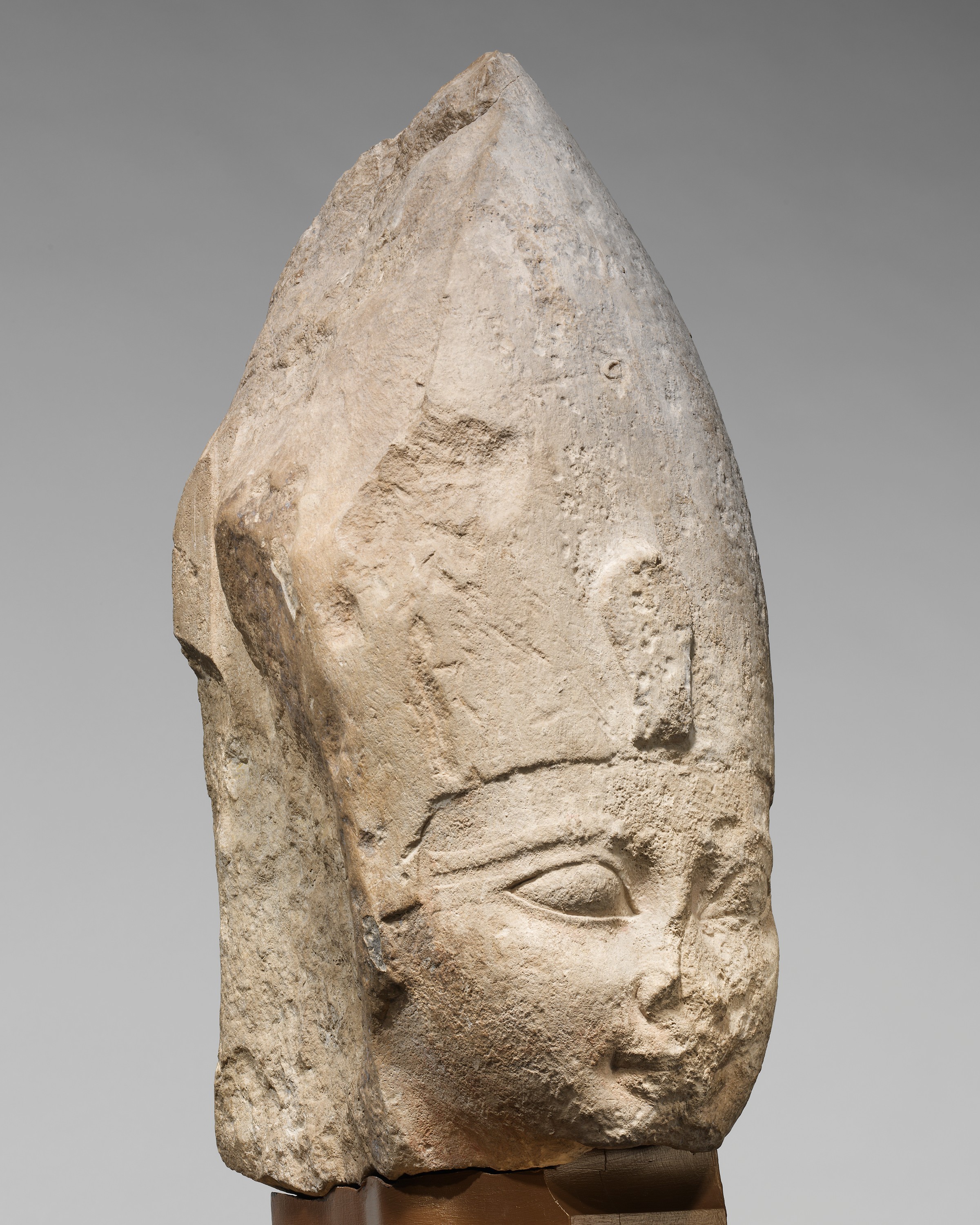
Ahmose I of Dynasty 18

Ahmose I of Dynasty 18{credit}The Metropolitan Museum of Art{/credit}

Ahmose I was the founder of the 18th dynasty and a pharaoh of ancient Egypt, famous for military campaigns that saw him drive the Hyksos out of Lower Egypt, clinch their stronghold in modern-day Gaza and take over lands in Syria and Nubia—heralding the birth of the New Kingdom. The stela was written down during his reign.

Scholars previously believed that the records of thunder and rain described on the stela were figurative –perhaps analogical references to Ahmose’s political conquests. But Ritner and Moeller beg to differ. The stela’s reports are not only literal, but are “further proof that the scholars under Ahmose paid close and particular attention to matters of weather,” they say.

The natural catastrophe lasted for an extended period, and was “unparalleled in intensity and extent,” as per the stela. Although the precise number of days is lost, the storm could have lasted for up to a month, according to some estimates, suggested the scholars.

The Egyptian stela mentions vivid imagery from the resulting chaos: “construction debris, household furnishings and […] human victims are washed by the driving rains into the river.” And it clearly states that the devastation extended into the “Two lands” a reference to north and south of Egypt.

“What Ahmose experienced and recorded was neither a typical storm, nor a masked reference to Hyksos destruction and royal defeat of primordial chaos,” say the researchers. “Whether the Tempest Stela records the actual events of Thera or later after-effects cannot be proved conclusively since the text cannot be expected to state that the storm ‘originated in Santorini’ or ‘among the Aegean islanders’.”

“The events described need not be testimony of the initial explosion, but rather of climactic after-effects that would have continued for some years,” the researchers added in their paper. “The Ahmose text’s further statement that those on the east and west lacked “clothing” … proves that this is a reference to the specific rain event, not a general metaphor for long term Hyksos domination.”

The researchers suggest that other scholars may have been reluctant to link the eruption at Thera to the Tempest Stela not because of the text itself, but because of chronological implications of such a link. “With newer and better dates for the eruption, there yet remains another possibility for reconciliation […] If Thera cannot be moved to Ahmose, it is becoming clearer that Ahmose might be moved toward Thera.”

The link between Ahmose’s reign plus the stela on one hand and Thera on the other has meant that scholars have now accurately placed his reign 30 to 50 years earlier than the previously recorded dating.

David Schloen, associate professor in the Oriental Institute and Near Eastern Languages & Civilizations on ancient cultures in the Middle East told EurekAlert!, science news agency, that Ritner and Moeller’s revised translation and their new conclusions helps “realign the dates of important events such as the fall of the power of the Canaanites and the collapse of the Babylonian Empire” in the ancient Near East, fitting the dates of other events more logically.

“This new information would provide a better understanding of the role of the environment in the development and destruction of empires in the ancient Middle East,” he said.

Eyewire: Solving mysteries of the brain through gaming

Image courtesy of Eyewire.org

Image courtesy of Eyewire.org

While some may be familiar with the concept–made famous by Foldit, a pioneer online video puzzle where you “fold” protein as part of a University of Washington research project–the crowd at Bibliotheca Alexandria were blown away by a similar game model: Eyewire, neurology’s first ever computation game, open to laypeople.

“It’s fantastic because it builds a sense of community and makes science accessible,” project co-founder Amy Robinson, Creative Director of the Department of Brain & Cognitive Sciences, Massachusetts Institute of Technology (MIT), told the audience at this year’s Biovision conference during one of its seminars at Alexandria’s foremost knowledge hub.

Eyewire is a “cell mapping” game launched by MIT’s Seung Lab, where players reconstruct and map interconnected neurons in the retina–setting a precedent for neurologists everywhere, not just in using crowd-sourcing for research purposes, but in thinking outside of the proverbial box to get more work done in less time (and in this case, while entertaining the public).

The lab is working to generate translations of the application in other languages, including Arabic–which would make Eyewire the first game of this genre to be translated into Arabic.

EyeWire tweetAccording to recent estimates, there are 1.6 billion internet users worldwide who play games, across several portals, 38 per cent of which are in the Arab World. It would be interesting to see how such a large segment would respond to the prospect of Arabic-speaking citizen science gaming, if at all.

The prototype for the game application is based on–and is visually similar to–the real-life version of the lab software that MIT researchers use. The original software allows the scientists to “semi-automatically analyze neuro-image data, to see which cell is connected to which cell and this is important, because it allows us to understand how these circuits function,” Robinson explains in a chat with Nature Middle East.

“Even with the best software that currently exists it takes us 50 hours to map one neuron,” she says.

Currently, there are 120,000 players on Eyewire, which was officially launched in December 2012. It’s a relatively small but very active community, that spends a total of 1,200 hours per day tracing neurocircuits, starting with retinal neurons.

The game uses data from Max Plank Institute for Medical Research, but soon enough Seung Lab will be feeding in their own data as well.

“Essentially, gamers are helping labs make discoveries in science,” says Robinson. You don’t have to be a scientist, or to have studied science, to help MIT map a tangle of neurons, identify new cells or (literally) connect the dots in areas that the gaming app’s AI had missed. And unlike other viral video games, like CandyCrush, or Diamond Dash, one can solidly argue that this, along with others like Zooniverse or Foldit, serves a higher purpose.

“It’s a good example of citizen science,” Robinson says.

courtesy of Eyewire.org

courtesy of Eyewire.org

During the conference, one participant was concerned that as a field, science can be highly-exclusive, conservative and separated from popular audience, so naturally old hands might have a difficult time taking such citizen science ventures seriously. In response, MIT’s young and passionate creative director acknowledged that they were initially received with a degree of skepticism.

“But a lot of effort has gone into improving the effectiveness. improving accuracy and efficiency [of the application, and in turn the results],” explains Robinson. “And this is key to making citizen science work.”

This writer signed up for the game to get a glimpse of how it works–and all one needs to get started is a Facebook profile or an email address, and it’s on. Once you begin, you’re assigned a slice of the retina and you’re asked to start exploring a mystery cell, reconstructed in 3D on your screen–in what might be the most beautiful game imagery I have yet seen. Then again, neural structures are a work of art, and Eyewire gives non-scientists like myself a chance to appreciate their intricacies.

You’re requested to treat the cell’s 3D model as a coloring book; and along with the AI, you color the neurons, eventually forming a labyrinth that lab researchers, and now top players, inspect for accuracy. If you’re new, you have to build game credit before you can effectively “trailblaze a cube” or a section of the retina.

Pakinam Amer's own account of Eyewire.Org--she just signed up.

Pakinam Amer’s own account on Eyewire.Org–she just signed up.

The game is highly interactive; you can chat with other players, pitch ideas for improving the application, or even pose any question related to this specific branch of science. According to Robinson, they polled players, and many said that the game had inspired them to go out and read more on how the brain works.

Like Angry Birds or World of Warcraft, or any other viral or cult gaming portal, you keep scores, collect accolades as you level up, compete against other gamers, participate in gaming marathons (EyeWire held a gaming Olympics once, says Robinson, and sometimes they tailor “challenges” based on gamers’ requests), go on “cell hunts,” rise up the ranks to become a “grim reaper” (with the power to sever faulty cell branches or “mergers”) and even name neuron branches after yourself. And, hold the phone, these names go into the papers that the lab produces.

MIT’s Seung lab does have big plans for the evolution of the gameplay too. Besides improving the technology, the lab will introduce an alternative “action” version in a Science Fiction and Fantasy setting– with alternate universes, alien technology, warring factions, weapons and the whole shebang. It’s part of an effort to build a bigger, stronger (and fun) community for this gaming app. “Community is key if you want to inspire people to work together to build something,” says Robinson.

In my books, it’s another win for the nerds.