
Reactions Catch-up: Mike Tarselli

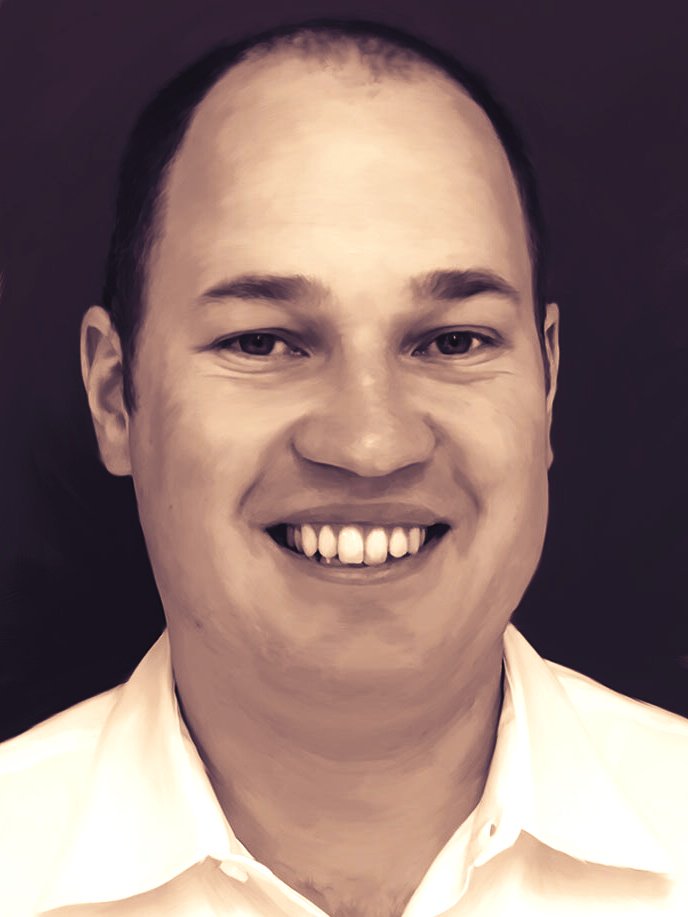
tarselliMike Tarselli works in the Information Systems division of the Novartis Institutes for BioMedical Research (NIBR) in Cambridge, MA. His projects there involve data management for external science and synthetic biology, while managing a global team of informaticians, web developers, and business analysts.

Mike was originally interviewed on Reactions in May 2013; this past summer he contributed to an interesting paper in J. Med. Chem entitled “Big Data from Pharmaceutical Patents: A Computational Analysis of Medicinal Chemists’ Bread and Butter.

Given the change in his research focus, we thought we would check in and see what Mike’s up to in his new role.

1. How has your job changed since you last appeared on Reactions?

Let’s see: New city, new company, new tasks, new projects, and new colleagues. I went from a small start-up focused on neuroprotection to the informatics division of a large pharmaceutical company investigating multiple disease areas. The common thread tying together my past few jobs would be understanding and anticipating chemists’ needs, predicting how chemistry will evolve, and communicating change to different stakeholder groups.

2. What do you think is the most important aspect of your work?

Scientific business analysis is a relatively new title for a rather old pursuit – taking the 10,000-foot view on scientific workflows, and asking questions like: “How can we streamline this process?” or “What’s the end goal for this group’s data?” If I’ve done my work well, scientists make faster, better decisions on higher-quality data, saving us all time and resources. I remain grateful that my role also allows for occasional original research questions, which we’ve pursued recently in the areas of green chemistry and patent mining.

3. Which is your favourite element — or if not an element, favourite molecule and why?

I couldn’t pick an absolute favourite, so I’ll give you three molecules: artemisinin, curcumin, and conolidine. Artemisinin, the recent recipient (2015, Tu Youyou) of a Nobel Prize, helps treat malaria for millions of people. It contains a remarkable endoperoxide (C–O–O–C) group thought to result from photo-oxidation of O2. Curcumin, a pigment found in curry and turmeric, conjugates to free thiols and amines in the cytoplasm through double Michael addition, which may have roles in apoptosis. Finally I first synthesized conolidine as a postdoctoral fellow; this subsequently became my first peer-reviewed publication in Nature Chemistry. Conolidine’s observed benefit — non-opioid pain reduction — remains important in a world awash in widely available, addictive painkillers.

4. Imagine that your inbox is empty, there is nothing in need of writing, and there are no experiments that need attention: how would you spend this free time?

As recommended by many great scholars, I’d take a walk. I’m amazed how much light exercise, a welcome distraction from the glowing screens and impending deadlines of modern science, clears one’s head and improves critical thinking. For maximum benefit, I’d probably drop into one of the many fine local cafes Cambridge proudly hosts, and walk out a bit more lively after a dry cappuccino.

5. If you were given $1 million as you stepped out of your office to do with what you will, what would you use it for?

A lifelong dream to endow a scholarship comes to mind — I’d contact my high school and university and ask how we could structure something for scientists like me: without much familial financial support, but showing the passion to help people and make the world a better place. Donations to Wikipedia, independent radio, and public parks might follow. If I have any of the million left over, I’d re-enroll in a continuing education program to learn a new language or pick up some business classes. Just for fun, let’s throw in a big meal with my friends and family.

6. Where would you most like to travel to, but have never been — and why?

Uh-oh, I think I could spend the rest of the post just answering this single question! Argentina would give me a chance to brush up on my Spanish language skills, while riding a horse across the Pampas. For a complete contrast, Iceland would show me the Northern lights (aurora borealis) and a chance to relax in the volcanic hot springs. I’m drawn, finally, to Shanghai, China, because I want to see such a city during its major growth phase – the number of skyscrapers built there in just the past decade rivals New York or Hong Kong during the 20th century. I’d appreciate the chance to visit the Shanghai Institute of Organic Chemistry, from which I’ve seen many important papers emerge.

7. Which chemists do you look up to, living or otherwise — and why?

This post may show the reader that I’m terrible at selecting absolutes. Thus, two more…

Carl Djerassi made his mark as a chemist, inventor, entrepreneur, and playwright. He constantly reinvented himself, whether at Syntex, Stanford, or in writers’ groups, and possessed an amazing work ethic and strong opinions. From him, I draw lessons about self-reliance and confidence.

On a completely different tack, I learned an important lesson once in a passing interaction with Harvard chemist Eric Jacobsen. He presented a seminar at one of my first pharmaceutical jobs, with the former Millennium Pharmaceuticals. Eric made a request I thought strange: he wanted to meet only with the bench chemists for lunch. Once the door was shut, he asked only “How do they treat you here? Are you happy?” to myself and a handful of other young scientists. And then he listened intently and delivered sage responses where appropriate. From him, I learned that you could be a warm, compassionate leader, and still deliver amazing science.
Reactions: Alexander Spokoyny

spokoyny portraitAlexander Spokoyny is in the Department of Chemistry and Biochemistry at the University of California, Los Angeles, and works on inorganic cluster chemistry at the interface with materials science and chemical biology. Alex recently published “Atomically precise organomimetic cluster nanomolecules assembled via perfluoroaryl-thiol SNAr chemistry” in Nature Chemistry.

1. What made you want to be a chemist?

Looking back to my adolescent years growing up in Russia, I could not have imagined becoming a chemist, since I was more interested in the humanities (literature and history). Around the 8th grade, my parents (who are both scientists) decided to apply some pressure on me as they were worried about my career aspirations and high probability of me bumming on their couch indefinitely if I would become a historian (humanists in Russia unfortunately make even less money than they do in the United States). Around the same time I took my first chemistry class at school, which was unlike all previous science classes — extremely non-boring and actually exciting. What struck me about chemistry back then was how uncertain it was compared to, let’s say, physics where any laboratory experiment worked and could be rationally explained. On the other hand, the “human factor” in chemistry was apparent and things went often not the way one would have expected. In any case, following my compromise with the parents, I enrolled into the Moscow Lyceum 171 which was offering advanced preparation to high school students in chemistry to ultimately gain admissions to Moscow University. I have spent two years there studying advanced chemistry subjects (organic, analytical and inorganic chemistry) essentially at the University level. Professors there were truly fantastic and taught us a curriculum that is normally offered to college freshmen. Sometime during that period, I decided that I wanted to pursue higher education in chemistry and have been in this business ever since.

2. If you weren’t a chemist and could do any other job, what would it be — and why?

I consider myself as a part of the generation consisting of many kids growing up in a post-Soviet Russia with an infatuation towards the mainstream American culture stemming primarily from watching too many Schwarzenegger, Stallone and Van Damme movies. One of the really cool cultural elements in these classics (and many other movies as I realized later) is American diners and dive bars and the random groups of folks who used to show up at those places. This is something that Russia lacked back in my days, and I find these places personally fascinating and very charming. I would love to own one of these dive bars; I think it will provide me with plenty of interesting conversations and characters to meet with.

3. What are you working on now, and where do you hope it will lead?

One of the long-standing goals in our research program is to make atomically precise nanomaterials. We use stable molecular clusters as template placeholders for the bottom-up synthesis of these species. By developing a wide arsenal of chemistry allowing to modify these cluster “core” molecules selectively, we want to build hybrid systems featuring metals, metal oxides, organic substrates and biomolecules. I think that atomic precision can be detrimental to some of the properties of hybrid nanomaterials and we ultimately would like to probe to what extent this is true in terms of applications.

4. Which historical figure would you most like to have dinner with — and why?

Samuel Clemens (Mark Twain). He had one of the most brilliant senses of humor and I think that would make for a very enjoyable dinner. I am also personally fascinated with a post-Civil War era in the U.S. history so there should be a lot to talk about.

5. When was the last time you did an experiment in the lab — and what was it?

The last experiment I did was several months ago. One of the key precursors we use in our laboratory is meta-carborane. Unfortunately, purchasing it from the overseas vendors in large quantities is very problematic paperwork-wise due to the archaic silliness in the U.S. International Traffic in Arms Regulation (ITAR) stemming from the Cold War era (shout-out to anyone in the government who can fix this!), so we decided to revisit some old industrial patents to produce the compounds in our laboratory on a decagram scale. I’ve made several compounds en route to the final meta-carborane product and my super talented undergraduate co-worker Josh Martin has recently validated the final step.

6. If exiled on a desert island, what one book and one music album would you take with you?

Master and Margarita by Bulgakov and one of Taylor Swift’s early albums (this makes it official that I am not a closeted Taylor Swift fan anymore!).

7. Which chemist would you like to see interviewed on Reactions — and why?

Angela Merkel. There is obviously a lot written about her, but surprisingly not a lot on the chemistry side of things.


[Editor’s note: because at least three separate people asked me while I was preparing this how to pronounce Prof. Spokoyny’s last name, here’s some help.]

Reactions: Helmut Schwarz

Schwarz portraitHelmut Schwarz works in the Department of Chemistry at the Technische Universität Berlin. His experimental and computational research is concerned with understanding why it is so difficult to bring about, in an economically viable and environmentally benign fashion, the conversion of methane to value-added products under ambient conditions. Additionally, his commentary, “On the usefulness of useless information,” was published this week in the inaugural issue of Nature Reviews Chemistry.

1. What made you want to be a chemist?

Chemists don’t just discover what was already there, they also create new forms of matter. Among all the natural sciences, chemistry is unique in that it is most closely related to the arts and the engineering sciences. In this regard, it has led me on many a satisfying intellectual adventure.

2. If you weren’t a chemist and could do any other job, what would it be — and why?

I would perhaps join a theatre group, work on plays, and merge reality with the imaginary.

3. What are you working on now, and where do you hope it will lead?

I am trying to understand why it is so challenging to activate small molecules like CH4, CO2, NH3, etc.

4. Which historical figure would you most like to have dinner with — and why?

Nelson Mandela – just listening to him, perhaps asking him how he did manage to overcome hatred.

5. When was the last time you did an experiment in the lab — and what was it?

Ages ago – my students were not really excited about my showing up in the lab!

6. If exiled on a desert island, what one book and one music album would you take with you?

Goethe’s unparalleled “Elective Affinities” and Mozart’s dark opera “Così fan tutte”.

7. Which chemist would you like to see interviewed on Reactions — and why?

There are too many!

Reactions Catch-up: Stephen Davey

Stephen DaveyStephen Davey is the Chief Editor for Nature Reviews Chemistry. Steve was originally interviewed on Reactions in July 2008; given that Nature Reviews Chemistry will release its first issue next week, we thought we would check in and see what’s changed recently.

1. What has changed in your role since you last appeared on Reactions?

When I was last interviewed, I had just started working at Nature Chemistry – which hadn’t launched. I spent almost eight years handling (mostly) the organic chemistry content for the journal during which time I moved across the Atlantic to live in Boston, and then back to live in London. For most of that my time in America there was a science-literate/appreciative president, something which is wildly undervalued.

In that time, I’ve read a huge number of papers. Some of them I got to publish and contrary to what many may think accepting papers (not rejecting them) is definitely the best part of my job — and if I’ve contributed in any way to making them better that’s really satisfying.

In February this year I left to begin my new role launching Nature Reviews Chemistry. This will be second Nature journal I’ve been involved with launching, with the added excitement/pressure that the buck stops with me this time. With a little luck my hair won’t be as grey as Stu’s in a few years.

2. What do you think is the most important aspect of your new journal?

I think reviews can be a really valuable part of the literature, but only if they provide something more than a ready-made reference list. I read reviews to find out about important developments, but more importantly I read them to get insight from experts and hear their opinions on where we should go next. I think the majority of review articles are too long, and that too often review articles are either targeted at experts or at novices (both are in need of good reviews) but believe that it is possible to target both demographics in one article. I’m not saying it’s easy – just possible.

Also important, Nature Reviews Chemistry is one part of a wider commitment to chemistry at Nature Research Group. I’ve often said that I never read Nature as a graduate student (there was next to nothing in it that would have interested me). Now I look at it every week – and not just because I work here! There is more chemistry and that’s a good thing – it deserves to get the attention.

3. Which is your favourite element — or if not an element, favourite molecule and why?

steve molecule_formattedN,N-diethyl-5-(2-phenylnaphthalen-1-yl)pyridin-3-amine. First off, I’m fairly certain I was the first person to make it. It’s not an especially useful molecule. In fact it’s a by-product – from a reaction that I ran towards the end of my PhD. It was made in something of a ‘hail Mary’ attempt to complete a synthesis that wouldn’t work any other way. I think I’m right in saying that my PhD advisor didn’t really have a great deal of confidence in the reaction working and the fact that this product was formed confirmed that the reaction worked the way I thought it might. I still remember his response when I told him the outcome (NSFW).

4. Imagine that your inbox is empty, there is nothing in need of writing, and there are no experiments that need attention: how would you spend this free time?

Firstly, let me say I’d need a really good imagination. I guess it depends on how long the inbox will be empty for! I like to play snooker1 — even though I’m not very good. I’d like to be better but it takes a lot of practice. If it’s just a couple of hours off, a snooker club is where I’m headed. After that the cinema and then spend some time cooking. I think I’m quite a good cook, but I don’t spend nearly enough time doing it.

If there’s more time, then I refer you to question 6.

5. If you were given $1 million as you stepped out of your office to do with what you will, what would you use it for?

I’m assuming that “pay of my mortgage and buy a fast car” is too glib? I’ve often idly wondered if I could go back to research if I didn’t have to concern myself with applying for funding to just do what I wanted. But I’m not sure that I’d really want to do that. It’s just nostalgia for time in the lab and I’ve forgotten just how hard it is. Also, $1 million is not nearly as much as it seems to do research with.

I think it would be great to use the money to advance public understanding/enjoyment of chemistry. I won’t be the first person to recount that when I tell people that I’m a chemist they respond with “I hated chemistry at school” or something similar. That’s where the problems start. Perhaps there’s too much information overload and not enough time for students to just explore and find out what interests them? The system as it is worked OK for me, but I worry that our subject misses out on some really creative people in this way. And even if people don’t go on to work in chemistry, a generally more science literate public would be a very good thing.

I’d have to think really exactly to spend the money though. I don’t think that many of the current approaches to the problem are all that successful — I think we spend too much time preaching to the converted.

6. Where would you most like to travel to, but have never been — and why?

My first reaction is to say India. Really though, there are too many places to list. I picked India because I love to try new food and Indian food is one of my favourites. I’d like to get the authentic experience though.

7. Which chemist do you look up to most, living or otherwise — and why?

I was going to call you out for being over-delicate and saying “otherwise” rather than just “dead”, and then I realized that I could go fictional. Severus Snape. Potions is obviously chemistry, and Alan Rickman was one of the best actors of his generation. 2016 got off to a bad start when he died and went downhill from there.

Stay tuned next week for more Nature Reviews Chemistry-related content! We’ll be featuring authors of reviews in NRC on Reactions on a regular basis, so be sure to email nchem —at— nature.com if you’d like us to feature the author of your favourite review!

[1] For our non-British readers, snooker is a billiards game similar to pool, but (to oversimplify, perhaps) is typically played on a larger table with a different scoring system (among other differences). I’ll save you a click to Wikipedia here.