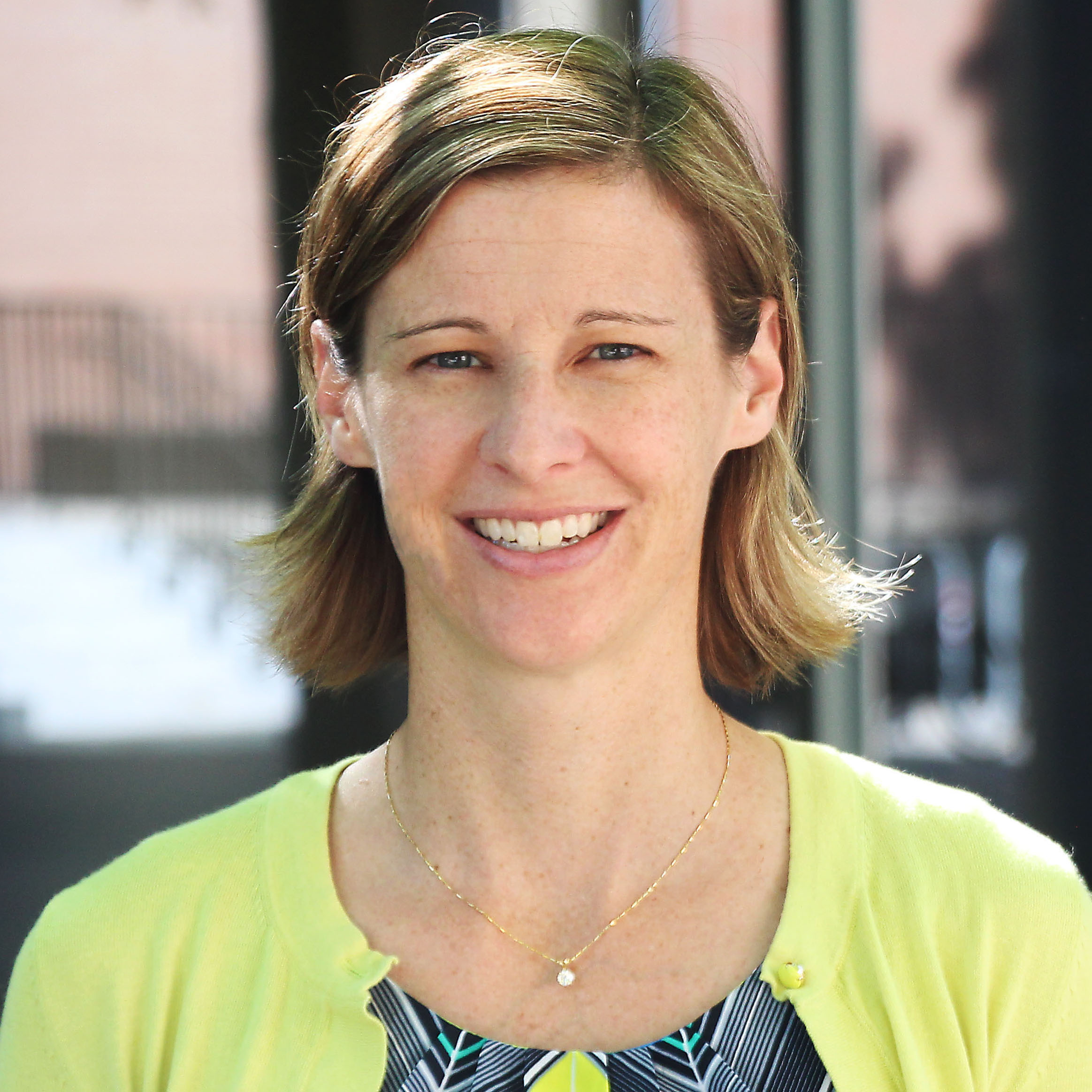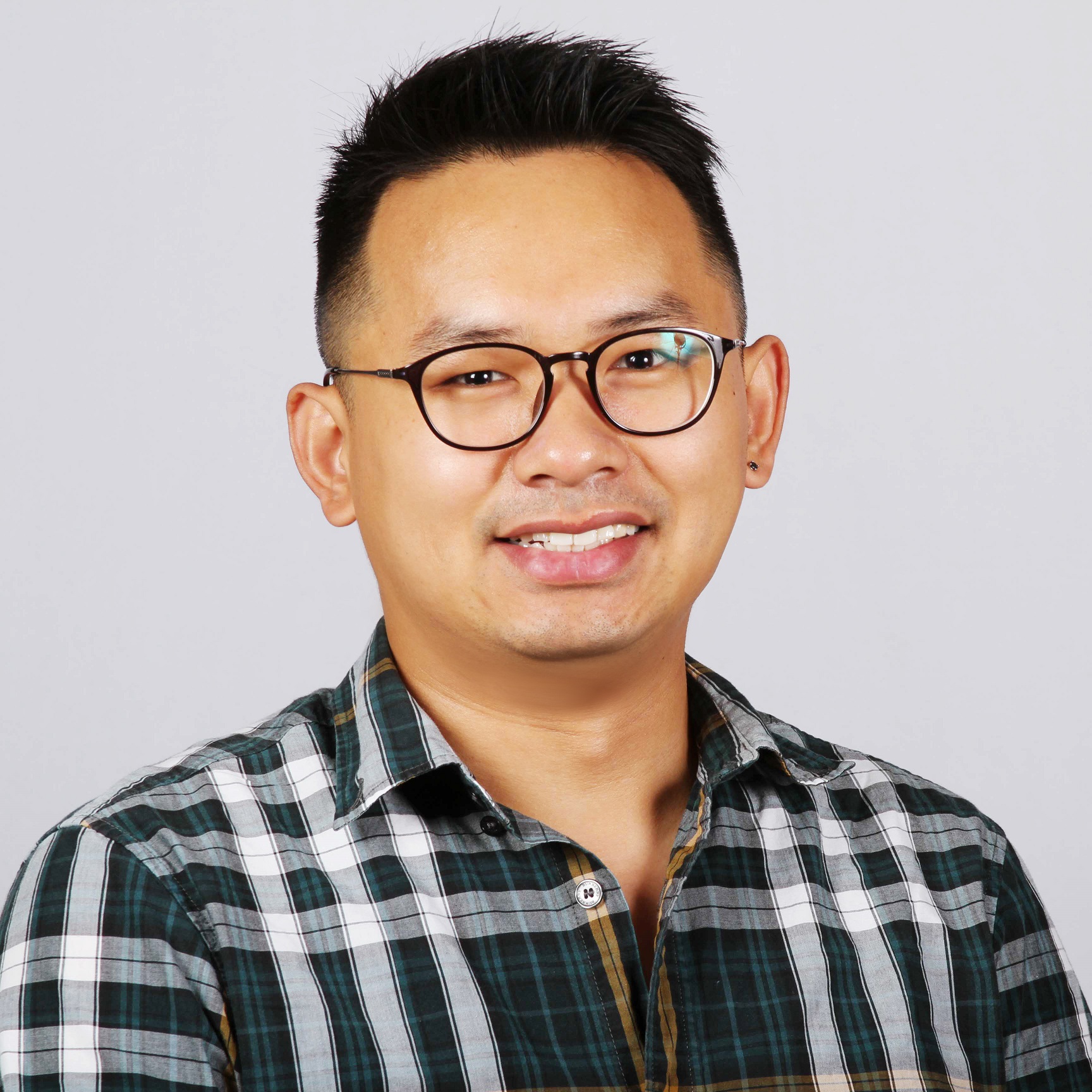
Reactions: Xin Su

xinsuXin Su studied chemistry in China and the United States and started his career in scholarly publishing with John Wiley & Sons in New Jersey. He just flew across the pond to London to join Nature Chemistry as a Senior Editor, and will ultimately be based out of the Springer Nature Shanghai office.

1. What made you want to be a chemist?

Certainly a biography book of Michael Faraday I read when I was a kid. In retrospect, it is far from being a fine piece on this great scientist, but it did successfully interest me, sparking curiosity and inspiration in me to go and explore chemistry. Throughout my school years, I also had very good chemistry teachers, which reinforced my pursuit.

2. If you weren’t a chemist and could do any other job, what would it be — and why?

I would choose to become a historian, naturally and ideally studying the history of chemistry. I always had an interest in history, as I still do. I minored in history when I was in college, and was attracted to grammatology and classical Chinese literature. I was seriously thinking of apply for a postdoctoral fellowship from the Chemical Heritage Foundation when I was about to finish my PhD. So if I ever get an opportunity to take two half-time jobs, the combination will be publishing and history.

3. What are you working on now, and where do you hope it will lead?

Now that I have just switched to Nature Chemistry, I look forward to serving truly innovative and broadly influential research results to the readers. In the meanwhile, I’m interested in promoting communications and exchanges among chemists and between scientists and the public (with deep-rooted fear for the demonized chemistry).

4. Which historical figure would you most like to have dinner with — and why?

Nikola Tesla. He was such a prolific genius, but a lot of work he did in his later year remains largely unknown. I’d be very eager to learn more from him.

5. When was the last time you did an experiment in the lab — and what was it?

It was after I left research and started in publishing and it wasn’t chemistry at all. I replaced a cracked screen on an iPad in the lab. It would have been quite awkward to maneuver elsewhere, and you could hardly imagine how easy it is with a lab jack, a heat gun and clamps unless you try yourself (DO WEAR GOGGLES).

6. If exiled on a desert island, what one book and one music album would you take with you?

Shishuo Xinyu (Chinese: 世說新語), or literally, A New Account of the Tales of the World, and to complement it, Guangling San (Chinese: 廣陵散), a qin (ancient Chinese zither) melody long enough to be considered as an album. They make the best companion for solitude, I think. Citing the comment by Graham Sanders, a sinologist at University of Toronto, “few works can match the importance of the book…. for its portrayal of cultural attitudes and social practices among elites in China from the second to fourth centuries”, simply a fascinating age.

7. Which chemist would you like to see interviewed on Reactions — and why?

Professor Gordon Gribble at Dartmouth College. He is a highly achieved scholar, as well as an avid winemaker, but  more importantly, he cares about the public image of chemistry and defends against the so-called “chemophobia”.
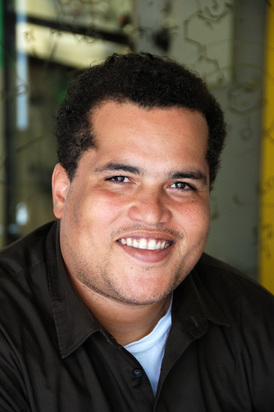
 

Reactions: Hosea Nelson

Hosea Nelson is in the Department of Chemistry and Biochemistry at UCLA, and works in organic methodology and catalysis.

1. What made you want to be a chemist?

Biology. Early in my career I became fascinated by biomolecules like DNA and protein enzymes. This led to a strong desire to have a more atomistic understanding of how they work and how they interact with small molecules. I found out quickly that I had to study chemistry to do this.

2. If you weren’t a chemist and could do any other job, what would it be — and why?

Valet parking. The second most fun that I ever had working. I did this when I was in my early twenties. I got to drive a lot of nice cars, had the opportunity to interact with cool people, and made cash tips. Working for tips can be fun.

3. What are you working on now, and where do you hope it will lead?

We are working in quite a few areas of catalysis ranging from small molecule activation to asymmetric methodology. My dream is to develop reactions that are broadly applied to solve the many problems that plague humanity!!!

4. Which historical figure would you most like to have dinner with — and why?

Albert Einstein. I may be naive when it comes to physics, but I view the theory of general relativity as one of the most insightful and creative additions to science. I love to rub shoulders with creative scientists…. Maybe some of their magic will rub off on me.

5. When was the last time you did an experiment in the lab — and what was it?

Last month. I screened conditions for a transition metal-catalyzed alkene hydration.

6. If exiled on a desert island, what one book and one music album would you take with you?

For music, the soundtrack to Superfly by Curtis Mayfield. For reading, Fear and Loathing in Las Vegas by Hunter S. Thompson.

7. Which chemist would you like to see interviewed on Reactions — and why?

Ken Houk. He could tell cool stories about Woodward.

Reactions: Jen Heemstra

JenHeemstraCOS crop4Jen Heemstra is in the Department of Chemistry and the Center for Cell and Genome Science at University of Utah, and works on understanding and utilizing the molecular recognition and self-assembly capabilities of nucleic acids for applications in biosensing, bioimaging, and stimuli-responsive materials.

1. What made you want to be a chemist?

I had fantastic mentors. I entered high school thinking that I wanted a career in math. This changed when I joined Science Olympiad, largely because our coach was so effective in conveying to us the joy of scientific discovery and the fact that science is a constantly evolving field. In college, I had the opportunity to work in a chemistry research lab with an outstanding mentor, and after two years thought “hmmm, maybe this is something I want to do with my life.” This was followed by outstanding mentors in graduate school and my postdoc, who nudged me toward academia. I now recognize that l love chemistry because I love to design, build, and explore molecules. But, I think there are many careers that I could have been happy in, and it is interesting to ponder whether things might have ended up differently given a different set of formative influencers in my life.

2. If you weren’t a chemist and could do any other job, what would it be — and why?

I would love to be an architect. Over the past three years, I’ve had the opportunity to serve on the design committee for a new building on our campus, and that has been a really neat experience. I’ve come to appreciate much more of what architects do. Similar to chemists, they have some mundane aspects to their jobs, but they spend significant amounts of time creating, problem solving, and engaging with other people, which are all things that I love about my current job.

3. What are you working on now, and where do you hope it will lead?

Our lab has spent the past seven years developing and studying biomolecular platforms for molecular recognition, self-assembly, and catalysis in vitro. We’re excited to now be pushing these towards applications in living cells, and eventually in vivo. We anticipate that this will open up new avenues in a variety of areas including metabolite imaging, biocatalyst discovery, RNA-based diagnostics, drug delivery, toxin sequestration, and transcript-targeted therapeutics. Over the past few years, I’ve also become increasingly passionate about the challenge of how to educate and prepare students for future success. In particular, I think that we need to help students overcome fear of failure, and encourage them to embrace failure as a necessary step on the path to innovation. My grand hope is that this will lead to an overhaul of how universities assess student success in courses – our current approach teaches students to avoid failure at all costs, which is in dissonance with the values of today’s most innovative workplaces, where we hope our students will end up.

4. Which historical figure would you most like to have dinner with — and why?

Rock climbing has been a passion of mine for the last 20+ years, and so I would choose to have dinner with Lynn Hill. She was one of the few women hanging out in Yosemite’s Camp 4 during the dawn of sport climbing in the 1980s, and has crushed barriers across multiple disciplines of climbing. Right at the time that I was starting to climb, she became the first person, male or female, to free climb The Nose on El Capitan. A year later, she repeated the climb in under 24 hours. When I first subscribed to Rock and Ice magazine, the free gift was a poster of Lynn Hill climbing The Nose – this hung in my dorm room all through college as an inspiration to work hard and push limits.

5. When was the last time you did an experiment in the lab — and what was it?

These days, I’m only in lab to do experiments related to our educational or outreach activities. My last experiment was flooding a plate of GFP-expressing c. elegans and trying to pipet them into a 384-well plate to measure fluorescence intensity. My experiment didn’t work, but then two graduate students from my group tried the same experiment a week later, and they got it to work great. That’s pretty typical these days, and I’m thrilled to be surrounded by a group of people who are all much more competent in lab than I am.

6. If exiled on a desert island, what one book and one music album would you take with you?

Album choice is easy – The Heist by Macklemore & Ryan Lewis. They are one of many artists whose music I enjoy, but what makes them unique is the diversity of emotions that are captured on one album. This album in particular has songs that span the themes of working hard to achieve big goals (“Can’t Hold Us”), the shame that comes with failing yourself and those you care about (“Starting Over”), and not taking yourself too seriously (“Thrift Shop”). I would need a lot of positive energy to survive in exile, and it’s impossible not to smile when singing along to lyrics about rocking flannel zebra jammies from a thrift store. Book choice is much tougher. Most of my favorite books right now (Mindset, Creativity Inc., Give and Take) are focused on how we relate to those around us, so reading one of those on a desert island would make me feel even more lonely. I would probably choose Bossypants by Tina Fey, as that book can still make me laugh out loud, even though I’ve read it at least five times.

7. Which chemist would you like to see interviewed on Reactions — and why?

I would love to see an interview with Cathy Drennan. She is an outstanding researcher, educator, mentor, and advocate for diversity, manages to balance all of this with family life, and seems to be having a blast in everything she does.