Letters from Lindau: Day 2

Editor’s note: Anthea Blackburn is a graduate student based in the US who is attending the 63rd Lindau Meeting of Nobel Laureates (this year dedicated to chemistry) in Germany. Anthea is writing daily blog posts from the meeting for the Sceptical Chymist.

– – – – – – – – – – – – – – – – –

Well readers, talk about starting things off with a bang!
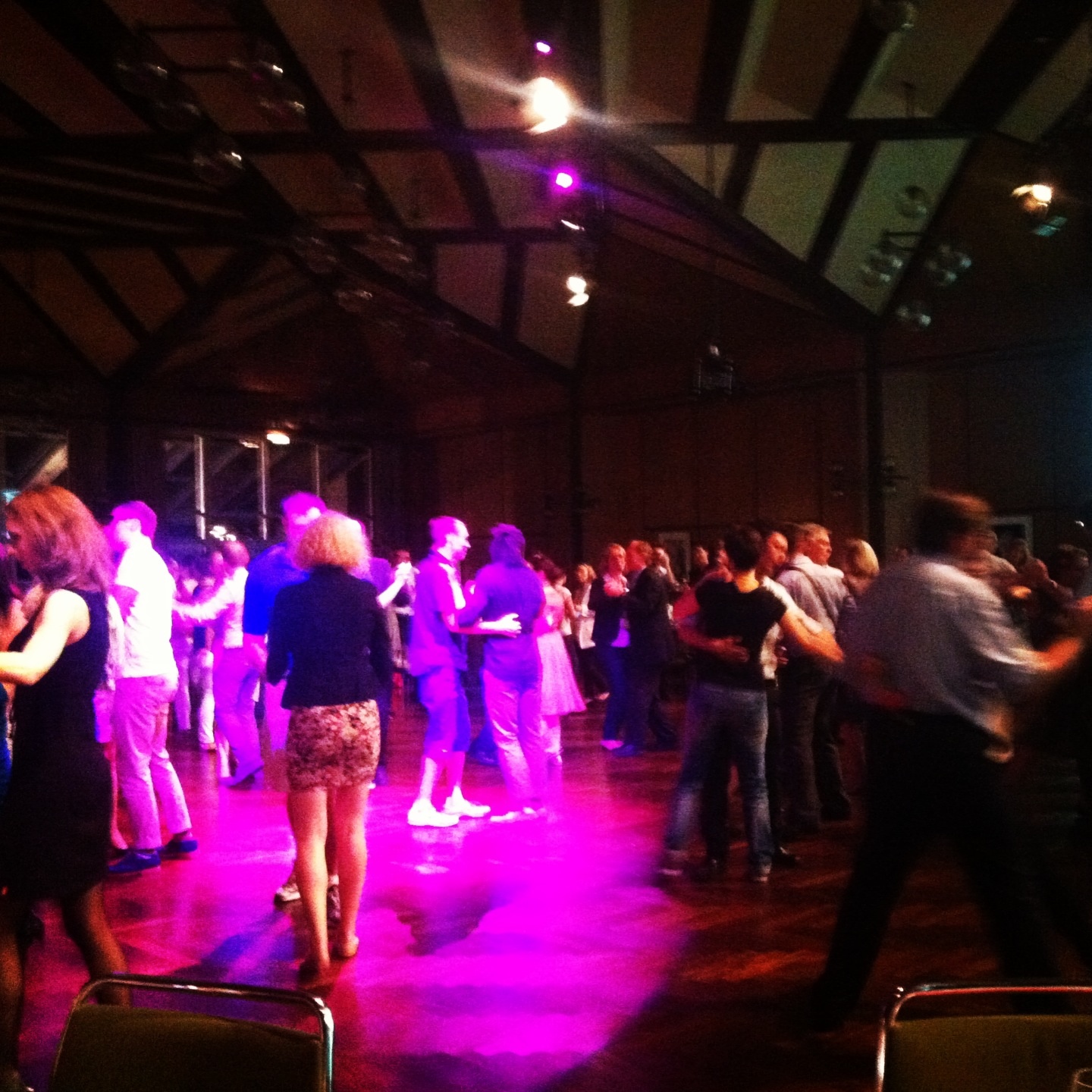
Photo courtesy of Anthea Blackburn

Photo courtesy of Anthea Blackburn

The talks began with Brian Kolbilka, 2012 Nobel Laureate in Chemistry, who began by telling us how nervous he was being the ‘new kid on the block’ (it’s reassuring to know that we aren’t the only ones who get stage nerves!). Kolbilka shared with us his research on G-protein-coupled receptors, and the structural insights he was able to gain into the binding events and activation of this membrane protein using a variety of structural and photophysical analyses. In particular he highlighted that it is not the binding pocket that is important in differentiating the action of this protein from others, but rather its surface and the allosteric pocket that is present — something we need to focus on when developing new pharmaceuticals.

Next up was Gerhard Ertl, 2007 Nobel Laureate in Chemistry, who discussed his work on heterogeneous, solid-surface catalysis. He focused specifically on CO oxidation using Pt surfaces, followed by Ru surfaces, or as they discovered, the RuO2 surfaces that were necessary for reactions to occur. I particularly admired Ertl for acknowledging the work of other Laureates present at the meeting whose work had enabled his own successes, which is not something I hear a lot in research presentations. Heterogeneous catalysis was followed by some homogeneous catalysis, specifically the work of Akira Suzuki, 2010 Nobel Laureate in Chemistry, and the development of carbon–carbon coupling reactions. As most synthetic chemists will know, these remarkable reactions form (most often) unsymmetric C–C bonds in the presence of an organoboron molecule, an organohalide, a Pd catalyst and base in, more often than not, high yields. These are reactions I carry out on a daily basis, so it was interesting to hear about the detailed reasons why this specific reaction works. Suzuki also appealed to the audience that he “would be very happy if we used this approach in the synthesis of our target molecules” — mission accomplished!

The second half of our morning session began with two talks from David Wineland and Serge Haroche, 2012 Nobel Laureates in Physics. While the work on quantum mechanics that they talked about was a little outside my realm of knowledge, I was able to follow most of what they discussed relating to Schrodinger’s famous thought experiment about (a potentially rather unfortunate cat). They both focused on the work they had individually contributed to the development of atomic clocks, and the use these systems may have in quantum computers. A point both scientists made, which as a synthetic chemist I will never understand, is how much “lasers have invaded our researchers’ everyday lives” — perhaps the same way I feel about NMR spectrometers?

These talks were followed by John Walker, 1997 Nobel Laureate in Chemistry, who focused on his studies and elucidation of the mechanism of ATP synthase. This is something I am familiar with from my undergraduate studies, and it was interesting to hear just how much work was involved in resolving the action and solid-state structure of this protein, which you can’t quite comprehend from textbooks. I was particularly surprised to hear that the work they have been doing lately shows that many multicellular organisms, whether mammalian, crustaceous or otherwise, all seem to have the same ratio of 2.7 protons required by the cell to generate one ATP molecule. Furthermore, the average human will generate 60 kg of ATP per day! This work was followed by that of Harmut Michel, 1988 Nobel Laureate in Chemistry, who not only characterized the membrane protein cytochrome c, but also pioneered the process of protein crystallization. The methods he described and the time and effort required to crystallise a protein, made me feel a little guilty for sometimes complaining how ‘hard’ small molecule crystallography is! Using this technique however, they were able to elucidate the electron transfer processes that originate from cytochrome c to enable the formation of H2O in cells.

The last research talk of the day was by Robert Curl, Jr., 1996 Nobel Laureate in Chemistry. Fullerenes are something I am reasonably familiar with from the work carried out in my research group, and it was amazing to hear first-hand how the discovery of this new carbon allotrope came about, how collaboration and hard work really can pay off, and ultimately how serendipitous chemistry can be. The advice we, as an audience of young researchers, probably found most useful however, was that when a photo is taken of a team of researchers at the end of a successful research project, make sure you stand in the middle of the group, so that when the Nobel Prize is awarded you don’t get cut out of the picture shown at the ceremony! This advice was followed by some from another of the fullerene team, Harry Kroto, who held a workshop on presentation skills. Many of you will have seen various talks by this dynamite presenter, and it was interesting to hear about both the thoughts that go through his mind when preparing a presentation, but also how various students around the world have used and benefited from this advice as a result of the Global Educational Outreach for Science, Engineering and Technology (GEOSET) program he is deeply involved in. Most importantly though, for those who would like to learn from the master — “make friends with the audience, especially those with rotten tomatoes.”

The day was concluded with an International Get-Together, hosted by the Republic of Korea. We were advised by government officials and academics about the need our world has for green chemistry, were entertained with some Korean songs, and dined on Korean-style food. The evening concluded with a Bavarian tradition, involving the presentation of flowers from the men at the meeting to the women, followed by dancing (at which some were MUCH better than others!). I also mentioned yesterday that the researchers present seemed to be scared of the Laureates. Overnight this fear seems to have disappeared. I watched Laureate after Laureate approached by students asking for photos and autographs — they truly are celebrities, and to their credit, they took it all in their stride.

Till tomorrow readers, a day of talks on synthetic chemistry (much more related to my current research) awaits.

Letters from Lindau: Day 1

Editor’s note: Anthea Blackburn is a graduate student based in the US who is attending the 63rd Lindau Meeting of Nobel Laureates (this year dedicated to chemistry) in Germany. Anthea is writing daily blog posts from the meeting for the Sceptical Chymist.

– – – – – – – – – – – – – – – – –

Hello readers, or should I say guten tag!

Photo courtesy of Anthea Blackburn

Photo courtesy of Anthea Blackburn

Well, I have arrived in Lindau, after what seemed like endless travelling. After 24 hours here I am still in awe of how beautiful this small island town is. From the old-style buildings, the cobbled streets (which coincidentally are completely miserable to drag a suitcase down), to the views of Lake Constance, it feels like you are walking through a postcard. For such a tiny area of land (0.68 square km), there is an awful lot to experience.

We were only required to register this morning, and obtain our distinctive red satchels complete with programmes and name badges, so the morning was spent exploring the island, meeting new friends, spending time at the lake and, in my case, accidentally swimming (way to make a first impression!) Thankfully the weather is supposed to be beautiful all week, so there will be more opportunities to experience more of the friendly Bavarian culture, and see more of Lindau’s history.

The meeting kicked off in the afternoon with opening talks from a range of the people who were involved in the planning of the Lindau Meetings, as well as politicians involved in German education and research. As I mentioned in my first post, the main theme of the Lindau Meetings is ‘Educate. Inspire. Connect.’ and this was a theme in each of the speakers’ addresses. They stressed that as young scientists, we need to build bridges between Laureates, students, countries and disciplines – the only way that we can achieve this is through dialogue and exchange, leading to mutual understanding on a personal level. I am beginning to see how exceptional an experience the meeting will be already – I have spoken with other young researchers from all corners of the world, all of whom have different backgrounds in science and different life stories. The Lindau Meetings truly do provide a global forum to educate, inspire and connect.

Photo courtesy of Anthea Blackburn

Photo courtesy of Anthea Blackburn

The evening finished with a performance from an ensemble of the Vienna Philharmonic Orchestra, followed by dinner and conversation. The one thing that stuck out from these dinner conversations is just how like celebrities these Nobel Laureates really are. I overheard, and even took part in, more than a few conversations about Laureates a person had spotted that afternoon, and whether or not they should have approached (I heard of no one that had, for the record). I imagine that as the week progresses, and as we listen to the Laureates speak, they will become much less names written down on pieces of papers and spoken in awe at dinner tables, and more ‘real’ people, so hopefully there will be much less of the should I/shouldn’t I conversations, and many more of the “this is what they said” conversations. We are here to interact with these rock stars on a personal level after all!

Stay tuned readers, talks from the Laureates start tomorrow. The theme of this year’s meeting is sustainable chemistry, and how we can develop new methods for chemical energy conversion and storage. I’m excited to hear about the Laureate’s research (which may or may not be related to this topic), as well as take part in discussions about how we, as the future generation of scientists, can help to address the energy issues we are currently facing.

Letters from Lindau: An introduction

Editor’s note: Anthea Blackburn is a graduate student based in the US who will be attending the 63rd Lindau Meeting of Nobel Laureates (this year dedicated to chemistry) in Germany next month. Anthea will write daily blog posts from the meeting for the Sceptical Chymist.

– – – – – – – – – – – – – – – – –

Hello Sceptical Chymist Readers!

Have you ever thought about which three historical figures, past or present, you would most like to have dinner with? My dinner party would almost certainly feature Nobel Laureates — ever since I developed an interest in science I have been fascinated with the people who have received this prize. While cramming with friends for exams during my undergraduate studies in chemistry I realized that I wasn’t alone in my admiration — discussions about which Nobel Laureates we would most like to meet were common.

Of course, we were born a few decades too late to meet most of the scientists that we learned about in class and in our textbooks — van ’t Hoff, Diels, Alder and Pauling, for example. More recently, however, as my scientific career has progressed into graduate studies, the Laureates that intrigue me the most are those who were awarded the prize for concepts I use on a daily basis — the likes of Suzuki, Negishi, Heck, Lehn, Cram, Pedersen and Ernst — many of whom are still alive and kicking.

And that dinner party with the scientists who have contributed so much to our understanding of the molecular world around us? Well, come July, what I thought was an elusive dream will be (partly) coming true. Each year, the Lindau Nobel Laureate Meetings are held in Lindau, a small island town on Lake Constance, Germany, where young researchers from around the world are selected to meet with a group (what is the collective noun for Nobelists?!) of Nobel Laureates from a particular field. The meetings foster interactions between the Laureates and the young scientists through presentations, discussions and many, many social events. This year the meeting, the 63rd of its kind, will focus on chemistry, and I have been fortunate enough to be selected to spend a week mingling with 34 Nobel Laureates and other young researchers from around the world.

I write today, however, to introduce myself, before I embark on this incredible scientific voyage. I am a born-and-bred New Zealander, who has been living in Chicago for the last three years studying chemistry at Northwestern University under the tutelage of a Scot. I have been working on a few interesting projects throughout my graduate career thus far, all of which stem from the synthesis and characterization of topologically interesting and mechanically interlocked molecules. As a graduate student at a school with a large chemistry department, I have the privilege of hearing from very successful chemists about their research in formal settings like lectures and seminars. Although this environment exposes me to the latest exciting science, it does not offer the chance for students like myself to easily talk with established scientists in an informal setting.

Fortunately for me, this is one of the main themes of the Lindau Meetings — discussions between students and Laureates outside of the lecture theatre are a core aspect of the event. Of course, I am looking forward to learning about Nobel Prize-worthy science, but as a chemist interested in inspiring science and making it applicable to the general public, I am much more excited to have the opportunity to talk to these Laureates and interact with them on a more personal level. These scientists have clearly excelled in sharing and presenting their research successes with the scientific community, and, upon being awarded the Nobel Prize, with non-experts, as well as the general public, so I am preparing to absorb as much of their expertise and technique as I can — any information I can gain will only make me a better communicator, scientific and otherwise!

The next time I write will be from Germany. As a way of sharing what goes on at these meetings, I will be writing daily Sceptical Chymist updates during my time in Lindau, starting on Monday July 1st. Check out my Twitter feed as well — @antheablackburn — I’ll be tweeting during the meeting too. I am excited to share stories of my experiences, my thoughts from Lindau, and my interactions with the superstars of science.

Common sense science

Editor’s note: This is a guest post by Liesbeth Venema, a Senior Editor at Nature.

—————-

As a recent comment in Nature pointed out (Lab life: Scientists are snobs), it’s all too easy to get carried away at big multi-session conferences and gravitate towards presentations given by high-flying scientists and those from top institutes. Encountering some down-to-earth research can be a healthy antidote.

At the recent annual American Physical Society meeting in Baltimore, a young researcher approached the Nature stand and told me about a project in his lab: the development of a wireless sensor to detect traces of methanol in liquids. I wasn’t immediately sure why this would be so important, but then he told me the motivation for the work.

As it turned out, the researcher came from the University de los Andes, in Bogotá, Colombia. In Colombia (and many other countries) organized crime gangs run an illicit alcoholic drinks industry and unscrupulously mix their wares with methanol to make them cheaper. And the problem with methanol is that it is extremely toxic and can lead to blindness (and even death) depending on how much is ingested.

Around 300,000 bottles of adulterated alcoholic beverages were confiscated by authorities in Colombia in 2011. Ideally of course, the criminal networks need to be closed down, but in the meantime, affordable sensors that consumers can use to test alcoholic drinks would be a practical, life-saving solution to the immediate problem.

The Colombian group has been working on a wireless battery-free sensor which can be dipped in a liquid and pick up the presence of unwanted compounds. It is small and simple, but elegantly designed, consisting of a resonating electronic circuit that detects variations in its environment as changes in its resonance frequency. The group previously demonstrated such a sensor to detect hazardous compounds in water (Diego A. Sanz et al. Sensors and Actuators B: Chemical Volume 178, 1 March 2013, Pages 26–33).

Their current prototype methanol sensor can detect concentrations as small as 0.2% in 40% alcoholic beverages, which is even better than the methanol limit (0.4%) set by health agencies. At the moment, the read-out equipment is too expensive for general use (the sensor itself costs only a few dollars), but the researchers are improving the sensor’s sensitivity so that a cheaper analyser could do the job.

There is a fast growing body of work on point-of-care sensors and imagers, often based on mobile phones, that can be deployed in under-developed countries. Such efforts are not about creating ultra-high precision, highly-engineered sensors, but making ones that are as simple as possible and yet have sufficient sensitivity for a targeted health application. Affordable, low-maintenance systems for monitoring the quality of water, food and other goods could play an essential role in protecting the health of millions of people.

It may not seem the most glamorous type of research work, but perhaps it should.

The art of presenting

Editor’s note: This is a guest post by Fabian Carson, who is a PhD student in the Department of Materials and Environmental Chemistry at Stockholm University, Sweden. If you agree or disagree with anything — or want to share your own presentation tips — let us know in the comments.

– – – – – – – – – – – – – – – – – –

Let’s face it, most presentations are bad: too much information; unreadable fonts; monotonous speaking and poor slide design. It can sometimes be a struggle to follow the speaker through a seminar and some audience members will succumb to sleep. And yet it shouldn’t be this way. A talk should be engaging, informative and motivating. Talks can be good — even spectacular. The TED series demonstrate this (ref. 1). Yet many speakers can’t present well and don’t even realise there is a problem.

Scientific presentations seem to be particularly poor; perhaps because chemistry degrees stress little importance on rhetoric. Instead, the focus — with good reason — is on exams, experiments and coursework. In an age where communication is everything, poor presentation skills are unacceptable (ref. 2).

It’s not only students who struggle to present, but professors too. There has been much focus recently on chemists communicating with non-scientists and the general public (refs 3,4). Yet most chemists can’t even communicate among themselves. How many talks have you attended recently that tick the boxes in Bad Presentation Bingo (pdf link here)? This game was developed by Monica Metzler at the Illinois Science Council to highlight the importance of communication skills in science (ref. 5).

So what is the secret to presenting? Storytelling. At a recent RSC event in London about science communication, the broadcaster Adam Hart-Davis was eager to extol the virtues of storytelling. If you want your audience to listen, you have to connect. Make it personal and tell a story. They are there to be educated and entertained. Of course, it’s not just about jumping around the stage; the content has to be good. But it must be told in a captivating manner.

So how does one prepare, create and deliver an effective and engaging presentation? Start by brainstorming. List the topics, the key points and the main issues. Then filter. You shouldn’t talk about everything. If you want your audience to remember anything, then you need a story and a core message. It can’t just be a random collection of facts. It needs a plot with characters, heroes and villains.

The key to slide design is simplicity (ref. 6). Less is more. Many make the mistake of filling the entire slide with data, words and images. The audience will be overloaded. If something is complex, then build up the slide with animations (but not too many). Don’t be scared to fill the entire slide with one image; space is there for a reason. Chemists are blessed, since we have an incredibly visual language. Crystal structures, molecular orbitals and reaction schemes can be stunning when used appropriately. As for font size, take the age of the oldest audience member and divide by two (or don’t go below 30) (ref. 7). This will stop you including too many words and will enhance your talk because it will force you to select the most important points and explain them well. And avoid using too many bullet points. They may be useful for stating your aims, but slide after slide of bulleted lists will quickly bore your audience. A slide is a canvas, not a word document, so think visually.

You’re not limited to PowerPoint or Keynote. Prezi (ref. 8) is a relatively new cloud-based presentation software that is based on a zooming user interface. The speaker is provided with a map, or virtual canvas, on which to sketch his or her presentation. You can zoom in or out and pan around — similar to Google Earth. This offers a far more lateral perspective rather than the linear progression of classical presentation software. A basic account is free and those with educational email addresses can get an upgraded Prezi license here.

Presenting is closer to acting than writing. Treat it like a theatre. How often does the presenter speak to their slides? Face the audience and connect with them. Make eye contact and speak to everyone, like it’s a personal conversation. Your voice is important. If you want people to listen for longer than 10 minutes, you can’t be monotonous. Of course, we can’t all sound like Sir Michael Gambon, but having a natural, flowing voice helps. If you’re enthusiastic and interested about your subject, your voice will naturally develop.

Finally, we arrive at the biggest killer of all presentations: jargon. Chemistry is filled with jargon. Correct terminology is necessary and useful for explaining specific ideas. But if you want to alienate your audience, use jargon. If you want to reach them, avoid it. Use simple language. At the same time, explain important terminology to the audience — they’re here to be educated, right?

Presenting research results can be difficult and challenging — especially when you haven’t been trained. The science shouldn’t be dumbed down, but it has to be accessible. Content is important — you need to know your topic — but so are style and format. Engage with your audience — challenge them! If you’re creative, informative and motivated, people will enjoy your talks. Above all, tell a story. People want to hear stories.

1. https://www.ted.com/
2. İşsever, Ç. & Peach, K. Presenting Science: A practical guide to giving a good talk (Oxford University Press, New York, 2010). (Amazon link)
3. Hartings, M. R. & Fahy, D. Nature Chem. 3, 674–677 (2011). (Link)
4. Smith, D. K. Nature Chem. 3, 681–684 (2011). (Link)
5. https://illinoisscience.org/docs/badpresentationbingo.pdf
6. Reynolds, G. Presentation Zen 2nd Ed. (New Riders, Berkeley, 2012). (Link)
7. https://blog.guykawasaki.com/2005/12/the_102030_rule.html#axzz25IK1Kx6I
8. https://prezi.com/

Scrutinizing synthesis

Posted on behalf of See Arr Oh who blogs at Just Like Cooking.

Ever run a new reaction, and found it doesn’t quite live up to the hype? So have I. Frustrating, isn’t it?

Back in 1921, another frustrated group — the first Editorial Board of Organic Syntheses — published a ‘slender little pamphlet’ of vouched-for preps chemists could follow. More modern variants include Nature Methods, or Prof. Alison Frontier’s compilation of notoriously touchy reactions at Not Voodoo: ‘May Require Mojo’.

In 2009, amid growing skepticism over a hydride-catalysed ‘oxidation‘, chemist Paul Docherty of Totally Synthetic repeated the experiment and live-blogged his results. This effort quickly attracted the attention of the wider chemical community — other scientists wrote in to check his results.

Blog Syn takes a page from that playbook. My initial squad consisted of Organometallica, B.R.S.M., and Matt Katcher, three synthetic chemists active in the blogosphere. We launched this blog as a collaborative effort: starting with an iron/sulfur cyclization reaction recently reported in JACS, we agreed to re-test certain reactions and pool the resulting data.

Each chemist repeated a reaction in their own lab, using their own group’s reagents, while adhering closely to the original authors’ Supporting Information. We exchanged e-mails full of tips and advice before writing the final post. As well as writing up details of the procedures and the final yields, the post was augmented with pictures of the reactions, products, and spectral data.

We dubbed this first reaction ‘moderately reproducible’, indicating isolation of correct final products, but not at the originally published yields.

We’re pretty excited about this new crowdsourcing method for checking the literature, and hope it spreads. Do you have a reaction you’ve always wondered about? Want to help further the cause, perhaps as a reaction ‘checker’? Get in touch with us on Twitter (@Organometallica, @katmatcher, @BRSM_blog, @SeeArrOh) or leave a comment on our first post.

Here’s to reproducibility!

Not making tea

[This is a guest post from Hannah Moody, a third year undergraduate student at The University of Oxford, who has spent the week seeing what we do in the Nature Chemistry office. Hannah is the second undergraduate student to spend a week with us this year; back in April we had Heather from York. On Heather’s last day we asked her to write a blog post about her time with us and we wanted Hannah to do the same. So that it didn’t end up being a very similar post, Hannah had a great idea — she decided to write in verse. As we know, rhymes do have their place in chemistry (see the comments)! And yes, the one thing Hannah didn’t have to do, was make tea! – Stuart]

Trying to stay away
From that age-old cliché,
Of work experience students like me,
Spending their days making tea.
This was not to be,
At Nature Chemistry.

On my first day
I began work straight away.
Finding a paper on which I could write,
An interesting research highlight.
I was given lots of advice –
This was very nice.
330 words and 3 paragraphs,
And a title designed to give a few laughs.
The most difficult part,
Finding where to start?
What paper would be best?
And what would be easily expressed?
I found a paper and started writing,
At the start it was quite frightening.
But I was able to do it alright,
And it was edited so that it might,
Be good enough to be
Published in Nature Chemistry.

My next task on Tuesday,
Was for me to have my say
And edit an ‘In Your element’
Article that I had been sent.
Again I was given advice,
And again this was very nice.
I saw how to edit News and Views,
This gave me skills that I could use.
So I started reading and suggested improvements
Involving word changes and sentence movements.
To the editor I sent what I had,
Hoping it wasn’t too bad.
It was hard to do it alone,
So the next day I spoke on the phone
To the editor in Japan,
And we made it better than when we began.
This made it suitable to be,
Given a place in Nature Chemistry.

Next I learnt about paper reviewing,
And was given a paper to start viewing.
I read it right though
To try to get a clue
Of what it was about,
And tried to figure out,
Who should be the referee?
I needed someone more able than me!
To tell us whether the content
To the journal could be sent.
I had learnt about the criteria,
That makes a paper far superior.
I saw how many papers are sent in,
And how hard it is to see where to begin
And tell whether a paper should be
Sent out to a referee.
For only the best quality,
Get into Nature Chemistry.

The next day was a Thursday,
From chemistry I moved away.
Off to the Nature News team,
Current affairs are their theme.
Here I leant about,
How they choose what goes out.
Which stories are most interesting?
So every reader will enjoy something.
They look at a huge variety,
Of potential stories that may be
News in Brief or put online,
From spikes of a porcupine
To a crocodile escapee,
And changes in science policy.
This is science journalism at its best,
And puts journalists to the test.
With the news team I was able to see,
Something different to Nature Chemistry.

Later on in the day,
I went for a brief stay,
With the Open Access crew,
To see what it is that they do.
They only publish papers online,
And get them out in far less time
Than many other publications,
And require less strict justifications
To publish scientific reports
And so get research of all sorts.
I helped to go through a quality check,
This enables the editors to get
Each paper in the right form
For external reviewers to perform,
The necessary extra review
Before the paper can be viewed.
This was an opportunity for me,
To see something other than Nature Chemistry.

NPG Press Office was my next stop,
And this I enjoyed a lot.
The members of this group,
Keep the public in the loop.
Through meetings with journal teams,
They highlight current themes.
Then they prepare a press release
Of topics that make a good news piece.
I also spent time with Art and Design,
This team make the journal look fine.
And make sure that every page
Is beautiful at every stage.
I also had a talk on how to get in
To a career in publishing.
Next I was given some time,
To enable me to write this rhyme.
Overall my week was a great opportunity,
To see what goes on at Nature Chemistry.

Today it is my last day,
And I take this chance to say:
A very big thank you!
To all the people who,
Succeeded in making me
Feel so welcome at Nature Chemistry!

Fall MRS 2012: Rare earth magnets — Reduce, Reuse, Recycle!

Posted on behalf of Ros Daw, Senior Editor, Nature

——————

Hard disk drives, DVDs and CDs — along with many clean energy devices such as wind turbines and electric vehicles — all demand high-quality permanent magnets such as neodymium-iron-boron and samarium-cobalt for their operation. Increasing demand in these products has meant the cost of the rare-earth metals forming these magnets has gone up; and the Western world is already paying a premium to China for the raw materials.

At the ‘Magnets’ session of the ‘Energy Critical Materials’ symposium, researchers presented a variety of routes to reduce the dependence of rare-earth metals in high-quality magnetic materials. George Hadjinpanyas described rare-earth-lean nanocomposites comprised of exchange-coupled soft and hard magnetic phases from powder precursors (1). Ryan Ott reported a promising method of recycling rare-earth metal alloys using a magnesium extraction method (2). And in a third talk, Arif Mubarok provided insights to optimise rare-earth-free (soft) magnet FeNi with inspiration from novel crystal structures found in meteorites (3).

The session highlighted that the burgeoning clean-energy-device industry is actually introducing a whole new set of sustainability issues with regard to the raw materials forming their components. There is clearly a need for a more holistic approach in order to develop truly sustainable technologies.

(1) The Drive for Permanent Magnets with Significantly Lower or No Rare Earth Content; George Hadjipanyas; Symposium D; 2012 Fall MRS.
(2) Permanent Magnet Alloys Synthesized from Recycled Rare Earth Metals; Ryan T Ott, Lawrence L Jones, Kevin W Dennis, R. William McCallum; Symposium D; 2012 Fall MRS.
(3) Microstructural and Magnetic Characterization of Tetrataenite, FeNi — A Potential Candidate for a Rare-earth-free Permanent Magnet; Arif Mubarok; Nina Bordeaux, Joseph L Goldstein, Laura H Lewis; Symposium D; 2012 Fall MRS.

Fall MRS 2012: Quasicrystals go mainstream

Posted on behalf of Ros Daw, Senior Editor, Nature

—————-

It’s MRS time again and this year the meeting is bigger than ever with 52 symposia running in parallel. As an editor, it’s a painful task identifying which sessions to attend, knowing all the other potentially interesting talks that I will not be able to see. The MRS is attempting to address this for attendees by videoing many sessions to be made available online for viewing. So now I just need to find another 5 days to watch them all!

On Monday night I saw Dan Shechtman’s inspirational plenary lecture (1) describing the discovery of quasicrystals and his battles with the crystallography community — and with Linus Pauling — to get his ideas accepted. As quasicrystals are now appearing in all manner of materials systems, Shechtman’s talk emphasised the importance to researchers entering the field to go that extra mile to unambiguously confirm that they have truly seen a quasicrystal and not some other less interesting structural artefact.

A session the following morning in Symposium U: Colloidal Crystals, Quasicrystals, Assemblies, Jammings, and Packings explored the emerging field of soft aperiodic crystals. Two presenters described 18-fold symmetries in block copolymer micelles (2) (experimental data) and hard-core/square-shoulder particles (3) (Monte-Carlo simulations), symmetries which have yet to be seen in ‘conventional’ hard quasicrystals. Theorists are working hard to identify the mechanisms underlying the formation of such structures in soft matter and this subfield is growing rapidly — it is definitely one to watch.

(1) Quasicrystals: Discovery, Structure, Properties and Uses; Danny Shechtman; Plenary Session; 2012 Fall MRS.
(2) Quasicrystalline Lyotropic Phases; Stephan Foerster, Alexander Exner, Peter Lindner, Jan Perlich; Symposium U; 2012 Fall MRS.
(3) Quasicrystals Formed by Hard-core/Square-shoulder Particles; Tomonari Dotera, Tatsuya Oshiro, Primoz Ziherl; Symposium U; 2012 Fall MRS.

Transatlantic Tales: Homeward bound

Posted on behalf of Nessa

————————-

My hood is sparkling clean (nearly) and the tangle of chemical structures has been acetoned (of course that’s a real word to chemists) off the glass doors: this can only mean one thing…

I’m writing my final blog post under the headline ‘Transatlantic Tales’ on the plane back from Chicago to Manchester. You may be interested to know that my saga resulted in a whole pile of fantastic chemistry and my first publication to be submitted in the future… and I’m planning to apply for postgraduate study (‘graduate school’) in both the US and the UK.

Working in the organic chemistry department in Illinois gave me experience in reactions and methods that were new to me, many new contacts in the world of careers, and knowledge of how the systems work in both countries — useful for those postgrad applications. In a more real sense, it also happened to be full of incredible and epic chemistry, and great new friends. Working in a fast-paced research group is always going to be a rollercoaster ride, but in the end, being over there was a completely eye-opening and amazing experience, and I’m glad that the series of coincidences that led me to getting to work there all happened.

I’m now off to start my Masters year back in Oxford, where everything I’ve done this summer should put me in good stead! I’ll be honest, there are disadvantages to international study — financial ones being the main consideration in my case — but I’d at least like to think this summer has been well, well worth it.

And now for the next year of fantastic science. For all who read this, good luck with your work, and if your research is working towards a machine that can allow me to be in two places at once, I’m in full support.

Nessa (you can find me on G+ here)