Enigmatic astatine

When we think of the halogens, F, Cl, Br and I are generally those that spring to mind. Yet there is, of course, another one — astatine. In contrast to the first four, ubiquitous on earth and which serve in numerous reactions, astatine is rare and has remained a bit of a mystery. It is the topic of this month’s ‘in your element’ article (subscription required), written by Scott Wilbur from the Department of Radiation Oncology at the University of Washington.

As its name reflects — astatos is the Greek word for unstable — it is radioactive. All of the known isotopes of astatine are radioactive, the longest-lived ones (210At and 211At) with half-lives of only 8.1 and 7.2 h, respectively. This does not facilitate chemical and physical characterization, in particular making it impossible to weigh and even observe element 85 in the conventional sense. Fortunately, these two isotopes can be produced by irradiation of bismuth targets — only in very small amounts, but sufficient for some research nonetheless.

The field in which astatine has attracted the most attention is medicine — but only the 211 isotope; its 210 counterpart is definitely unsuitable as it decays into polonium-210, a species that made the news a few years ago through the poisoning of Alexander Litvinenko. Actually, 211At is one of the rare α-emitters to be investigated for medical applications; they usually wreak havoc in internal organs. I’ll let you go to the article to read about its potential medical uses — as well as the challenges in investigating it, including how difficult it is to even determine whether or not it is released from a carrier molecule.

In some other ways, astatine behaves very much like other halogens and undergoes electrophilic and nucleophilic reactions. I wouldn’t recommend trading halogens for astatine in any of your up-coming reactions just yet; reproducibility can be an issue (this is not overly surprising considering you may only have about 10-13 to a maximum of 10-8 grams of astatine in any given sample and this may be a smaller amount than any trace impurities!). In any case, we don’t know nearly enough about astatine’s physical and chemical properties — but if you like working with minute amounts of decaying species, give it some thought!

Anne Pichon (Associate Editor, Nature Chemistry)
Reactions: Juan Herranz

Juan Herranz is in the Department of Technical Electrochemistry at the Technical University of Munich, and works on the development of catalysts for electrochemical energy storage and conversion devices, like fuel cells and metal-air batteries.

1. What made you want to be a chemist?

During my teenage years I had multiple interests but no vocational passion for one particular subject, and decided to give chemical engineering a try without knowing too well whether I would really like it – as time would prove, though, it ended up being a very good choice. I particularly enjoyed the chemistry labs included in the program, so when the time came to choose a topic for my Master’s thesis I decided to take a break from the engineering side of things and have some fun doing research into new materials for fuel cells – which ultimately led me to the field of electrochemistry.

2. If you weren’t a chemist and could do any other job, what would it be – and why?

Alike many people, I would have loved to work on something related to my various hobbies; record collecting and anything related with food are at the top of my list and, while I still struggle with my writing, it’s also becoming an increasingly fulfilling process. So I can very well imagine myself working as a food- and/or music-critic for the written press. I mean, who wouldn’t love to get paid for listening to music or tasting food?

3. What are you working on now, and where do you hope it will lead?

At the moment I am mostly involved with two research projects. In the first one we’re trying to better understand the kinetics of hydrogen-oxidation and evolution in alkaline medium while developing better electrocatalysts for these reactions. Hopefully, these improved materials will allow for the development of alkaline membrane fuel cells and electrolyzers with ultra-low noble-metal loadings or even completely free of noble metal, therefore facilitating the commercialization of these devices.

The second project deals with the fundamental understanding of the electrochemistry of oxygen in aprotic media; ultimately, I hope that it will help to elucidate the intricate chemistry of non-aqueous metal-air batteries and also bring them a bit closer to their commercial application.

4. Which historical figure would you most like to have dinner with – and why?

I am not a big fan of bibliographies, but I recently read one about Joseph Fouché and found the character truly fascinating, if also morally regrettable (to say the very least). In any case, sharing his memories of the French Revolution and the times of Napoleon and Louis XVIII should make for a very interesting dinner!

5. When was the last time you did an experiment in the lab – and what was it?

Just today I performed some voltammetric measurements to determine the oxygen-reduction and H2O2-oxidation activities of various manganese-oxide phases in aqueous, alkaline media. Mn-oxides are becoming increasingly popular as O2-reduction and -evolution catalysts for lithium-air batteries and alkaline fuel cells and electrolyzers, and we are trying to determine whether their behaviours in aqueous and aprotic media are somehow correlated.

6. If exiled on a desert island, what one book and one music album would you take with you?

Mmm, that’s a tough one considering my love for books and records! This being said, I would take Roberto Bolaño’s massive 2666 and Converge’s Jane Doe, which I’m still listening to on a regular basis after all these years.

7. Which chemist would you like to see interviewed on Reactions – and why?

I would like to continue reading interviews with young, up-and-coming chemists and researchers, because these are the future professors, team leaders and managers of our academic institutions and companies and their opinions don’t always get the attention they deserve.

Reactions: Ji-Hyun Jang

Ji-Hyun Jang is in the Interdisciplinary school of Green Energy at UNIST, Korea, and works on graphene and 3D nanostructures related with energy conversion systems, catalysis, and energy-storage devices.

1. What made you want to be a chemist?

When I was in high school, I joined a chemistry club, a voluntary group for people who loved sciences. After classes, we performed experiments of our own in the lab. At the time, I liked wearing the white lab coat, working with the glass apparatus, and the process of thinking logically. My teacher taught us chemistry with great passion, which inspired me to pursue it as my major.

2. If you weren’t a chemist and could do any other job, what would it be – and why?

I love what I am doing now—conducting research and seeing our contribution to the progress in our field, however incremental. Well, it seems there is no position that is a better fit for me than working as a scientist.

3. What are you working on now, and where do you hope it will lead?

I have been working on the fabrication of 3D nanostructures. They have been shown to feature very interesting phenomena as photonic crystals, phononic crystals, and bioscaffolds. Recently, I have extended the application of our 3D structures into energy-related areas, such as solar cells, water splitting devices, and supercapacitors. 3D nanostructures dramatically boost the potential for these technologies, since they increase the active sites by more than thousand times compared to the bulk materials. In addition to my research into 3D nanostructures, I am also deeply involved in synthesizing and developing physicochemical properties of the wonder material graphene.

4. Which historical figure would you most like to have dinner with – and why?

I suppose the person I would most like to meet would be Marie S. Curie, who opened up the science of radioactivity and is famous for having twice won the Nobel Prize.

Even more than her numerous achievements, I respect Marie Curie’s attitude toward her life and her aspiration for the science, which allowed her to continue her research even under very difficult circumstances. Here, I would like to explain the reason why I have chosen her as a person I would most like to have dinner with by several quotes from her that show explicitly what she believed about science and about life.

“Life is not easy for any of us. But what of that? We must have perseverance and above all confidence in ourselves. We must believe that we are gifted for something and that this thing must be attained.”

“Nothing in life is to be feared. It is only to be understood.”

“One never notices what has been done; one can only see what remains to be done.”

5. When was the last time you did an experiment in the lab – and what was it?

Ever since I became a professor, the overall time I have spent working in the lab by myself has been continuously decreasing. However, I come to the lab almost every day to check the progress of my students and to discuss the issues they might have with the various ongoing experiments.

6. If exiled on a desert island, what one book and one music album would you take with you?

I would like to bring a spring binder filled with papers collected from everywhere. They might be mostly the scientific papers I have not been able to read due to lack of time or lack of pressing interest when I first came across them. Reading others’ valuable work is always fascinating.

The music I would like to take is “Clarinet Concerto in A major, K622,” by Mozart. By the way, I can bring the appropriate player, right?

7. Which chemist would you like to see interviewed on Reactions – and why?

The most influential professor I can remember is Edwin L. Thomas, from Rice University, my former postdoc advisor during my time at MIT. He was a model professor; he showed us everything essential as a scientist and as a professor. From how to perform our projects in a reasonable way, to how to move students to focus on their researches, to how to treat people and even how to enjoy our lives, Prof. Thomas was exemplary.

Barium bright and heavy

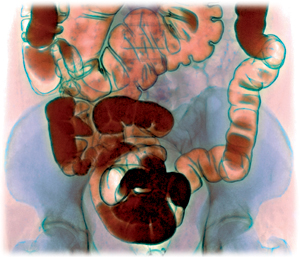
This month’s ‘in your element’ article (subscription req’d), written by Katharina Fromm from the University of Fribourg, is about barium — an element infamous among those who have ingested it as a ‘barium meal’ for an X-ray of the stomach and bowels.

© DU CANE MEDICAL IMAGING LTD/SCIENCE PHOTO LIBRARY

It is barium sulfate that serves as a contrast agent for these scans, despite its toxicity. The barium ions of various salts can interfere with the calcium- and potassium-based processes in the body, leading to problems ranging from muscle weakness to breathing difficulties, cardiac irregularities and even paralysis. This is why barium carbonate is an efficient rat poison. But — because there is a “but”, otherwise it wouldn’t serve as contrast agent in those gastrointestinal studies mentioned above — the reason why barium sulfate can be ingested safely is that it is insoluble in aqueous media. Phew. Never underestimate solubility effects!

I’ll let you read the article to find out how a barium-containing stone intrigued witches and alchemists from the early 17th century, with such a peculiar behaviour that one scientist, Giulio Cesare Lagalla, remained sceptical even after seeing one such stone. It is somewhat surprising that the origin of the phenomenon was only unambiguously elucidated last year (until then it was mistakenly attributed to another one of the stone’s components).

Barium compounds are also used in many other fields, for example as weighting agents to make drilling fluids — used in oil and gas wells — denser. This fits with the particular characteristic element 56 was named after: barys means ‘heavy’ in Greek. It has however a somewhat more artistic side: barium chloride and nitrite salts are used to colour fireworks bright green, and barium dihydroxide is used in the restoration of artworks. While we’re on the topic of barium hydroxide, I can share one regret with you: as a kid, I’d have loved to do this endothermic reaction with an ammonium salt. Mix two powders, get a liquid and a smelly gas and, as a bonus, any water placed underneath your beaker freezes. Pretty cool (ahem).

Anne Pichon
(Associate Editor, Nature Chemistry)
 

Reactions: Richard Payne

Richard Payne is in the School of Chemistry at the University of Sydney, Australia and works on the synthesis and biological evaluation of peptides and proteins containing post-translational modifications and the development of new drug leads for the treatment of neglected diseases (tuberculosis, malaria and African sleeping sickness).

1. What made you want to be a chemist?

There were really two reasons why I chose chemistry as a career. I first became interested in chemistry due to an inspirational high school teacher who joined my School after years working as a research chemist at a fertilizer company in New Zealand. His passion for chemistry was infectious and I really enjoyed learning from him. I still vividly remember his collection of chemistry-based ties and his love for explosive experiments; potassium in the swimming pool and dry ice bombs (the latter getting the attention of the special police). While studying Chemistry at the University of Canterbury, New Zealand, I had a summer job cleaning fridges rented out to students during the academic year. After three weeks of scrubbing out mouldy fridges, I received a call from a Professor who asked if I would be interested in joining his lab to carry out a paid research project for the remainder of the summer.  I loved doing research and spent long hours working away on the project which culminated in my first publication. I couldn’t believe that someone was willing to pay me for something that I would have done for free. It was from this moment that I knew I wanted to be a chemist.

2. If you weren’t a chemist and could do any other job, what would it be – and why?

10 years ago I would have liked to have been a footballer (soccer player). I played at a reasonable level in New Zealand and the UK until the end of my PhD in 2006. Now, I would chance my arm as a Vintner. Obviously there is still a lot of Chemistry behind the perfect drop, but people would benefit from my labour in other ways to my current role as a chemist!

3. What are you working on now, and where do you hope it will lead?

There are a number of exciting projects underway in my research group. If I had to choose two to share: 1) we have recently discovered a number of small molecule antimalarials that are more potent than chloroquine and have a novel mode of action to currently available therapies. We hope to optimise these compounds further and hopefully get compounds that enter pre-clinical studies; 2) we have recently prepared a number of variants of a full length protein by total synthesis that differ by their glycosylation state. This has enabled us to determine the effect that glycosylation has on the structure and function of the protein.  We hope to use this approach to study the biological role of glycosylation on other proteins which may have important implications for understanding disease and for the design of protein therapeutics.

4. Which historical figure would you most like to have dinner with – and why?

I would have to say Sir Winston Churchill. He was not just an inspirational leader (in very tough times) but he had many other talents including a Nobel Prize in literature. I would like to ask him how and why big decisions were made (good and bad) and how he knew when the timing was right.

5. When was the last time you did an experiment in the lab – and what was it?

My last experiment was in May 2011 (the last entry in my lab book). I was attempting to convert a C-terminal peptide thioester into the corresponding C-terminal aldehyde via an aqueous Fukuyama reduction.  Unfortunately it didn’t work very well (probably because I got distracted by teaching and administration duties and let the reaction stir for a week!). After this I decided that I was setting a bad example for my students so decided to hang up my lab coat. However, I now enjoy meeting with my group members to discuss their research projects, design experiments and helping solve problems.

6. If exiled on a desert island, what one book and one music album would you take with you?

Assuming I would be there for a long time I would take a book to learn French. I have always wanted to learn a new language but have never found the time. I would love to go to France and converse in the language rather than speaking English in a French accent! For music I would take an Arcade Fire album. – probably Funeral.

7. Which chemist would you like to see interviewed on Reactions – and why?

I would like to see Professor Clifton Barry III from the NIH, Maryland interviewed. I have never met him but have followed his work closely and I admire his collaborative approach to drug discovery research. He has made significant impact and a number of breakthroughs in understanding the biochemistry of Mycobacterium tuberculosis enzymes and in tuberculosis drug discovery. His group has been involved in the discovery of two new antitubercular compounds in phase II clinical trials.

Reactions: Henry Rzepa

Henry S. Rzepa is professor of computational chemistry at Imperial College London. Trained as a physical organic chemist, he adopted the use of computers to try to get answers to deep questions in molecular behaviour at a time when a molecule with more than about 40 atoms was considered unreachable in this manner. His research, which nowadays covers unravelling on a computer the mechanisms of catalysed reactions and polymerisations, is balanced by his interest in using new mediums such as the Internet to communicate this science both visually and in a data-rich manner. He also writes a blog where he explores some of the interesting nooks and crannies of chemistry.

1. What made you want to be a chemist?

Bright colours! Chemistry sets for 12 year olds in my time were colourful play-things, and I soon discovered that the diazo-coupling reaction could produce vivid hues. I became more adventurous, culminating in my making benzidine (I was oblivious at the time to how carcinogenic this substance is), which also produces lovely colours when diazo-coupled. On the 50th anniversary of my making this molecule, I decided to take a look at the mechanism of the reaction that produces benzidine, via the so-called benzidine rearrangement. I have to say that reaction mechanism has a decidedly modern feel to it nowadays, and it reveals how much chemistry has actually changed in 50 years.

2. If you weren’t a chemist and could do any other job, what would it be – and why?

I have come to realise that art and science are just different aspects of the same. Science can be artistically creative, and so I do sometimes wonder if I could have succeeded as a creative artist. I would love to have developed musical skills, but at the age of 13 they were distinctly lacking and so I became a chemist. Also, when giving lectures to undergraduates, I do often wonder how different that experience would be to say doing a musical gig to an audience.

3. What are you working on now, and where do you hope it will lead?

Quantum chemistry can now model both molecules and their reactions to remarkable accuracy, an extraordinary change compared to when I started in chemistry. One can now genuinely (thins means meaningfully) explore a reaction computationally as a prelude to undertaking it in practice. We, with collaborators, are looking at the stereochemical outcome of reactions induced by organocatalysts or metals (e.g. Ag, Mg, Zn, etc) to see if we can pin down the origins of their selectivity. I think that with the theoretical advances made over the last 30 years, coupled with the incredible increase in available computing power, it will become the norm for virtually any type of chemist to synchronously explore their chemistry on a computer as well as in the laboratory. But in fact, what I have noticed is that doing this more often than not brings entirely unexpected surprises. There is still lots to discover about molecules and their chemistry.

4. Which historical figure would you most like to have dinner with – and why?

Francis Crick (is he too recent to be historical?) Or Archimedes.

5. When was the last time you did an experiment in the lab – and what was it?

Well, it was more recent than the benzidine rearrangement done 50 years ago. Some 20 years ago I used to love shimming NMR spectrometers, and I measured many an interesting spectrum using many an interesting pulse sequence. Of course, I presume the question means what a chemist might call a “wet” experiment in a wet laboratory, and not an “in silica” experiment on a computer. But as I imply above, these two very different sorts of experiment are indeed merging and sitting side by side nowadays. Perhaps the closest to a real recent experiment involved the electronic circular dichroism spectrometer at the Diamond light source at Didcot, in which I participated a few months ago. We were measuring the ECD of a thin film, to try to establish what the structure of a natural product was. I did not actually press the buttons, a colleague did (but I pressed them in spirit). This is perhaps the best example of synergy between experiment and theory. Having obtained the ECD spectrum, one truly has to then compute the spectrum theoretically in order to get a proper understanding of the molecule.

6. If exiled on a desert island, what one book and one music album would you take with you?

Is that question not copyright? I love reading biographies, and so a nice compilation of the 50 greatest scientists would do nicely. With album, we again hit the phenomenon of changing semantics. Is an album nowadays a playlist? Surely it cannot refer to the physical object we used to call a vinyl album? You see, another interest of mine is the semantics of chemistry, and how to implement this on the Web, and so I do linger on definitions sometimes. Even the question; what would you load up onto your iPod is also out of date. Nowadays it would be “what would you have on the cloud?” OK, if you are really asking what kind of music do I like, I would have to tell you either Sibelius or the Irish fold band the Dubliners. Come to think of it, these comments also relate to “the one book”. Curiously, I was invited yesterday to participate in a half-day symposium on recent advances in teaching, and am thinking of a title along the lines of “Wither the book? (the “h” may or may not be included in the first word at your inclination). What does a book mean nowadays? What should it become? Does it have boundaries any more? (boundaries which used to be defined by its bindings). Should one press the “3D print” button on a book of the future? Etc.

7. Which chemist would you like to see interviewed on Reactions – and why?

Has Roald Hoffmann been interviewed? He wonderfully sits in the land joining science and art. Or Paul Schleyer, who also straddles wide swathes of chemistry, but in a very distinctly different way from Hoffmann.


Reactions: Matthew Todd

Matthew Todd is in the School of Chemistry at The University of Sydney, and works on organic synthesis, asymmetric catalysis and chemical sensing. He has a particular interest in the use of open source methods in research, particularly for open source drug discovery. He can also be found on Twitter at @mattoddchem.

1. What made you want to be a chemist?

Childhood disbelief. I remember learning about molecules and being fascinated that we could work out so much about things that we could never see. I couldn’t believe the speed of molecular events or the complexity of the cell. One day I saw a crude black and white wireframe animation of DNA – from a whole chromosome, zooming in, unfurling, until one could see the base pairs. It was like some living sculpture – a masterpiece. All I could think was “You have got to be kidding me. That’s real?”

2. If you weren’t a chemist and could do any other job, what would it be – and why?

Movie location scout. This would couple two of my greatest pleasures – movies and travel. And I’d get paid doing it.

3. What are you working on now, and where do you hope it will lead?

Open source drug discovery. We’re trying to show that you can discover a drug via an open source process where all data and ideas are freely shared, anyone can participate and there are no patents. You don’t actually need patents to discover and develop drugs, we just all assume it’s necessary. By working openly you stimulate contributions from a wide range of experts. Open source creates this unique mixture – an open, meritocratic arena which is truly, and rather brutally, competitive, but because everything is shared the competition ultimately results in cooperation – I find that fascinating. The open drug discovery project maintains public, online lab books, meaning anyone can use the data and criticise/contribute at any level. We published a paper last year (https://www.nature.com/nchem/journal/v3/n10/full/nchem.1149.html) that described the acceleration we saw in our first open source chemistry project – motivated strangers contributed and sped things up significantly, leading to a drug synthesis that was benchmarked against one developed by a commercial organisation. Where are we hoping it will lead? To a change in the way we do research – that keeping secrets in science is, most of the time, slowing us down and that we should value negative results along with the positive. We’re spending a lot of time showing how open research can be done, because if it can be done then we can tackle really hard problems that aren’t remotely tractable at the moment – new drugs for most diseases would fall into that category, but some of the really interesting basic scientific questions are just too complex to manage without an open approach.

4. Which historical figure would you most like to have dinner with – and why?

Socrates. Anyone who drinks and can talk about anything at all is OK by me.

5. When was the last time you did an experiment in the lab – and what was it?

I did a trituration about 4 years ago that made chewing gum.

6. If exiled on a desert island, what one book and one music album would you take with you?

Book would be Plato’s Republic because it’s the most beautifully written argument I can’t agree with. Music album would be the Ring cycle – you’d need a lot of variety for a long stay. Music to help you reflect, conquer and, ultimately, escape.

7. Which chemist would you like to see interviewed on Reactions – and why?

Barry Trost or Rainer Herges – wise, funny, honest.

Reactions: Ang Li

Ang Li is in the Shanghai Institute of Organic Chemistry, Chinese Academy of Sciences and works on the total synthesis of biologically active natural products.

1. What made you want to be a chemist?

Fascinating structures of organic molecules and unimaginable functions accompanying these structures.

2. If you weren’t a chemist and could do any other job, what would it be – and why?

A differential geometrist. I would like to use another language to describe and study structures.

3. What are you working on now, and where do you hope it will lead?

Total synthesis of biologically active natural products. It may lead to discovery of new reactivity and functions of organic compounds.

4. Which historical figure would you most like to have dinner with – and why?

The late Chinese philosopher Liang Shuming. To talk with him about the fate of Chinese culture.

5. When was the last time you did an experiment in the lab – and what was it?

A few weeks ago, I separated a synthetic sample of a natural product out of 3 very close bands on preparative TLC plate.

6. If exiled on a desert island, what one book and one music album would you take with you?

China: A Macro History by Ray Huang; Tao of Peace by Dean Evenson and Xiangting Li

7. Which chemist would you like to see interviewed on Reactions – and why?

Profs. Dawei Ma and Zhen Yang. Both fellows are my role models, who have made great contribution to China’s organic synthesis, especially natural product total synthesis.


Reactions: Jan Hartmann

Jan Hartmann is in the Department of Chemistry at RWTH Aachen University, and works on organocatalytic asymmetric synthesis — he is also one of the winners of our In Your Element essay competition, for which he wrote about plutonium (here is a write-up of his article by yours truly) .

1. What made you want to be a chemist?

That is rather hard to say. I found the first year of chemistry in high school quite boring, but nevertheless wanted to do my own experiments with a chemistry set. My parents were reluctant back then, emphasizing that they wished the roof to remain where it is, but I was eventually able to persuade them and from then on, my interest has continually grown.

2. If you weren’t a chemist and could do any other job, what would it be – and why?

I have always been interested in the natural sciences in general, not just chemistry. I was diagnosed with type 1 diabetes at age two and that has had a remarkable influence on my life, far beyond my eating habits. It got me interested in biology, human anatomy and medicine while I was still in kindergarten and that interest may have shifted to other areas of science, but never faded. Still I consider those parts of chemistry on the borderline to biology as the most interesting and if I wasn’t a chemist, I would most likely be a biologist or a doctor.

3. What are you working on now, and where do you hope it will lead?

I have been working on several aspects of asymmetric organocatalysis for my bachelor thesis and a master research project. Work in this area is, of course, always connected to the hope of improvements in general synthetic methodology and especially in drug discovery. The extraordinary importance of correct stereochemistry in the latter has tragically been established here in Aachen in the 1950s and ’60s by the thalidomide scandal.

4. Which historical figure would you most like to have dinner with – and why?

Being a big fan of space travel, my choices here would be Neil Armstrong or “Buzz” Aldrin. The Apollo Program and especially Apollo 11 as arguably one of the greatest technological feats of mankind have remained and sure always will remain a powerful symbol and an inspiration to keep exploring.

5. When was the last time you did an experiment in the lab – and what was it?

(Since I am in the lab almost every day, whatever I put here will be more than outdated by the time it’s posted.)

6. If exiled on a desert island, what one book and one music album would you take with you?

As for the music album, probably a Scorpions Best Of. The book would be a much harder choice, but Hemingway’s “For Whom The Bell Tolls” and Lee’s “To Kill A Mockingbird” would certainly be among the top contenders.

7. Which chemist would you like to see interviewed on Reactions – and why?

My research group leader, Prof. Dieter Enders. Seriously, who wouldn’t want to know the last time their boss was productive in the lab?

All joking aside, with the discovery of the structure of DNA celebrating its 60th anniversary this year, I’d consider an interview with James D. Watson.


The allure of aluminium

In the first issue of the year, Daniel Rabinovich from the University of North Carolina at Charlotte shares with us anecdotes about an element we use on a daily basis (subscription required). But just because aluminium serves to package food and drinks, we shouldn’t overlook its grander history and rich chemistry.

Aluminium hasn’t always been such a common-or-garden element: it used to be pricier than gold, it is aluminium cutlery that Napoleon III reached for to impress guests, and I’ll leave you to check Rabinovich’s ‘in your element’ article to read Jules Verne’s praise of element 13.

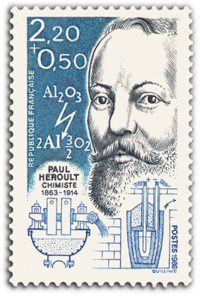
QUILLIVIC © LA POSTE, 1986

Alum, a hydrated sulfate salt of potassium and aluminium [KAl(SO4)2·12H2O], has long been known — ancient Greeks and Romans used it as astringent for dressing wounds. But although aluminium is present in various compounds, and abundant on Earth, it is so reactive in its elemental form that it wasn’t isolated until the 1820s.

Friedrich Wöhler isolated aluminium metal in 1827, Henri Sainte-Claire Deville produced larger quantities and published a detailed account of its properties and applications in the 1850s, and both Charles Hall and Paul Héroult devised electrolysis-based large-scale fabrication processes in the 1880s. Add to this the contribution of Karl Josef Bayer, who developed a route to extract and purify alumina from the mineral bauxite et voilà, aluminium became so widely used it was to be referred to as ‘the magic metal’ by National Geographic.

Its salts, compounds and coordination complexes have also proven useful for a variety of reactions, some of which have recognizable names such as the Friedel–Crafts acylation and alkylation reactions, or the Ziegler–Natta polymerization of olefins. Beyond its interesting chemistry and a myriad of practical applications, the unassuming metal also inspired artists — I particularly like the “Molecule Man”: 30m-tall structures by Jonathan Borofsky.

Anne

Anne Pichon (Associate Editor, Nature Chemistry)