2016: Editor’s choice

Extracts from selected news and feature articles published this year.

Astrophysics

An international team of scientists, including from New York University Abu Dhabi (NYUAD), managed to directly observe structural components of one slowly rotating star, thanks to asteroseismology. This new technique, 10,000 times more precise than its predecessor, reveals a star’s flatter, rounder contours and different rotational speeds. It allows scientists to ‘see’ the nature of the stellar interior with very high precision.

Marine science

In an unprecedented study on non-model organisms in captivity, scientists from Saudi Arabia, Australia and Norway were able to create large sequence datasets on how reef fish and their offspring react to the phenomenon of decreasing pH levels, called ocean acidification, brought on by climate change. Acidification happens due the uptake of atmospheric carbon dioxide. “The amount of sequencing data we generated is unparalleled for a non-model organism,” says Timothy Ravasi, the senior author of the paper. Scientists discovered that the offspring of some reef fish can tolerate acidification by adjusting their circadian rhythm to night time function throughout the day.

Ecology and evolution

An international consortium of researchers analysed the coding portions of genes, or “exomes”, belonging to 1,794 nationals of Greater Middle Eastern (GME) countries, a region spanning from Morocco in the west to Pakistan in the east. “As expected for a region so rich in history and at the crossroads of many civilizations, the Middle East ‘variome’ [the set of genetic variations in a given population] suggests mixing with other populations, although the percentage varies greatly depending on which subpopulation you look at,” says geneticist Fowzan Alkuraya from Saudi Arabia’s King Faisal Specialist Hospital and Research Center. Northwest African genes were found in people across northern Africa, most likely representing the Berber genetic background. Arabian Peninsular genes were observed in nearly all GME peoples studied, possibly the result of the Arab conquests of the seventh century. Similarly, Persian expansion in the fifth century into the Turkish peninsula, the Syrian Desert region and parts of northeast Africa probably accounts for the Persian and Pakistan genetic signal present in the peoples of those regions. The peoples of the Syrian Desert and Turkish peninsular regions show the highest levels of mixing with European populations.

Geology

Shallow, dense magma reservoirs may be responsible for the most hazardous type of volcano on Earth, according to a new study. Ivan Koulakov and colleagues, including scientists from Saudi Arabia, present a fresh seismic model, based on studying magma paths beneath the Toba volcano in Indonesia, which last erupted some 74,000 years ago. The model explains why the magma system under Toba causes large, devastating eruptions, and how such large volumes of magma are generated.

Archaeology

“We always say it can’t get any worse, and then it does — and that’s the hardest part,” says Allison Cuneo, project manager for the American Schools of Oriental Research’s Cultural Heritage Initiative (CHI), which documents the loss of Syrian heritage. CHI reported 851 incidents of damage to cultural heritage between September 2015 and August 2016, mostly concentrated in areas of northern Syria controlled by forces opposed to President Bashar al-Assad. With such extensive damage, there “is so much data on destruction to report, it’s like holding the ocean back with a broom,” says Michael Danti, the academic director of CHI.

Environment

A world atlas of artificial night sky brightness, published earlier this year in Science Advances, captured the extent to which we are smothered in light. It reveals Kuwait, Qatar, United Arab Emirates and Saudi Arabia as the most light-polluted places to live on the planet, topped only by Singapore. More than half of people living in Israel and Libya live through extremely bright nights, and the widest connected twilight zone in the world is along the Nile Delta in Egypt. No more can people in Kuwait and Qatar see the glowing band of the Milky Way from their homes. For more than 97 per cent of people in the United Arab Emirates, Israel, and Egypt, this is also true. “The night sky is the beginning of our civilization. It leads to all religions, philosophy, science, literature and the arts. The cultural significance of a sky full of stars is huge. The new generations have lost this source of inspiration,” says Fabio Falchi, of the Italian Light Pollution Science and Technology Institute’s Fabio Falchi, who led the study.

Astronomy

The Qatar Exoplanet Survey (QES) has discovered three new “exoplanets” outside our solar system. The planets, named Qatar-3b, Qatar-4b and Qatar-5b, are hot Jupiters: they are similar in size to Jupiter (11 times the size of Earth) and orbit very closely to their respective suns. They are located some 1400 to 1800 light years away from Earth and can be seen in the same part of the sky as the Andromeda Constellation, best observed in autumn in the northern hemisphere.

Biosensor zeroes in on dangerous bacteria

Staphylococcus or Staph aureus is a type of infectious bacteria that commonly causes skin and respiratory infections in addition to food poisoning. In some cases, it can lead to life-threatening diseases such as pneumonia, and brain, bone or heart infections. As well, it’s a common hospital acquired infection.

Now, a team of scientists from Saudi Arabia and Jordan have developed a point-of-care diagnostic test as effective in food samples as it is in clinical samples to detect the bacteria. It’s cheap, instrument-free, and takes less than a minute, according to lead researcher Mohammed Zourob, professor of chemistry at Alfaisal University in Saudi Arabia.

The researcher and his colleagues tested the biosensor in food and clinical isolates from a hospital but instead of targeting bacterial cells, as traditional sensors would, they targeted poteases enzymes released by the cells or expressed on the cells’ surface. The former’s sensitivity is too poor to detect infectious dozes of most bacteria, according to Zourob, unlike the latter method, invented by Zourob et al.

The probe itself is made up of a specific peptide sequence, cleaved by Staph aureus proteases, and sandwiched between magnetic nanobeads and gold surface on top of a paper support.

Another perk to the test, according to its developer, is that it does not require special training to use, so it can be easily administered by food inspectors and hospital nurses.

Zourob and his colleagues say they are now establishing a spin off in order to commercialize this new technology.

This injectable biomaterial can control bleeding

The biomaterial can maintain its shape upon injection, only becoming liquid after a force is applied.

The biomaterial can maintain its shape upon injection, only becoming liquid after a force is applied. {credit}Ali Khademhosseini, Brigham and Women’s Hospital{/credit}

Scientists swap metallic coils, classically used to treat aneurysms and uncontrolled hemorrhaging, with a a hydrogel that can hold its shape within a blood vessel to prevent bleeding.

The agent, tagged a shear-thinning biomaterial, is similar to toothpaste in consistency and is made up of both gelatin and nanoparticles. The research by a team of scientists led by Ali Khademhosseini, from Brigham and Women’s Hospital and the department of physics, King Abdulaziz University, Saudi Arabia, developed the agent to overcome the limitations of the coils. In 47% of patients on blood thinning medications or in those who cannot form blood clots, dangerous break-through bleeding, with rebleeding, occurs when the coils are inserted into their blood vessels.

The new biomaterial doesn’t rely on the formation of blood clots to obstruct the vessel and halt bleeding. It can also withstand high pressure, and naturally degrades over time. It was tested on porcine models, whose blood vessels have similar dimensions to human’s. And the scientists plan to test it on humans next.

“This work is an example of how bioengineering can help address the challenges that clinicians and patients face,” says Khademhosseini of the research, published this month in Science Translational Medicine. “Our work thus far has been in the lab, but we are on a translational path to bring this new biomaterial for embolization to the clinic to improve patient care.”

Bringing cinema magic to science

ISFAD17-ProgramStill-1

{credit}Imagine Science Film Festival{/credit}

In its third edition in Abu Dhabi, Imagine Science Film Festival, running from 2 to 4 March, 2017, is dedicated to light, reflecting on it through a multitude of films spanning documentary, fiction and experimental genres.

The film festival, which contemplates the intersection between science and art and which takes place at the Arts Centre in New York University Abu Dhabi (NYUAD), chooses a theme for its productions every year, and creates a conversation around it through talks, workshops, performances, and screenings of both local and international films.

In the past, the festival has collaborated with Zayed University, Petroleum Institute, Masdar in addition to NYUAD’s Arts Center in a keen effort to encourage local filmmakers to particpate in programming and filmmaking.

This year, the festival explores another fundemntal of life: light, and “how in multiple ways it has shaped how we see and understand the world providing us new insights, methods and understandings of how investigate our surroundings, and their scientific and artistic subtexts,” according to NYUAD professor and festival founder Alexis Gambis.

The festival is still accepting film submissions until December 5, 2016; works that, in the words of the festival founders, give viewers “a deep look into the natural, technological, and theoretical worlds, from the smallest molecule to the furthest reaches of space and everything in between”.

Many of the artists showcased are usually in attendance at the festival, which, in 2017, is expected to include panels on how we process and make sense of an overflow of media and information, a career talk with scientists, artists and filmmakers and how they navigate worlds that incorporate scientific and artistic dimensions, in addition to a retrospective of Larissa Sansour’s Space Triology: Nation Estate, Space Exodus, and In the Future They Ate from the Finest Porcelain (the latter featured in the second edition of Imagine Science).

Imagine Science will also exibit a revisited animation about Quantum mechanisms where data visualizations (inspired by CERN) will be projected on sand from Liwa desert.

According to Gambis, in 2017, the featured films will move from traditional documentaries to regional science fictions, experimental studies, and narratives inspired by essential science issues.

“We’re seeking new science films of all styles and subjects. Possible themes include technological shifts, neurological and cognitive functions from vision processing to memory and even dream, and the ecological and sociological studies of the Gulf and MENA landscape,” he elaborates.

To know more about the festival, how it began and what its creators have in store for it, listen to the latest edition of Nature Middle East‘s monthly podcast where this editor talks to Gambis about his brainchild and how it rose to prominence over the years.

Empowering women scientists in MENA

Funded by the Islamic Development Bank and the Bill & Melinda Gates Foundation, an international center for agriculture is promising to lay the ground work for a women empowerment initiative aimed at scientists, reportedly the first of its kind in the Middle East and North Africa (MENA) region.

The International Center for Biosaline Agriculture (ICBA) launched the design phase of the Young Arab Women Scientists Leadership Programme, dubbed Tamkeen (literally meaning empowerment in Arabic) this month.

Nature Middle East speaks to Setta Tutundjian, director of partnerships and knowledge management at ICBA, about the potential of this gender-specific science programme.

NME: How will your programme empower women involved in scientific research across the Middle East?

Setta Tutundjian: The objective of the Tamkeen program is to encourage young Arab women scientists to pursue a life-long career within the field of scientific research and development. The programme also aims to help women scientists interested in pursuing leadership positions to acquire the skills necessary to assume such leadership position within research institutes across the region.

The programme will develop  leadership and soft skills among participants in key areas such as negotiation, human resource management, science writing, proposal writing, planning, presentation, mentoring, deeper understanding of self-esteem and so on.

We expect this to be achieved through a careful mix of classroom training, online training, coaching and mentoring.

NME: You’re still designing the programme, correct?

ST: Yes. And a critical part of this phase includes conducting focus group discussions and interviews with young women scientists to fully understand the challenges and opportunities they currently face within their careers, as well as to hear from them on the elements of an ideal leadership program that can help them address some of the challenges they face. We want to build a program primarily based around their needs and aspirations.

NME: By identifying the barriers and challenges, do you mean that you plan to launch country-specific investigations into how women are faring in the research and development field?

ST: Besides focus group discussions and interviews with the women, the design phase will also include an assessment of current academic programmes on offer in the region and whether these programmes cater to leadership development among graduates. There will also be an assessment of regional and international capacity building programmes to leverage learning and best practices.

During the coming months, a gender expert, a leadership expert and an expert in training activities will gather to prepare modules and produce a detailed framework of the leadership programme incorporating the results of the various assessments.

NME: I can imagine that women in a country like Egypt would be facing starkly different challenges than, say, the women of the United Arab Emirates …

ST: We do have a unique understanding of the region and the differences that exist between the different countries, specifically when it comes to research and development. Our focus group sessions will be divided among three sub-regions (the Gulf, the Levant and North Africa) in order to cater to the differences among the regions and target countries.

NME: How do you plan to measure progress?

ST: Measuring short-term results will include references to quantity and quality of workshops, participant feedback, network reach and similar metrics. Measuring long-terms results and impact will consider the number of women leaders over time in research institutions in the region, and the increase in number of scientific publications of women scientists.

Beating cancer with smarter use of radiation?

This is a guest post by Nature Middle East writer Hebah Salama.

Cancers infect different tissues, and so they manifest differently, in various types, and require different treatments or sometimes a combination of treatments. Throw in variability among patients as a factor, and it’s even more complicated. It’s the reason why numerous studies are carried out every year to try and gauge the most effective therapy for different cancer types.

Now, researchers from Sudan and Lebanon specializing in medical physics and biochemistry have collaborated together on one such study. Their research deals with cancer cases in children, specifically analyzing the effect of different single radiation doses of X-rays on Rhabdomyosarcoma (RMS) – a malignant tumor involving skeletal muscle tissue.

Radiation, one of the most commonly used methods of cancer treatment, is known to cause damage in both healthy and cancerous tissue. It’s what sparked the known risk-benefit-ratio debate on whether the benefits from radiation therapy outweigh the harms. Scientists often discuss the different methods in which radiation can be used while keeping its side-effects to a minimum. As well, new technologies that provide high accuracy in dose delivery have been invented for this purpose; sparing healthy cells.

In this study, the scientists treated cultured RMS cells in vitro (outside of the human body) with therapeutic X-rays. The cells have shown to be resistant to radiation. Additionally, and depending on the radiation dosages, many of the treated cells have repaired from the X-rays’ radiation damage.

The scientists use this study to demonstrate that efforts put into studying tumors’ and healthy tissues’ biological responses to radiation based on tumor type should be stepped up. The more accurate the data provided about these types of responses, the better the outcome of patient treatment is.

“The advancement in technology should be met with more scientific research,” says Alexander Fadul lead researcher.

He adds that more patient oriented studies are certainly needed to determine the different parameters of radiation.

Detecting deadly foodborne pathogens on the spot

Researchers from Saudi Arabia and Jordan have invented a cheap sensor that can detect foodborne pathogens within minutes and which can be used by anyone.

The sensor can detect, among other pathogens, Listeria monocytogenes, a notoriously harmful pathogen that has caused numerous infections worldwide and whose inspection and detection efforts exhaust billions of dollars every year, says a new study published in Biosensors & Bioelectronics.

The sensor itself is made of magnetic nanoparticles. It can detect minute traces or serial dilutions of Listeria in milk and meat, as the study demonstrates. “The sensor’s performance is superior in terms of its simplicity, cost and speed,” says researcher Mohammed Zourob, the study’s corresponding author.

Zourob adds that the sensor can be used by non-skilled personnel to check the food contamination; food manufacturers, stores, distributors and even laypersons can use it.

The biosensor changes color from black to yellow in less a minute time when it detects Listeria. Zourob’s team has also developed sensors that can detect other food pathogens such as Escherichia  coli, Salmonella, Shigella flexnerii and Staphylococcus aureus.

Genomes of stone-age woman carry farming tales

Zagros Mountains harbor a site with evidence for an ancient economy.

Zagros Mountains harbor a site with evidence for an ancient economy. {credit}JTB MEDIA CREATION, Inc. / Alamy Stock Photo{/credit}

The sequencing of the first genome of an early stone-age woman from Ganj Dareh, in the Iranian Zagros Mountains, can give us a glimpse into the world’s first farming efforts and the evolution of an activity that has profoundly affected human societies.

The international team of scientists, including a researcher from King Abdullah University for Science and Technology (KAUST), Saudi Arabia, has been studying an archaeological site in Zagros – a site with early evidence for an economy of a population of pastoralists, primarily based on goat herding, some 10,000 years ago.

This population has evidently occupied the area for two to three centuries.

Their findings suggest that Western Iran was inhabited by a population genetically similar to hunter-gatherers from the Caucasus, but distinct from the new stone-age Anatolian people who later brought food production into Europe.

The inhabitants of Ganj Dareh made little direct genetic contribution to modern European populations, suggesting those of the Central Zagros were somewhat isolated from other populations of the Fertile Crescent.

Archaeobotanical evidence remains limited, according to the study published in Scientific Reports yesterday, but the evidence present gives us an idea into what crops were common: for instance two-row barley with no evidence for wheat or rye.

This probably means that the overall economy was at a much earlier stage in the development of cereal agriculture than that found in the Levant, Anatolia and Northern Mesopotamian basin.

Without proper education, can we innovate?

20160414_165520~3What are the two biggest challenges to development and innovation facing the world today?

It was a question posed to a panel of speakers from developed and developing countries at the Biovision Alexandria 2016 conference currently happening in Alexandria, Egypt.

Education was singled out as the greatest threat, especially in the developing world.

“ICT [Information and communication technology] is the glue that holds innovation together,” said William Saito, the special adviser to the Prime Minister Cabinet in Japan. “It allows cross pollination across disciplines.”

Education is still based on rote-learning, but there’s an urgent need to shift to inquiry-based education at schools; methods that encourage children to develop the learning process themselves, argued Mohamed Hassan, the co-chair of the Inter Academy Partnership in Italy.

The smartphone boom happening in the developing world gives millions of young people access to the Internet every year; it’s the greatest disruption to this decades old style of teaching, he added. Knowledge is now at the fingertips of young people, and traditional education may be vastly transformed within the next decade due to that, he opined.

This rapidly changing world comes with its own challenges, however.

“We are not repairing children for a vastly changing world,” said Jason Blackstock, head of the Science, Technology, Engineering, and Public Policy Department at the University College London, UK.

Some reports suggest that when the toddlers of today grow up, 60% of the jobs present now – and which education is preparing them for – will have disappeared, said Saito. That means we need a paradigm shift in education where failure is not shunned.

We need to create a culture of tolerance of failure, teaching young people that it is normal to fail a few times to truly innovate, he said. “There’s a real opportunity to bring students into the real world and to bring the real world into labs.”

John Kilama, the chairman of the Innovators for Africa Development, Inc. in the US, warned however that these changes require governments that can create an atmosphere that would facilitate change, otherwise “a lot of young people will leave to other countries that can support their hopes and dreams.”

Clearly, the future for the developing world depends on the ability of nations to create enabling environments – ones that allow young people an education that enables critical thinking, entrepreneur training and ICT tools to make use of. It also depends, as well, on policymakers with the proper foresight and a genuine interest in promoting development in a global world.

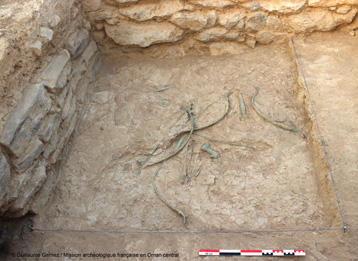
Exceptional collection of Iron Age weapons discovered in Oman

Bows, arrows, daggers and axes found in Mudhmar Est.

Bows, arrows, daggers and axes found in Mudhmar Est.{credit}© Guillaume Gernez / Mission archéologique française en Oman central.{/credit}

A collection of bronze weapons dating from the second Iron Age (900-600 BC) has been uncovered near Adam, at the frontier between oasis and desert regions in Oman, according to the National Centre of Scientific Research (CNRS), under the French Ministry of Education and Research.

The remains were discovered scattered on the ground in a building belonging to what is believed to be a religious complex, during excavations carried out by a French archaeological mission in central Oman, reads a press release by the centre. The mission, partly in collaboration with Oman’s Ministry of Heritage and culture, began in 2007 setting out to explore the political system, social practices and rituals existing in the region at the time.

The collection discovered in a site known as Mudhmar Est includes two complete quivers and weapons made of metal, including two bows – objects that are unfamiliar in the Arabian Peninsula, according to the scientists.

“These were small-scale models imitating the original objects made of perishable materials (leather), which are not usually found in archaeological excavations,” says the press release. “The fact that they are made of metal implies that they were non-functional. Quivers of this kind have never been found in the Arabian Peninsula, and are extremely rare elsewhere.”

Read more about this discovery here.