The competition that likes to say YES!

Enterprising early career researchers get some high-level mentoring to handle the rough and tumble of the boardroom. David Payne meets finalists in the 21st annual Young Entrepreneurs Scheme (YES)

Epitome is a Singapore biotech start-up whose product pipeline is based on engineered tail proteins to tackle bacterial diseases. It wants a slice of the US’s $6bn acne market. Epitome’s founders are seeking raise $10m to build a factory where its cosmetic products can be manufactured. Investors will be rewarded with a seat on its board.

The launch team describe the company at a presentation attended by other young entrepreneurs. They brace themselves for some tough questions from a judging panel. One judge asks how a factory can be built for $10m Another challenges the team’s plan to launch an acne treatment as a cosmetic product, which means they won’t mention acne on the label (the team adopted this approach to make the US regulatory process more straightforward).
15390900_1695305427446706_286911818743892859_n

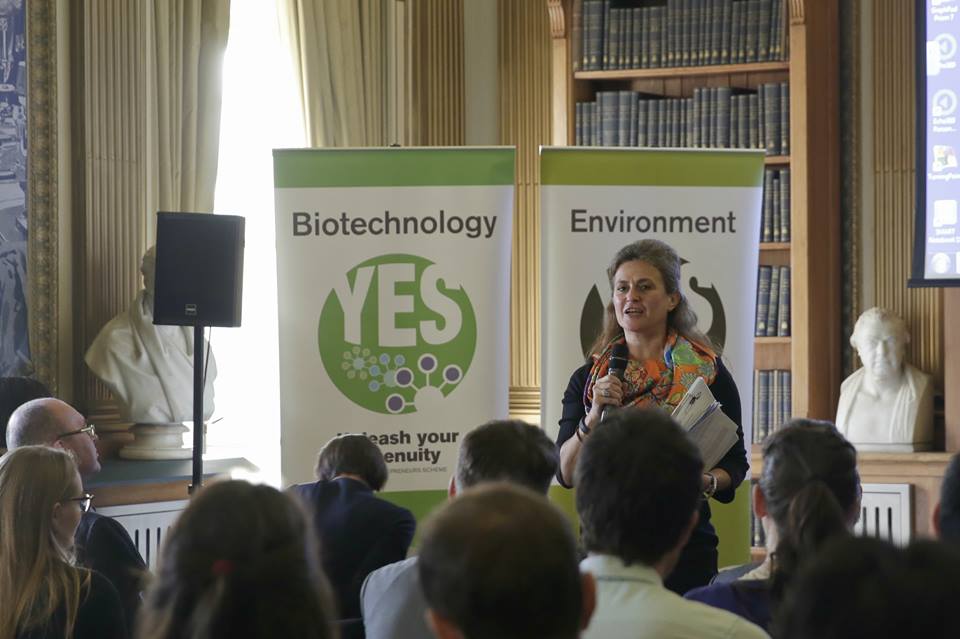
‎Elena Lurieluke, Head of Global Life Sciences Open Innovation, Corporate R&D at P&G, addresses fellow YES judges and finalists.


Continue reading →

The hidden costs of a career in scientific research

Does a career in science select against those unable to afford frequent relocation, unpaid work and short-term contracts?

Nick Riddiford

That a career in science is demanding is unsurprising. But alongside long hours spent in the lab grappling with abstract concepts, the number of years of education it takes to enter the professional ranks and the increasingly unstable nature of such employment, exists a further demand: money. It’s no secret that science costs money — building the Large Hadron Collider (LHC) and sequencing the human genome cost around €3 billion each — but what is less obvious is that entry to a career in science often requires considerable personal financial sacrifice.

save-money-1362382_1920 Continue reading →

Your best work might be just around the corner

A recent finding shows that a scientist’s career can peak at any age.

Ever wonder when you’ll publish that big paper that’ll win you the Nobel Prize (or at least a new research grant)? Turns out, it could be your next.

As Nature News reports, a new equation, developed by a team led by Albert-László Barabási at Northeastern University in Boston, Massachusetts, shows that papers published at any point in a scientist’s career have equal chance in becoming their most highly cited work. It might be sensible to keep that in mind the next time you’re struggling through centuries of data analysis, or when your thumb starts to bruise from more and more mindless pipetting.

You can watch a video explainer below, and find the paper here.

You are currently viewing a placeholder content from YouTube. To access the actual content, click the button below. Please note that doing so will share data with third-party providers.

More Information


Suggested posts

How to get published in high-impact journals: Big research and better writing

Writing for international journals: tips and techniques

Nature Masterclasses: Writing for highly-selective journals


Ageism “as bad as racism”

Ageism in the workplace is as bad as racism and over-50s applying for jobs are five times more likely to get interviews if they do not disclose their age, reports David Payne.

Andy Briggs, the UK government’s new adviser on older workers, told The Times this week that 27% of men of UK men aged 65 to 70 are in paid employment, compared to 15% in 2006. The figure for women is 18% and rising, and one in ten people aged over 70 are still working. And employers have an unconscious age bias.

Employers have an unconscious age bias

“Just as there are resources invested in younger workers in coaching and career development, and similarly when women return from career breaks, companies should invest in their older staff and give them midlife career counselling. It’s in business’s interest to do this,” he said. Continue reading →

Why don’t scientists always share their data?

Reproducibility is the cornerstone of science, and it can be compromised by insufficient data in peer-reviewed publications. Should scientists reveal everything?

Publishing Better Science through Better Data writing competition winner Emma Vander Ende.

One of the foundations of science is its reproducibility. Without it, results are not verifiable and are therefore not believable. But even if a published result is true, there is a chance it might not be reproducible, which introduces a plethora of problems for science.

Irreproducible experiments severely limit the ability of the scientific community to build on results and advance the field. This can happen when scientists don’t share enough data, or details of their experiments in papers, and it happens quite frequently.

So why might a scientist not share their data?

drugs

{credit}Comstock/Thinkstock{/credit}

Continue reading →

Tips to identify the perfect employer

Knowing yourself, what you want and what motivates you should be the foundation of your job hunt, says Ulrike Träger.

Finding the right job and organization to work in after your PhD can be a daunting task. Coming from an academic setting, researchers tend to struggle to identify skill sets needed for a change in their career paths, asking questions like ‘what skills should a medical writer have?’ Job titles sometimes explain little about the actual work responsibilities—did you know, for example, that an ‘Innovation Facilitator’ communicates science and sets up links between academia and industry, to help speed up drug development or begin business opportunities?

Different_ iStockphoto_Thinkstock

{credit}iStockphoto/Thinkstock{/credit}

Continue reading →

Back to basics: Cracking an academic interview

Mit Bhavsar runs through some simple tips he learnt in his quest for an academic position.

Staying and working in academia is a good career choice but finding the right position in academia is still a tricky thing. Blanket-applying to as many positions as you can find and crossing your fingers isn’t going to cut it. Recently, I managed to crack some of my own postdoc interviews. Here’s what I learnt.

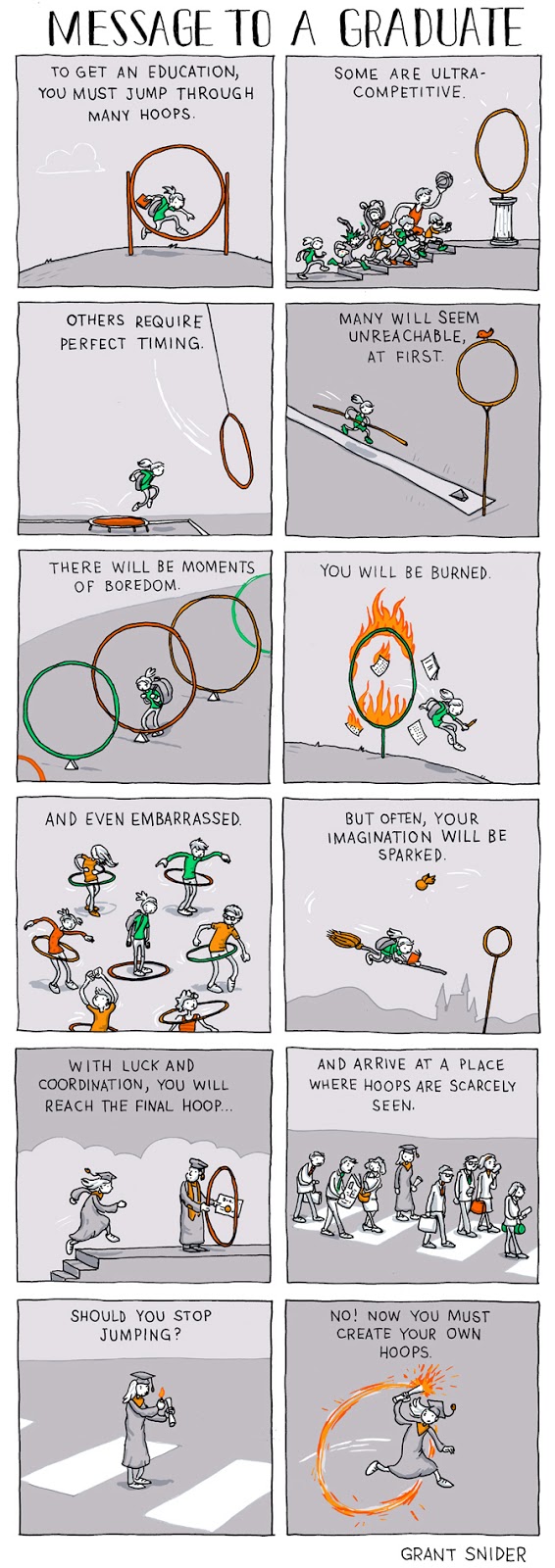
grant snider comuic

Image source: Grant Snider https://www.incidentalcomics.com/2013/05/message-to-graduate.html

Continue reading →

Bonding in Boston: The importance of networking in science

Naturejobs journalism competition winner Ashish Nair finds new hope at our Boston career expo.

A long time ago in a land galaxy far far away, there was a great gathering where those weary of the well-trodden trail of tenureships and grants repaired themselves. The gathering in question was the Naturejobs career expo, a free one-day event organized for students and scientists alike. Featuring some truly inspiring speakers, it gave a much-needed boost to my hope for a career in science that can be both emotionally and financially (yes, $$$) satisfying.

Continue reading →

Uncertain Airspace: Changing career paths is disorienting and exhilarating

Pursuing a new career makes PhD student Jonathan Wosen feel like a baby goose—and he loves it.

Sometimes I ask people, “if you weren’t studying biology, what would you do?”

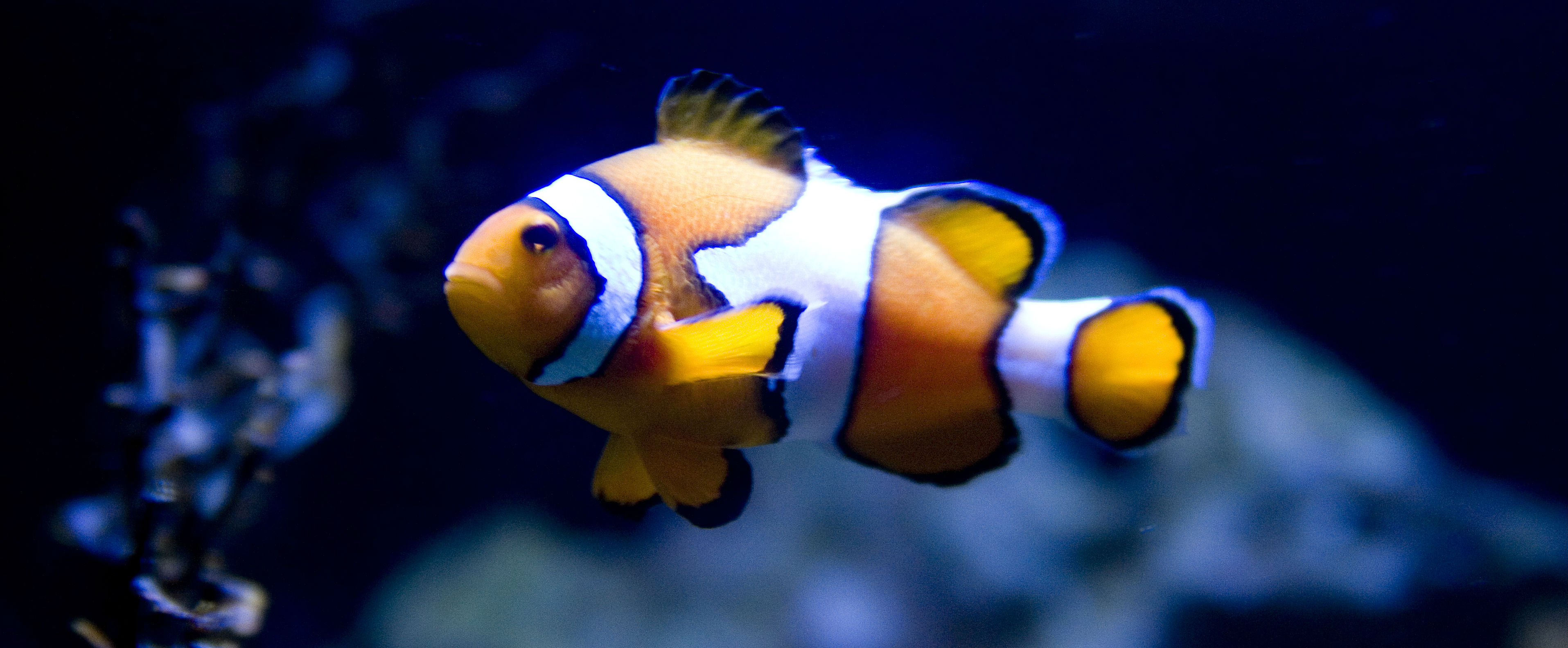
At first, they’re taken aback, and I don’t blame them. PhD students are self-selected for a certain kind of persistent, focused thinking; that’s what it takes to become the world’s leading expert on your thesis project. We are as deeply immersed in our work as a fish in water. That makes asking a graduate student to consider a different field of study a lot like asking a fish to imagine life on dry land.

Clownfish_in_blue_water-smaller

“We are as deeply immersed in our work as a fish in water. That makes asking a graduate student to consider a different field of study a lot like asking a fish to imagine life on dry land.”

Continue reading →