Why don’t scientists always share their data?

Reproducibility is the cornerstone of science, and it can be compromised by insufficient data in peer-reviewed publications. Should scientists reveal everything?

Publishing Better Science through Better Data writing competition winner Emma Vander Ende.

One of the foundations of science is its reproducibility. Without it, results are not verifiable and are therefore not believable. But even if a published result is true, there is a chance it might not be reproducible, which introduces a plethora of problems for science.

Irreproducible experiments severely limit the ability of the scientific community to build on results and advance the field. This can happen when scientists don’t share enough data, or details of their experiments in papers, and it happens quite frequently.

So why might a scientist not share their data?

drugs

{credit}Comstock/Thinkstock{/credit}
Continue reading

Most read on Naturejobs: December 2014

So far, in December 2014, you’ve done a lot of reading and writing! We want to thank our wonderful contributors this month: Shimi Rii and Frances Saunders. Thank you both very much.

Here are the 5 most popular posts from this month.

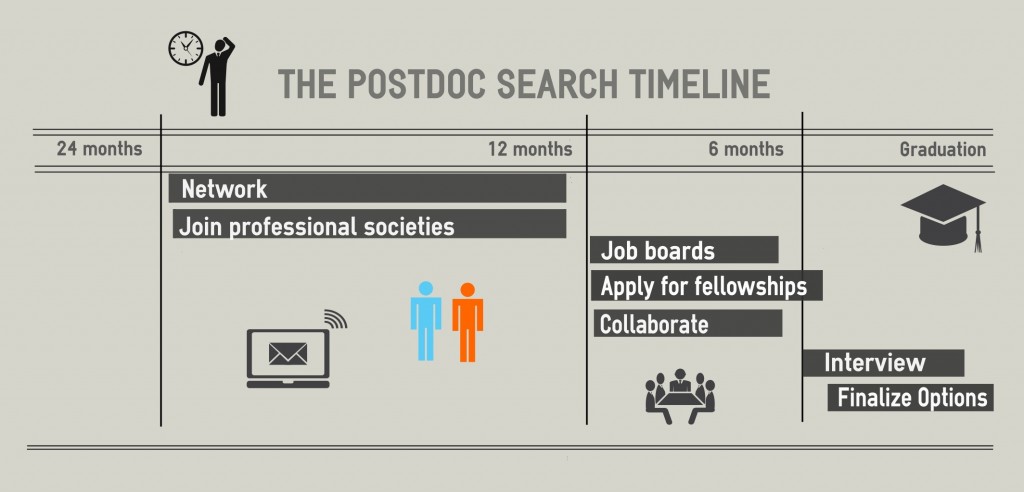
postdoc-search-timeline

The postdoc search timeline. Image credit: Shimi Rii

1) The postdoc search timeline. Shimi Rii interviews fellow postdoc researchers about their job hunt, in particular, she focuses on how long they spent looking.

2) Ask the expert: Can research ever be a ‘9-5’ job? Dr Frances Saunders, president of the Institute of Physics in London, tries to answer this question for you. The conclusion: it is possible, but it requires a joint effort from many people.

3) How to cope when things go wrong in academia. This short Q&A film from the 2014 London Naturejobs Career Expo highlights some of the coping strategies that academics have when things go wrong.

4) How to publish your data in a data journal is a piece in which we highlight the main tips from Andrew Hufton at a recent Scientific Data event on publishing your data in data journals.

5) From academia to policy with David Carr is a Q&A interview about his transition into policy work at the Royal Society in London.

Merry Christmas everyone!

How to publish your data in a data journal

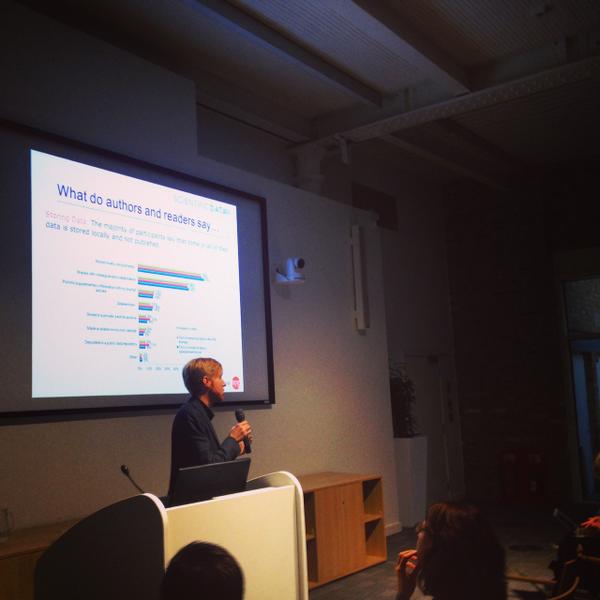
A big picture view for researchers on data repositories and data journals from Andrew Hufton at Publishing Better Science through Better Data.

andrew-hufton-scidata14

{credit}Image credit: Scientific Data{/credit}

More and more, funding bodies are requiring scientists to make their data open-access and available to the research community and others. So, why not wrap a publication around it at the same time, build your CV and get credit for all the hard work you’ve done?

Andrew Hufton, Managing Editor of Scientific Data, gave a great talk on the big picture view of publishing your data. I’ve reproduced some of it below for your reading pleasure along with further advice from Hufton. Have a read and tell us what you think – do you agree with the list? Do any ring particularly true for you? Are there any others you would add? Share your views in the comments section below.

Before even thinking about finding a repository to store your data, you need to make sure that your data is fit for storing. Hufton suggests a three-point checklist where you should:

–          Make sure that your data is well structured

–          Have lots of metadata to aid others’ understanding of your data

–          If dealing with human data, have the appropriate consent forms organised

When you’ve prepared your data, it’s time to think about finding a repository for it. Continue reading