Career paths: Beyond the ivory towers

Take control of your own career by doing some self-reflection and going to informational interviews.

Naturejobs-podcastAt the end of 2014, we set our Naturejobs podcast listeners, especially the PhD students, a challenge: Take control of your own careers.

Earlier this month I attended a one day careers conference in Edinburgh called Beyond the Ivory Towers, where 7 speakers took to the stage to share their transitions from academia into “other”. The “other” included law, entrepreneurship, research in industry, tech transfer, public engagement, clinical science, publishing, and more. What struck me about each of these speakers is that from the outside, it looked as though their careers had been perfectly planned from the day they started at a university. This was definitely not the case. Each speaker had their own challenges to face, from the expected (no more funding) to the unexpected (becoming allergic to rubber gloves).

Transitions are never easy, but there are things you can do to make them smoother. In this podcast I’m joined by two of the speakers, each one taking a different approach to tackling their transitions from academia into “other”

Elizabeth Fairley from EFB Services took an outward approach: find out what she needed to do to become successful in her chosen career in industry. This included going out and speaking to industry professionals who could give her insight into what her future career might look like and what she would need to do to make it.

Phill Jones from Digital Science took the inward approach: determine what skills I learned by self-reflection so that I can market them and sell them to industry. This included analysing what he had done whilst in academia, not just the technical stuff, and learning to convey it in an appropriate way.

Listen to the podcast to find out more!

4 ways to identify smaller companies to work for

Lauren Celano offers advice on how to identify and research smaller companies that can offer growth opportunities and a variety of skills.

Contributor Lauren Celano

It’s easy to identify large companies in an area of interest, as they work hard to build strong brand recognition and awareness. But how do you identify the small and stealth-mode companies working in your field? Since these companies can provide tremendous growth opportunities and a chance for you to develop a variety of skills, it is important to include them in your target list during your career search. Below are a few suggestions on how to identify these companies and jump-start your search.

Scientific Conferences & meetings

Scientific conferences and meetings provide a wealth of information regarding research in a particular field and the organizations working in and/or supporting the area. Often, conferences and meetings have a website to profile the meeting and highlight the speakers, poster presenters, exhibitors and sponsors. Continue reading

Most read on Naturejobs: December 2014

So far, in December 2014, you’ve done a lot of reading and writing! We want to thank our wonderful contributors this month: Shimi Rii and Frances Saunders. Thank you both very much.

Here are the 5 most popular posts from this month.

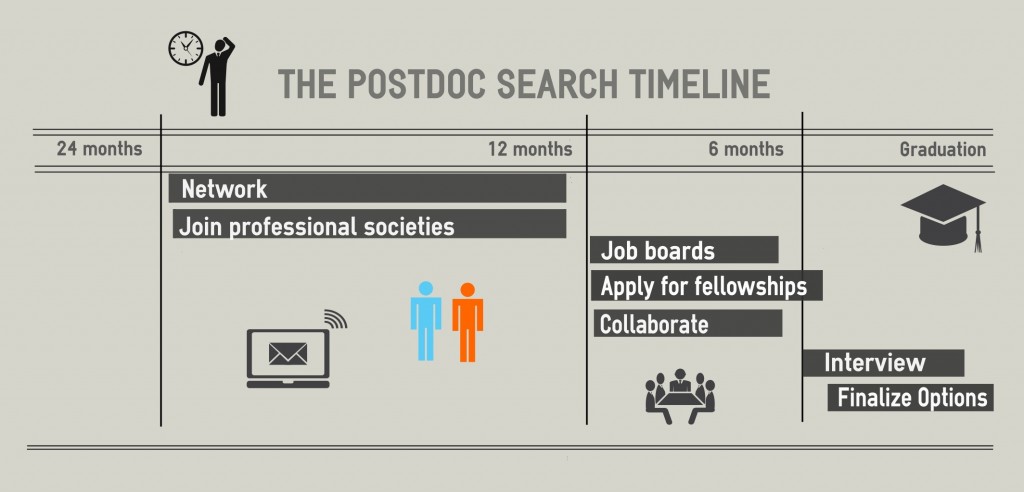
postdoc-search-timeline

The postdoc search timeline. Image credit: Shimi Rii

1) The postdoc search timeline. Shimi Rii interviews fellow postdoc researchers about their job hunt, in particular, she focuses on how long they spent looking.

2) Ask the expert: Can research ever be a ‘9-5’ job? Dr Frances Saunders, president of the Institute of Physics in London, tries to answer this question for you. The conclusion: it is possible, but it requires a joint effort from many people.

3) How to cope when things go wrong in academia. This short Q&A film from the 2014 London Naturejobs Career Expo highlights some of the coping strategies that academics have when things go wrong.

4) How to publish your data in a data journal is a piece in which we highlight the main tips from Andrew Hufton at a recent Scientific Data event on publishing your data in data journals.

5) From academia to policy with David Carr is a Q&A interview about his transition into policy work at the Royal Society in London.

Merry Christmas everyone!

Transitions: From Science to Politics – Julian Huppert

Career paths are not always straightforward. Choosing a scientific vocation can involve challenging and unanticipated decisions, often with no tour guide to follow. Some scientists may hop from the lab bench into industry while others progress up the academic research ladder. Others decide to leave research behind and explore science communication,  teaching, setting up their own business or working in technical roles outside of the lab. 

While a love of science can lead to varied and fulfilling careers, it may be lonely trying to evaluate the next step to take. Recently, initiatives such as “This is what a scientist looks like” and the #IamScience discussions, have shone a bright light on scientific career trajectories. In our latest Soapbox Science series, we focus on some interesting examples of scientific career transitions. We will hear from different contributors, all of whom use their scientific background in their current jobs, asking each of them the same questions: how did you decide on your career path, what are your motivations, and what does the future hold?

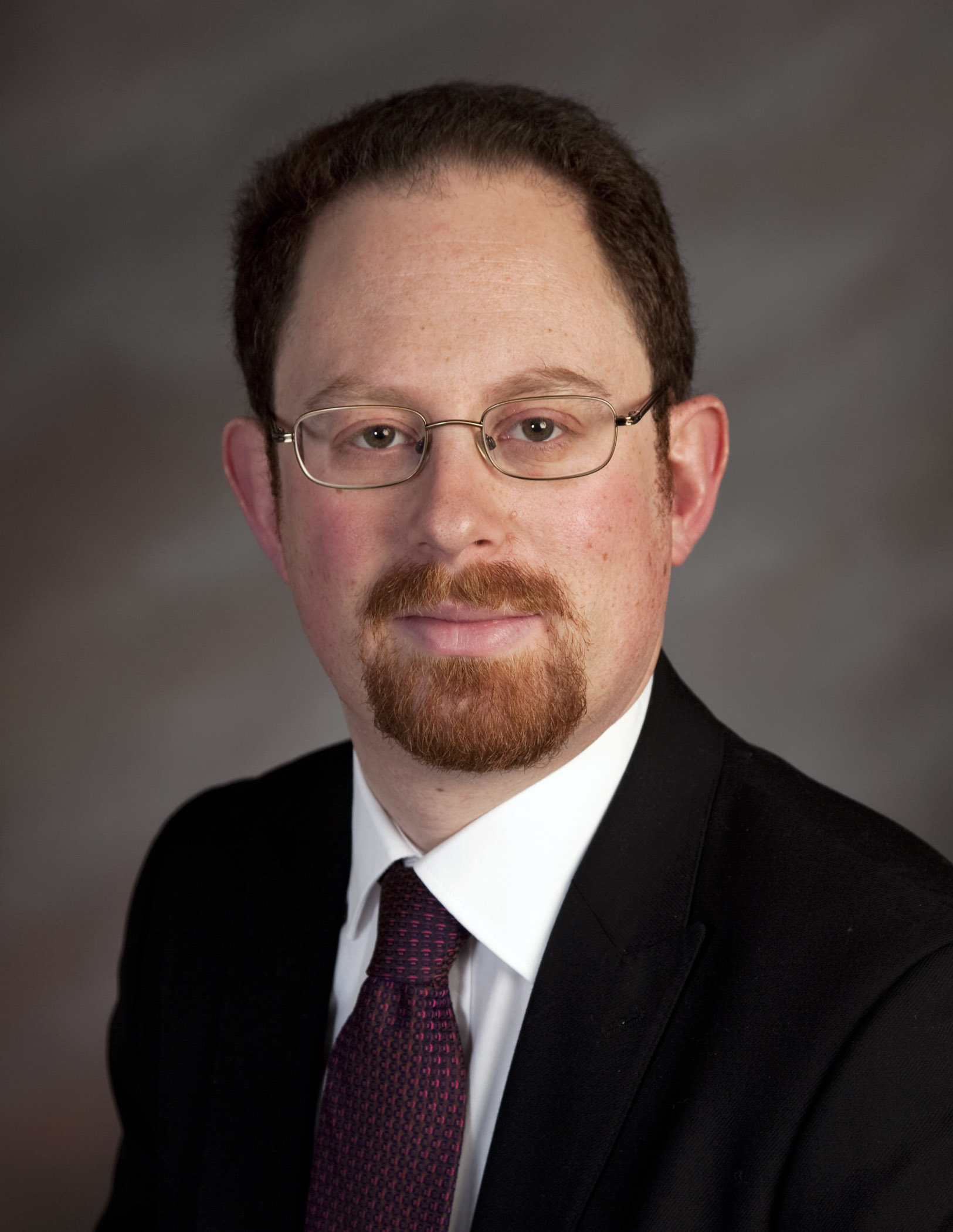
Julian Huppert is a Liberal Democrat politician in the United Kingdom and has been a Member of Parliament for Cambridge since 2010. He studied at Cambridge University, completing a BA and then a PhD in Biological Chemistry at Trinity College. He was elected a Junior Research Fellow of Trinity in 2004 and became a fellow of Clare College in 2009. He is also a Member of the Royal Society of Chemistry (MRSC) and the Institute of Physics (MInstP).  Continue reading

Transitions: From Scientist to combining science and novel writing – Professor Sunetra Gupta

In a special Soapbox Science series, nature.com blogs have been featuring the career paths of several scientists who have ventured to and from the lab bench and use science in a variety of careers. Here on the London blog, we are featuring the career paths of scientists based in London.

Career paths are not always straightforward. Choosing a scientific vocation can involve challenging and unanticipated decisions, often with no tour guide to follow. Some scientists may hop from the lab bench into industry while others progress up the academic research ladder. Others decide to leave research behind and explore science communication,  teaching, setting up their own business or working in technical roles outside of the lab. 

While a love of science can lead to varied and fulfilling careers, it may be lonely trying to evaluate the next step to take. Recently, initiatives such as “This is what a scientist looks like” and the #IamScience discussions, have shone a bright light on scientific career trajectories. In this week’s Soapbox Science series, the focus is on interesting examples of scientific career transitions. We will hear from different contributors, all of whom use their scientific background in their current jobs, asking each of them the same questions: how did you decide on your career path, what are your motivations, and what does the future hold?

In this post Professor Sunetra Gupta talks about her parallel careers as a scientist and a novelist

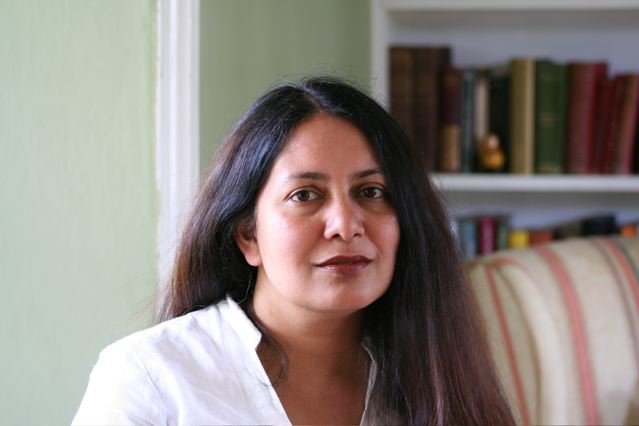
Sunetra Gupta is an acclaimed novelist, essayist and scientist. Her fifth novel, So Good in Black was published in February 2009. She was named as the winner of the 2009 Royal Society Rosalind Franklin Award for her scientific achievements. Sunetra, who lives in Oxford with her husband and two daughters, is Professor of Theoretical Epidemiology at Oxford University’s Department of Zoology, having graduated in 1987 from Princeton University and received her PhD from the University of London in 1992. Sunetra was born in Calcutta in 1965 and wrote her first works of fiction in Bengali. She is an accomplished translator of the poetry of Rabindranath Tagore. Continue reading

Transitions: From Scientist to combining science and novel writing – Professor Sunetra Gupta

Career paths are not always straightforward. Choosing a scientific vocation can involve challenging and unanticipated decisions, often with no tour guide to follow. Some scientists may hop from the lab bench into industry while others progress up the academic research ladder. Others decide to leave research behind and explore science communication,  teaching, setting up their own business or working in technical roles outside of the lab. 

While a love of science can lead to varied and fulfilling careers, it may be lonely trying to evaluate the next step to take. Recently, initiatives such as “This is what a scientist looks like” and the #IamScience discussions, have shone a bright light on scientific career trajectories. In our latest Soapbox Science series, we focus on some interesting examples of scientific career transitions. We will hear from different contributors, all of whom use their scientific background in their current jobs, asking each of them the same questions: how did you decide on your career path, what are your motivations, and what does the future hold?

In this post Professor Sunetra Gupta talks about her parallel careers as a scientist and a novelist

Sunetra Gupta is an acclaimed novelist, essayist and scientist. Her fifth novel, So Good in Black was published in February 2009. She was named as the winner of the 2009 Royal Society Rosalind Franklin Award for her scientific achievements. Sunetra, who lives in Oxford with her husband and two daughters, is Professor of Theoretical Epidemiology at Oxford University’s Department of Zoology, having graduated in 1987 from Princeton University and received her PhD from the University of London in 1992. Sunetra was born in Calcutta in 1965 and wrote her first works of fiction in Bengali. She is an accomplished translator of the poetry of Rabindranath Tagore. Continue reading

Transitions: From PhD to Scientific Conference Organizer – Amanda Ullman

In a special Soapbox Science series, nature.com blogs have been featuring the career paths of several scientists who have ventured to and from the lab bench and use science in a variety of careers. Here on the New York Blog, we are featuring the career paths of scientists based in New Yourk City.

Career paths are not always straightforward. Choosing a scientific vocation can involve challenging and unanticipated decisions, often with no tour guide to follow. Some scientists may hop from the lab bench into industry while others progress up the academic research ladder. Others decide to leave research behind and explore science communication,  teaching, setting up their own business or working in technical roles outside of the lab. 

While a love of science can lead to varied and fulfilling careers, it may be lonely trying to evaluate the next step to take. Recently, initiatives such as “This is what a scientist looks like” and the #IamScience discussions, have shone a bright light on scientific career trajectories. In this week’s Soapbox Science series, the focus is on interesting examples of scientific career transitions. We will hear from different contributors, all of whom use their scientific background in their current jobs, asking each of them the same questions: how did you decide on your career path, what are your motivations, and what does the future hold?

In this post Amanda Ullman talks about her transition from the bench into pharmaceutical marketing and finally scientific conference organizer.
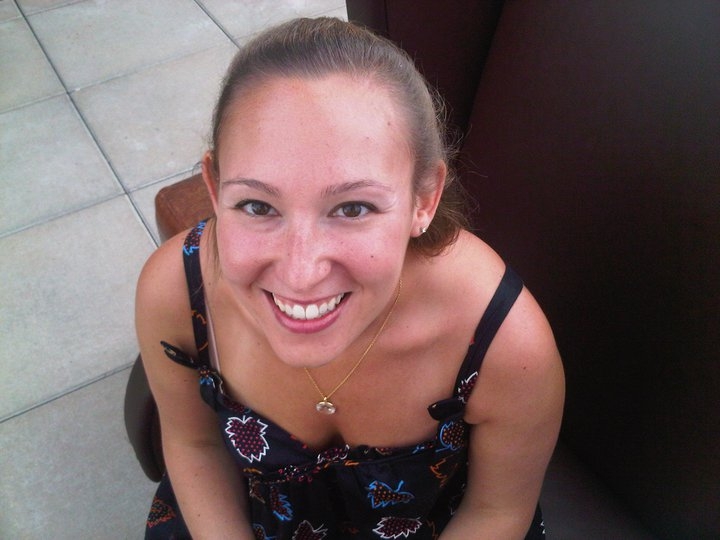
Amanda Ullman graduated with distinction from McGill University with a BSc in Microbiology and Immunology.  She earned her PhD at Stony Brook University in Molecular Genetics and Microbiology.  She continued her training as a postdoc in the Microbiology department at the Mount Sinai School of Medicine and then in the Department of Immunology at Memorial Sloan-Kettering Cancer Center.  Amanda tweets as @ScienceMandy 

Job Title:

Program Manager, Life Sciences, at the New York Academy of Sciences

What is your scientific background?

From the time I was a child, I was really interested in germs.  Unsurprisingly, the focus of my graduate studies and first postdoc was in viral pathogenesis. I find the complex interplay between virus and host enthralling.  I have also loved using viruses as a tool to understand signal transduction and cell biology and of course, the immune response.  Building upon my interest in immunology, my second postdoc explored transcriptional regulation in NKT cells which function on the cusp of innate and adaptive immunity.  I was really excited by this cell type’s implications in autoimmunity.

What is your current job? 

At the New York Academy of Sciences, I work with a team of scientists to help shape the Academy’s agenda of scientific conferences.  I find it both challenging and exciting as I need to quickly learn about fields I am not an expert in.  It’s somewhat analogous to preparing for journal club with fundraising and organizational aspects superimposed onto it.

 “It is wonderful to think and talk about science without the pressures that accompany lifting a pipette.”

In this role, I enjoy a broad understanding of current research across the biological sciences, as opposed to having a very esoteric perspective at the bench. It is really intellectually satiating!  It is also provides a great opportunity to liaise with those in academia, industry, government and at other scientific organizations.  It is wonderful to think and talk about science without the pressures that accompany lifting a pipette.  I did not, however, escape grant writing – I still submit grants, but I do not find the process nearly as stressful as submitting a fellowship application.

Can you detail the steps you have taken to get to your current position? 

In 2009, about 6 months into my second postdoc, despite loving science, I was concerned about forging a career as a scientist and decided it was time to explore other options.  To supplement my income as a postdoc, I had done some freelance medical writing for a continuing medical education company.  I enjoyed writing and thought that perhaps exploring medical communications for pharma full-time would be a good career move.

“…I needed to pursue a career that would keep my finger on the pulse of science, without the stresses and frustrations of being at the bench in a traditional academic career.” 

I spent 2 years in promotional medical education.  I worked on the scientific and then on the account management side of the business.  It was interesting to learn how drugs are marketed to physicians.  It was also good exposure to marketing and medical strategy.  Prior to this experience, I had never heard terms like “messaging” nor drugs referred to as “brands.” Ultimately, it was this exposure that led me to understand a) that I did not enjoy marketing; and b) I really missed basic science.  My career choice had left me feeling alienated from what I truly loved.  It became apparent that I needed to pursue a career that would keep my finger on the pulse of science, without the stresses and frustrations of being at the bench in a traditional academic career. Understanding what I wanted enabled me to focus my job search on roles that I would find fulfilling and exciting.

Where do you see your career in the future?

As scientists, we are intensely passionate about our research.  Upon leaving the bench, I needed to find a role that maintained my connection to what I love.

“It was important for me to spend time doing something that did not provoke this scientific passion so that I could understand how critical it is to my professional fulfillment.”   

I now understand that to be happy in my career, I need to remain a part of the scientific community.  I need to think about and discuss science – daily!  After a bit of a circuitous route, I found a role that I genuinely enjoy.  I look forward to remaining at the New York Academy of Sciences, where I can continue to learn and think scientifically, for some time.

Do you have any advice to other scientists considering a career in your area?

The best way to explore and, ultimately, to find that first job outside of academia is to leverage your network of friends and acquaintances.  Reconnect with former classmates and labmates that have already made the leap from academia.  They can help you to understand what it is that they do and how they obtained their current positions.  These colleagues can offer candid assessments of their industries, which may help you to determine if you are suited to work in those fields.  Further, they may know of jobs openings at their own companies, or at others within their industries.  Of equal importance, they might introduce you to other individuals with whom you should speak.  This will help you to develop a better understanding of a career path and maybe even help you to get a foot in the door.

For more career transitions, check out  Ian Mulvany’s post, Paige Brown’s post, Alom Shaha’s post, Rebecca Caygill’s post, Asha Tanna’s post and Toby Thompson’s post. You can also follow the conversation online using the #Transitions hashtag. 

Transitions: From PhD to Scientific Conference Organizer – Amanda Ullman

Career paths are not always straightforward. Choosing a scientific vocation can involve challenging and unanticipated decisions, often with no tour guide to follow. Some scientists may hop from the lab bench into industry while others progress up the academic research ladder. Others decide to leave research behind and explore science communication,  teaching, setting up their own business or working in technical roles outside of the lab. 

While a love of science can lead to varied and fulfilling careers, it may be lonely trying to evaluate the next step to take. Recently, initiatives such as “This is what a scientist looks like” and the #IamScience discussions, have shone a bright light on scientific career trajectories. In our latest Soapbox Science series, we focus on some interesting examples of scientific career transitions. We will hear from different contributors, all of whom use their scientific background in their current jobs, asking each of them the same questions: how did you decide on your career path, what are your motivations, and what does the future hold?

In this post Amanda Ullman talks about her transition from the bench into pharmaceutical marketing and finally scientific conference organizer.

Amanda Ullman graduated with distinction from McGill University with a BSc in Microbiology and Immunology.  She earned her PhD at Stony Brook University in Molecular Genetics and Microbiology.  She continued her training as a postdoc in the Microbiology department at the Mount Sinai School of Medicine and then in the Department of Immunology at Memorial Sloan-Kettering Cancer Center.  Amanda tweets as @ScienceMandy 

Job Title:

Program Manager, Life Sciences, at the New York Academy of Sciences Continue reading

Transitions: From Chemist to Company Founder – Dr Ed Marshall

Career paths are not always straightforward. Choosing a scientific vocation can involve challenging and unanticipated decisions, often with no tour guide to follow. Some scientists may hop from the lab bench into industry while others progress up the academic research ladder. Others decide to leave research behind and explore science communication,  teaching, setting up their own business or working in technical roles outside of the lab. 

While a love of science can lead to varied and fulfilling careers, it may be lonely trying to evaluate the next step to take. Recently, initiatives such as “This is what a scientist looks like” and the #IamScience discussions, have shone a bright light on scientific career trajectories. In our latest Soapbox Science series, we focus on some interesting examples of scientific career transitions. We will hear from different contributors, all of whom use their scientific background in their current jobs, asking each of them the same questions: how did you decide on your career path, what are your motivations, and what does the future hold? 

In this post Dr Ed Marshall talks about his transition from chemistry lecturer to founder of his own company.

Dr Ed Marshall is Director of Research and Founder, Plaxica Ltd. With more than 50 academic papers and patents to his name, Ed Marshall was formerly a lecturer in the department of Chemistry, Imperial College London before co-founding Plaxica in 2009. A major focus of his research has been the development of new catalysts for the synthesis of polymers from green sources. He was also previously the Director of Imperial’s Master’s degree in Green Chemistry: Energy and the Environment. Continue reading

Transitions: From Chemist to Company Founder – Dr Ed Marshall

In a special Soapbox Science series, nature.com blogs have been featuring the career paths of several scientists who have ventured to and from the lab bench and use science in a variety of careers. Here on the London blog, we are featuring the career paths of scientists based in London.

Career paths are not always straightforward. Choosing a scientific vocation can involve challenging and unanticipated decisions, often with no tour guide to follow. Some scientists may hop from the lab bench into industry while others progress up the academic research ladder. Others decide to leave research behind and explore science communication,  teaching, setting up their own business or working in technical roles outside of the lab. 

While a love of science can lead to varied and fulfilling careers, it may be lonely trying to evaluate the next step to take. Recently, initiatives such as “This is what a scientist looks like” and the #IamScience discussions, have shone a bright light on scientific career trajectories. In this week’s Soapbox Science series, the focus is on interesting examples of scientific career transitions. We will hear from different contributors, all of whom use their scientific background in their current jobs, asking each of them the same questions: how did you decide on your career path, what are your motivations, and what does the future hold?

In this post Dr Ed Marshall talks about his transition from chemistry lecturer to founder of his own company.

Dr Ed Marshall is Director of Research and Founder, Plaxica Ltd. With more than 50 academic papers and patents to his name, Ed Marshall was formerly a lecturer in the department of Chemistry, Imperial College London before co-founding Plaxica in 2009. A major focus of his research has been the development of new catalysts for the synthesis of polymers from green sources. He was also previously the Director of Imperial’s Master’s degree in Green Chemistry: Energy and the Environment. Continue reading