FameLab: Secrets of successful science communicators

This Saturday evening The Times Cheltenham Science Festival in the United Kingdom will host the 2011 international final of the FameLab competition, featuring leading science communicators from Europe, Asia and the Middle East. Naturejobs caught up with three of the 14 finalists to get their tips on how you can improve the way you present and discuss your research to those outside your field.
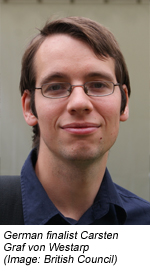
carsten.jpgCarsten Graf von Westarp, a PhD student from Germany studying semiconductor physics at the University of Hamburg, says the key to successful communication is to show how your research relates to everyday life. “Be aware of the interests of the audience or reader,” he says. Use simple language: keep technical terms to a minimum, and make sure you explain any that you do use.

Another tip from Graf von Westarp is to show your fascination with your topic, advice that is echoed by the other two finalists. Karen Lavi, a PhD student studying memory and learning at the Bar-Ilan University and Haifa University in Israel, says enthusiasm is essential for good communication. “Keep in mind that [to you] your subject is the most interesting topic that ever existed — otherwise you wouldn’t have chosen to invest your whole life in it,” she says. “Try to pass on this feeling to your audience.”
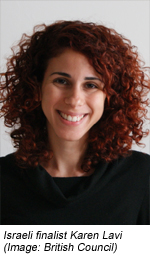
karen.jpgFellow finalist Mahmoud Abu-khedr, a third-year student at the University of Alexandria in Egypt, agrees that talking from your heart is key, and adds that you also need to believe in the importance of science communication itself.

In addition, Lavi emphasises the power of using metaphors and story-telling, suggesting that you talk about your research as if it were a detective story rather than a presentation at a conference. She also recommends you try to personalise your audience — “Imagine you are talking with your mother,” she says — and make sure that you can sum up your entire talk in a few sentences: “What is the message your audience should take home with them? What will they tell their friends and family?”
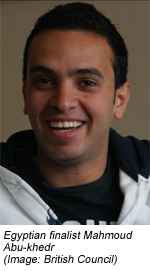
mahmoud.jpgConsidering how you present yourself can also help you communicate better, says Abu-khedr. Remember to smile, and work on your charisma: “You have to act as well as present,” he says. Lavi adds that you should also inject some humour if you can. But don’t force it so that you become uncomfortable — it’s important to have confidence in yourself. “Be how you are,” concludes Abu-khedr.

Do you have any tips to add? Share your advice and experiences below. And best of luck to all the FameLab international finalists.

UPDATE: Congratulations to Karen Lavi and Mahmoud Abu-khedr, who took second and third places respectively in the competition. You can read more about the results on the FameLab website.

Are long working hours inevitable for postdocs?

More than half of postdocs surveyed work at least 50 hours per week and one quarter work at least 60 hours per week.

By comparison, an employee in the United Kingdom works around 37 hours per week on average, while in France this figure is 38 hours (ref). In the United States the average working week of a private, non-farm employee is just over 34 hours long (ref).

Just 2.5% of postdocs work part-time, compared with around a quarter of employees in the United Kingdom and a sixth of employees in the United States (ref).

While the poll of visitors to naturejobs.com is not the most rigorous of measures, it highlights the long-hours culture that many postdocs are faced with. So are long hours inevitable, and what can you do if struggling with your workload?

Liliya Bondareva, a board member of Eurodoc, an organization that supports PhD students, postdocs and junior researchers throughout Europe and is based in Brussels, is not surprised by our poll results. “A postdoc position implies longer hours for a number of reasons,” she says. Complex research combined with limited funding, tight timescales and a need to publish regularly all pile on the pressure. “Working hours often include doing research, teaching, supervision and increasingly administration,” she adds.

Rob Hardwick, co-chair of the UK Research Staff Association (UKRSA) and a postdoc at the University of Leicester, agrees work outside the lab can take up a significant amount of time and deserves more formal recognition. “It is easy to see how the hours put in by the average postdoc soon stack up,” he says.

Sometimes it’s the nature of the work in the lab that means anti-social hours are unavoidable — Bondareva cites an example of a UK postdoc who typically remains in the lab until past midnight when monitoring the behaviour of cells.

A lack of employment rights exacerbates the issue in some countries, a situation that support organisations are campaigning to change. In France, the CJC (Young Researchers Confederation) is pushing to relabel postdocs as temporary research workers to highlight their contractual plights, according to spokesman François Briatte: “Private companies treat [postdocs] as ‘late-stage students’ and consequently offer wages and positions that would correspond to much lower levels of qualification.”

Contracts and union representation can offer some degree of protection. In August 2010, postdocs at the University of California formed a union and agreed a contract with the university hierarchy. While the deal says work schedules must be reasonable, there is no upper limit set on hours. “We want postdocs to be flexible about their work schedule,” says union president Xiaoqing Cao, adding that postdocs facing an unreasonable workload can file a grievance since the contract was put in place.

However, Cao says that postdocs should expect to work longer-than-average hours: “I was told to be prepared to work at least 50 hours per week when I became a postdoc. If we want to move forward with our careers, we have to work hard.” Hardwick agrees, saying long working weeks are inevitable for ambitious postdocs: “We put in the hours we do because it is highly competitive out there.”

Hardwick advises postdocs struggling with their workload to tell their supervisors or mentors and get the issue discussed at departmental committees and meetings so senior staff are aware there is a problem. “When you get to department-head level you don’t always remember what it was like to be a postdoc,” he says.

Another tactic to mitigate problems with long working hours is to try to prevent them arising in the first place. Bondareva advises postdocs applying for a position to investigate the set-up of the project, such as checking whether other institutes allow more time for similar projects and whether staff in administrative positions are also doing research, which could be a sign of overworked researchers. She also suggests checking the blogs and social media outputs of those already in similar postdoc positions: “Do they seem to have a healthy work-life balance? Do they blog a lot about their work? Is it only about work?”

Failing that, Bondareva advises postdocs under pressure to take strength from their initial motivation for becoming a researcher: “Think about the reason you are doing it, and if the reason is compelling enough, remind yourself about [it] every day.”

Have your say

Should postdocs expect to work longer-than-average hours? Can you share any tips on coping with a heavy workload? Have you been successful in improving your work-life balance as a postdoc? Share your thoughts and experiences below.