Away from home: May round-up

Our ‘Away from home’ blogging series features one Indian postdoc working in a foreign lab every Wednesday. The posts recount the experience of these postdocs — the triumphs and challenges of lab life, the cultural differences, what they miss about India — and, most importantly, offer some useful tips for postdocs headed abroad.

The series has had an excellent response from the scientific and research community worldwide. For our regular readers, and those who are just joining us now, we provide a summary of the month’s entries, including an interactive  map pinpointing the labs these postdocs are based. All these interesting entries and summaries can be found under the Away from home’ category of the Indigenus blog.

We will continue to update the map each Wednesday and hope that you will join in the online conversation using the #postdochat hashtag. 

This month we covered a wonderful mix of postdocs in terms of their geographical spread, disciplines and dreams. We featured postdocs from the US, Canada and Singapore with a wide array of interests — from biological modelling to regenerative medicine and from healthcare delivery to academics.

Mastering industry-academia links

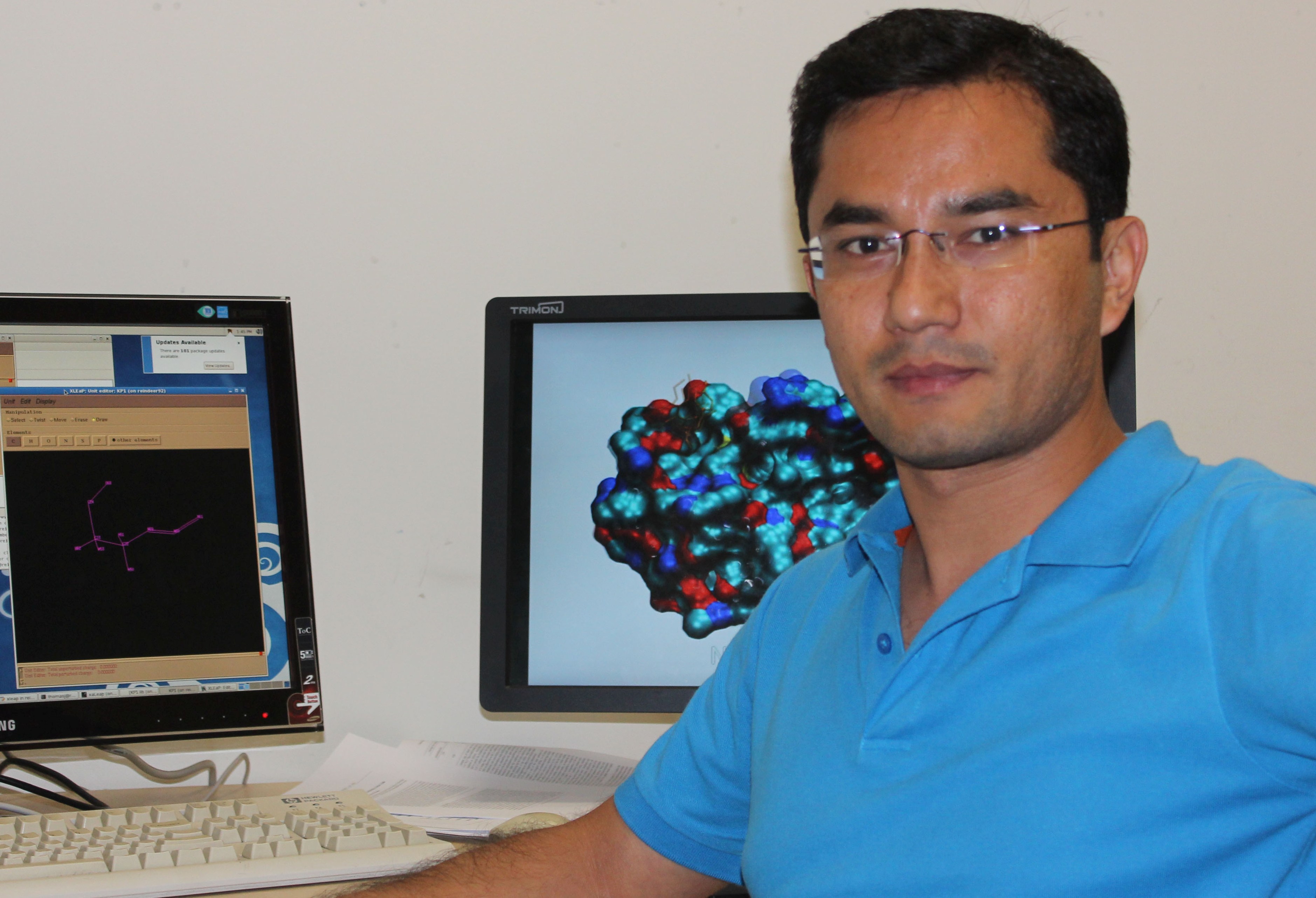
Dilraj Lama, a PhD from the Indian Institute of Technology, Kanpur and a postdoctoral research fellow at the Bioinformatics Institute, A*STAR, Singapore was our first blogger for the month. Dilraj is having a great time with biological modelling and simulation experiments as he seamlessly blends in with the local community owing to similar facial features. Exposed to a healthy multi-disciplinary work team, he is also learning important lessons in industry-academia linkages early on in his research life.

Marital science bliss

Talking about how marriage catapulted her further into her scientific pursuits was Atrayee Banerjee. Atrayee has a Masters in Environmental Management from the Indian Institute of Social Welfare and Business Management (IISWBM), Calcutta, India and was a postdoctoral researcher at the University of Missouri-Rolla. Right now, she works at the National Institute of Health (NIH) in Maryland, USA.

Regenerative medicine & skiing

Next up, we had Anand Krishnan, a PhD from the Rajiv Gandhi Centre for Biotechnology, Thiruvananthapuram, Kerala, India and currently a postdoctoral researcher at the Hotchkiss Brain Institute, University of Calgary, Canada. Anand is focusing his energies on regenerative medicine under a clinician-scientist mentor. Anand relieves his research stress in multicultural and beautiful Calgary, a place that comes with enviable perks in the form of skiing holidays and cool summers.

A journey through academia

Our fourth and final blogger of the month was Akhilesh Gaharwar. Akhilesh is currently a postdoctoral associate at the Massachusetts Institute of Technology (MIT) and Harvard University, and will be joining Texas A&M University, USA as an assistant professor a couple of months later. He tells us about his fascinating academic journey from an undergraduate student in India to a faculty in a leading US University. Akhilesh exemplifies two things — that hard work has no alternative and that you can never go wrong if you follow your heart.

Don’t forget to take a look at our Away from home interactive map, pictured below and updated every Wednesday. It is dotting up quite nicely with some enriching Indian postdoc experiences. Next week, we will have the 25th flag on that map! Stay tuned as we add more from around the world. Please feel free to suggest names of postdocs from unusual countries and disciplines we haven’t covered yet.

AFH map update19

Away from home: A journey through academia

Every Wednesday, our ‘Away from home’ blog series features one Indian postdoc working in a foreign lab recounting his/her experience of working there, the triumphs and challenges, the cultural differences, what they miss about India, as well as some top tips for postdocs headed abroad. You can join in the online conversation using the #postdochat hashtag.

Today we feature Akhilesh Gaharwar. Akhilesh is currently a postdoctoral associate at the Massachusetts Institute of Technology (MIT) and Harvard University, and will be joining Texas A&M University, USA as an assistant professor a couple of months later. He tells us about his fascinating academic journey from an undergraduate student in India to a faculty in a leading US University. Akhilesh exemplifies two things — that hard work has no alternative and that you can never go wrong if you follow your heart.

Akhilesh Gaharwar

Akhilesh Gaharwar

Follow your heart

I was always interested in engineering and wanted to design and develop complex machines as a child. During my undergraduate years, I realized that I didn’t want to go into the software industry and opted for core engineering through campus placement. While working in one of the biggest multinational engineering conglomerate in India for a year, I realized that this is not what I want to do for the rest of my life!

Then, I decided to join Indian Institute of Technology – Bombay (IIT-Bombay), and quit the well-paying job. Choosing research work over industry was one of the biggest decisions of my life. I am glad I followed my heart! I realized that immersing myself in learning, research and technology is what I enjoyed doing the most. While working for my master thesis in Germany/India, I recognized that I can apply my engineering principles to the medical field. I was always fascinated by the most complex machine known — the human body.  One of the aspects that particularly grabbed my attention was the healing properties in the human body. Although man-made machines can mimic many of the functions of humans, they completely lack the ability to heal themselves. I was interested in finding out how applying engineering principles to medical science can enhance this remarkable healing ability and to probe that aspect deeper, I decided to work in the area of regenerative medicine.

The academics dream

After a masters from IIT-Bombay, I moved to Purdue University (USA) for a Ph.D in biomedical engineering. I started designing new materials that can talk to stem cells and instruct them to make certain type of tissues. I joined the David H. Koch Institute for Integrative Cancer Research at Massachusetts Institute of Technology (MIT) and Wyss Institute for Biologically Inspired Engineering at Harvard University as a joint postdoctoral associate. I decided to join MIT/Harvard, as I was very excited to work with the Demigod of Biomaterial – Prof. Robert Langer along with Prof. Ali Khademhosseini on “Living Legos”.

At MIT/Harvard, I started designing complex tissue architecture to mimic native tissue structures using smart nanomaterials. These experiences trained me well for my dream job — a tenure-track faculty position. In August this year, I am joining Texas A&M University as an assistant professor and will be directing the “Inspired Nanomaterials and Tissue Engineering (iNanoTE) Laboratory”.

From postdoc to faculty

I am enthusiastically looking forward to my upcoming transition from a postdoctoral associate to a faculty member. I aim to leverage principles from nanotechnology, experimental stem cells biology, bioengineering and materials science to address some of the daunting challenges in regenerative medicine and tissue engineering.

Tissue engineering is a process of restoring, maintaining or enhancing tissue function by replacing or regenerating human cells, tissues or organs. I am devising new ways to instruct human stem cells to regenerate and restore damaged tissues. I anticipate shedding new light on some of the remarkable properties of nanomaterials and hope to introduce new customs that will revolutionize the way we look at regenerative medicine.

Cultivating creativity

Freedom of thought (to cultivate creativity) and a word of appreciation are two things that a researcher desires. From my experience, USA is a perfect place where you can get both simultaneously. Your hard work will be appropriately recognized. Apart from this, intellectual stimulation and feeling of getting constantly pushed (to think outside the box) are other notable factors to consider about USA. Moreover, while working at MIT and Harvard University, I also learned about time management, organization skills and supervisory skills, which are of utmost importance to be successful in an academic career.

Understanding cross-culture communication

Adjusting to a new culture can be a daunting challenge. Fortunately, as a child I had to change cities, schools and friends every three years as my father was in a transferable job. Before coming to USA, I was in Europe for a year and I also did an internship in Singapore for a short time. My European experience has made a significant impact on my thinking and provided a new outlook.

In Germany, I enrolled for a “cross-culture communication”workshop and it made me inquisitive about other cultures and customs. As the world is becoming a global village, we as a scientists need to unify our ideas to work towards a common goal. It is so much fun to work with people from diverse backgrounds and culture. We get to learn so many new things, meet interesting people, and know new cultures/customs. Apart from that, I also enjoyed sightseeing in Europe, USA and East Asia. There is so much to see and feel in this world! Life is beautiful out of the research laboratory as well!

Missing Indian culture

With the advancement of technology, world has become a global village. Almost all materialistic things are available in USA. But, I miss two things about India – my parents and Indian culture! I always feel disconnected with India as it takes around 15-20 hours to get back home. But this did not deter my enthusiasm and I visit my family every six months. I hope I can continue this trend in future as well. Compared to a regular industrial job, working in academia gives us a lot of flexibility in our daily lives, and I love this!

Aim high, nothing is impossible

A postdoc position is the next big thing for a Ph.D student. I would advice Indian students to follow their passion. I acknowledge that the academic journey is not easy, but your motivation, knowledge and hard work will empower you to get through the toughest of times.

I would suggest you to give careful consideration to all the aspects of life. Don’t just jump at the first available position. Always aim high.

And most important follow your research interest. If possible visit the laboratory before making a decision. If you are good, you will be in demand! To be good, you need to publish high impact papers. For undergraduate and graduate students, I would recommend that you explore international opportunities and get some research experience before making any big decision in your life.

Find all the 24 Indian postdocs featured so far in this blog in the interactive Away from home map pictured below and updated every Wednesday. Please feel free to suggest names of postdocs from countries and disciplines we haven’t covered yet.
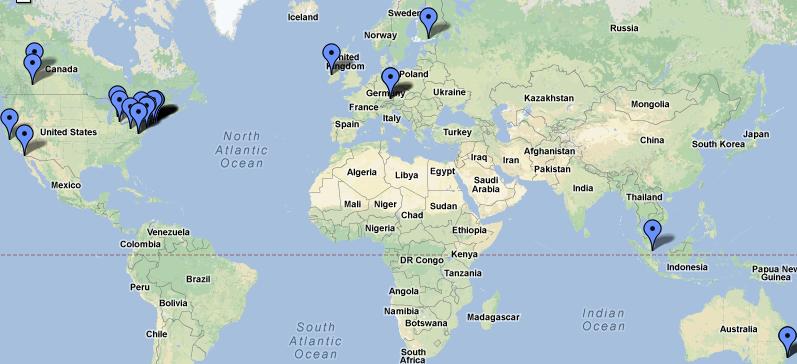
AFH map update19


India’s no to dolphinarium

Here’s some more news on India’s national aquatic animal, the Gangetic dolphin.

Last week, India’s ministry of environment and forests banned creation of any dolphinarium across the country that might attract tourists with dolphin shows or similar such commercial use of the friendly mammal, elevated to the status of national aquatic animal less than four years back.

The ministry’s Central Zoo Authority said in a circular that various state governments and tourism development corporations had been receiving proposals to develop such dolphinarium in recent years. But since India’s Wild Life (Protection) Act, 1972 says that captive animals can be kept for exhibition only in ‘zoos’ (that includes circus and rescue centres), the dolphinarium will fall under the definition of ‘zoo’.

The ministry also observed that since the endangered Gangetic dolphin is India’s national aquatic animal and a highly intelligent and sensitive species, it is morally unacceptable to keep it captive for entertainment purpose. The ministry has advised state governments to reject any such proposal for dolphinarium by organizations or agencies.

A fisherman with a Gangetic Dolphin.

A fisherman with a Gangetic dolphin.{credit}CAPGD 2010{/credit}

The Gangetic dolphin was accorded the national aquatic animal status in 2009 when the 100 million year old species was found to face the danger of extinction within the next decade if not protected ferociously.

Poaching,  accidental killing, dolphin-fisherman competition for fish, use of dolphin products, construction of dams and barrages  and pollution of the river are named as some of the biggest threats to the dolphin population.

At last count, India had around 2,300 Gangetic dolphins. The World Wide Fund for Nature had said in 2009 before any large-scaled national intervention that its population was declining at a rate of 10 per cent annually.

India then launched a decadal programme (The Conservation Action Plan for the Gangetic Dolphin 2010-2020) which noted: “Just as the tiger represents the health of the forest and the snow leopard represents the health of the mountainous regions, the presence of the Dolphin in a river system signals its good health and biodiversity.”

Here’s hoping that all the action bears fruit and makes life somewhat better for the Gangetic dolphin by 2020.

Away from home: Regenerative medicine & skiing

Every Wednesday, our ‘Away from home’ blog series features one Indian postdoc working in a foreign lab recounting his/her experience of working there, the triumphs and challenges, the cultural differences, what they miss about India, as well as some top tips for postdocs headed abroad. You can join in the online conversation using the #postdochat hashtag.

This Wednesday, we have Anand Krishnan, a PhD from the Rajiv Gandhi Centre for Biotechnology, Thiruvananthapuram, Kerala, India and currently a postdoctoral researcher at the Hotchkiss Brain Institute, University of Calgary, Canada. Anand is focusing his energies on regenerative medicine under a clinician-scientist mentor. Anand relieves his research stress in multicultural and beautiful Calgary, a place that comes with enviable perks in the form of skiing holidays and cool summers.

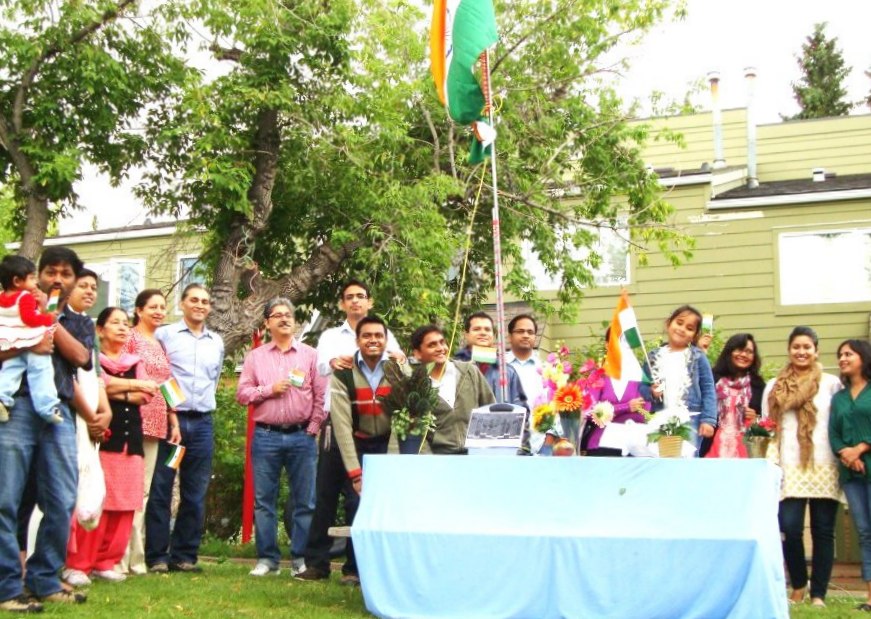
Anand Krishnan (extreme left with baby in arms) enjoys an Indian Independence Day celebration at the University of Calgary.

Anand Krishnan (extreme left with his daughter Durga in arms) enjoys an Indian Independence Day celebration at the University of Calgary family housing complex.

Long-bearded men, stuff of fantasies

To become a scientist was my innocent fantasy in early childhood. There was no specific reason behind it but just the fascinating photos of long-bearded men whom people called ‘scientists’. As I grew up, my dreams shuttled between becoming a pilot to a doctor to a businessman and so on.

I completely quit the ambition of joining medicine after my grand failure in the medical entrance exam. Confused days followed. Finally I chose pharmaceutical sciences and surprisingly found myself enjoying the subject. Thanks to my teachers for stoking my curiosity. My real interest in science developed in those days.

Cancer and regenerative medicine

Many friends advised me to practice pharmacy abroad since it meant a lot of money. But the passion for scientific research had already set in. I joined industrial R&D after completing masters and learnt how pure science meets practical needs. After two years, I joined the PhD programme at Rajiv Gandhi Centre for Biotechnology. I chose cancer biology as my research area with a strong desire to contribute to treatment. Though my PhD work didn’t offer a potential solution to the dreaded disease, I realised the need to integrate multiple disciplines to come up with effective measures.  Keeping this in mind, I chose to get trained in regenerative medicine.

Regenerative medicine is a charming field of biological sciences that studies the re-growth of organs in controlled environment and failure to re-grow or over-grow in uncontrolled environment. Understanding the re-growth potential of organs and the points of errors which stimulate them for over-growth offers insights into tumorigenesis. My current postdoctoral training under the supervision of Dr. Douglas Zochodne in Hotchkiss Brain Institute, University of Calgary addresses molecular events associated with peripheral nerve regeneration.

Great mentor, great place to work

My supervisor is a clinician-scientist and a great mentor.  A close observation of him managing clinic, lab, writing grants and articles and above all updating science itself is a motivation to trainees. Our lab has limited work-pressure but students and trainees hardly exploit the free environment. Our routine lab discussions and presentations help everyone improving the weak areas. Our building has accommodated many research laboratories of various scientific disciplines and this encourages healthy collaborations.

I find Calgary a beautiful place to live. Every day I meet amicable people around. Calgary is filled with immigrants  from many countries. Their friendliness is commendable and rare.  People here, irrespective of their homeland, imbibe the multicultural environment with true spirit.

You can go ice skating and skiing in winter. Summers are cool. You can visit all the exotic places, feel the freshness of lakes and rivers and sweat out by hiking. The University of Calgary recreational centre is an excellent place to relieve all your research stress.

Coming to terms

My old friend Bhagat in Canada helped me with my initial acclimatization in the country. Official affairs are smooth here. So that part was not difficult for me.

However, apartment rent and child care fee are too costly. And I hate the long waiting periods in hospitals and pharmacies. If you do not like cold climate, Calgary is not the right place for you. You need to pay for your car parking everywhere (except malls) though there are vast stretches of unused land all around. Calgary is too far from India. So if you are in Calgary, you are literally ‘Away from Home’!

I live in Calgary with my wife Ambika (who works as a postdoc in another lab) and our little one Durga. We have a balanced research-family life in Calgary. Life is not too difficult here. If you plan to come with a baby, make sure you have an Indian driving license. This will avoid the one year waiting period to apply for a driving license here. Winter is too cold and snowy and managing a baby without personal conveyance is difficult.  Otherwise, public transport is good and you can manage routine travel without difficulty.

For postdocs headed towards Calgary

There are many funding opportunities available for postdocs in Calgary. CIHR, AI-HS and Hotchkiss postdoctoral fellowships are a few among them.  And a recently announced ‘Eyes High’ programme by the University of Calgary offers 60 postdoctoral fellowships this year.

Here are some useful links below with information on postdoctoral fellowships for those who are interested to come to Calgary:

https://www.aihealthsolutions.ca/

https://www.cihr-irsc.gc.ca

https://www.ucalgary.ca/risingstars/postdoc

https://www.hbi.ucalgary.ca/funding/harley-n-hotchkiss-fellowship

https://hbi.ucalgary.ca/education/realise

Bike rides, beaches and banana leaf feasts, Bollywood

I miss my home, family and friends in India. I miss the marriage functions and sadhya on banana leaf (occasional feast), rain and festivals. I miss my bike rides and the weekend movies on the big screen. I miss the beaches and my mother tongue.

I am quite excited at  the way India is investing money in scientific research these days. It is my dream to have my own lab back home, a dream which is possible if I am fortunate.

Anand Krishnan joins Arghya Basu, the other Indian postdoc featured in this blog series from Canada. Find them and 21 other Indian postdocs in out interactive Away from home map pictured below and updated every Wednesday. Please feel free to suggest names of postdocs from countries and disciplines we haven’t covered yet.

AFH map update18

Away from home: Marital science bliss

Every Wednesday, our ‘Away from home’ blog series features one Indian postdoc working in a foreign lab recounting his/her experience of working there, the triumphs and challenges, the cultural differences, what they miss about India, as well as some top tips for postdocs headed abroad. You can join in the online conversation using the #postdochat hashtag.

Today,  talking about how marriage catapulted her further into her scientific pursuits is Atrayee Banerjee. Atrayee has a Masters in Environmental Management from the Indian Institute of Social Welfare and Business Management (IISWBM), Calcutta, India and was a postdoctoral researcher at the University of Missouri-Rolla. Right now, she works at the National Institute of Health (NIH) in Maryland, USA.

Atrayee Banerjee

Atrayee Banerjee

Science in the family

I grew up in an environment where education was given the top priority. My parents, specially my father, a Mechanical Engineer by profession always wanted me to study science, it started like that.  But then I got more and more interested in biology and the intricacies of it. However, with constant learning and support from my husband (a faculty member in a prestigious private university in the US), science became a part of our daily life, during my PhD here in US.

Amalgamating experiences

I completed a Masters in environmental management from Indian Institute of Social Welfare and Business Management (IISWBM), Calcutta.  I went to Texas A&M University to pursue a PhD in toxicology, where I worked on alcoholic liver diseases and then joined the University of Missouri-Rolla as a post-doctoral fellow. There, I worked on understanding the role of HIV proteins and addictive drugs in the blood-brain barrier permeability.

Currently, I am working at the National Institute of Health (NIH) in Maryland as an IRTA Fellow in the National Institute of Alcohol Abuse and Alcoholism (NIAAA). I focus on understanding the mechanism of progression of alcoholic and non-alcoholic fatty liver disease in HIV patients. My work at NIH is an unique amalgamation of my previous experiences, and thus provides me with an opportunity to carve a niche for myself.

The work-life balance

The best thing about working at NIH is you get to work with the brightest people in your field and have access to the state of the art technologies. I have always found my colleagues to be forthcoming, helpful and collegial. In my present laboratory, I have two fellow scientists who help me with my experiments. Since I am a mom to a two-year old, it is very difficult for me to work odd hours.  My mentor has been very understanding and has always helped to balance my work-family priorities.

Incidentally, my husband was also getting a PhD in mechanical engineering from Texas A&M University and we started our married life in a very academic environment. Life was sometimes a challenge, but looking back at what the two of us have achieved in our careers this far, I believe it has been very worthwhile.  There have been several proud moments in my career, most notably when I received the Novartis Fellowship from the Society of Toxicology in 2007. The Novartis Fellowship is extremely prestigious and is awarded to one-graduate student every year, from a huge pool of applicants.

Ask plenty of questions

My tips for postdoc aspirants are:

1. Make sure you know what you are getting into, what the expectations are and how long the position is funded. Ask plenty of questions, especially about your long term career growth, and make sure that your mentor is invested in your career and wants you to be successful in life and not be a life-long post doc.

2. US is a land of opportunities but you need to be careful that you end up in the right place with the right person.

3. You would need to follow the mantra of “publish or perish”.

4. Most importantly, plan to attend conferences so that you can network with people.  I have been lucky to have worked with people who are extremely helpful and allowed me to publish extensively.

To all young people reading this blog, please keep in mind that education is a marathon race. Do not let a few individuals discourage you or a few lack of opportunities distract you from your ultimate goal. We never know what life has in store for us but please be true to yourself and make use of the opportunities that life presents to you. Hard work and perseverance will always pay off. Do not let negativity surround you and stop you from achieving things in life.

Miss long holidays

In the US there are very few public holidays, so I sometimes miss the long Christmas or Puja vacations back home.

I miss Indian food, the clothes and the constant buzz of people. India is both perfect and imperfect in its own way and I miss the warmth of  family, neighbours and friends that I enjoyed back at home. I believe I cherish them more now than I used to when I lived back in India.

I would love to come back and start working in India. However, both my husband and I have advanced (PhD) degrees and it may be difficult for us to find suitable lines of work and good opportunities at the same place in India. But we would certainly like our 2.5 year old son (Adwik) to grow up to learn and appreciate his culture.

Atrayee Banerjee joins the large number of Indian postdocs from the east coast of US in our interactive Away from home map. Find her and 21 other Indian postdocs from around the world in the map pictured below and updated every Wednesday. Please feel free to suggest names of postdocs from countries and disciplines we haven’t covered yet.
 AFH map update17

Away from home: Mastering industry-academia links

Every Wednesday, our ‘Away from home’ blog series features one Indian postdoc working in a foreign lab recounting his/her experience of working there, the triumphs and challenges, the cultural differences, what they miss about India, as well as some top tips for postdocs headed abroad. You can join in the online conversation using the #postdochat hashtag.

Today we have Dilraj Lama, a PhD from the Indian Institute of Technology, Kanpur and a postdoctoral research fellow at the Bioinformatics Institute, A*STAR, Singapore. Dilraj is having a great time with biological modelling and simulation experiments as he seamlessly blends in with the local community owing to similar facial features. Exposed to a healthy multi-disciplinary work team, he is also learning important lessons in industry-academia linkages early on in his research life.

Dilraj Lama

Dilraj Lama

Switching between sciences

Learning has always been like a journey for me. I opted for mathematics over biology as my major during schooling, went for engineering thereafter, and guess what? I did a PhD in biological sciences! So it has never been a conscious effort on my part to be in any particular area. Looking back, I was always a bit curious and that might have driven me towards a carrier in science.

Molecular modelling

After completing a PhD from the Indian Institute of Technology, Kanpur, I was looking for an appropriate laboratory for postdoctoral training and Dr. Chandra Verma’s work at the Bioinformatics Institute, A*STAR, Singapore, caught my attention. He uses a computational approach corroborated with extensive experimental collaboration to address biological problems and he has made significant scientific contributions over the years. I was very keen to join him and today I work as a postdoctoral researcher with him.

My primary focus is designing and modelling of peptide-based inhibitors against biomolecular targets whose malfunctioning gives rise to pathological conditions. I use the computational approach mostly involving molecular modelling and simulation for my research. The work is done in extensive collaboration with an experimental group which complements our approach and validates the designed models. We are working towards developing high-affinity inhibitors which are biologically active and hence will have the potential to expand into drug molecules.

Multi-discipline potpourri

We have people working in different areas which provides an excellent opportunity to broaden my scientific skills. The work culture in the group is very positive. Besides, we also get to interact extensively with other scientific groups, meet eminent scientists, organise talks and events, all of which are an integral part of postdoctoral training.

Singapore is very close to home which is very comforting. It has an exceptional infrastructure, cleanliness, warm people, boundless cuisines, great tourist destinations and is a prime location to explore South-East Asia. I am also told that it is the sixth least corrupt nation in the world. Now, how cool is that!

Making the switch

It was a very smooth transition for me, primarily because of the people I came in contact with during the initial days. There have been several interesting incidents but one of them stands out. I come from the north-eastern part of India where the physical features of people are similar to Singapore locals. During my search for an apartment with an Indian agent (who looked more Indian to the locals), the owner asked me for my badge mistaking me for the agent and him for the prospective tenant. It was hilarious and we had a hearty laugh when the matter was clarified.

Singapore is overall a great place to be. Yes, it is not perfect. Naturally there are issues at hand.  But I believe it’s all about how you deal with it and make it work for you.

Successful industry-academia linkages

One of the things that post-doctoral researchers can learn from training in Singapore is the intricate worki culture between industry and academia. It is a very nice place for collaborative research since one of the prime conditions for funding here is that the work has to be cooperative in nature. It will also be an attractive destination for people who are interested in product development also known as applied science.

Home is where the heart is

Home is where the heart is, they say. I stand by that and nothing can substitute the feeling of being in close company of your near and dear ones. I do look forward for an opportunity to come back and work in India.

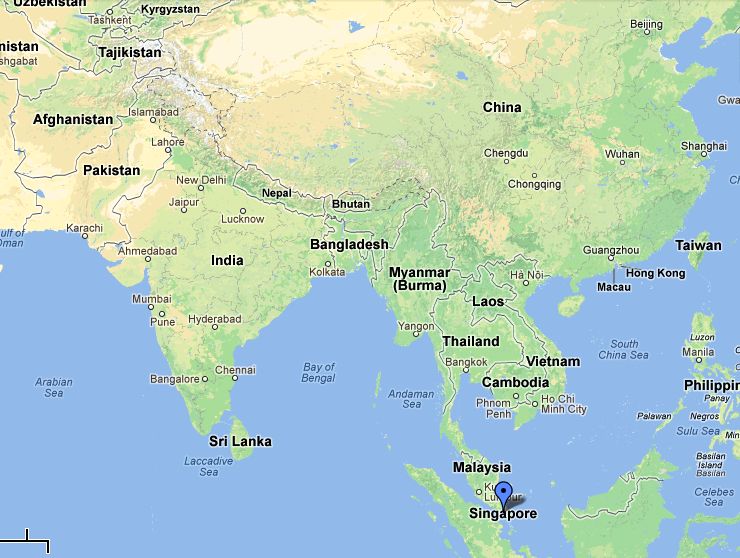
Dilraj Lama gets us the first flag post from Singapore (in fact, from the whole of Asia!) in our interactive Away from home map. Find him and 20 other Indian postdocs from around the world in the map updated every Wednesday (a snapshot showing Dilraj Lama’s flag below). Please feel free to suggest names of postdocs from countries and disciplines we haven’t covered yet.

AFH map update16