‘Visualising Science’ workshop to arm scientists with visual tools

Visualising ScienceWhen was the last time you didn’t pep up a written message — a text, an email or a social media post — with an image, a video or, in the least, an emoticon? Speaking to friends, family, peers, colleagues and even your boss, clearly isn’t anymore about dry, plain words.

These small examples actually point to a major shift in how our means and methods of communication have evolved. And so, should science communication — which lends itself naturally to pictures and graphics, figures, illustrations and images, videos and virtual reality — lag behind?

At Nature India, our constant endeavour has been to equip Indian scientists with the best and most effective ways of communicating. Which is what triggered a series of science communication workshops last year, co-hosted with the Wellcome Trust DBT India Alliance. Our annual photo contests (1, 2, 3) and most recently the FameLab India event, which we partnered with the British Council, for young science enthusiasts have been in the same vein — attempts to train, recognise and raise an army of effective science communicators that this country needs.

Taking one step further, Nature India now announces India’s first ever comprehensive science visualisation workshop called ‘Visualising Science’, again in partnership with the Wellcome Trust DBT India Alliance and the National Institute of Immunology (NII), New Delhi . The two-day event beginning March 30, 2017 at NII includes a science photography workshop with hands-on training. Participants will have stimulating sessions with an infographer, an illustrator a film maker and a virtual reality expert.

The workshop is set around a photo exhibition of the top 10 entries from Nature India Photo Contests and other visual art and science display. The event intends to introduce PhD students and researchers to visual tools and methods that make science communication more effective and interesting.

We will take in a maximum of 60 participants based on their real interest. If you are keen to join this grand visual experience, please register online before March 17, 2017 here: https://bit.do/visualisingscience.

Nature India partners with ICRISAT for InterDrought-V

Cover InterDrought-VNature India is proud to be associated with the International Crops Research Institute for the Semi-Arid Tropics (ICRISAT) as media partner for the fifth edition of the InterDrought conference being held in Hyderabad (February 21-25, 2017).

The conference brings togther experts from across the world to debate key issues in improving drought and other stress tolerance in crops. Scientists from around 56 countries will come together to explore the possibilities of scientific and technological applications in crop improvement.

ICRISAT Director General David Bergvinson says the conference will bring together the disciplines of plant and crop physiology, genomics, genetics and breeding. It will talk about recent advances in these fields related to plant responses to water deficit and climate change, phenotyping and genetic variability.

According to the conference chair Rajeev Varshney this is the largest conference in the InterDrought series with 850 participants from 56 countries. Earlier conferences in the series habe been held in France, Italy, China and Australia.

Nature India put together this cover for the abstract book depicting the three important elements of the drought story — the starkness of drought, its deep impact on humans and the science-driven solution to meet the challenge — drought-resilient crop varieties.

Here’s Nature India‘s editorial for the conference abstract book:

Looking for a Plan C in water-scarce times

An issue that stirs emotions among scientists, policy makers and the general public alike is ‘water’. Or, in the present times, the lack thereof.

In these water-scarce times, in India, as in many other parts of the world, the issue of groundwater depletion is a subject of concern and serious study. And so, apart from the parched patches that the world inherited from the 20th century, we are looking at times of new aridity triggered by plummeting groundwater tables. It’s actually a vicious circle – news studies are now suggesting that excessive pumping of water for agriculture may not be the reason behind the plunging groundwater levels after all. Long-term changes in monsoon rainfall could instead be influencing this, and that in turn is forcing farmers to dig deeper for water.

Why this preamble on water? Especially when water-scarcity is an issue almost embedded in the DNA of scientists attending InterDrought conferences.

Essentially because it’s nice to take a step back once a while and look at the larger canvas. For scientists and technologists working on a Plan B to counter drought – that is, to still be able to grow nutritionally-rich, drought-resistant crops – these conferences are a wonderful reminder of the big picture. Interestingly, InterDrought-V is hoping to be the largest such congregation in recent times with over 850 scientists from around 56 countries. This provides a canvas bigger than ever before to create new milestones, fortify strategies that have worked so far, and solemnly bury the ones that don’t work so well in the changing climate scenarios.

The Nature Research Group devotes significant energies to the coverage of the “Grand Challenges”, which include our coverage of climate, water and food – issues that resonate well with InterDrought-V. Nature India, a showcase of India’s science, is proud to be associated with the conference as its media partner. We hope that the conference, bringing together the who’s who of the discipline from across the world, will identify issues and concerns to evolve a futuristic Plan C for drought-friendly agriculture.

Away from home: Visa tips for postdocs to US

Here’s bringing you a new story in the ‘Away from home‘ blog series. In this series, we feature promising young Indian postdocs working in foreign labs. The postdocs featured here recount their experience of working in foreign lands, the triumphs and challenges, the cultural differences and what they miss about India. They also offer useful tips for other Indian postdocs headed abroad. You can join their online conversation using the #postdochat hashtag.

Our ‘Away from home’ interactive map now features 44 bright Indian postdocs from around the world. Please feel free to suggest names of postdocs from countries and disciplines we haven’t covered yet.

Today, it’s Sneha Rangarajan, a postdoc at the Institute of Biosciences and Biotechnology Research, University of Maryland, USA. Sneha completed a masters in biotechnology from the Lokmanya Tilak Municipal Medical College in Mumbai, India before enroling in a PhD programme at SUNY Albnany, New York. She offers some some practical tips to postdocs in times when there have been concerns about visas to the US.
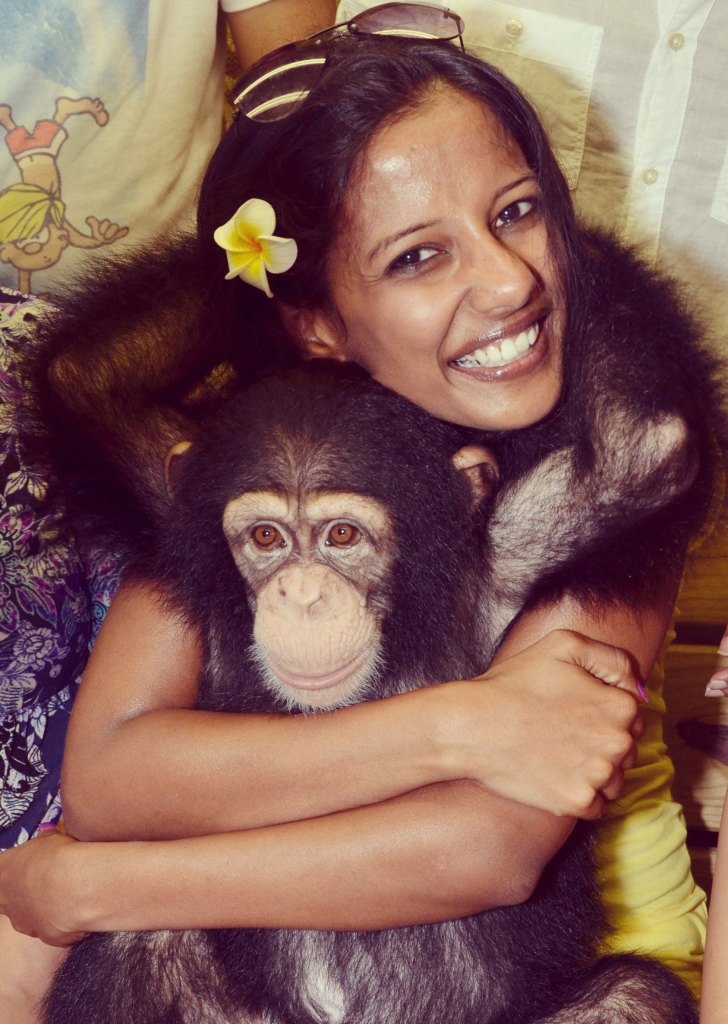
Sneha Rangarajan

Sneha Rangarajan

Biotechnology: A fascinating cocktail

It was that time of my life when I had to make a career choice after 12th grade – a choice between the “popular” like IT/engineering, especially since my grades would get me into a good programme, or the new bachelors programme in biotechnology that our college had just introduced. I chose biotechnology simply because it seemed like a fascinating cocktail of my interests and I didn’t want to do choose a career just because everybody else was choosing it. During the three years of bachelors programme, I learnt a lot about molecular biology principles which made me realize that I took the right decision. Later, I did a masters in biotechnology from Lokmanya Tilak Municipal Medical College in Mumbai.

It was around the same time that I became aware of the US as a land of opportunities for the field I had chosen. Several of my senior colleagues had enrolled in PhD programmes doing cutting edge research on topics I had studied only in theory. I also learnt that if you get accepted in a PhD programme your tuition fees most likely gets waived. This was a very important piece of information since I did not want my father to spend an enormous amount of money on my education abroad.

Another key factor was my parents’ permission to let me go to the US considering I had never stayed away from home and was now talking about going thousands of miles away. I still remember how pleasantly surprised I was when my dad said if it is for education and the prospects of a bright future, he would be happy to let me do so. And that is how I reached Albany, New York.

Turning theory into practice

I remember being truly excited over actually performing a PCR, something I had learnt only in theory. With my masters in India, I had a solid background in the basics of molecular biology and biochemistry.

As it turned out, I could transfer credits from similar courses I had taken in the Indian university. Not many people are aware of this possibility but it is a huge time saver! You can bypass the same courses and spend time and effort on learning new and interesting things instead. I transferred almost all of my basic courses and was able to enroll directly in advanced level courses in the first year itself. I joined Dr. Joachim Jaeger’s lab of crystallography, where I learnt a great deal of analytical skills along with the ‘art of troubleshooting’.

After PhD, I moved to the Institute of Biosciences and Biotechnology Research, University of Maryland, for a postdoc with leading structural immunologist Dr. Roy Mariuzza. My work focuses on vaccine development against Hepatitis C virus (HCV). I express and purify various HCV antigens from mammalian cells to identify the best candidates with increased neutralization potency against the virus.

I like the diversity in my work place and the fact that you get to learn a little bit about languages and cultures across the world. One thing I absolutely like about this country is that you could major in music and biology at the same time or could to university at 50 and nobody will raise an eyebrow. You are limited only by your own imagination!

Of ‘Good Mornings’ and weather shocks

The transition into a new culture and environment was made easier by the people around me. My PhD mentors were kind and helpful, always going out of their way to help students, especially the international ones, in adjusting to the new environment.

Moreover, I always found it interesting to discover differences – be it in the English language or the professor-student relationship or the norms of interaction in society, all of which differ from what we are used to in India. I still remember my experience taking a bus to the University campus where the bus driver politely greeted me with a “Good morning” as I got in and people thanking him as they got down. I liked the idea and imagined how it would be if I did this in India (would this make his day?).

However, depending on which part of USA you are coming to, you could be in for a major “weather shock”. I personally prefer the cold but sub zero temperatures may not be everybody’s cup of tea.

My postdoc tips

  • If you have an idea about what you want to do research-wise and have been unable to achieve that because of lack of means, then this is the place to be. In USA, there are tremendous opportunities and it is up to you how you use it to achieve your goals.
  • One practical visa tip in these times when there have been some concern about visas to the US. I am not sure if many of you know but you can now extend your Optional Practical Training (OPT) to as much as 24 months as opposed to the 17 months earlier. You can do that by using the Science, Technology, Engineering and Mathematics (STEM) extension. When I finished PhD, I did not get my OPT extended using STEM extension because I wasn’t aware of any advantages to doing so. But now, looking back, I can tell you that it was a mistake. Extending your OPT gives you the option of switching to an industry job if you so desire without worrying about a H-1B visa since the company doesn’t have to file for your H-1B until those 24 months. If you choose to continue in academics, it serves to increase your time in the US since you now have those 2 years plus your H-1B tenure.
  • Don’t wait for an advertisement. I did not. Just email the investigator whose work you like and describe how you would be a good fit to his/her lab and if they have the funding, you may just get accepted, like me!
  • Don’t be afraid to apply to labs that don’t exactly match your previous work. As long as you have a genuine interest and willingness to learn, people are usually open. Try to widen your skill set, that way you also broaden your future opportunities.

On returning home

I take one step at a time. For now, I see myself being here and making a mark in my research field. We are making huge strides in the field of vaccinology and if things go as planned, we should be able to enter clinical trials for the HCV vaccine in the next couple of years. Also, at this point, the infrastructure for my line of work is not very developed in India but who can say, in a few years things might be different.

As of now, I do miss my family and the street food. While there are a tons of Indian stores and restaurants that continue to surprise me with the variety, nothing can beat the vada pav or chaat from the streets of India!


Nature India Photo Story: The kingfisher feeds

Chuffed with the response to the annual Nature India Photo Contests (1, 2, 3), and humbled with the number of requests we get to publish photo stories, we are happy to start a blog series called the ‘Nature India Photo Story‘. The series will accept photo stories that explore the realms of science, wildlife, environment, health or anything that smells science.

For our inaugural post in the series, we feature Deepak Sahu, one of the winners of the Nature India Photo Contest 2016. Deepak, a Bhubaneswar-based IT professional with a passion for photography and travel has captured intricate details of the feeding behaviour of kingfishers in a series of telling pictures.

The kingfisher feeds

By Deepak Sahu

Kingfishers generally hunt by sitting on a high perch and keeping a watch on the surroundings for potential prey. They usually chose a perch around lakes, ponds, rivers and even farming fields. Once a kingfisher spots a prey, it swoops down and seizes it in its bill to return to the same perch or another one nearby.

Kingfishers not only eat fish but a wide range of foods. These may include invertebrates like worms, centipedes (above), insects (below), molluscs and crustaceans. They also eat vertebrates like amphibians, reptiles and mammals.

When they catch a fish, they casually toss fish into the air to reposition it for swallowing head first. They sometimes beat big fish to break their spine, which might otherwise cause harm to the bird when swallowing.

In this picture sequence (clockwise from left) a white-throated kingfisher is shown tossing its kill and then swallowing it.

1

{credit}Deepak Sahu{/credit}

I shot these pictures at Kanjia Lake near the State Botanical Gardens, Bhubaneswar, Odisha. I visit the place frequently for its rich faunal activity. One can see many species of birds like cormorants and ducks during the winter migration time, kingfishers, jacana, moorhens, peafowl and animals like snakes, langurs, mongoose and monitor lizard.

Wildlife and nature photography has helped me admire raw nature. It gives me an immense sense of unwinding and peace. It has also increased my knowledge about animal behaviour and their habitats. Wildlife photography has allowed me to explore a lot of new places and see wild animals I thought never existed.

I try to capture moments which I may never see again. Photographs immortalise those moments and also bring awareness towards conservation of many wild species.

You can follow this blog series online with the hashtag #NatureIndphotostory. If you have a photo story to tell, email your high resolution entries with a short narration and a couple of lines about yourself to npgindia@nature.com with the subject line “Nature India Photo Story”. If it appeals to our editorial team, your photo story might get featured on this blog.

Finding job satisfaction in industrial research

Let’s talk career with Naturejobs

Every week, Indigenus brings you some interesting and relevant posts from sister blog Naturejobs, a leading online resource for scientists in academia and industry who seek guidance in developing their careers. The blog delivers a mix of expert advice and personal stories to help readers review, set and achieve their career goals.

Today we have a guest blog by Shikha Mishra, who after a PhD and postdoc studying the cellular mechanisms behind cardiovascular disease, decided not to continue in academia. She found she could still do the work she loved at the bench by doing product development research at Thermo Fisher Scientific.

Shikha Mishra

Shikha Mishra

Why did you decide to go into research?

I decided as a very young girl that I would be a scientist. I chose Johns Hopkins for college because I knew it gave undergraduates research opportunities. The question wasn’t whether I was going to graduate school, it was what I wanted to do and what I wanted to study.

What do you do now?

I design experiments, I set up experiments, I analyze the data, I present the data. We are doing work that is on par with academia.  I have to be on top of the field, to understand what people are doing and what they want to do.

Did you consider academia?

My postdoc advisors at Harvard Medical School wanted me to be happy ultimately, but they were encouraging me to stay within the academic realm. They had volunteered to be my mentor on a grant.  My fiancé and I did have discussions about whether I should stay in Boston to work toward junior faculty, but he had a steady job in San Diego. It didn’t make sense to have one unemployed person and one (salary-wise) half employed person. It would be hard to support and start a family.

How did you find the job you have now?

One of the ways that I got my resume floated was that I knew someone who knew someone and people would offer to send it on. But in the Thermo case, that’s not how it happened. I applied for the position when I saw it on LinkedIn, and then I followed up by emailing a contact on LinkedIn, a senior manager that popped up on my feed. looked up his actual email and sent him a note.

Tell us about your job interviews.

One place wanted someone with my qualifications and skill set, but they wanted a technical person who would run a core facility, to do the same experiment every day. It was clear that I would get bored the first week. I told them what I was proud of in my post doc. It wasn’t the papers, it was problem solving, and being able to push myself outside the box. They immediately asked me if I would I be okay doing the same thing every day, and I thought ‘no, absolutely not’. I could have said that I would love that, but that would have ended up with them having a disgruntled employee.

An interview is really about you. If you misrepresent what you like to do and what’s important to you, you will not get a job that’s right for you.

I learned not just to go and stand in front of people and say ‘I know how to do this experiment.’  At my job talk at Thermo Fisher, I explained what problems I ran into in my research and how I got around them. That’s what industry is all about, knowing when to move forward and when to change direction. I showed that I was happy to work on any problem I was confronted with and could innovate. I think my manager responded well to that.

What advice do you have for other trainees looking for jobs and getting discouraged?

For every scientist, 70% of your experiments are nonproductive and you just struggle through it. A job search is similar. Making sure that you don’t lose your confidence is really important. And several colleagues said doing anything worthwhile takes time. Finding the next step to your career is not going to happen overnight. And if it does, it may not be the thing that is right for you.


Suggested posts

Finding job satisfaction as a science liaison

Finding job satisfaction in technology transfer

Finding job satisfaction in research development

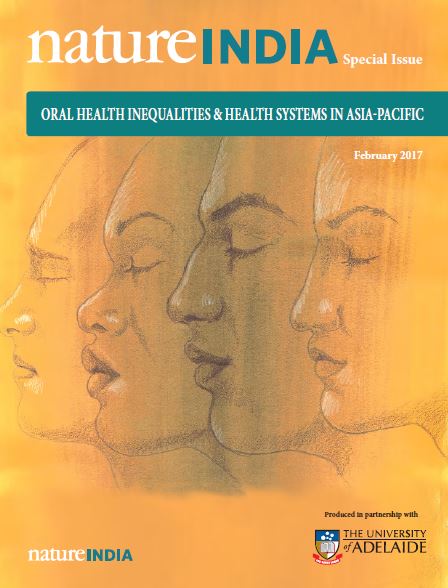
Nature India Special Issue: Oral Health Inequalities and Health Systems in Asia-Pacific

coverNature India is releasing a very timely special issue today in collaboration with knowledge partners University of Adelaide. The special issue on ‘Oral Health Inequalities and Health Systems in Asia-Pacific’ is a ready reckoner of the state of affairs and trends in oral health inequalities in the region. The issue hopes to be of great value to the region’s policy makers, health professionals, the oral health industry and general public.

The special issue has 12 articles and an editorial by the who’s who of oral health research in the region. The authors of these articles are senior academic or policy personnel, who in their own right have made a significant contribution to oral health research both globally and in the Asia-Pacific Region.

Here’s a brief summary of the special issue:

This special issue is a unique effort to address key challenges facing oral health inequalities and health systems in the Asia-Pacific region. A group of experts and leaders have authored pieces to strengthen the “call for action”. Based on the London Charter for Oral Health Inequalities, the special issue stresses the importance of advocacy on oral health inequalities in the region. The issue calls for an agenda further to strengthen essential aspects of health systems, such as dental workforce, service delivery, organisation of care, health financing, governance and leadership.

Asia-Pacific is home to about half of the world’s population. It is a diverse community with deep historical roots, comprising of 38 countries. Health is an intrinsic aspect of economic development in the region, and central towards achieving the global Sustainable Development Goals. Oral health is essentially the health of the mouth and adjacent structures.

Tooth decay, gum disease and tooth loss rank among the most common diseases (or conditions) in the world. The cost of treating oral diseases are high and occupy a large proportion of the overall expenditure on health. For example, direct treatment costs due to oral diseases were estimated at US$298 billion a year globally, corresponding to an average of 4.7% of the global health expenditure. Even though oral diseases are preventable, oral health is a neglected component of health and oral health care is given low priority in most heath care systems. There is an urgency for collaborative efforts among researchers, policymakers, public health practitioners, clinical teams and public, so as to improve oral health in the Asia-Pacific.

You can download the special issue here.