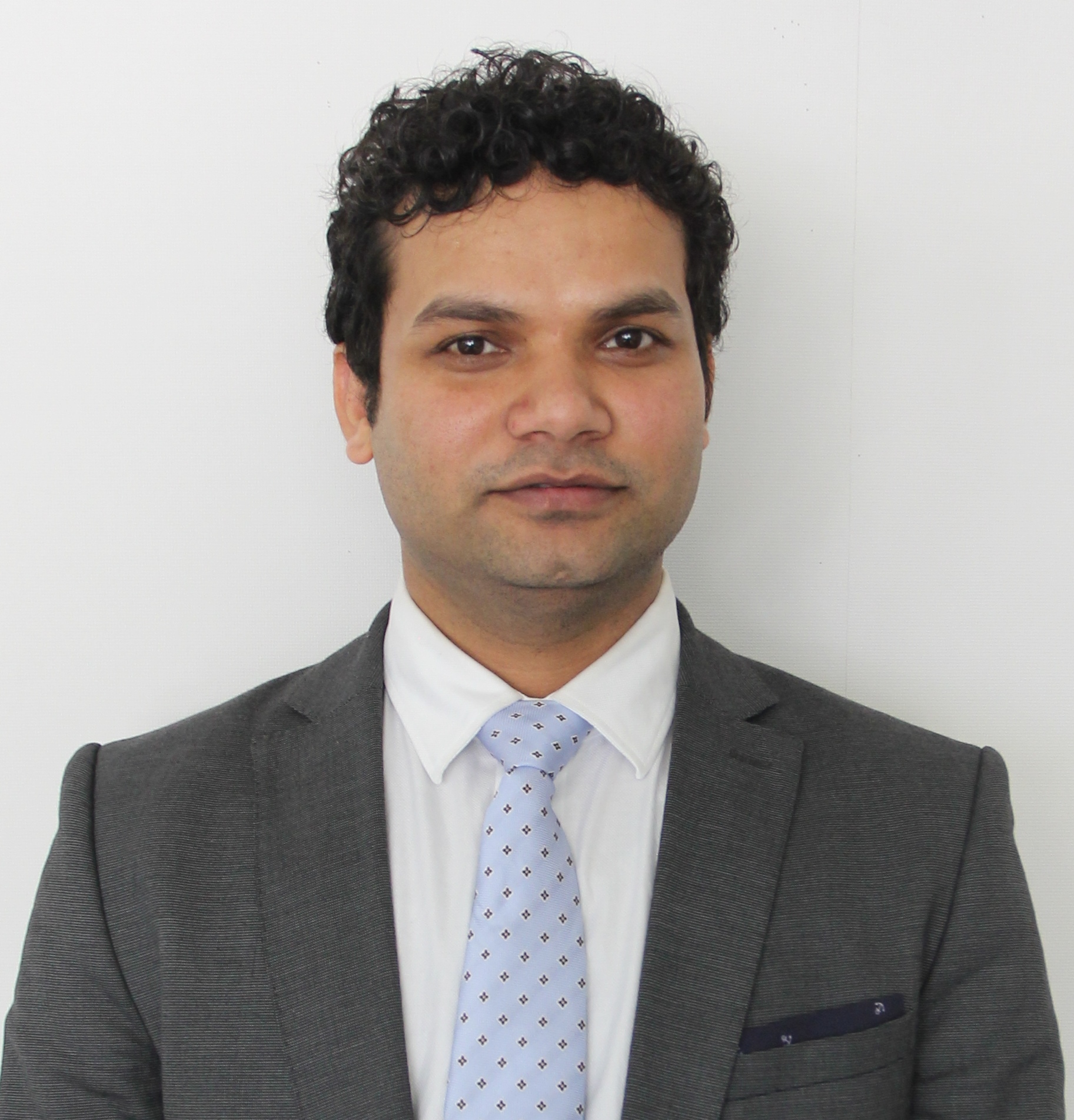
Away from home: Making graphene flakes in a kitchen blender

The ‘Away from home‘ blogging series features Indian postdocs working in foreign labs recounting their experience of working there, the triumphs and challenges, the cultural differences and what they miss about India. They also offer useful tips for their Indian postdocs headed abroad. You can join in the online conversation using the #postdochat hashtag.

Today’s blog is in the ‘breaking news’ category where Varrla Eswaraiah, a postdoctoral researcher at Trinity College Dublin, Ireland shares the excitement over his lab’s recent paper published in Nature Materials. Eswar, an alumnus of IIT Madras, tells us all about making graphene flakes in a kitchen blender and the possibility of replicating it on a mega scale. He tells us about his humble beginnings from a small village in Andhra Pradesh and how he struggled against odds to pursue his passion for science.
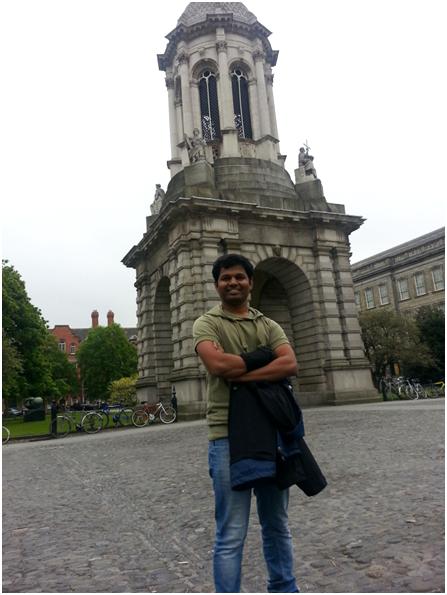
Varrla Eswaraiah at the Trinity College Dublin.

Varrla Eswaraiah at the Trinity College Dublin.

Whipping it up

Right now, we are excited about our new work at Prof. Jonathan N. Coleman’s lab in the School of Physics and CRANN at Trinity College Dublin, where I am a postdoc researcher. The reason for excitement is the result of some new experiments at our ‘Chemical Physics of Low dimensional nanostructures’ lab. The results, just published in Nature Materials are from a very simple experiment: we took graphite and put it in a kitchen blender with wash-up liquid, and turned it on. After sometime, we got graphene flakes. This works from a few milliliters of liquid to hundreds of liters and is technologically feasible to replicate on a large scale. The idea of taking graphene from the lab to industry is successfully achieved with our proof of concept. It will be useful in printed electronics and nanofillers for making super strong polymer composites and in many other applications that one can imagine.

Graphene is a wonder material with superior physical properties. It is basically few atoms (~1 nm) thick and is two dimensional with great electrical conductivity, superb strength (more than steel), transparency (98%) and exceptional thermal conductivity. The discovery of graphene with unusual electrical properties got the Nobel Prize in Physics for researchers at Manchester University in 2010. Now the world is working on commercialising this wonder material for real world applications.

Hunger pangs to craze for invention

For me, the fascination for science started alongside hunger pangs back in 1995 when I was a fifth grader. My parents were labourers, working every day from morning to evening. Since they did not get a chance to go to school, they wanted to give me good education with their savings. My primary school teacher recognised that I was good at mathematics and conveyed it to my parents. That was the first step, and my love towards science has never waned after that. However, my brother had to sacrifice his education due to lack of money.

When I got a 2nd rank in the common entrance test for a masters in physics at Sri Venkateswara University Tirupathi, I realised my potential in mathematics and physics. The professors at the university encouraged us towards research. Tirupathi is close to IIT Madras and we wrote all our competitive exams in physics there. We got an opportunity to visit the laboratories of the Indian Institute of Science, Bangalore and seniors would explain to us the science behind their research. That inspired me to take the GATE exam.

The environment at SV University was healthy and competitive — we discussed mathematical physics and solved problems to remember the concepts of physics. That got me into a PhD programme at IIT Madras.

Though I didn’t choose science, it chose me, and now I enjoy it. The best thing I like about science are experiments and inventions — I’m crazy about cracking it before anyone else can. My PhD was on carbon nanotubes and graphene nanomaterials under the supervision of Prof. S. Ramaprabhu, who introduced me to the world of carbon. I am grateful to him for inculcating discipline and time management in my research. He would start work at the lab at 8 am. One day, I was late and he told me, “If you want to grow in your career, you need to have self-discipline.”  I have never forgotten those words. The IIT Madras campus was awesome with the black buck deer roaming everywhere, Gurunath’s tea and the Electrical café.

PhD days were tough but I tackled moments of frustration with patience. If you don’t get frustrated at some point in your PhD, you will not realise the importance of the work. Research is ‘try and try, don’t cry’. I was actively working on carbon nanotubes and polymer nanocomposite for my PhD. Alongside, I was working with Prof. Krishnan Balasubramaniam on an IITM-US Air Force project for developing strain sensors. This is when I got an opportunity to visit the Northwestern University, Evanston campus and got an exposure to international research.

While writing my PhD thesis, I sent an email to Prof. Coleman for a postdoc position and got an interview call. I chose the Coleman lab because the group works on one-dimensional and two-dimensional materials and publishes in high impact journals.The ultimate aim of any researcher is to get recognised in his field and do useful science. I found that with this group. I  got a positive response and joined the lab as a postdoc.

Easy going Ireland

The best thing about Ireland is its easy going people. Dublin is one of the best places to live in and roam around.  I use the weekends to visit the beautiful counties with friends. Irish weather is great — you see winter, spring, summer and autumn in a single day!

When I landed in Dublin for the first time, it was raining and cold at 5 degrees celsius, way too chillier than Chennai, where temperatures are above 40 degrees celsius. There were big containers of Guinness beer everywhere just like petrol/diesel tanks in India! Since I am from a lower middle class family, I hesitate to drink and spend money over it. Here, everyone starts drinking from Friday evening till late on Sunday night! On the 5th day, my supervisor invited me to a send off party for a colleague at the bar in college. Everyone got beer and I got coke. One can’t drink too much coke but I counted everyone drinking more than 5 litres of beer! Later that night I called home and narrated the amazing story to my mom.

There are many similarities between India and Ireland — in fact our flags have the same three colours! There are Irish Telugu Associations and organisations here celebrating Ugadi, Diwali and almost all other Indian festivals with south Indian food and cultural programmes. So there is small India here!

Trinity college is a historical seat of learning and science with its Book of Kells library, which celebrated 350 years recently. My lab is a mind blowing mix of nationalities with lovely people from Ireland, Scotland, Australia, Germany, India, Pakistan, China, Romania and more. Prof. Coleman is an exceptional, world famous graphene research scientist.

Difficult accents, expensive living

The English accent in this country is a bit weird. Sometimes it is hard to understand.

Dublin is well developed but if one visits the countryside, there are very few people and most  houses are empty. People have either migrated to Dublin or left Ireland due to unemployment. Another worrying thing is the cost of living, it is very difficult to live here if one is not earning sufficient money. Much of the property is held by the banks, which borrowed money from other countries to build them. The buildings remained unsold for a long time and the country went into recession.

Postdoc tips

Indians do have a great opportunity here as postdocs in science and engineering fields. The good thing is if someone has the potential, it doesn’t matter where they are from. This country encourages them to grow further and help its national economy. My advice to Indian postdocs is to take decisions at the right time and look at labs that will help them grow in their research goals.

Village memories

I miss my home and family at Raithunagaram village in Nandyal, Andhra Pradesh. My family lives in the small, culturally-rich village with a population of 1500 and green rice fields all around. My parents came to this village from another far-off forest area called Nallamalla, where people don’t even have the basic amenities of life.

I know there’s stiff competition for a research job in India. But I am enthusiastic to start a science career in my homeland. India is a great nation with excellent human resources and intellectual property. All we need to do is create good work environments and be more productive.

I am very keen on propagating science education in rural India. Whenever I go home, I carry science gadgets, tool kits and do-it-yourself stuff for school kids in my village and explain to them the underlying science. They love it. I got a solar cooker model kit and a wind turbine model from science museums in London and Singapore for primary school students. They assembled these models and experienced first hand how these gadgets work. The important thing is: we need to teach kids when they are supposed to learn, not later.

Varrla Eswaraiah joins 36 other Indian postdocs already featured on this blog. Our ‘Away from home’ interactive map marks all these bright Indian postdocs from around the world. Please feel free to suggest names of postdocs from countries and disciplines we haven’t covered yet.

Film on scientists gets national award

Featured on this blog earlier for its powerful narration of the life and science of India’s celebrated scientist triad Bose-Raman-Saha, The Quantum Indians has now won India’s National Film Award as the best educational film of 2013.

Raja Choudhury

Raja Choudhury

The Quantum Indians written and directed by Raja Choudhury celebrates the lives of India’s three great yet almost forgotten scientists Satyendra Nath Bose, Sir C V Raman and Meghnad Saha. The national award jury has chosen the film “for an extremely efficient and precise analysis of the contributions of three renowned scientists in a manner that not only educates today’s generation but also provides insights into complex scientific phenomena in an accessible manner.”

The film tells the compelling and inspirational story of three amazing Indians who revolutionised the world of quantum physics in the 1920s giving us Bosons, The Bose-Einstein Statistics, the Raman Effect, the Saha Equation and India’s first and only Nobel Prize for science. Their work was also responsible for building the science infrastructure upon which much of India’s future was built.

Raja says he wanted to inspire the young people of India and help restore their interest in basic science as an essential and rewarding career path today. To take the message to the youth, the film is now being shown around the world at Indian embassies and cultural centers, in academic institutions, on TV, on the Indian Diplomacy Youtube Channel and on DVD by co-producers Public Service Broadcasting Trust (PSBT).

Raja is now making another science-based film called The Indian Mind that looks at the great inventions and ideas that India has given to the world — from the cotton of the Indus Valley, from the ‘Zero’ to the Bosons and the quest for Mars.

Congratulations to the team of The Quantum Indians and here’s hoping the film influences some young minds and redirects them towards the glory of basic sciences.

Away from home: Of ‘small’ things & big

The ‘Away from home‘ blogging series features Indian postdocs working in foreign labs recounting their experience of working there, the triumphs and challenges, the cultural differences and what they miss about India. They also offer useful tips for their Indian postdocs headed abroad. You can join in the online conversation using the #postdochat hashtag.

In this blog, Sivasankaran Harish, an alumnus of the College of Engineering, Guindy, Chennai and a postdoc researcher at Kyushu University in Japan tells us about making the most of the opportunities life throws at us. Harish’s other fascinating experiences at CERN on the Franco-Swiss border; Stanford University, USA and The University of Tokyo, Japan have taught him an important lesson: “Believe in your instincts, build on your strengths, but most importantly, focus on your weaknesses.”

Sivasankaran Harish with wife Sowmyaa at the Nagasaki Atomic Bomb Museum in Nagasaki, Japan.

Sivasankaran Harish with wife Sowmyaa at the Nagasaki Atomic Bomb Museum in Nagasaki, Japan.

Small is fascinating

I am particularly fascinated with ‘small’ things. I always liked looking at biological cells using an ‘optical microscope’. So medicine/microbiology should have been an obvious choice of study. However, I wanted to study mechanical engineering going by ‘my instincts’.

The fascination for ‘small’ (scientifically the relevant term now is ‘nano’) things remained but I did not know how to pursue it. Sometimes I thought it was just another childhood interest, just the way I wanted to play cricket like Sachin or Warne.

I studied engineering with limited interest for more than two years. During that time, a lecturer from my alma mater Dr. Albert Bensely asked me to work in his research work on cryogenic treatment of metals. I agreed without much of an interest on the topic. But it helped me work again at an advanced level of ‘microscopy’ to understand properties of materials. It was a difficult but I liked it more than my course work.

Starting to read relevant literature, I realized that small/nano was not just a medical term but had wide implications in the field of engineering. Being naturally inclined towards thermal sciences, the idea of exploring thermal properties at nanoscale was interesting. (I still wonder why Dr. Bensely asked me to work for him ignoring the many top ranking students in my department at that time. I would have ended up doing a normal job and would have had a huge bank balance now, if he didn’t ask me to join him!).

I completed an undergraduate in mechanical engineering at College of Engineering, Guindy, Chennai. Unlike most classmates, I was not interested in working in an IT firm. My interests were in higher studies but I failed to clear the qualifying GATE or CAT examinations. Eventually, I ended up working in a small control valve design firm in Chennai. The job was easy and I had plenty of time to think about further studies abroad. I was interested in going to Europe, especially to The Netherlands. The decision was not well received by my family members. However, I was fortunate to get full financial assistance for a masters degree programme from many reputed US universities and also from Eindhoven Institute of Technology, The Netherlands. I decided to accept the latter offer.

Enter mechanics and nanomaterials

I was predominantly working on topics related to fluid mechanics and heat transfer during my master’s programme. I happened to see summer internship openings at CERN and applied hesitatingly to the highly reputed institute. Surprisingly, I received an offer for internship in the electronics cooling division of CERN.

During my stay at CERN, I happened to learn a lot of serious heat transfer issues in micro and nano electronics and the need for advanced thermal management systems. The experience ignited my interest in nano materials and in harnessing the thermal properties of such materials for energy systems. This interest got me a scholarship to The University of Tokyo, Japan. I worked in Prof. Shigeo Maruyama’s research group for a doctoral degree on thermal properties of carbon nanotubes.

Also, during my stint as visiting researcher in Prof. Kenneth Goodson’s laboratory at Stanford University, USA , I worked on state-of-the-art techniques for measuring thermal properties of industrially important nanoscale materials. (Imagine measuring the thermal transport properties of an individual wire/tube which is 100 times smaller than a human hair.)

I joined Kyushu University as a postdoctoral researcher in 2013 with a fellowship from the Japan Society of Promotion of Science. Presently, I am working on developing advanced thermal energy storage materials with carbon nanostructured additives. I also work on measuring the thermal properties of thin films used in fuel cells in collaboration with the material science research team at International Institute of Carbon Neutral Energy Research.

Resources aplenty but language an issue

Top academic institutes in Japan are always equipped with plenty of resources for research activities. The standard of facilities in Japan is much higher than the facilities in USA. Considering the kind of facilities available in Japan, the amount of scientific work done is relatively low. Inability of the Japanese students to communicate in English is one of the major reasons for this. This is also an area where academic institutes of native English speaking countries outperform the rest.

Nevertheless, people in Japan are very polite and helpful. Though language remains a hindrance on many occasions, they are forever willing to help you. Moreover, I often see significant cultural similarities between India and Japan, which makes it easier to interact with people here. However, I must admit that among the countries in which I spent a significant amount of time, I would consider Switzerland the best for it’s lovely working atmosphere, very helpful colleagues and the country’s scenic beauty.

Bollywood connection?

Starting in Japan was not easy especially after graduating from Europe. The language was/is a major barrier. Sometimes, it is frustrating to communicate with people here since you do not know the language.

On the funny side, when I came here, people had difficulty understanding my English. To understand me better, they always asked ‘Sushmita Sen?’  whenever I was trying to strike up a conversation. I wondered why everyone in Japan was so curious about this Bollywood celebrity. I thought the former Miss Universe Sushmita Sen must have a special place in the hearts of the Japanese. It took me a while to finally understand that the word was sumima-sen (and I wrongly heard it as Sushmita Sen all the time), and it meant ‘excuse me’ in Japanese!

In general, if you eat vegetarian food, then Japan is not the right place. Besides, outside Tokyo it’s almost impossible to find a south Indian restaurant or the real taste of Indian food.

Commitment and hard work make the difference

The intellectual acumen of people is the same here as in India, or perhaps is better in our country compared to many others. It is essential that we use our postdoc experiences to understand and learn things we are not very good at and which make other countries shine. I would say the most important qualities to learn are commitment, sincerity, self-discipline and hard work. If you lack these four qualities, intellect will be fruitless.

Believe in your instincts, build on your strengths, but most importantly, focus on your weaknesses.

Academic profession still neglected in India

I miss my friends from back home. I also miss celebrating festivals, weddings, anniversaries, parties and religious functions with family members. I certainly miss the Diwali sweets, Christmas cakes and the Ramzan Biryani.

I would love to come back home and work. But my concern is the kind of facilities in India and the position of academics and teachers in our society. In Japan, being a professor in a good University is considered quite prestigious and is viewed at par with a chief technology officer position in a reputed company. I wonder if professors in India get the same respect as faculties in developed countries.

Sivasankaran Harish makes an impressive addition to our ‘Away from home’ interactive map  featuring bright young Indian postdocs from around the world. Please feel free to suggest names of postdocs from countries and disciplines we haven’t covered yet.

Away from home: Collaboration in a global organisation

The ‘Away from home‘ blogging series features Indian postdocs working in foreign labs recounting their experience of working there, the triumphs and challenges, the cultural differences and what they miss about India. They also offer useful tips for their Indian postdocs headed abroad. You can join in the online conversation using the #postdochat hashtag.

Today, we have environment scientist Ram Avtar, an alumnus of Jawaharlal Nehru University (JNU), New Delhi and a postdoc from the  Japan Agency for Marine-Earth Science and Technology (JAMSTEC). He tells us about his transition from a postdoc to a research associate with the United Nations University in Tokyo, an organisation with a global outlook and ample scope to forge meaningful collaborations — not just in one’s professional life but also in the personal life.

Ram Avtar

Ram Avtar

Why environmental science

As I was growing up, global warming was one of the most widely discussed environmental issues. There was apprehension and curiosity about it. This inspired me to take a keen interest in researching issues related to global environmental change. Since then, I have paid special attention to climate change mitigation. My keen interest in environmental science helped me excel during masters at the Jawaharlal Nehru University (JNU), New Delhi.

Later, I received the Japanese government’s prestigious Monbukagakusho Scholarship to pursue doctoral research at the University of Tokyo. My doctoral research monitored forest cover, deforestation and forest biomass in Cambodia to establish a cost-effective operational measurement, reporting and verification (MRV) system for effective implementation of REDD+ policies. My visits to Cambodia to collect data gave me a better understanding of ground realities and the role of local people whose livelihoods depend on forests and forest products. The research also provided information to the Cambodian government on implementing sustainable forest management policies to minimise deforestation.

After the Ph. D., I started working with the Japan Agency for Marine-Earth Science and Technology (JAMSTEC) as a post-doctoral fellow. During my post-doctoral research, I monitored the conversion of peat land forest to oil palm plantation and its impact on ecosystem services in Borneo. I learned a lot about sustainable agriculture and forestry and the real practical possibilities of trade-offs between palm-oil productions and sustainable land management.

Since October 2012, I have been working as a Research Associate with the United Nations University, Institute for the Advanced Study of Sustainability (UNU-IAS). I am learning how multi-disciplinary research can make a bridge between cross cutting issues through research, education and collaborative initiatives with the aim of solving current problems and anticipating future challenges. At UNU-IAS, I am actively involved in Climate and Ecosystems Change Adaptation Research (CECAR-Africa) and focusing on enhancing resilience to climate and ecosystem changes in semi-arid Africa.

Crossing the line

I studied in the civil engineering department of University of Tokyo (Todai) and my major was in the applications of remote sensing and GIS to solve global environmental problems. Tokyo is one of the most expensive cities in the world but I was lucky that Todai put me in the JASSO Soshigaya International house, which I could afford easily with my scholarship. At Soshigaya, I had a wonderful experience living with international students from all over the world and exchanging ideas and views on different issues. I also got an opportunity to learn more about the customs and cultures of different countries. Todai’s International Center helped me interact with a Japanese family and to know their culture closely.

After graduation from Todai, I have been working as a Research Associate at the United Nations University (UNU). UNU is also a wonderful place and has world class research facilities and an international environment. Now,  I am on the other side of academic life as a faculty member. I miss the fun and freedom of student life when all mistakes were excused. Now I need to be more careful and responsible.

Living in Japan

I was always influenced strongly by Indian culture and customs. India’s diversity and multiculturalism makes Indians acclimatize to any kind of environment and culture quickly. I learnt a lot from different cultures and tried to adapt to them during my stay at JASSO’s International House. The Japanese people also have strong cultural values. But unlike Indians, I feel that the sense of family bonding is sometimes missing in Japanese culture. I also miss the social life that I had back in India.

Career options

There are a number of career options in Japan after you complete a doctoral degree. You could opt to work in a private company as a consultant, an engineer, in the research & development section, as a researcher, scientist or in the academia. Japanese companies are quite open when it comes to accepting people from various academic backgrounds. For example, someone studying engineering can join a banking company. However, job hunting in Japan is a bit time taking — you have to apply for a job one year before your graduation.  If you are looking for an option in the research and academic field, you can apply for JSPS post-doctoral fellowship or you need to contact the professor of your area of interest directly.

Advice for future researchers

The period after doctoral research is relatively relaxed and you can start working on some individual research projects. You can apply to different funding agencies to get your own funding and start working on a topic of your choice. You can also hire researchers in your project.

If you are planning to come to Japan, don’t be afraid of the language or culture. It is a country where you will enjoy your work and personal life. You can also try to stay connected with different Indian communities here through the Indian Scientists Association in Japan (ISAJ), University of Tokyo Students Association (UTISA), Indian in Japan etc. You can enjoy different festivals/events/cultural programmes in Japan. These programme help one enhance collaborations, network, share experiences, organise events and stay connected with people in Japan. They also make for good memories when you leave and help you remain connected with researchers in Japan.

Find Ram Avtar in our ‘Away from home’ interactive map featuring Indian postdocs from around the world. Please feel free to suggest names of postdocs from countries and disciplines we haven’t covered yet.