Antibiotics everywhere — in chicken, pork, fish, mutton

The ‘antibiotics in your chicken’ story was everywhere in the Indian media (1, 2, 3, 4)  today — studies by Delhi-based NGO Centre for Science and Environment (CSE) always manage to generate this level of interest — be it antibiotics in honey, toxic phthalates in toys, polluting car parks or pesticides in cola. These are studies that touch the common man’s  life directly and, many a time, help make policy changes by creating the necessary buzz. The peer review process follows the advocacy drive, I am told, “since publishing scientific findings could take time and the issue at hand might need urgent attention.”

Scientifically speaking, what do we know about the chicken-antibiotic story that we didn’t already? One, this is the biggest study done in India to test residues of antibiotics in chicken — 70 chicken samples from Delhi and the National Capital Region (NCR) were tested, 40 per cent samples tested positive, residues of more than one of six commonly used antibiotics were found in 17 per cent samples. All this “points to a large-scale unregulated use of antibiotics as growth promoters by the poultry industry and could be one of the reasons Indians might be developing antibiotic resistance.”

Antibiotics might creep into your plate from most commercially reared food animals

Antibiotics might creep into your plate from most commercially reared food animals{credit}S. Priyadarshini{/credit}

Getting back to the issue of humans developing antimicrobial resistance through use of antibiotics in food animals, way back in 2002, the World Health Organisation (WHO) raised an alarm over this “fast spreading, serious threat to global public health.” WHO  estimated that half of the antibiotics produced in the world are being used in farms and not to improve human health (WHO, 2002, Use of antimicrobials outside human medicine and resultant antimicrobial resistance in humans).  Antibiotics are administered eight times more for non-therapeutic purposes than for treatment. Antibiotics are given as prophylactics to prevent infections and also to promote growth.

“The prolonged use of low doses of antibiotics in animal feed can create ideal environment for production of antibiotic resistant bacterial strains. The resistant bacteria can be transmitted from animals to humans via contact, food and environment. Infections caused by resistant microorganisms do not respond to the standard drugs, leading to prolonged illness, higher cost of health care and more risk of death.”

So, if you thought your mutton, fish and pork are exempt from the antibiotic-fed category, here’s a rude shocker, by WHO:

antibiotics-WHO

{credit}WHO{/credit}


This year WHO mentioned in its global surveillance report on antimicrobial resistance :

The use of antibiotics in animal husbandry – including  in livestock, poultry and fish farming – are leading to increasing recognition that urgent action is needed to avoid inappropriate use, and to reduce antibiotic usage in animal husbandry and aquaculture, as well as in humans. More data are needed on antibiotic consumption in food-producing animals worldwide, and on the occurrence of antimicrobial resistance in diff‚erent countries and di‚fferent production systems, in order to make comparisons between countries and identify priority areas for intervention.

Food-producing animals are reservoirs of pathogens with the potential to transfer resistance to humans. The magnitude of such transmission from animal reservoirs to humans remains unknown, and will probably vary for di‚fferent bacterial species. The spread of resistance genes from animal bacteria to human pathogens is another potential danger which adds complexity.

The report rang alarm bells saying antibiotic resistance was sweeping the developing world. India also has the dubious distinction of being the hotbed of many drug-defying bugs.

So, earlier this month, at the International Conference on Host Pathogen Interactions (ICHPI) in Hyderabad, the issue of antimicrobial resistance raised some sharp reactions. Scientists attending the meet recognised how microbes are constantly fighting back by gaining new resistance mechanisms against drugs. The need for novel and effective antimicrobial drugs was felt, not only to treat emerging infections but also for the success of medical procedures such as organ transplantation, cancer chemotherapy and major surgeries that are commonly preceded by infections especially in developing nations like India.

Scientists at the meet said it was unfortunate to see ‘lack of data’ for India in the recent WHO report on global surveillance on antimicrobial resistance. A brainstorming, therefore, intended to identify international and national organizations and funding agencies for addressing antimicrobial resistance. The scientists and policy makers participating in the brainstorming were looking at existing Indian policies on antimicrobial resistance and their strengths and weaknesses to spot areas that need immediate amendment.

Some key recommendations that came out of the session (and have been sent to India’s Department of Biotechnology and the Indian Council of Medical Research)  were:  (i) creating awareness about the growing antimicrobial resistance and its impact on animal and human health to the public, doctors and other stakeholders – lobbying with the politicians for this, (ii) regulation of the prescription / sale of antibiotics and standardisation of antibiotic treatment regimen, (iii) collection of epidemiological and surveillance data and maintenance of a nationwide database to monitor and record developing antimicrobial resistance in hospitals, fields and among public, (iv) research to identify novel growth promoters, novel targets to kill microbes, novel combination of approved drugs and alternatives to antibiotics such as probiotics, immunomodulators, anti-virulence drugs, anti-toxins, vaccines and improved sanitary managements, (v) development of community level, rapid, point of care diagnostics/screening tools, (vi) understanding the molecular mechanisms involved in the development of antimicrobial resistance and development of strategies to overcome it, (vii) strict regulation of antibiotic withdrawal period in animal produce and need to monitor food borne illnesses, (viii) development of alternatives to the use of antibiotics in the poultry/aquaculture/veterinary practices, as growth promoters and (ix) as large pharma is not interested in the development of new antibiotics, there is need for enhanced public funding and incentives for small and medium companies.

The scientists have also recommended establishment of a National network for antimicrobial resistance, a coordinating centre for molecular epidemiology, genomics and control of drug resistant pathogens with multiple regional monitoring and surveillance centres. The centre is proposed to give emphasis on hospital and community acquired infections.

Lets hope some of these recommendations get some attention — the near absence of global scientific data in this field means taking the first step would be avant-garde.

The CSE study, therefore, comes at the right time as a pioneering effort to generate public discourse on this very significant threat to public health in India.
Radio and science

At a ‘Career Day’ meet in Bangalore last week, I was asked by a young scientist from the National Centre for Biological Sciences (NCBS) why there were not enough people communicating science in India’s national language Hindi. I had a ready answer for that (I get that question a lot of times from well meaning souls). And the answer is: it makes sense when you ask the same question in the context of Chinese or Japanese or for countries where science is done in regional languages. In India, the language of science happens to be English, for historic reasons. And even if you passed out of a Hindi medium school (or for that matter in any other regional language) and wanted to pursue science, nine out of ten chances you would have to switch to English.

So the question that follows is: who would be the takers, the audience of such communication then? Without a significant audience (and thus commerce) why would a publishing house think of a Hindi science communication venture that runs the risk of being in the red from the word go? [Having said that, here‘s a more optimistic piece that goes beyond the commerce of regional science communication and weighs its merit.]

Someone from the audience had the expected sequel question ready, “What about radio?” Yes, that’s a tried and tested medium — put to very good use by the All India Radio and BBC Hindi Radio to popularise science, primarily agricultural science in rural India. I have loved doing regional language radio trying to relate tough scientific terms to a Hindi audience [though I must admit I have fumbled to find the Hindi equivalent for terms like “cross-pollination” at times].

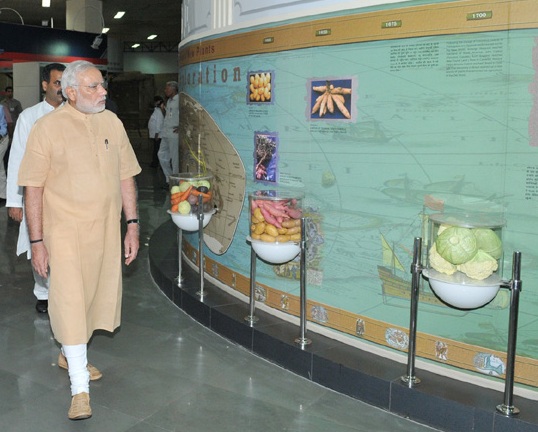
Prime Minister Narendra Modi says agriculture scientists must take to the radio to reach out to farmers.

Prime Minister Narendra Modi says agriculture scientists must take to the radio to reach out to farmers.{credit}PIB{/credit}

Therefore, today when Prime Minister Narendra Modi urged hundreds of agricultural scientists at the 86th Foundation Day celebration of the Indian Council of Agricultural Research (ICAR) to make use of good, old radio to take science from ‘lab to land’, it rang a bell. Modi said agricultural colleges should start their own radio stations. Farmers listen to radio a lot and young agricultural scientists in these colleges kicking off new radio programmes would benefit the farmers immensely, the Prime Minister suggested.

Science-savvy Modi, who began his stint in the high chair a couple of months back flagging off a satellite launch vehicle and consulting scientists of all hues from day one, also called for creation of a digitized database of agricultural research in the country. He sought to link the young, educated and progressive farmers of India with agricultural research scholars saying they could form a powerful talent pool.

Farming in India is mostly inherited across generations and so it is difficult to change agricultural practices overnight. Modi said something science communicators often say — that it would be useful for scientists to explain the efficacy of a particular practice or initiative in language the farmer can understand. Agricultural scientists could play a big role in conveying the impact of changes in climate, water and soil to farmers.

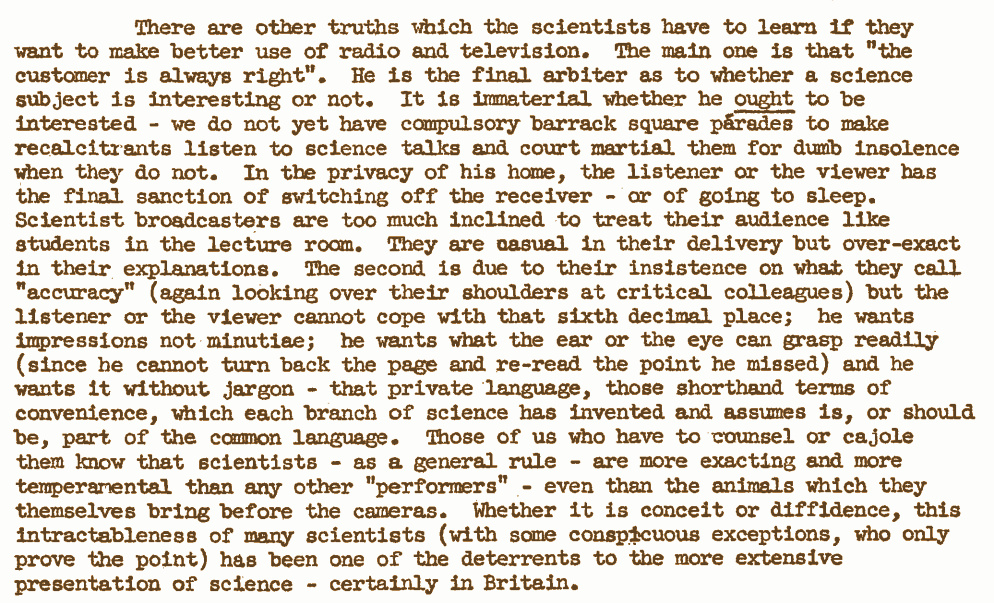
While we are at it, I am taken back to a 1955 communication by British science writer Ritchie Calder, Member of the Council of the British Association for the Advancement of Science. In the article written for UNESCO, Calder summarises the role of a scientist in popularising science through radio thus:

Calder

{credit}UNESCO{/credit}

We might well be heralding an era of a structured science communication and outreach programme in this country, with scientists and the radio at the heart of it all.

India’s research scholars in protest mode

The meagre fellowships that India’s science scholars get has been a contentious issue for long. It raised its head again this week when hundreds of research scholars from various government science and medical institutes of New Delhi staged a silent protest in the corridors of power demanding an immediate hike in fellowships to tackle inflation blues. They were assured by the Indian government yesterday that their long-standing demands will be heard in a meeting next protestweek. And some positive action is expected within the next two weeks.

The researchers under the banner of ‘Research Scholars of India’ were protesting in front of the office of secretary of India’s Department of Science and Technology K. VijayRaghavan. These were scholars from many institutes of Delhi — All India Institute of Medical Sciences, National Institute of Immunology, International Center for Genetic Engineering and Biotechnology (ICGEB), Indian Institute of Technology Delhi, Jawaharlal Nehru University, Jamia Hamdard University, Jamia Milia Islamia, Delhi University and National Institute of Plant Genome Research. Their immediate demands:  a hike in fellowship to compensate for the current inflation rate, annual increments linked to inflation, revision of fellowships from April 1, 2014 and streamlining of monthly fellowships.

Says ICGEB junior research fellow Krishnan Yadav, “Fellowships or stipends provided by the Indian Government to research scholars have, historically, been abysmally low. The amount disbursed is probably enough for one person in his/her twenties to afford a roof over their heads.”

According to a release by the researchers’ body, the cost of living has skyrocketed with inflation soaring over 144% as compared to 2010 level.  A junior research fellow (JRF) gets a stipend of Rs. 16000 per month, increased from Rs. 12000 in 2010 after an indefinite fast by students of Indian Institute of Science, Bengaluru. Senior research  fellows (SRFs) get around Rs. 18,000 per month. Research associates (PhD graduates) get a consolidated fellowship of around Rs. 22,000 per month. “Average age of a research associate is 31 years. With this kind of money, we can’t even support our parents and marriage is a distant dream,” Yadav says.

The protestors are demanding that the pay be revised to 35,000 for JRFs and Rs 38,000 for SRFs.

Quoting a CSIR study, the disgruntled researchers say around 44% of fellows who qualify the prestigious CSIR-UGC JRF/NET examination don’t join Indian institutions for a PhD. More than half of them look at a PhD abroad mainly because of the poor pay.

Anjali Khatri of ICGEB put out an update on the protestors’ Facebook page saying the DST had assured them that new fellowship amounts will be proposed considering inflation rates and guidelines of the Indian Council of Medical Research (ICMR). The protestors  have demanded that their annual increment be linked to two factors — inflation and pay commision. The pay commision recommendations come into force every year but a Phd student’s tenure is not that long. So the researchers have proposed that 1/10th of the hike of pay commision should be included every year in the felllowships along with an inflation-adjusted hike as done for any other government employee.

There have been similar protests in the science hub of the country Bengaluru and in Chandigrah. Some more protests are planned in Mumbai.

Here’s hoping the demands of this country’s young researchers are heard by her policy makers. It will certainly go a long way in retaining talent and attracting more students to science — issues that have plagued the growth of science in the country for long.

Nature India announces its first photo contest

NI photo contestOn popular demand from readers, Nature India is pleased to announce its first ever photo contest!

One lucky winner chosen by the Nature India editorial and design team will be featured on Nature India. The winning entry stands a chance of being on the cover of one of our forthcoming print publications. The winner and two runners-up will receive a copy of the Nature India Special Annual volume and a bag of goodies from the Nature Publishing Group.

The theme for our inaugural photo competition is: Science & technology in India.

The contest is open to everyone – any nationality, any age, any profession. The only keywords for the subject of the picture are: ‘India’ and ‘science’. You could use whatever camera you wish to – even your cell phone – as long as the photograph you send us is unedited, original and in a digital format. Photographs will be judged for novelty, creativity and quality.

Please send a single entry to npgindia@nature.com  with your name, telephone number and address, both e-mail and postal. Please mention “Nature India Photo Contest” in the subject line of your email. The photograph must be accompanied by a brief caption (not exceeding 100 words) explaining the subject of the picture along with the date, time and place it was taken. The last date for submissions is August 15, 2014. If you are on social media, please use the hashtag #NatureIndphoto to spread the word around about the contest.

Selfies are welcome as are pictures of sculptures, statues, paintings, and other works of art. Just make sure you are not violating any copyrights. Also, no obscene, provocative, defamatory, sexually explicit, or other inappropriate content please.

So, get set and go clickety-click!

Nature India partners with NIAB

Abstracts Book CoverNature India is proud to be associated with the National Institute of Animal Biotechnology (NIAB), Hyderabad in bringing out the abstracts of the high profile International Conference on Host Pathogen Interactions (ICHPI — July 12-15, 2014).

Director of NIAB Pallu Redanna says, “The conference hopes to provide a platform to scientists from across the globe working in academic laboratories and industry on infectious diseases to come together, interact and share their experiences with an aim to identify the problems and come up with strategies for more effective control of infectious diseases.” The technical sessions will focus on a number of disciplines in molecular biology, microbiology, immunology, genetics and genomics, related to host-pathogen interactions.

The scientists will deliberate on host-pathogen interactions; infection, inflammation and immunity as well as translational research (vaccines and diagnostics). There would be some brainstorming on issues that affect the Indian scenario directly, such as, integration of health of humans and animals with the environment, antimicrobial resistance and control of foot-and-mouth Disease (FMD) in India.

Nature India will bring to you coverage of some key scientific sessions of the conference.

Here’s an editorial I wrote for the abstracts book on Why India needs a polio-style control programme for the foot-and-mouth scourge:

Khur Paka-Munh Paka: I heard those words for the first time as a child on a trip to Rajasthan. They stayed with me for a long time, primarily because their rhythmic recall was funny.

Turns out they were anything but funny – Khur Paka-Munh Paka is the local name for the deadly Foot-and-Mouth Disease (FMD) that kills or lames millions of India’s cattle every year with very high fever and nasty blisters inside the mouth and on the feet. With three prevalent serotypes, the Foot-and-Mouth-Disease Virus (FMDV) has been hitting India’s agricultural economy hard – resulting in direct annual losses of an estimated Rs 20,000 crore (around 4.45 billion USD).

The need to protect livestock – more than 527 million susceptible ones along with wild ungulates – has seen India float ambitious FMD control programmes covering almost 85 million animals through 300 million trivalent vaccine doses every year. The idea is to cover 316 million animals during the 12th five year plan period that ends in 2017. The country has spent over Rs 400 crores (around 83 million USD) to keep livestock free from the virus and intends spending Rs 500 crore in the 12th plan period alone. There’s a clear policy now to control the disease by 2020 and to establish one or more clearly defined zones that have achieve freedom from the virus through vaccination.

Long years of intervention by the government, adequate funds and vaccine production facilities have, however, not been able to contain this trans-boundary viral disease, endemic in the Indian subcontinent. Outbreaks of the disease are reported every now and then. Obviously, we are doing some things wrong. What exactly are these loose ends and how can we tie them? These are vital questions that will be addressed at a close-door brainstorming session at the International Conference on Host-Pathogen Interactions at the National Institute of Animal Biotechnology, Hyderabad.

Some major challenges that the research community and public health experts identify are lack of uniformity in implementation and poor vaccination coverage during mass vaccination. Also, current vaccines fail to induce long term immunity to the animals and persistent infection has been reported in vaccinated animals and wildlife. The animals move unrestricted within the country and there’s no organised disease reporting system.

Alongside hundreds of illuminating presentations on host-pathogen interactions, the FMD brainstorming session will focus on identifying and prioritising research areas, finding collaborative partners and discussing practical difficulties and possible solutions. The fact that FMD gains primacy in discussions at the International Conference on Host-Pathogen interactions attaches a sense of urgency to the need for its absolute control. The recommendations of the session should provide key pointers for our policy makers to achieve total control of the disease in the subcontinent.

References:
1.  Annual Report 2012-13, Department of Animal Husbandry Dairying and Fisheries, Govt. of India