H1N1 in India

There’s no reason to panic, the health authorities in India tell us. The official figure of confirmed swine flu cases in the country has risen from five to 15 in a week. Swab reports of five suspected cases are awaited. But such isolated cases don’t indicate anything and there isn’t much to be alarmed as long as case clusters are not reported.

Health ministry officials pacify our nerves saying we are in the ‘containment stage’ or lower level of spread of the virus.

Meanwhile, what is bothering public health administrators is the illegal sale and purchase of Tamiflu as an over-the-counter drug in some metro cities. The drug, given free to infected patients at the designated swine flue treatment centres, is being black marketed freely at exorbitant prices. This, more than being an offence, also means people taking the drug out of panic might develop drug resistance to the fast mutating influenza bug. The World Health Organisation has cautioned again self-medication as if might only worsen the situation.

For a guide to swine flu, click here. For India helplines, dial 1075 or 011-23921401.

Climate cries

A new report and a book this week presented two sides of the climate change coin.
blogpic (4)

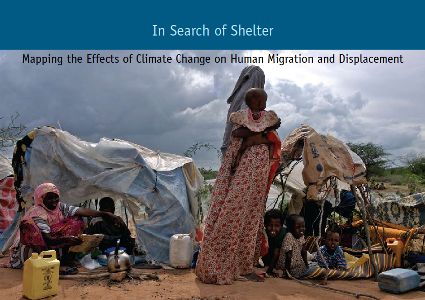
While the report unveiled at the Bonn UN climate change meeting sounded alarm bells for many Asian countries, including India, predicting large scale migrations due to glacial thaw, the book was a guide for erring cities across Asia, Africa and Latin America – cajoling them into becoming ‘good boys’.

Reports of the report flooded the Indian media since a lot is at stake for the country. The climate gurus have warned that the ongoing melting of alpine glaciers in the Himalayas will devastate the heavily irrigated farmlands of Asia by increasing floods and decreasing long-term water supplies. The glacier-fed basins of the Ganges, Brahmaputra, Irawaddy, Salween, Mekong, Yangtze and Yellow rivers support over 1.4 billion people.

The report ‘In search of Shelter: Mapping the Effects of Climate Change on Human Migration’ also predicted breakdown of ecosystem-based economies including subsistence herding, farming and fishing.

And while we were still coming to terms with the crisis looking us in the face, the International Institute of Environment and Development (IIED) sent us word that they have quite a few pointers for the Indian city of Mumbai along with its Asian metro counterparts in their new book ‘Adapting Cities to Climate Change: understanding and addressing the development challenges’.

blogpic (5)

The book, they say, should be of interest to policy makers, practitioners and academics, who face the challenge of addressing climate change vulnerability and adaptation in urban centres throughout the ‘global South’. It describes how the first priority for adapting cities to climate change is to remedy deficits in infrastructure and services. For most urban centres in these regions at least half of the population lacks piped water, sewers, drains, health care or emergency services. Also included are chapters discussing where adaptation can overlap with reducing greenhouse gas emissions (for Indian cities) and a critique of the very limited international funding available to support adaptation.

The UN-Columbia University-CARE International report also makes a few policy recommendations that include prioritising the world’s most vulnerable populations and including migration in adaptation strategies.

Takes me back to the gloom I experienced while doing an investigation some time back in the Sunderban islands of the Bay of Bengal. The story of the vanishing islands has been quoted widely (and even got a BBC award). But the migrants from these sinking islands have not yet been recognised as vulnerable , neither has there been any serious rehabilitation effort to save these environment refugees. Just the other day, a young environmentalist who had revisited the Sunderban delta, reported at a seminar on climate change that she hadn’t seen any perceptible change in the plight of the people despite the international press writing about them.

Makes one cynically wonder, what do reports, books and investigations finally boil down to? I would love to be shaken out of this cynicism: do tell me of the last book, report or press coverage that helped significantly alter the lives of such vulnerable populations in India.

Young HIV crusaders

DSC_0153.jpg

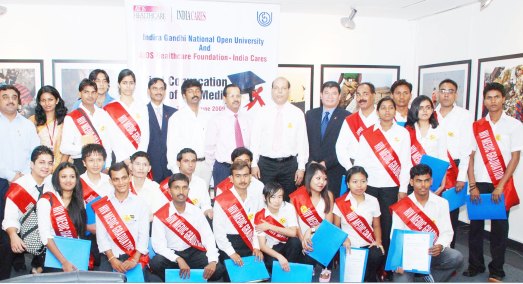
A group of health workers (picture above), clutching certificates of specialised HIV care training, emerged from the first convocation of HIV medics in New Delhi today (June 8, 2009). The young medics aim to do their bit in addressing the acute shortage of trained healthcare workers in a country currently housing over 2.4 million people living with HIV and AIDS (UNAIDS global report, 2008).

They underwent a three-month orientation into HIV/AIDS care giving jointly organised by the AIDS Healthcare Foundation, the largest provider of specialised HIV medical care in the US, and the Indira Gandhi National Open University (IGNOU). The paraprofessionals will now assist clinicians in providing antiretroviral therapy (ART) to patients. Additionally, they will provide initial patient screenings, complete patient histories and refer patients to physicians for physical exams and initiation of ART.

The special care givers will draw blood, dispense medications and provide medication adherence counselling and HIV testing. This would eventually free up physicians, nurses and other healthcare professionals for more complex tasks and enable them to see more patients.

The idea is to contribute to the overall goal of increasing the number of people receiving ART and improving the quality of care.

The HIV Medic training has been designed for students who have passed high school with no prior medical training or experience. The training programme has 6 weeks of class-room learning and 6 weeks of hands-on experience. They get a basic grounding in anatomy & physiology, common diseases in various organ systems, sexually transmitted infections and opportunistic infections of HIV, TB, the natural history and life cycle of HIV, mechanisms of anti-retroviral drugs, side effects or toxicity, HIV in pregnancy, paediatrics, counseling, adherence and social and ethical aspects of HIVAIDS.

AHF has had success with similar programmes in Uganda, Zambia and Rwanda, training local youth as healthcare workers in the fight against HIV/AIDS. It’s a good start in India with 30 energetic youths every year. Hope AHF can replicate its success here.

More info here.

Pollution goes to school

We counted this already among the many menaces of living in polluted cities, but now there’s a study to prove it beyond doubt. Our children breathe heavily polluted air in schools.

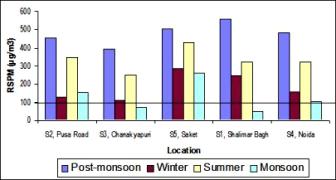
The respirable standard particulate matter (RSPM) in Delhi schools apparently exceeds all air quality standards in most seasons, according to pollution watchers at The Energy Research Institute (TERI) in New Delhi. They studied five schools in the national capital region and found that nitrogen dioxide levels were also over the top in some of these schools. They report ‘alarming’ levels of pollutants on Diwali day, the festival of lights, and for days preceding Diwali.

Here, the first two self-explanatory graphs talk of the RSPM and nitrogen dioxide levels (in that order). The third graph gives a feel of the Diwali bonanza!

rspm.jpg

no2.jpg

diwali.jpg

In the emission inventory of Delhi, the prime culprits stand out — vehicles and industries, primarily the power plants. The researchers have suggested a slew of mitigation measures to make school zones safer for children including improved parking, pick up and drop off zone for children, dense tree plantation, water sprinkling in play fields and special reinforcement messages prior to Diwali.

How doable is all this? Anything else that can be done to get our school authorities working?