Small schools greener

Looks like the greenest schools are in India’s suburbs. An annual environmental audit of schools by New Delhi-based Centre for Science and Environment (CSE) says ‘the real action is not happening in the ‘elite’, big-budget, up-market schools.’ Rather, semi-urban and mid-rung institutions in small cities such as Panipat (Haryana) and Jalgaon (Maharashtra) are leading the green brigade.

CSE asks schools across India to carry out rigorous self-audit on environmental practices within their own premises. From among the 5,000 schools that participated this year, the 20 national toppers had nine from the semi-urban, mid-rung category. Six of the national-level winners are from Delhi. Interestingly, ‘elite’ schools joined the programme with great fanfare, but failed to carry it through.

Small schools showed commitment — discarded cars in favour of walking and cycling to commute, reused grey water to irrigate playfields and green areas, harvested rainwater, recycled solid wastes, turned their grounds into biodiversity hotspots planting large varieties of medicinal plants and used solar power to heat water, cook and light up streets.

The green campaign in ‘elite’ schools was found to be restricted to reating ‘eco clubs’ and campaigns with no long term commitment. The trend reflects a larger social behaviour — the lack of commitment of our big cities and urban citizens to make any path-breaking contribution towards this end. It would be a good thing to see small cities lead by example.
Virtual bioinformatics

This week I marveled at the organising skills of some young and enterprising bioinformatics researchers who had put together what they called India’s first virtual conference on bioinformatics in real time — Inbix ’10.

Going by the content of the conference — pre-recorded and live streaming talks, lively interactions as well as poster presentations — it did look like they made the most of the time-honored, cost-effective means of conferencing benefiting the Indian bioinformatics fraternity. This conference succeeded the African Bioinformatics conference (Afbix ’09) organised in collaboration with the African Virtual Bioinformatics Network in 2009.

Experts from India, Singapore, USA and Denmark spoke on a variety of subjects. There were talks on computational protein structure prediction methods, use of sequence diversity in emerging infectious agents for vaccine designing diagnostic tool development, open access tools in systems biology, mathematical models for simulation of multicellular virtual tissues, use of genomic expression data and metabolite pathway information to predict tumorigenic potential of chemicals, computational framework for the profiling and prioritisation of environmental chemicals, large-scale analysis of tissue-specific pathology and gene expression of human disease genes, open source drug discovery model for TB and analysing genetic data on human disease and the pathways associated with these genes.

The conference organised by the Indian bioinformatics network Bioclues and US-based Bioinformatics Organization opens up the possibility of creating such low-cost platforms for international conferencing in Indian labs.

African ties

India will host African scientists through an international scholarship programme being instituted by the Department of Science and Technology (DST).

The C. V. Raman International Fellowships programme will provide an opportunity to African scientists and researchers to visit Indian institutions for conducting research in various areas of Science & Technology. The programme provides fellowships in different categories ranging from a duration of 1 month to 12 months. The Federation of India Chambers of Commerce and Industry (FICCI) is the coordinating partner for the C. V. Raman programme.

The programme is scheduled to be formally launched by India’s Science and Technology and Earth Sciences minister Prithviraj Chavan on 19 February, 2010 in New Delhi. So, if you have friends in African science or are an African scientist or researcher yourself, watch out for more details.

Wildlife crime handbook

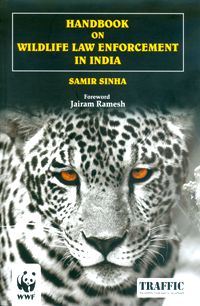
A new handbook on wildlife law enforcement promises to be just the insight that enforcement officials and agencies need into the growing wildlife crimes in India.

wildlifecrimebook.jpg

The Handbook on Wildlife Law Enforcement, written by the head of TRAFFIC India Samir Sinha and launched by India’s proactive environment and forests minister Jairam Ramesh, is a ‘comprehensive and detailed publication on wildlife trade and crime, conceived from several discussions with senior enforcement officials and experts.’

The book has sections on offence prevention, identifying early signs, wildlife crime scenes, internet as a tool for illegal wildlife trade, securing electronic evidence and conducting interrogation. According to Ravi Singh CEO of WWF-India the book has been published at a time when many of our own species and conservation landscapes are depreciating, some beyond even long term recovery.

I remember Sinha telling me sometime back that the main challenge for wildlife law enforcement agencies in the country was poor acknowledgment of the magnitude of the problem. There are very organised criminal syndicates operating in this country, he said. Sinha was also disturbed at the tiger-centric focus of conservation while other species were left out to fend for themselves. The fundamental enforcement challenges, however, were lack of ‘legs on the ground’ — a long time peeve of all agencies — the abysmally low number of forest guards that man India’s forests.

Hope the book answers these questions and takes the conservation debate beyond tigers by highlighting crimes on other species.